东南亚恐怖主义的时空演进及其网络关系
|
胡平平(1992—),男,博士研究生,主要研究方向为南亚、东南亚地缘政治与地缘经济,(E-mail)hupingping2014@126.com; |
收稿日期: 2021-05-25
修回日期: 2021-09-08
网络出版日期: 2021-04-15
基金资助
云南省科技基础专项重点项目(202001AS070032)
云南省中青年学术技术带头人后备人才项目(202105AC160059)
2020年云南师范大学博士研究生新人奖资助项目
Time and Space Evolution and Network Relationship of Terrorism in Southeast Asia
Received date: 2021-05-25
Revised date: 2021-09-08
Online published: 2021-04-15
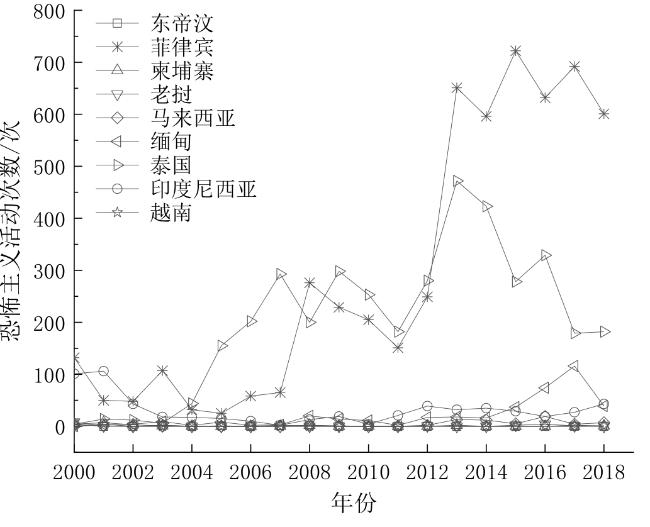
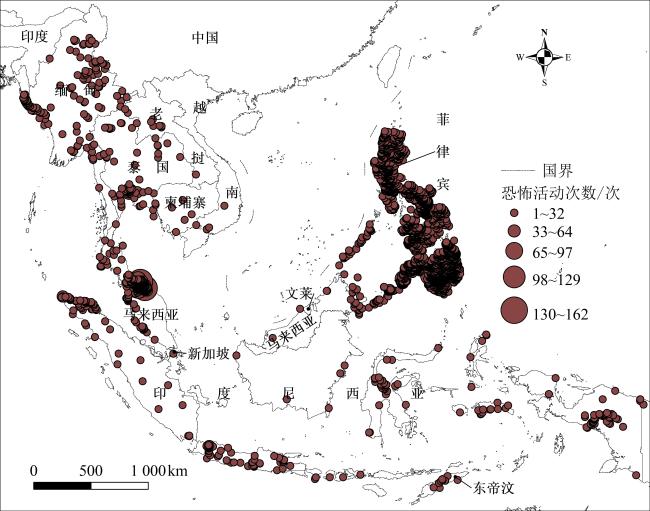
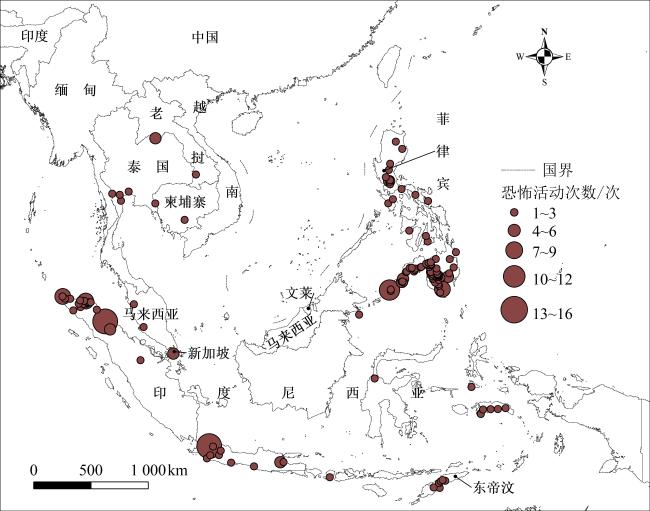
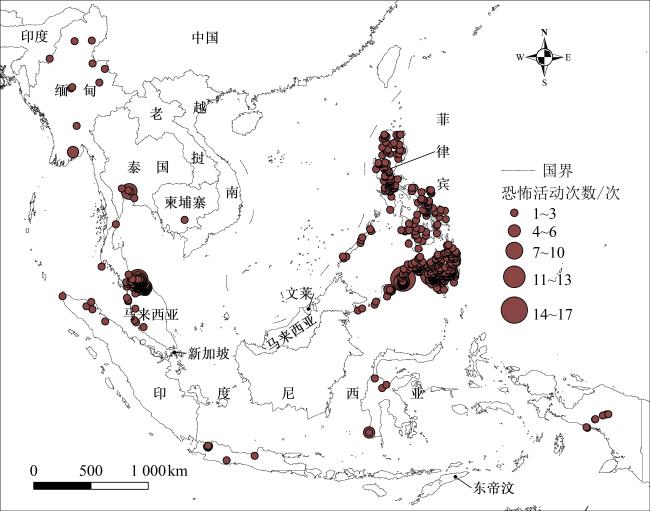
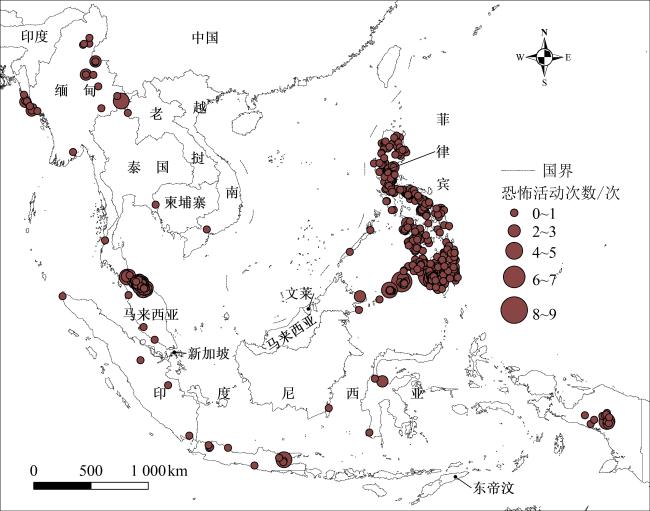
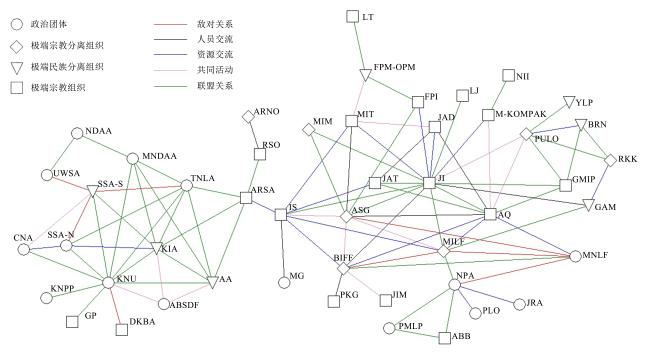
以全球恐怖主义数据库(GTD)的研究数据为基础,运用地学空间统计分析方法和社会网络分析方法,对2000-2018年东南亚发生的恐怖主义事件进行时空演变特征分析及其参与组织的社会网络关联解析,得出以下结论:1)东南亚恐怖主义发展态势呈现显著的阶段性波动增长,在空间上表现为明显的集聚性,由2000-2013年的两极集聚中心转变为2014-2018年的三级集聚中心。2)东南亚恐怖主义组织众多,恐怖组织类型复杂,各恐怖组织及独狼型恐怖主义之间通过情报、资源及人员交流等方式进行联系,形成了一个巨大的跨地区恐怖组织网络;以伊斯兰祈祷团(JI)为代表的东南亚恐怖组织在上个世纪90年代利用域外组织的支持建立了一个横跨多国、分工明确的4M活动网络,并利用此活动网络进行资金筹集、人员培训、策划活动等。3)东南亚恐怖主义迅速发展有其深层次原因,既有地区内部社会文化、政治环境和经济发展的影响,又有区域外恐怖主义势力的干预。
胡平平 , 武友德 , 李灿松 , 曹逸凡 , 王敏 . 东南亚恐怖主义的时空演进及其网络关系[J]. 热带地理, 2021 , 41(6) : 1209 -1221 . DOI: 10.13284/j.cnki.rddl.003413
Since 2000, terrorism in Southeast Asia has developed rapidly via numerous terrorist organizations. As the regional anti-terrorism situation has become increasingly severe, regional security has faced serious challenges. The research is based on the research data of the Global Terrorism Database (GTD), using geospatial statistical methods to visualize the spatial variation terrorist activities in Southeast Asia from 2000 to 2018, and to analyze the characteristics of the temporal and spatial research of terrorist activities in Southeast Asia. Social network analysis methods were used to analyze the internal and external social relations of terrorist organizations in Southeast Asia. This helped us to have a certain understanding of the development situation of terrorism in Southeast Asia and to provide a reference for Southeast Asian countries to formulate relevant counter-terrorism measures and strengthen regional counter-terrorism cooperation in the future. The study draws the following conclusions: (1) A total of 10,440 terrorist activities occurred in Southeast Asia from 2000 to 2018, showing a significant volatility growth over time, with obvious phase changes. According to the trend of terrorism in Southeast Asia and its spatial changes, this period can be divided into three stages, namely: rising volatility (2000-2010), rapid development (2011-2013), and turbulence and change stage (2014-2018). In terms of spatial distribution, Southeast Asian terrorism activities are highly concentrated, with significant agglomeration, showing a trend of diffusion and agglomeration. The agglomeration center has changed from a two-pole agglomeration center in 2000 to a three-level agglomeration center in 2018: the southern region of Thailand, the southern islands of the Philippines and the southern islands of the Philippines, and mountainous areas in western Myanmar. (2) There are many terrorist organizations in Southeast Asia, the types of which are complex. The members of the terrorist organization network are closely related. The terrorist organizations and the lone wolf type terrorism are related through intelligence, resource, and personnel exchanges. A huge cross-regional terrorist organization network has been established. In this network of terrorist organization relations, various terrorist organizations cooperate and act together, posing a serious threat to the anti-terrorism situation in Southeast Asia. In the 1990s, Southeast Asian terrorist organizations represented by JI, established the 4M activity network with a clear division of labor across many countries with the support of foreign organizations and used this activity network to raise funds, train personnel, and plan activities. (3) There are deep-seated reasons for the rapid rise of terrorism in Southeast Asia, not only the influence of social culture, political environment, and economic development within the region but also the intervention of terrorist forces outside the region.
图1 2000—2018年东南亚各国恐怖主义活动趋势Fig.1 Trends of terrorist activities in Southeast Asian countries during 2000-2018 |
表1 东南亚部分恐怖组织中英文对照Table 1 Comparison of Chinese and English major terrorist organizations in Southeast Asia |
| 英文全称 | 英文简称 | 中文 | 性质 |
|---|---|---|---|
| New People's Army | NPA | 新人民军 | 政治团体 |
| Abu Sayyaf Group | ASG | 阿布沙耶夫 | 极端宗教分离组织 |
| Bangsamoro Islamic Freedom Movement | BIFF | 邦萨摩洛伊斯兰自由战士 | 极端宗教分离组织 |
| Moro Islamic Liberation Front | MILF | 摩洛伊斯兰解放阵线 | 极端宗教分离组织 |
| Runda Kumpulan Kecil | RKK | 伦达·库普兰·凯西尔 | 极端宗教分离组织 |
| Barisan Revolusi Nasional | BRN | 国民革命军 | 极端民族分离组织 |
| Free Aceh Movement | GAM | 自由亚齐运动 | 极端民族分离组织 |
| Jemaah Islamiya | JI | 伊斯兰祈祷团 | 极端宗教组织 |
| Free Papua Movement | FPM-OPM | 自由巴布亚运动 | 极端民族分离组织 |
| Arakan Rohingya Salvation Army | ARSA | 若开邦罗兴亚救世军 | 极端宗教组织 |
| Islamic State of Iraq and the Levan | IS | 伊斯兰国 | 极端宗教组织 |
| Kachin Independence Army | KIA | 克钦独立军 | 极端民族分离组织 |
| Karen National Union | KNU | 卡伦民族联盟 | 政治团体 |
| Arakan Army | AA | 若开军 | 极端民族分离组织 |
| Maute Group | MG | 穆特组织 | 政治团体 |
| Ta'ang National Liberation Army | TNLA | 德昂民族解放军 | 政治团体 |
| Mujahidin Indonesia Timur | MIT | 东印度尼西亚圣战者 | 极端宗教组织 |
| Jamaah Ansharut Daulah | JAD | 贾玛·安萨鲁特·道拉 | 极端宗教组织 |
| Pattani United Liberation Organization | PULO | 北大年联合解放组织 | 极端宗教分离组织 |
| Moro National Liberation Front | MNLF | 摩洛民族解放阵线 | 政治团体 |
| National Democratic Alliance Army | NDAA | 全国民主同盟军 | 政治团体 |
| Jamaah Ansharut Tauhid | JAT | 贾玛·安萨鲁特·陶希德 | 极端宗教组织 |
| Democratic Karen Buddhist Army | DKBA | 民主克伦佛教军 | 极端宗教组织 |
| Laskar Jihad | LJ | 拉斯卡尔圣战组织 | 极端宗教组织 |
| United Wa State Army | UWSA | 佤邦联合军 | 政治团体 |
| Shan State Army-South | SSA-S | 南掸邦军 | 极端民族分离组织 |
| Mujahideen Islam Pattani | GMIP | 北大年伊斯兰圣战者运动 | 极端宗教组织 |
| Alex Boncayao Brigade | ABB | 亚历克斯·邦卡尧旅 | 极端宗教组织 |
| Shan State Army - North | SSA-N | 北掸邦军 | 政治团体 |
| God's Army | GP | 上帝之军 | 极端宗教组织 |
| Islamic Defenders' Front | FPI | 伊斯兰捍卫者阵线 | 极端宗教组织 |
| Lekagak Tenggamati | LT | 莱卡加 | 极端宗教组织 |
| Partido Marxista—Leninista ng Pilipinas | PMLP | 菲律宾马克思列宁主义党 | 政治团体 |
| Rohingya Solidarity Organization | RSO | 罗兴亚团结组织 | 极端宗教组织 |
| Chin National Army | CNA | 钦族国民军 | 政治团体 |
| Karenni National Progressive Party | KNPP | 卡伦尼民族进步党 | 政治团体 |
| Mujahedin Kompak | M-KOMPAK | 圣战者KOMPAK | 极端宗教组织 |
| Negara Islam Indonesia | NII | 印尼伊斯兰国 | 极端宗教组织 |
| Pentagon Kidnap Group | PKG | 五角大楼绑架小组 | 极端宗教组织 |
| West Indonesia Mujahideen | WIM | 西印度尼西亚圣战者 | 极端宗教分离组织 |
| Young Liberators of Pattani | YLP | 北大年年轻解放者 | 极端民族分离组织 |
| All Burma Students' Democratic Front | ABSDF | 全缅甸学生民主阵线 | 政治团体 |
| Japanese Red Army | JRA | 日本赤军 | 政治团体 |
| Palestinian Liberation Organization | PLO | 巴勒斯坦解放组织 | 政治团体 |
| Arakan Rohingya National Organisation | ARNO | 若开罗兴亚国家组织 | 极端宗教分离组织 |
| AL-Qaeda | AQ | 基地组织 | 极端宗教组织 |
| Myanmar National Democratic Alliance Army | MNDAA | 缅甸民族民主同盟军 | 政治团体 |
| Justice for Islamic Movement | JIM | 伊斯兰运动正义组织 | 极端宗教组织 |
表2 东南亚部分恐怖组织的节点度中心性及接近中心性Table 2 Node centrality and proximity centrality of some terrorist organizations in Southeast Asia |
| 恐怖组织 简称 | 出度 中心性 | 入度 中心性 | 入接近 中心性 | 出接近 中心性 |
|---|---|---|---|---|
| JI | 15 | 15 | 118 | 119 |
| KNU | 10 | 10 | 180 | 188 |
| AQ | 9 | 10 | 144 | 147 |
| BIFF | 8 | 8 | 131 | 132 |
| ASG | 8 | 9 | 128 | 130 |
| KIA | 8 | 8 | 149 | 156 |
| MILF | 8 | 7 | 145 | 127 |
| IS | 7 | 8 | 113 | 120 |
| PULO | 6 | 3 | 160 | 156 |
| SSA-S | 6 | 4 | 189 | 191 |
| TNLA | 6 | 7 | 150 | 159 |
| SSA-N | 5 | 5 | 186 | 193 |
| NPA | 5 | 6 | 182 | 164 |
| MNDAA | 5 | 5 | 185 | 192 |
| ARSA | 5 | 5 | 127 | 134 |
| MNLF | 5 | 5 | 149 | 153 |
| AA | 5 | 6 | 152 | 164 |
| GMIP | 4 | 4 | 157 | 158 |
| JAD | 4 | 3 | 161 | 159 |
| JAT | 4 | 4 | 142 | 143 |
| MIT | 4 | 4 | 140 | 140 |
| FPM-OPM | 3 | 3 | 180 | 182 |
| ABSDF | 3 | 3 | 189 | 196 |
| GAM | 3 | 3 | 154 | 155 |
| M-KOMPAK | 3 | 3 | 160 | 161 |
| CNA | 3 | 3 | 223 | 229 |
| FPI | 3 | 3 | 158 | 159 |
| NDAA | 2 | 2 | 228 | 235 |
| BRN | 2 | 3 | 198 | 201 |
| PMLP | 2 | 1 | 273 | 208 |
| RKK | 2 | 3 | 193 | 198 |
| ABB | 2 | 2 | 227 | 208 |
| UWSA | 2 | 2 | 232 | 234 |
| MIM | 2 | 2 | 162 | 163 |
| RSO | 2 | 2 | 171 | 178 |

|
Abuza Z. 2002. Tentacles of Terror: Al Qaeda's Southeast Asian Network. Contemporary Southeast Asia, 24(3): 427-465.
|
|
Abuza Z. 2015. Joining the New Caravan: ISIS and the Regeneration of Terrorism in Southeast Asia. Carlisle: US Army War College Strategic Studies Institute, 1-29.
|
|
Arianti V and Singh J. 2015. ISIS' Southeast Asia Unit: Raising the Security Threat. (2015-10-19) [2021-10-26]. https://www.files.ethz.ch/isn/194795/CO15220.pdf.
|
|
Chow J T. 2005. ASEAN Counterterrorism Cooperation since 9/11. Asian Survey, 45(2): 302-321.
|
|
Buldyrev S V, Parshani R, Paul G, Stanley H E and Havlin S. 2010. Catastrophic Cascade of Failures in Interdependent Networks. Nature, 464(7291): 1025-1028.
|
|
戴维·诺克,杨松. 2012. 社会网络分析. 2版.上海:上海人民出版社,103-104.[David Nock and Yang Song. 2012. Social Network Analysis. 2nd ed.. Shanghai: Shanghai People's Publishing House, 103-104. ]
|
|
Dolven B, Vaughn B, Chanlett-Avery E, Lum T and Rollins J W. 2018. Terrorism in Southeast Asia. Current Politics and Economics of South, Southeastern, and Central Asia, 27(1/2): 239-284.
|
|
Emmers R. 2009. Comprehensive Security and Resilience in Southeast Asia: ASEAN's Approach to Terrorism. The Pacific Review, 22(2): 159-177.
|
|
Gunaratna R and Taufiqurrohman M . 2014. Insurgency and Terrorism in East Asia: Threat and Response. In: Ramon Pacheco Pardo and Jeffrey Reeves. Non-Traditional Security in East Asia. Singapore: World Scientific, 23-48.
|
|
Hamid A F A and Fauzi A. 2016. ISIS in Southeast Asia: Internalized Wahhabism is a Major Factor (2016-05-16) [2020-12-26]. https://www.iseas.edu.sg/images/pdf/ISEAS_Perspective_2016_24.pdf.
|
|
Hoffman B. 2004. The Changing Face of Al Qaeda and the Global War on Terrorism. Studies in Conflict and Terrorism, 27(6): 549-560.
|
|
靳晓哲,李捷. 2016. “伊斯兰国”与东南亚恐怖主义的发展. 东南亚南亚研究,(3):1-11,108. [Jin Xiaozhe and Li Jie. 2016. "Islamic State" and the Development of Terrorism in Southeast Asia. Southeast Asia and South Asia Studies, (3): 1-11, 108. ]
|
|
靳晓哲,李捷. 2018. 反恐语境下东南亚国家去激进化策略及其反思——以新加坡、印度尼西亚、菲律宾为例. 东南亚研究,(3):1-23,153. [Jin Xiaozhe and Li Jie. 2018. De-Radicalization Strategies and Reflections in Southeast Asian Countries in the Context of Counter-Terrorism: Taking Singapore, Indonesia, and the Philippines as Examples. Southeast Asian Studies, (3): 1-23, 153. ]
|
|
Jung E. 2018. Islam and Politics in Contemporary South East Asia. In: Ba A and Beeson M. Contemporary South East Asia. 3rd ed.. London: Palgrave, 131-145.
|
|
LaFree G and Dugan L. 2007. Introducing the Global Terrorism Database. Terrorism and Political Violence, 19(2): 181-204.
|
|
LaFree G. 2011. Using Open Source Data to Counter Common Myths about Terrorism. Cambridge: Cambridge University Press, 411-442.
|
|
李恒. 2017. “伊斯兰国”渗透下的东南亚恐怖主义特点趋势. 新疆社会科学,(5):86-93,149. [Li Heng. 2017. The Characteristics and Trends of Terrorism in Southeast Asia under the Penetration of the "Islamic State". Xinjiang Social Sciences, (5): 86-93, 149. ]
|
|
Liow J C. 2014. ISIS Goes to Asia. (2014-09-19) [2021-10-26]. http:// https://www.rsis.edu.sg/wp-content/uploads/2014/09/140921_ISIS_Goes_to_Asia_Foreign_Affairs.pdf.
|
|
Liow J C. 2018. Shifting Sands of Terrorism in Southeast Asia. (2018-02-15) [2021-10-26]https://dr.ntu.edu.sg/bitstream/10220/44443/1/CO18025.pdf.
|
|
刘军. 2014. 整体网络分析:UCINET软件实用指南. 2版. 上海:格致出版社/上海人民出版社,134.[ Liu Jun. 2010. Overall Network Analysis: UCINET Software Practical Guide. 2nd Edition. Shanghai: Gezhi Publishing /Shanghai People's Publishing, 134.]
|
|
卢光盛,周洪旭. 2016. 中国与东南亚国家反恐合作的态势、问题及对策. 云南师范大学学报(哲学社会科学版),(6):63-72. [Lu Guangsheng and Zhou Hongxu. 2016. The Situation, Problems and Countermeasures of Anti-Terrorism Cooperation between China and Southeast Asian Countries. Journal of Yunnan Normal University (Philosophy and Social Sciences Edition), (6): 63-72. ]
|
|
卢光盛,周洪旭. 2017a. “伊斯兰国”对东南亚的渗透:态势、影响及应对. 南洋问题研究,(3):53-64. [Lu Guangsheng and Zhou Hongxu. 2017a. The Penetration of the "Islamic State" into Southeast Asia: the Situation, Influence and Response. Research on Southeast Asian Issues, (3): 53-64. ]
|
|
卢光盛,周洪旭. 2017b. “伊斯兰国”阴影笼罩东南亚,各国谋求反恐合作. 世界知识,(14):28-30. [Lu Guangsheng and Zhou Hongxu. 2017b. The Shadow of "Islamic State" is over Southeast Asia, and Countries Seek Cooperation against Terrorism. World Knowledge, (14): 28-30. ]
|
|
卢光盛,周洪旭. 2018. 东南亚恐怖主义新态势及其影响与中国的应对. 国际安全研究,(5):3-20,155. [Lu Guangsheng and Zhou Hongxu. 2018. The Tew Trend of Terrorism in Southeast Asia and Its Impact and China's Response. International Security Research, (5): 3-20, 155. ]
|
|
Lushenko P, Auken L V and Stebbins G. 2019. ISIS-K: Deadly Nuisance or Strategic Threat?. Small Wars & Insurgencies, 30(2): 265-278.
|
|
吕康娟,付旻杰. 2010. 我国区域间产业空间网络的构造与结构测度. 经济地理,30(11):1785-1791. [Lv Kangjuan and Fu Minjie. 2010. The Structure and Structure Measurement of My Vountry's Inter-Regional Industrial Spatial Network. Economic Geography, 30(11): 1785-1791. ]
|
|
Niksch L. 2010. Abu Sayyaf: Target of Philippine-US Anti-Terrorism Cooperation. Washington: DIANE Publishing, 15-17.
|
|
潘峰华,赖志勇,葛岳静. 2013. 社会网络分析方法在地缘政治领域的应用. 经济地理,33(7):15-21. [Pan Fenghua, Lai Zhiyong and Ge Yuejing. 2013. The Application of Social Network Analysis Methods in the Field of Geopolitics. Economic Geography, 33(7): 15-21. ]
|
|
Raj A J. 2019. Challenges in Counter Terrorism and Counter Violent Extremism in Malaysia. In: Shanthie Mariet D'Souza. Countering Insurgencies and Violent Extremism in South and South East Asia. New York: Routledge, 206-222.
|
|
Ramakrishna K. 2017. The Growth of ISIS Extremism in Southeast Asia: Its Ideological and Cognitive Features—and Possible Policy Responses. New England Journal of Public Policy, 29(1): 6.
|
|
Record J. 2003. Bounding the Global War on Terrorism. Carlisle: Strategic Studies Institute, US Army War College.
|
|
任华. 2018. 后“伊斯兰国”背景下东南亚反恐态势与反恐合作. 印度洋经济体研究,(1):74-89,140. [Ren Hua. 2018. Anti-Terrorism Situation and Anti-Terrorism Cooperation in Southeast Asia under the Background of Post-Islamic State. Indian Ocean Economics Research, (1): 74-89, 140. ]
|
|
Rodell P A. 2002. Culture and Customs of the Philippines. Westport: Greenwood Publishing Group, 22-30.
|
|
Ross J I. 2004. Taking Stock of Research Methods and Analysis on Oppositional Political Terrorism. The American Sociologist, 35(2): 26-37.
|
|
Schulze K E and Hwang J C. 2019. Militant Islam in Southeast Asia. Contemporary Southeast Asia, 41(1): 1-13.
|
|
Smith A L. 2004. Trouble in Thailand's Muslim South: Separatism, Not Global Terrorism. Asia Pacific Center for Security Studies, 3(10): 1-4.
|
|
Smith P J. 2015. Terrorism and Violence in Southeast Asia: Transnational Challenges to States and Regional Stability. New York: Routledge, 98-121.
|
|
Stevenson A. 2010. Oxford Dictionary of English. Oxford: Oxford University Press.
|
|
Tan A T. 2018. The United States and Terrorism in South and Southeast Asia. In: Tan A T. Handbook on the United States in Asia. Cheltenham: Edward Elgar Publishing, 425.
|
|
王俊,徐金海,夏杰长. 2017. 中国区域旅游经济空间关联结构及其效应研究——基于社会网络分析. 旅游学刊,32(7):15-26.[Wang Jun, Xu Jinhai and Xia Jiechang. 2017. Study on Spatial Correlation Structure and Its Effect of China's Regional Tourism Economy—Based on Social Network Analysis. Journal of Tourism, 32 (7): 15-26. ]
|
|
王晴锋. 2017. “独狼”恐怖主义的类型、激进化及其遏制策略. 云南民族大学学报(哲学社会科学版),(2):48-55. [Wang Qingfeng. 2017. Types, Radicalization and Containment Strategies of "Lone Wolf" Terrorism. Journal of Yunnan Nationalities University (Philosophy and Social Sciences Edition), (2): 48-55. ]
|
|
王玉娟,方天建. 2017. 泛伊斯兰背景下“伊斯兰国”对东南亚的渗透. 东南亚研究,(1):115-130,149-150. [Wang Yujuan and Fang Tianjian. 2017. The Penetration of "Islamic State" into Southeast Asia under the Pan-Islamic Background. Southeast Asian Studies, (1): 115-130, 149-150. ]
|
|
吴云贵. 2002. 伊斯兰原教旨主义、宗教极端主义与国际恐怖主义辨析. 国外社会科学,(1):14-20. [Wu Yungui. 2002. Analysis of Islamic Fundamentalism, Religious Extremism and International Terrorism. Foreign Social Sciences, (1): 14-20. ]
|
|
杨凯. 2015. 伊斯兰国与基地组织在东南亚、南亚的扩张比较. 东南亚研究,(5):106-112. [Yang Kai. 2015. Comparison of the Expansion of Islamic State and Al Qaeda in Southeast Asia and South Asia. Southeast Asian Studies, (5): 106-112. ]
|
|
Young A J and Valencia M J. 2003. Conflation of Piracy and Terrorism in Southeast Asia: Rectitude and Utility. Contemporary Southeast Asia: A Journal of International and Strategic Affairs, 25(2): 269-283.
|
|
张家栋. 2003. 恐怖主义的概念分析. 世界经济与政治,(3):37-42,78-79. [Zhang Jiadong. 2003. Conceptual Analysis of Terrorism. World Economy and Politics, (3): 37-42, 78-79. ]
|
|
张洁. 2017. 中国—东盟反恐合作:挑战与深化路径. 国际问题研究,(3):27-40. [Zhang Jie. 2017. China-ASEAN Anti-Terrorism Cooperation: Challenges and Deepening Paths. Research on International Issues, (3): 27-40. ]
|
|
张力. 2002. 国际反恐怖主义与南亚地区安全. 亚非纵横,(3):26-30. [Zhang Li. 2002. International Counter-Terrorism and Regional Security in South Asia. Asia and Africa, (3): 26-30. ]
|
|
曾赟. 2016. 论独狼恐怖主义犯罪的构成要素. 政法论坛,34(5):14-24. [Zeng Yun. 2016. On the Component Elements of Lone Wolf Terrorism Crime. Forum of Political Science and Law, 34(5): 14-24. ]
|
/
| 〈 |
|
〉 |