“优质学区房”社区社会-空间异化的发生机理及效应——以南京为例
|
马国强(1980—),男,河北武安人,讲师,博士,主要从事城市社会地理、区域规划研究,(E-mail)maguoqi2754@163.com。 |
收稿日期: 2022-06-14
修回日期: 2022-07-05
网络出版日期: 2022-10-28
基金资助
江苏高校哲学社会科学研究项目(2021SJA0481)
Mechanism and Effect of Social-Spatial Alienation in High-Quality School-District Community: A Case Study of Nanjing
Received date: 2022-06-14
Revised date: 2022-07-05
Online published: 2022-10-28
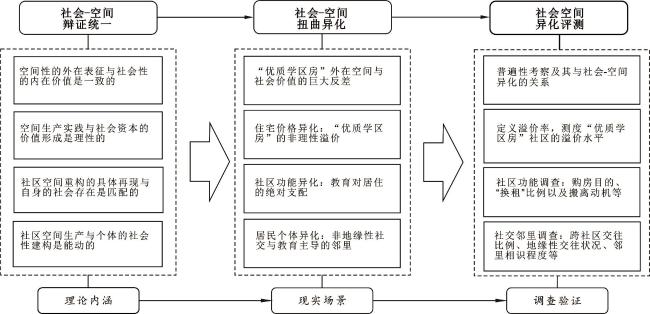
近年来,教育资源分化导致的居住空间分异不断加深,“学区房”社区尤其是老城区的优质“学区房”社区以其高房价与破旧物质景观、优质教育与低劣居住品质的显著对比,对个人、家庭、社群的价值取向和社会实践方式产生强烈的拉扯与撕裂作用,成为社会-空间矛盾凸显的典型空间之一。文章借用“异化”这一哲学术语,基于对南京的调查,对“优质学区房”社区社会空间特征、机理进行研究。结果显示:1)老旧“优质学区房”社区普遍存在外在空间环境与内在社会价值的强烈反差,社会空间关系发生扭曲进而表现出社会-空间异化的现象和特征;2)“优质学区房”社区社会-空间的异化是在住房市场化改革、学区制、东方文化等因素的叠加影响下,社区社会-空间辩证统一关系受到冲击激发学区房角色不断衍变,最终引致社会-空间分离对立与自我否定的结果;3)社会-空间异化会带来深刻的社会空间影响,不仅将进一步加剧居住空间分异的程度,而且将增加学区房社区的治理复杂性和更新难度。
马国强 , 赵静 , 孙燕 , 朱红云 . “优质学区房”社区社会-空间异化的发生机理及效应——以南京为例[J]. 热带地理, 2022 , 42(10) : 1617 -1627 . DOI: 10.13284/j.cnki.rddl.003561
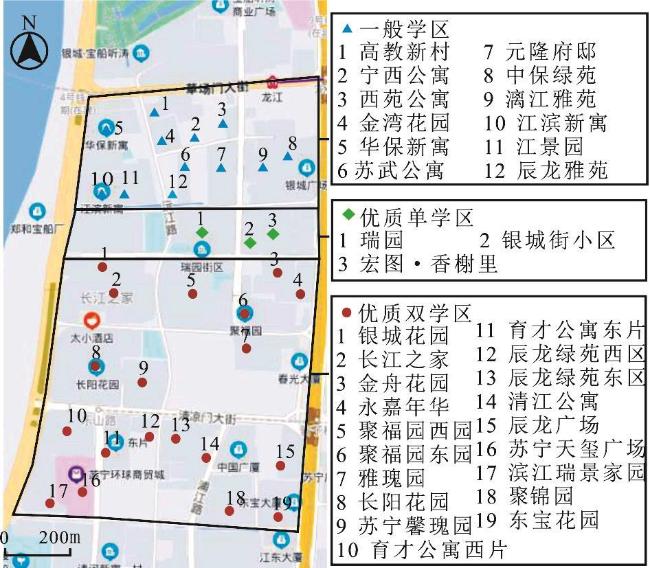
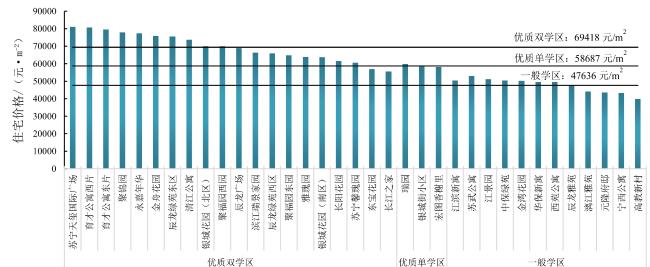
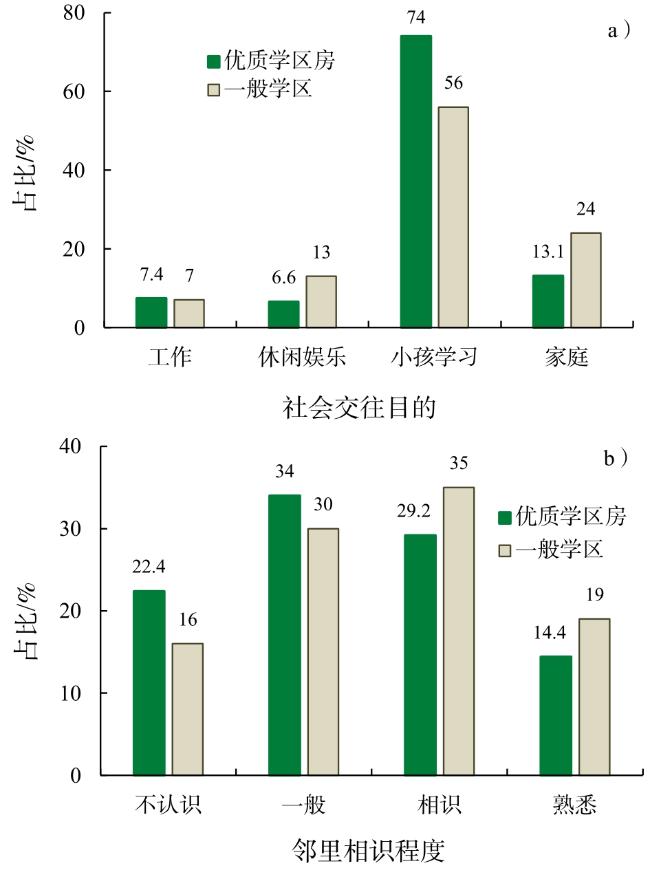
Educational activities have obvious influence on the development of social space, which has always been an important topic of theoretical and practical research. In China, with urban economic development and social transformation, the differentiation of residential space caused by differentiation of educational resources is becoming more pronounced. School-district communities in many central cities, especially the high-quality school-district communities in old urban areas, with a strong contrast between high housing price and dilapidated material landscape, high-quality education and poor living environment, have a strong pulling and tearing effect on the value orientation and social practice of individuals, families, and communities. This has become one of the most typical spaces of social-spatial contradiction and distortion. This study introduces the concept of "alienation" (a philosophical term) and investigates the social-spatial characteristics and mechanism of high-quality school-district communities, from the theoretical viewpoint of "social-spatial dialectical unity." Taking Nanjing as an example, a survey reveals that a large proportion of the high-quality school-district community is old and dilapidated. Hence, the contrast between their material space and social value is significant, the housing price is at an irrational premium, the educational function surpasses the residential function and becomes the primary function of the community, and residents construct a non-geographical social network and shape an education community neighborhood. The high-quality school-district community in Nanjing exhibits the characteristics of social-spatial alienation, which is common and significant. This study further analyzes the mechanism of alienation, which is logically related to external factors such as housing market reform, school district, and oriental culture. However, in essence, the social-spatial alienation is the result of the impact on the dialectical unity of society and space, displaying the tendency of separation and opposition, which promotes the self-denial and role evolution of the community of "high-quality school-district housing". The social-spatial alienation will lead to many negative effects. It will lay siege to the school district and aggravate the antagonistic effect of society and space. It will trigger the solidification and intergenerational transmission mechanism of social stratification and residential differentiation, leading to the residential re-differentiation. It will encounter such difficulties as the absence of subjects, the misplacement of objectives and the rupture of the mechanism, resulting in the "failure" of school-district community governance. It will highlight the contradictions such as high renewal cost, diversified and complex stakeholders, and resistance to school-district rezoning, and delay the process of renewal of the old city. Based on the philosophical construction of "alienation", the social space characteristics of high-quality school-district community are summarized, which provides a new perspective for the study of urban social space. This study also systematically analyzes and explains the mechanism of social-spatial alienation in high-quality school-district communities, and provides tools for the problems in the transformation and reconstruction of urban social space in China.
表1 样本家庭社会经济特征Table 1 List of sample attributes |
| 类别 | 特征属性 | 占比/% | |
|---|---|---|---|
| “优质学区房” 社区 | 一般学区 社区 | ||
| 性别 | 男 | 43.0 | 45.0 |
| 女 | 57.0 | 55.0 | |
| 年龄/岁 | ≤25 | 2.5 | 6.0 |
| 26~35 | 26.0 | 16.0 | |
| 36~45 | 58.6 | 42.0 | |
| ≥46 | 12.9 | 36.0 | |
| 受教育程度 | 初中及以下 | 3.3 | 13.0 |
| 高中/中专/职校 | 8.6 | 15.0 | |
| 大专 | 15.6 | 20.0 | |
| 本科 | 51.6 | 38.0 | |
| 研究生及以上 | 20.9 | 14.0 | |
| 家庭月均 收入/元 | <5 000 | 12.0 | 26.0 |
| [5 000~10 000) | 20.6 | 38.0 | |
| [10 000~20 000) | 51.2 | 29.0 | |
| ≥20 000 | 16.2 | 7.0 | |
| 家庭状况 | 单身 | 4.1 | 6.0 |
| 已婚无孩 | 2.4 | 10.0 | |
| 孩子在学前阶段 | 21.3 | 12.0 | |
| 孩子上小学 | 49.7 | 30.0 | |
| 孩子上初中 | 16.3 | 20.0 | |
| 孩子初中已毕业 | 6.2 | 22.0 | |

1 http://nj.cityhouse.cn
马国强:负责确定论文研究思路、主导设计调查方案,撰写论文,负责论文后期修改;
赵 静:参与论文研究思路和调查方案的设计;
孙 燕、朱红云:参与问卷调查、访谈和调查结果的分析。
|
边艳,周春山. 2014. 中国中产阶层社会空间分异研究述评. 热带地理,34(1):108-115.
Bian Yan and Zhou Chunshan. 2014. Review on the Studies of Socio-Spatial Differentiation of the Middle Class in China. Tropical Geography, 34(1): 108-115.
|
|
Boterman W, Musterd S, Pacchi C and Ranci C. 2019. School Segregation in Contemporary Cities: Socio-Spatial Dynamics, Institutional Context and Urban Outcomes. Urban Studies, 56(15): 3055-3073.
|
|
Butler T and Hamnett C. 2007. The Geography of Education: Introduction. Urban Studies, 44(7): 1161-1174.
|
|
陈培阳. 2015. 中国城市学区绅士化及其社会空间效应. 城市发展研究,22(8):55-60.
Chen Peiyang. 2015. Jiaoyufication and Its Socio-Spatial Consequences in Urban China. Urban Development Studies, 22(8): 55-60.
|
|
Soja E W. 2005. 第三空间——去往洛杉矶和其他真实和想象地方的旅程. 陆扬,刘佳林,朱志荣,路瑜,译. 上海:上海教育出版社.
Soja E W. 2005. Third Space: A Journey to Los Angeles and Other Real and Imaginary Places. Lu Yang, Liu Jialin, Zhu Zhirong and Lu Yu, Trans. Shanghai: Shanghai Educational Publishing House.
|
|
何雪松. 2006. 社会理论的空间转向. 社会,26(2):34-48.
He Xuesong. 2006. The Spatial Turn of Social Theory. Chinese Journal of Sociology, 26(2): 34-48.
|
|
Holloway S L and Jöns H. 2012. Geographies of Education and Learning. Transactions of the Institute of British Geographers, 37 (4): 482-488.
|
|
胡述聚,李诚固,张婧,马佐澎,刘伟. 2019. 教育绅士化社区:形成机制及其社会空间效应研究. 地理研究,38(5):1175-1188.
Hu Shuju, Li Chenggu, Zhang Jing, Ma Zuopeng and Liu Wei. 2019. Jiaoyufication Community: Its Formation Mechanisms and Socio-Spatial Consequences. Geographical Research, 38(5): 1175-1188.
|
|
黄建洪,孙崇明. 2016. 城市社区空间异化问题及其治理路径. 学习与实践,(11):86-92.
Huang Jianhong and Sun Chunming. 2016. Space Alienation and Its Governance Path of Urban Community. Learning and Practice, (11): 86-92.
|
|
李超,连增. 2020. 学区房问题的国际比较与文献述评. 城市与环境研究,(2):96-112.
Li Chao and Lian Zeng. 2020. International Comparison and Literature Review on the School District Housing Problem. Urban and Environmental Studies, (2): 96-112.
|
|
刘天宝,叶子聪,王天依. 2021. 基础教育分异的时空间行为研究框架. 热带地理,41(5):1046-1059.
Liu Tianbao, Ye Zicong and Wang Tianyi. 2021. Research Framework of Basic Education's Differentiation Based on Space-Time Behavior. Tropical Geography, 41(5): 1046-1059.
|
|
Logan J R and Burdick-Will J. 2015. School Segregation, Charter Schools, and Access to Quality Education. Journal of Urban Affairs, 38(3): 323-343.
|
|
马国强,赵静,孙燕. 2022. 优质学区社区邻里交往特征及其社会空间效应——以南京市银城小学学区为例. 地域研究与开发, 41(1):73-78.
Ma Guoqiang, Zhao Jing and Sun Yan. 2022. Neighborly Interaction Characteristics and Social-Spatial Effect of Superior School District Community: A Case Study of Yincheng Primary School District in Nanjing City. Areal Research and Development, 41(1): 73-78.
|
|
马克·戈特迪纳. 2014. 城市空间的社会生产. 任晖,译. 南京:江苏凤凰教育出版社. [Gottdiener M. 2014. Social Production of Urban Space. Ren Hui, trans. Nanjing: Phoenix Education Publishing. ]
|
|
Reardon S F and Owens A. 2014. 60 Years After Brown: Trends and Consequences of School Segregation. Annual Review of Sociology, 40(1): 199-218.
|
|
宋伟轩,吴启焰,朱喜钢.2010. 新时期南京居住空间分异研究.地理学报,65(6):685-694.
Song Weixuan, Wu Qiyan and Zhu Xigang. 2010. Residential Differentiation of Nanjing in the New Period. Journal of Geographical Sciences, 65(6): 685-694.
|
|
宋伟轩,涂唐奇,尹上岗,徐岩,刘春卉. 2019. 南京义务教育资源的社会-空间可达性差异及效应研究. 地理研究,38(8):2008-2026.
Song Weixuan, Tu Tangqi, Yin Shanggang, Xu Yan and Liu Chunhui. 2019. The Differentiation and Effects of Social-Spatial Accessibility in Compulsory Education Resources in Nanjing. Geographical Research, 38(8): 2008-2026.
|
|
孙晨光,王冰纯. 2010. 社区的异化——全球化视野下的社区转变. 中国集体经济,(6):50-51.
Sun Chenguang and Wang Bingchun. 2010. Alienation of Community: Transformation of Community in the View of Globalization. China Collective Economy, (6): 50-51.
|
|
孙江. 2008. “空间生产”——从马克思到当代. 北京:人民出版社.
Sun Jiang. 2008. Social Production: From Marx to the Present. Beijing: People's Publishing House.
|
|
Wu Q, Zhang X and Waley P. 2016. Jiaoyufication: When Gentrification Goes to School in the Chinese Inner City. Urban Studies, 53(16): 3510-3526.
|
|
杨振山,栗子林,丁悦,程哲. 2018. 学区化外部性对城市空间的影响 人文地理,33(4):60-67.
Yang Zhenshan, Li Zilin, Ding Yue and Cheng Zhe. 2018. The External Effect of Jiaoyufication Upon Urban Space. Human Geography, 33(4): 60-67.
|
|
叶斌. 2020. 国土空间规划实施过程中的南京城市更新工作. 南京:南京市规划和自然资源局.
Ye Bin. 2020. Urban Renewal in Nanjing during the Implementation of Land and Space Planning. Nanjing: Nanjing Municipal Bureau of Planning and Natural Resources.
|
|
俞吾金. 2007. 资本诠释学——马克思考察批判现代社会的独特路径. 哲学研究,(1):23-31.
Yu Wujin. 2007. Capital Hermeneutics: Marx's Unique Way to Investigate and Criticize Modern Society. Philosophical Research, (1): 23-31.
|
|
张振,杨建科. 2017. 城市社区的空间关系异化:生产机理与治理机制——基于空间生产视角的分析. 学习与实践,(11):82-88.
Zhang Zhen and Yang Jianke. 2017. Alienation of Spatial Relations in Urban Communities: Production Mechanism and Governance Mechanism: Based on the Perspective of Space Production. Learning and Practice, (11): 82-88.
|
|
钟晓华. 2013. 社会空间和社会变迁——转型期城市研究的“社会-空间”转向. 国外社会科学,(2):14-21.
Zhong Xiaohua. 2013. Social Space and Social Change: the "Social-Space" Turn of Urban Research in the Rransitional Period. Social Sciences Abroad, (2): 14-21.
|
|
朱兆斌. 2019. 邻居的异化与重构——《欢乐颂》与现代社会的人际征候. 北京社会科学,(1):25-32.
Zhu Zhaobin. 2019. The Alienation and Reconstruction of Neighbors: Ode to Joy and Interpersonal Symptoms in Modern Society. Social Science of Beijing, (1): 25-32.
|
/
| 〈 |
|
〉 |