基于深度学习和数学形态学的经济欠发达地区农村住房智能识别研究
|
劳春华(1986—),男,广东茂名人,讲师,博士,主要从事土地科学方面的相关研究,(E-mail)chanverlao@qq.com。 |
收稿日期: 2022-09-30
修回日期: 2022-11-26
网络出版日期: 2023-02-28
基金资助
国家自然科学基金项目(41901312)
广东省基础与应用基础研究基金项目(2020A1515010677)
Intelligent Identification of Rural Housing in Economically Underdeveloped Areas Based on Deep Learning and Mathematical Morphology
Received date: 2022-09-30
Revised date: 2022-11-26
Online published: 2023-02-28
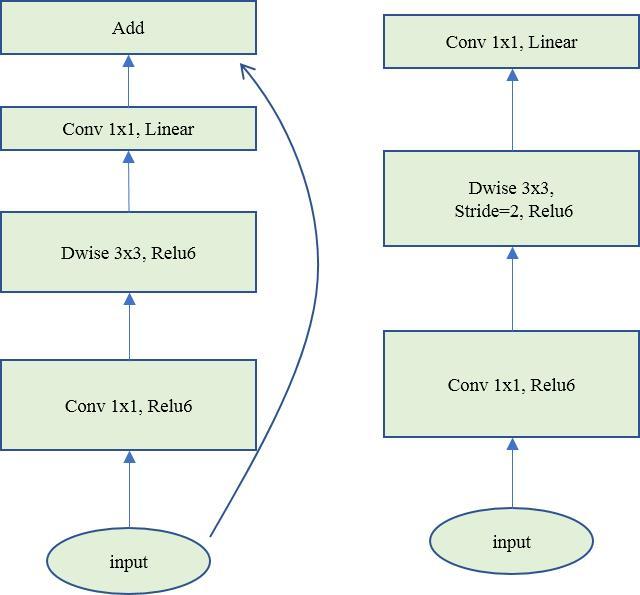
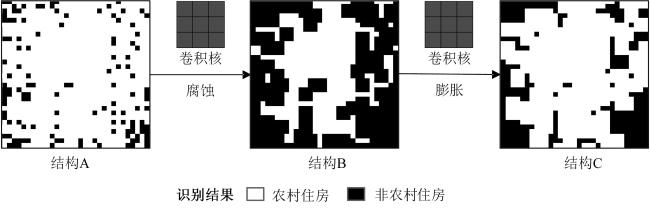
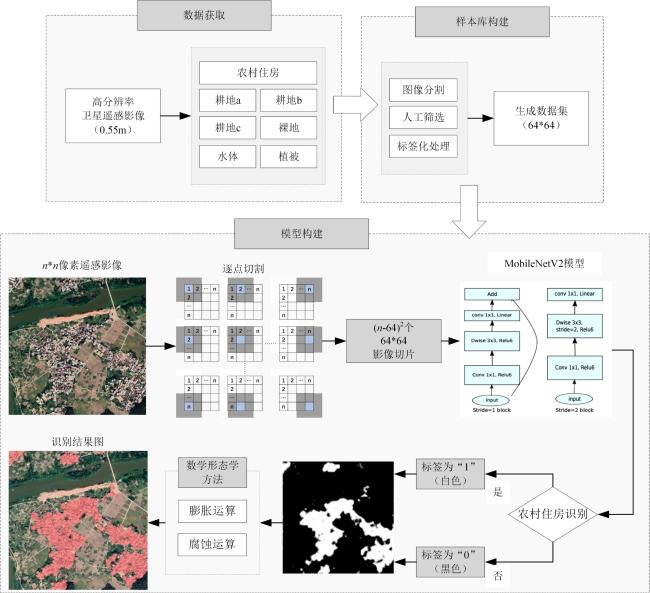
中国大部分农村住房处于一种无规划的自发性建设状态。这种无序扩张是对土地资源的严重浪费,尤其是耕地资源,因此需要通过对农村住房监测来规范农房建设,同时保护耕地资源。而中国目前的农村住房监测手段主要以全国土地调查人工巡查为主,该方法收集到的信息缺乏实时性和可靠性。针对该问题,文章提出一个基于深度学习和数学形态学的经济欠发达地区农村住房智能识别模型,该模型基于高分辨率遥感影像数据和PaddlePaddle框架,创新性地引入数学形态学的膨胀腐蚀方法,并与MobileNetV2进行松散耦合,其在农村住房识别监测中的平均精度达到84.5%,且具有一定的泛化性。与ResNet34模型进行对比,该模型平均识别精度比ResNet34模型高10.6%,对地类边界的提取效果更精细,对农村住房轮廓的识别效果更好。
劳春华 , 林燕慧 . 基于深度学习和数学形态学的经济欠发达地区农村住房智能识别研究[J]. 热带地理, 2023 , 43(2) : 179 -189 . DOI: 10.13284/j.cnki.rddl.003628
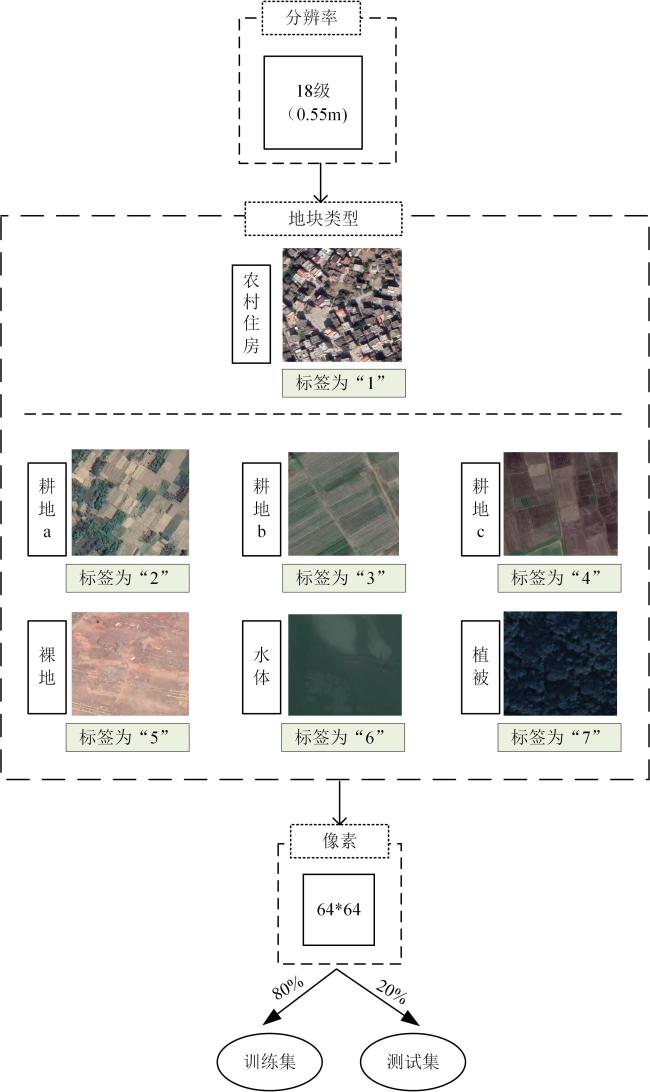
With the rapid growth of China's economy and the supportive government policies and funds, the demand for and the expansion of rural housing in China are on the rise, which tightens requirements for rural housing. However, most of the present rural housing suffers from unplanned growth. The sprawl of rural housing adversely affects the quantity and quality of land resources, in particular, productive agricultural lands; therefore, it is necessary to regulate the growth of rural housing and protect farmlands through spatiotemporally continuous monitoring. Currently, the monitoring of rural housing in China is mainly conducted via in-situ inspection of the national land survey, which is restricted by unfavorable conditions (e.g., weather, outbreaks, and traffic) as well as impairing real-time and reliable control over information collected. To resolve this issue, this study proposed an intelligent model to recognize rural housing in underdeveloped areas based on deep learning and mathematical morphology (MobileNet-MM). The model was based on high-resolution remote sensing data, MobileNetV2 (a convolutional neural network architecture well performing on mobile devices), and mathematical morphology. First, the obtained data were segmented and manually screened and tagged to construct a training dataset. Second, the training dataset was used to train MobileNet-MM, with the expansion operation being used to compensate for identification errors of deep learning. Finally, the accuracy of MobileNet-MM to identify and monitor rural housing was tested, resulting in 84.5% accuracy. The comparison of the accuracies of MobileNet-MM and ResNet34 (a state-of-the-art image classification model) indicated that ResNet34 misclassified a large area of rural housing that was mainly distributed on the edge of the region as well as cropland and vegetation as rural housing, with its weak ability to recognize actual rural housing. The MobileNet-MM model predicted rural housing accurately and land boundary precisely, with the misclassified area being scattered, and its average accuracy, is 10.6% higher than that of ResNet34. The novelties of this study were two-fold: (1) a high-resolution training dataset of rural housing in underdeveloped areas was generated, which provides data support for the development of subsequent models; and (2) an intelligent model to recognize rural housing in underdeveloped areas (MobileNet-MM) based on deep learning and mathematical morphology was proposed.
表1 MobileNet V2网络结构Table 1 MobileNet V2 network structure |
| Input | Opertator | t | c | n | s |
|---|---|---|---|---|---|
| conv2d | — | 32 | 1 | 2 | |
| bottleneck | 1 | 16 | 1 | 1 | |
| bottleneck | 6 | 24 | 2 | 2 | |
| bottleneck | 6 | 32 | 3 | 2 | |
| bottleneck | 6 | 64 | 4 | 2 | |
| bottleneck | 6 | 96 | 3 | 1 | |
| bottleneck | 6 | 160 | 3 | 2 | |
| bottleneck | 6 | 320 | 1 | 1 | |
| conv2d 1×1 | — | 1280 | 1 | 1 | |
| avgpool 7×7 | — | — | 1 | — | |
| conv2d 1×1 | — | k | — | — |
|
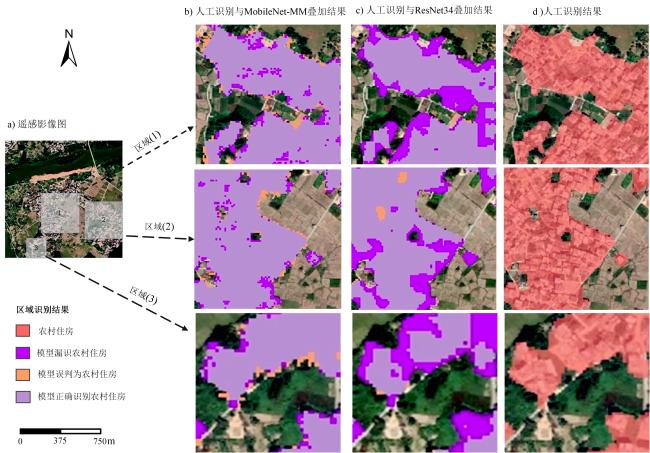
图6 1号影像农房识别结果局部放大Fig.6 Partial zoom-in of farm house recognition results from No.1 image |
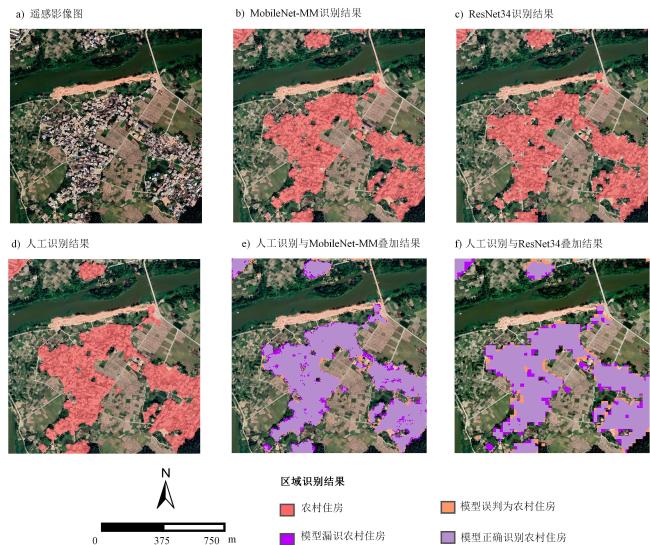
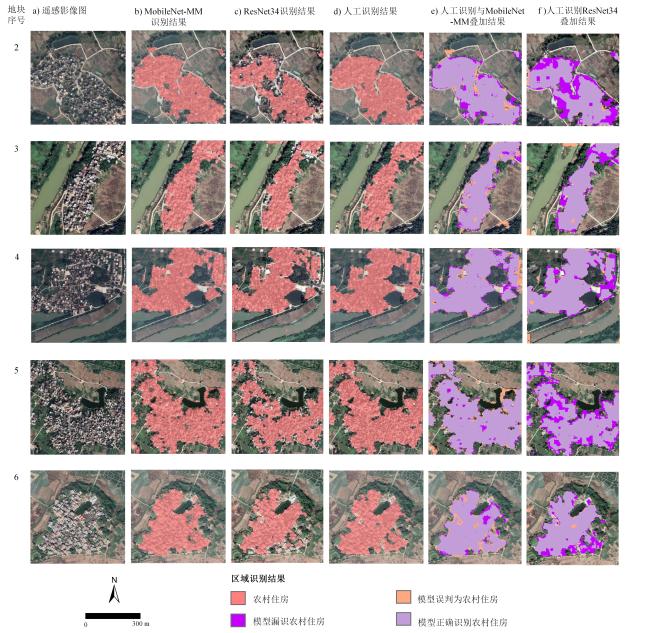
图7 MobileNet-MM模型识别结果 Fig.7 Recognition results of MobileNet-MM model |
表2 模型训练精度与测试精度 (%)Table 2 Models' training accuracy and test accuracy |
| 模型名称 | 训练精度 | 测试精度 |
|---|---|---|
| MobileNet-MM 1 | 100.0 | 99.2 |
| MobileNet-MM 2 | 100.0 | 100.0 |
| MobileNet-MM 3 | 96.7 | 90.8 |
| MobileNet-MM 4 | 96.7 | 99.7 |
| MobileNet-MM 5 | 100.0 | 99.5 |
| MobileNet-MM 6 | 100.0 | 100.0 |
表3 模型识别精度对比 (%)Table 3 Comparison of models' identification accuracy |
| 影像 序号 | MobileNet-MM 模型精度(a) | ResNet34 模型精度(b) | 精度对比 (a比b) |
|---|---|---|---|
| 方差 | 0.02 | — | — |
| 1 | 86.0 | 71.6 | +14.4 |
| 2 | 83.3 | 65.5 | +17.8 |
| 3 | 82.5 | 74.0 | +8.5 |
| 4 | 85.5 | 81.8 | +3.7 |
| 5 | 86.2 | 72.0 | +14.2 |
| 6 | 83.3 | 78.2 | +5.1 |
表4 汇总模型精度对比 (%)Table 4 Summary model accuracy comparison |
| 影像 序号 | MobileNet-MM A | 与MobileNet-MM 1-6对比(左比右) | MobileNet-MM B | 与MobileNet-MM 1-6对比(左比右) |
|---|---|---|---|---|
| 方差 | 0.03 | 0.02 (影像1-3) | ||
| 1 | 80.3 | -5.7 | 81.7 | -4.3 |
| 2 | 84.0 | +0.8 | 84.7 | +1.5 |
| 3 | 85.1 | +2.6 | 84.1 | +1.6 |
| 4 | 85.2 | -0.3 | 83.3 | -2.2 |
| 5 | 85.0 | -1.2 | 87.6 | +1.4 |
| 6 | 83.0 | -0.3 | 80.3 | -3.0 |

劳春华:研究框架设计,论文设计,论文修改、图表精修、论文质量把控;
林燕慧:数据收集;实验开展;初稿攥写,图表制作。
|
Abdel-rahman Mohamed, George E Dahl, and Geoffrey Hinton. 2011. Acoustic Modeling Using Deep Belief Networks. Institute of Electrical and Electronics Engineers (IEEE), 20(1): 14-22.
|
|
陈晨,王红军,王大森,田爱玲,刘丙才,朱学亮,刘卫国. 2019. 基于稀疏矩阵的光学元件表面疵病检测. 中国激光,46(4):182-190.
Chen Chen, Wang Hongjun, Wang Dasen, Tian Ailing, Liu Bingcai, Zhu Xueliang and Liu Weiguo. 2019. Detection of Surface Defects of Optical Elements Based on Sparse Matrix. Chinese Journal of Lasers, 46(4): 182-190.
|
|
邓仕超,黄寅. 2017. 二值图像膨胀腐蚀的快速算法. 计算机工程与应用,53(5):207-211.
Deng Shichao, and Huang Yin. 2017. A Fast Algorithm for Dilation and Corrosion of Binary Images. Computer Engineering and Applications, 53(5): 207-211.
|
|
《广东农村统计年鉴》编辑委员会. 2021. 广东农村统计年鉴. 北京:中国统计出版社.
Editorial Board of Guangdong Rural Statistical Yearbook. 2021. Guangdong Rural Statistical Yearbook. Beijing: China Statistics Press.
|
|
贺丰收,何友,刘准钆,徐从安. 2020. 卷积神经网络在雷达自动目标识别中的研究进展. 电子与信息学报,42(1):119-131.
He Fengshou, He You, Liu Zhunga, and Xu Congan. 2020. Research Progress of Convolutional Neural Network in Radar Automatic Target Recognition. Journal of Electronics and Information Technology, 42(1): 119-131.
|
|
He Kaiming, Zhang Xiangyu, Ren Shaoqing, and Sun Jian. 2016. Deep Residual Learning for Image Recognition. In: IEEE. Conference on Computer Vision and Pattern Recognition. Piscataway N J: IEEE Computer Society, 770-778.
|
|
Howard Andrew G, Zhu Menglong, Chen Bo, Kalenichenko Dmitry, Wang Weijun, Weyand Tobias, Andreetto Marco, and Adam Hartwig. 2017. Mobilenets: Efficient Convolutional Neural Networks for Mobile Vision Applications. (2017-04-17) [2022-05-17]. https://doi.org/10.48550/arXiv.1704.04861.
|
|
胡典雄. 2018. 新型城镇化下的农村住宅建筑与设计理念研究. 中国住宅设施,(4):10-11.
Hu Dianxiong. 2018. Research on Rural Residential Architecture and Design Concept under New Urbanization. China Residential Facilities, (4): 10-11.
|
|
Karen Simonyan, and Andrew Zisserman. 2014. Very Deep Convolutional Networksfor Large-Scale Image Recognition.(2014-09-04) [2022-05-19]. https://doi.org/10.48550/arXiv. 1409.1556.
|
|
李小文,曹春香,常超一. 2007. 地理学第一定律与时空邻近度的提出. 自然杂志,(2):69-71.
Li Xiaowen, Cao Chunxiang, and Chang Chaoyi. 2007. The First Law of Geography and the Proposal of Spatio-Temporal Proximity. Chinese Journal of Nature, (2): 69-71.
|
|
李郇,许伟攀,黄耀福,陈浩辉,秦小珍,李颖,邓明亮,姜俊浩,秦雅雯. 2022. 基于遥感解译的中国农房空间分布特征分析. 地理学报,77(4):835-851.
Li Xun, Xu Weipan, Huang Yaofu, Chen Haohui, Qin Xiaozhen, Li Ying, Deng Mingliang, Jiang Junhao, and Qin Yawen. 2022. Analysis of Spatial Distribution Characteristics of Rural Houses in China Based on Remote Sensing Interpretation. Acta Geographica Sinica, 77(4): 835-851.
|
|
林倩,刘庆,苏劲松,林欢,杨静,罗斌. 2019. 神经网络机器翻译研究热点与前沿趋势分析. 中文信息学报,33(11):1-14.
Lin Qian, Liu Qing, Su Jinsong, Lin Huan, Yang Jing, and Luo Bin. 2019. Research Hotspots and Trends of Neural Network Machine Translation. Journal of Information Technology, 33(11): 1-14.
|
|
刘娟宏,胡彧,黄鹤宇. 2020. 端到端的深度卷积神经网络语音识别. 计算机应用与软件,37(4):192-196.
Liu Juanhong, Hu Yu and Huang Heyu. 2020. End-to-End Deep Convolutional Neural Network Speech Recognition. Computer Applications and Software, 37(4): 192-196.
|
|
Ripley B D, and Matheron G. 1975. Random Sets and Integral Geometry. Journal of the Royal Statistical Society, 139(2): 277-278.
|
|
Sandler Mark, Howard Andrew, Zhu Menglong, Zhmoginov Andrey, and Chen Liang-Chieh. 2018. MobileNetV2: Inverted Residuals and Linear Bottlenecks. In: IEEE. Conference on Computer Vision and Pattern Recognition. Piscataway N J: IEEE Computer Society, 4510-4520.
|
|
Serra Jean. 1986. Introduction to Mathematical Morphology.Computer Vision Graphics & Image Processing, 35(1): 283-305.
|
|
Szegedy Christian, Liu Wei, Jia Yangqing, Sermanet Pierre, Reed Scott, Anguelov Dragomir, Erhan Dumitru, Vanhoucke Vincent, and Rabinovich Andrew. 2015. Going Deeper with Convolutions. IEEE. Conference on Computer Vision and Pattern Recognition. Piscataway, NJ: IEEE Computer Society, 1-9).
|
|
谭庆扬,张骆琳. 2018. 广东乡村建筑空间布局特征及其规划引导研究. 东莞理工学院学报,25(5):91-99.
Tan Qingyang, and Zhang Luolin. 2018. Spatial Layout Characteristics and Planning Guidance of Rural Buildings in Guangdong. Journal of Dongguan University of Technology, 25(5): 91-99.
|
|
Tobler Waldo. 1970. A Computer Model Simulation of Urban Growth in the Detroit Region. Economic Geography, 46(2): 234-240.
|
|
王华俊,葛小三. 2022. 一种轻量级的DeepLabv3+遥感影像建筑物提取方法. 自然资源遥感,34(2):128-135.
Wang Huajun, and Ge Xiaosan. 2022. A Lightweight Building Extraction Method from DeepLabv3+ Remote Sensing Images. Remote Sensing of Natural Resources, 34(2): 128-135.
|
|
王晶,王亮,朱沁萱. 2016. 农村住宅建筑节能改善策略研究. 制冷与空调,30(1):26-29,32.
Wang Jin, Wang Liang, and Zhu Qinxuan. 2016. Research on Energy Conservation Improvement Strategies of Rural Residential Buildings. Refrigeration and Air Conditioning, 30(1): 26-29, 32.
|
|
武东海,朱岩. 2018. 浅析如何做好第三次全国土地调查工作. 国土资源,(4):56-57.
Wu Donghai, and Zhu Yan. 2018. Brief Analysis on How to Do the Third National Land Survey Well. Land and Resources, (4): 56-57.
|
|
许博鸣,刘晓峰,业巧林,张福全,周京正. 2019. 基于卷积神经网络面向自然场景建筑物识别技术的移动端应用. 南京师范大学学报(工程技术版),19(3):37-44.
Xu Boming, Liu Xiaofeng, Ye Qiaolin, Zhang Fuquan, and Zhou Jingzheng. 2019. Mobile Application of Convolutional Neural Network for Building Recognition in Natural Scenes. Journal of Nanjing Normal University (Engineering and Technology Edition), 19(3): 37-44.
|
|
余璀璨,李慧斌. 2021. 基于深度学习的人脸识别方法综述. 工程数学学报,38(4):451-469.
Yu Cuican, and Li Huibin. 2021. A Survey of Face Recognition Methods Based on Deep Learning. Journal of Engineering Mathematics, 38(4): 451-469.
|
|
于坤,王贺封,焦月正,李武乾. 2021. 基于语义分割的遥感影像建筑物提取. 测绘与空间地理信息,44(10):50-54.
Yu Kun, Wang Hefeng, Jiao Yuezheng, and Li Wuqian. 2021. Building Extraction from Remote Sensing Images Based on Semantic Segmentation. Geomatics and Spatial Geoinformation, 44(10): 50-54.
|
|
张号逵,李映,姜晔楠. 2018. 深度学习在高光谱图像分类领域的研究现状与展望. 自动化学报,44(6):961-977.
Zhang Haokui, Li Ying, and Jiang Yenan. 2018. Research Status and Prospect of Deep Learning in Hyperspectral Image Classification. Acta Automatica Sinica, 44(6): 961-977.
|
|
张慧,王坤峰,王飞跃. 2017. 深度学习在目标视觉检测中的应用进展与展望. 自动化学报,43(8):1-17.
Zhang Hui, Wang Kunfeng, and Wang Feiyue. 2017. Progress and Prospect of Deep Learning in Object Visual Detection. Acta Automatica Sinica, 43(8): 1-17.
|
|
赵其国,周生路,吴绍华,任奎. 2006. 中国耕地资源变化及其可持续利用与保护对策. 土壤学报,43(4):662-672.
Zhao Qiguo, Zhou Shenglu, Wu Shaohua, and Ren Kui. 2006. Changes of Cultivated Land Resources in China and Its Sustainable Utilization and Protection Strategies. Acta Pedologica Sinica, 43(4): 662-672.
|
|
郑远攀,李广阳,李晔. 2019. 深度学习在图像识别中的应用研究综述. 计算机工程与应用,55(12):20-36.
Zheng Yuanpan, Li Guangyang, and Li Ye. 2019. Review on the Application of Deep Learning in Image Recognition. Computer Engineering and Applications, 55(12): 20-36.
|
|
朱向雷,王海弛,尤翰墨,张蔚珩,张颖异,刘爽,陈俊洁,王赞,李克秋. 2021. 自动驾驶智能系统测试研究综述. 软件学报,32(7):22.
Zhu Xianglei, Wang Haichi, You Hanmo, Zhang Weiheng, Zhang Yingyi, Liu Shuang, Chen Junjie, Wang Zan, and Li Keqiu. 2021. Review of Intelligent System Testing for Autonomous Driving. Journal of Software, 32(7): 22.
|
/
| 〈 |
|
〉 |