AI技术赋能下地理教育的转型与重构
|
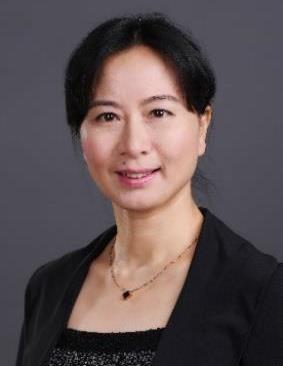
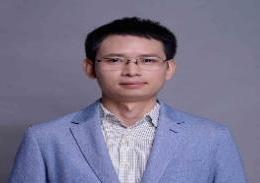
程昌秀(1973―),重庆人,博士,教授,主要从事地理空间数据管理与挖掘方法研究,(E-mail)chengcx@bnu.edu.cn。 |
收稿日期: 2025-12-09
修回日期: 2025-12-23
网络出版日期: 2025-12-28
基金资助
北京师范大学基于高阶能力培养的智慧课程建设项目
Transformation and Reconstruction of Geography Education Empowered by AI Technology
Received date: 2025-12-09
Revised date: 2025-12-23
Online published: 2025-12-28
随着人工智能(AI)技术的迅猛发展,其在提升地理教育教学效率、拓宽知识传递渠道的同时,亦对传统教学模式、考核体系及人才培养目标形成强烈冲击。为应对此挑战,文章汇聚多所高校学者的教学实践与研究思考,系统剖析人工智能对地理教育的深层影响及学科特殊性,探索AI赋能下地理教育的转型路径,并凝练核心共识如下:其一,兼具自然科学严谨性与人文关怀属性的地理教育,在AI驱动下进入转型关键期,虽可借AI提升教学效率、拓展实践场景、优化个性化教学,但需明确AI的工具属性,应规避过度依赖引发的学生能力退化、思维受阻及学术伦理争议等风险;其二,地理教育的核心竞争力,在于AI难以替代的空间思维、地方感知、辩证分析与人文关怀;转型关键是借“技术赋能+能力导向+虚实融合”新模式,强化学生自然规律认知与实操能力、培育系统思维与实证素养,提升人文素养并推动跨学科融合与社会实践,助力地理学专业筑牢根基、融入前沿技术;其三,地理教育工作者需从知识传授者转型为思维引导者与育人实践者,通过重构课程体系、革新教学评价机制,引导学生从“会用AI”向“善用AI”进阶,培养兼具技术素养、人文温度、空间思维与创新能力的复合型地理人才。
程昌秀 , 孔翔 , 熊礼阳 , 刘逸 , 何金廖 , 马凌 , 陶卓霖 , 李涛 , 马丁 . AI技术赋能下地理教育的转型与重构[J]. 热带地理, 2026 , 46(1) : 17 -35 . DOI: 10.13284/j.cnki.rddl.20251508
The rapid development of Artificial Intelligence (AI) has enhanced the teaching efficiency of geography education and broadened the channels of knowledge dissemination. It has also profoundly impacted traditional teaching models, assessment systems, and talent cultivation objectives. To address this challenge,this study integrates the teaching practices and research insights of scholars from multiple universities. It systematically analyzes the in-depth impacts of AI on geography education and its unique disciplinary characteristics, explores AI-driven transformation paths, and summarizes the core consensus as follows. First, geography education, which integrates the rigor of natural science with humanistic values, is entering a critical period of transformation driven by AI. Although AI can be leveraged to improve teaching efficiency, expand practical scenarios, and optimize personalized teaching, it is essential to clarify the instrumental role of AI and avoid the risks caused such as overreliance, the erosion of students' skills, diminished critical thinking, and ethical concerns. Second, the core competitiveness of geography education lies in spatial thinking, place perception, dialectical analysis, and humanistic spirit—none of which AI can replace. The key to transformation is to adopt the new model of "technology empowerment + competence orientation + integration of virtual and real practice." This approach strengthen students' understanding of natural laws and practical operation capabilities, cultivate their systematic thinking and empirical literacy, enhance their humanistic qualities, enable geography to solidify its roots while embracing frontier technologies. Third, geography educators must transform from knowledge transmitters into mentors and educational practitioners. By redesigning the curriculum system and reforming the teaching evaluation mechanism, they can guide students from "being able to use AI" to "being good at using AI," cultivating compound geography talents with technical literacy, humanistic awareness, spatial thinking, and innovative capabilities.
主讲课程荣获国家一流本科课程、北京高校优质本科课程等荣誉;主编教材获北京高校优质本科教材。教学成果获第三届全国高等学校GIS教学成果特等奖(排第1)、地理数据教育与科学普及奖(排第1)、北京师范大学教学成果一等奖(排第1)等荣誉。
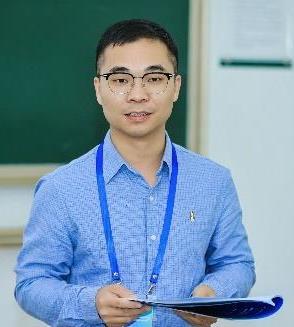
负责的人文地理学课程入选上海市精品课程、国家级一流本科课程、上海市首批课程思政示范课程和教学名师,首批“上海高校示范性本科课堂”;负责的区域规划实习入选上海市一流课程(社会实践类)。获上海市教学成果二等奖(排第4)、北京市教学成果一等奖(排第3)和上海市教学成果一等奖(排第5)。荣获“宝钢优秀教师奖”“申银万国奖教金”等。
1 伦敦大学学院官网. https://www.ucl.ac.uk/
2 弗洛里达大学官网. https://www.ufl.edu/
3 得克萨斯克里斯汀大学课程主页. https://personal.tcu.edu/kylewalker/assets/urbangis.pdf
4 中山大学旅游学院官网. https://stm.sysu.edu.cn/
5 “旅游管理+数据科学与大数据技术”双学士学位项目成功获批,开启复合型人才培养新篇章,云南大学工商管理与旅游管理学院,2025年5月. http://www.bts.ynu.edu.cn/info/1083/2534.htm
|
埃德蒙德·胡塞尔. 2017. 欧洲科学的危机与超越论的现象学. 王炳文,译. 北京:商务印书馆.
Edmund Husserl. 2017. The Crisis of European Sciences and Transcendental Phenomenology. Wang Bingwen, Trans. Beijing: The Commercial Press.
|
|
Budzyń K, Romańczyk M, Kitala D, et al. 2025. Endoscopist Deskilling Risk after Exposure to Artificial Intelligence in Colonoscopy: A Multicentre, Observational Study. The Lancet Gastroenterology & Hepatology, 10(10): 896-903.
|
|
陈发虎,李新,吴绍洪,樊杰,熊巨华,张国华. 2021. 中国地理科学学科体系浅析. 地理学报,76(9):2069-2073.
Chen Fahu, Li Xin, Wu Shaohong, Fan Jie, Xiong Juhua, and Zhang Guohua. 2021. Disciplinary Structure of Geographic Science in China. Acta Geographical Sinica, 76(9): 2069-2073.
|
|
Chang H C, Kidman G, Lidstone J, et al. 2022. IRGEE Inretrospect-the 30th Anniversary Serving the International Geography and Environmental Education Communities. International Research in Geographical and Environmental Education, 31(4): 261-264.
|
|
樊杰. 2018. “人地关系地域系统”是综合研究地理格局形成与演变规律的理论基石. 地理学报,73(4):597-607.
Fan Jie. 2021. "Territorial System of Human-Environment Interaction": A Theoretical Cornerstone for Comprehensive Research on Formation and Evolution of the Geographical Pattern. Acta Geographical Sinica, 73(4): 597-607.
|
|
Fink L D. 2003.Creating Significant Learning Experiences: An Integrated Approach to Designing College Courses. San Francisco, CA: Jossey-Bass.
|
|
郭庆胜,任晓燕. 2003. 智能化地理信息处理. 武汉:武汉大学出版社.
Guo Qingshen and Ren Xiaoyan. 2003. Intelligent Geographic Information Processing. Wuhan: Wuhan University Press.
|
|
Huang X, Wilson J, and Wang S. 2025. GeoAI and Human Geography. Cham: Springer Nature Switzerland AG.
|
|
贺灿飞,彭建,苏筠. 2025. 新时代中国大学地理教育. 北京:商务印书馆.
He Canfei, Peng Jian, and Su Jun. 2025. Geographic Education in Chinese Universities in the New Era. Beijing: The Commercial Press.
|
|
Murphy A B. 2018. Geography: Why It Matters. Cambridge: Polity Press.
|
|
Openshaw S and Openshaw C. 1997. Intelligence in Geography. Chichester: John Wiley & Sons.
|
|
藤田正胜. 2011. 西田几多郎的现代思想. 吴光辉,译. 石家庄:河北人民出版社.
Fujita Masakatsu. 2011. Nishida Kitarō's Modern Thought. Wu Guanghui, Trans. Shijiazhuang: Hebei People's Publishing House.
|
|
Turing A M. 1950. Computing Machinery and Intelligence. Mind, 59(236): 433-460.
|
|
王宁. 2025. AI时代的智力物替、主体重塑与结构转型——一个人工智能社会学的分析框架. 探索与争鸣,425(3):76-91.
Wang Ning. 2025. Intellectual Substitution, Subject Reshaping and Structural Transformation in the AI Era: An Analytical Framework for Artificial Intelligence Sociology, China. Exploration And Free Views, 425(3): 76-91.
|
|
王兴宇. 2025. 生成式人工智能最终会取代教师吗?——基于主体性视角的讨论. 现代大学教育,41(4):35-44,113. [Wang Xingyu. 2025. Will Generative AI Finally Replace Teachers? An Agency Perspective. Modern University Education, 41(4): 35-44, 113. ]
|
|
王竹立. 2019. 新知识观:重塑面向智能时代的教与学. 华东师范大学学报(教育科学版),37(5):38-55. DOI:10.16382/j.cnki.1000-5560.2019.05.004.
Wang Zhuli. 2019. New Concept of Knowledge: Remolding Teaching and Learning in the Age of Intelligence. Journal of East China Normal University(Educational Sciences), 37(5): 38-55. DOI: 10.16382/j.cnki.1000-5560.2019.05.004.
|
|
魏其濛. 2025. 复旦大学开了门“AI考古”课. (2025-01-04)[2025-06-16]. https://baijiahao.baidu.com/s?id=182032299264 9146412&wfr=spider&for=pc.
Wei Qimeng. 2025. Fudan University has Launched a Course Titled "AI Archaeology". (2025-01-04) [2025-06-16]. https://baijiahao.baidu.com/s?id=182032299 2649146412&wfr=spider&for=pc.
|
|
张庆熊. 2025. 从哲学角度探讨人工智能的理解问题和对人生的影响. 哲学分析,16(4):90-104,197-198.
Zhang Qingxiong. 2025. Exploring the Issues of Artificial Intelligence's Comprehension and Its Impact on Human Life from a Philosophical Perspective. Philosophical Analysis, 16(4): 90-104, 197-198.
|
|
张飞舟,刘典. 2019. 空间信息智能处理. 北京:北京大学出版社.
Zhang Feizhou and Liu Dian. 2019. Intelligent Processing of Spatial Information. Beijing: Peking University Press.
|
|
郑祖槐,李琳. 2025. 人工智能赋能地理教育变革的审思与展望. 地理教学,(5):15-19.
Zheng Zuhuai and Li Lin. 2025. Reflections and Perspectives on Artificial Intelligence Empowered Change in Geography Education. Geography Teaching, (5): 15-19.
|
|
周怡,王俊杰,马克. 2025. 人工智能与经济不平等:影响、挑战与对策. 经济学家,(7):44-53.
Zhou Yi, Wang Junjie, and Ma Ke. 2025. Artificial Intelligence and Economic Inequality: Impacts, Challenges, and Countermeasures. Economist, (7): 44-53.
|
/
| 〈 |
|
〉 |