数字时代艺术地理的演进与反思:以数字艺术作品为例
|
董嘉(1988—),女,江苏南京人,博士,讲师,研究方向为环艺设计、数字艺术,(E-mail)dongjia@njnu.edu.cn; |
收稿日期: 2025-07-30
修回日期: 2025-12-24
网络出版日期: 2025-12-28
基金资助
国家自然科学基金(42371234)
江苏省社科基金(23YSC010)
教育部社科基金(21YJAZH030)
Evolution and Reconsideration of Art Geography in the Digital Era: A Case Study of Digital Artworks
Received date: 2025-07-30
Revised date: 2025-12-24
Online published: 2025-12-28
文章以艺术与地理的共生关系为出发点,提出了一个由“数据媒介-算法生成-多元感知”构成的三维分析框架,用以探讨数字时代艺术地理作品的生成逻辑与感知机制。文章聚焦于城市视觉记录、具身环境表达与人工景观再构3类主要创作议题,分析6件代表性数字艺术作品,揭示出当代艺术地理的关键特征:地理空间数据被转化为艺术创作的物质媒介,算法生成成为空间重构的核心手段,而虚实交织的多感官体验则促使观众在现实世界与数字生态系统之间形成新的栖居方式。数字艺术地理的发展推动了从静态再现到动态生成的范式转型,也促使地理空间被重新理解为数据流、算法逻辑与身体经验的交互过程。这一框架有助于揭示数字艺术中技术与感知、生态与政治的内在关联,说明艺术创作已成为理解数字时代空间生产与人类栖居关系的重要途径。文章不仅为数字艺术的地理解读提供了系统的分析思路,也拓展了人工智能时代的地理批判视野,对数据权力、算法透明性以及生态复杂性被简化等问题提出了反思与回应。
董嘉 , 都皓湲 , 黄旭 . 数字时代艺术地理的演进与反思:以数字艺术作品为例[J]. 热带地理, 2026 , 46(1) : 129 -139 . DOI: 10.13284/j.cnki.rddl.20250515
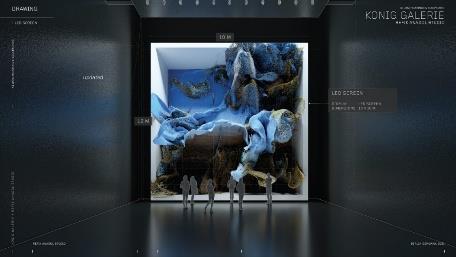
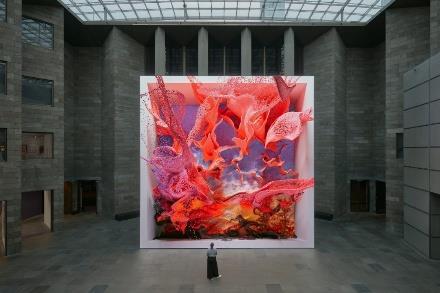
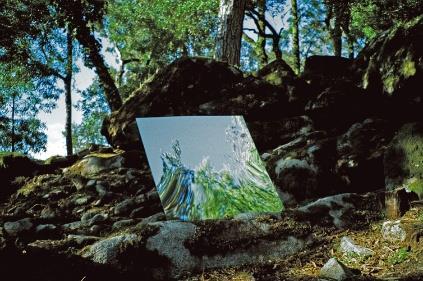
This study, grounded in the symbiotic relationship between art and geography, constructs a three-dimensional analytical framework composed of data media, algorithmic generation, and multisensory perception. The framework aims to investigate how digital technologies reshape modes of spatial production, sensory engagement, and environmental imagination in contemporary art geography. In the digital era, where data, algorithms, and embodied experience intersect, artistic practices have evolved from static spatial representation to dynamic, participatory, and process-oriented forms of geographic expression. By examining six representative digital artworks including Machine Hallucinations: Nature Dreams and Quantum Memories by Refik Anadol, Monte by Luciano Piccilli, The Deep Listener by Jakob Kudsk Steensen, Peace can be Realized Even without Order by teamLab, and I'm Feeling Lucky by Timothy Thomasson, this study delineates three major thematic dimensions of digital art geography: urban visual documentation, embodied environmental expression, and artificial landscape reconstruction. The analysis reveals that contemporary digital art transforms geographical data into creative material media, using algorithms to generate fluid, dynamic spatial representations that transcend traditional boundaries between the physical and the virtual. Through multisensory and immersive interactions, these artworks invite audiences to inhabit hybrid environments in which data flows, algorithmic processes, and bodily perception are intertwined. Such practices articulate a new form of spatial consciousness, in which human beings experience themselves as simultaneously embedded in both natural and digital ecologies. The study identifies three distinctive tendencies: the transition from artificial selection to data-driven narrative in urban visualization, the shift from philosophical abstraction to informational reconstruction in environmental expression, and the evolution from static fixation to responsive symbiosis in artificial landscape creation. Beyond formal innovation, these transformations embody deeper epistemological and political implications. Digital art geography reveals how data infrastructures, algorithmic systems, and technological mediation carry implicit forms of power that shape perception and representation. The artworks analyzed demonstrate that data are never neutral; rather, they participate in constructing spatial hierarchies and determining who can access, interpret, or intervene in digital landscapes. This study thus extends the critical scope of art geography by engaging with pressing issues of the artificial intelligence era, such as data sovereignty, algorithmic transparency, and the ethical tension between human-centered perception and ecological complexity. In conclusion, digital art geography represents not merely a technological advancement in artistic media but also a profound transformation in the human relationship with space, environment, and information. By integrating artistic creativity with geographic inquiry, the "data medium-algorithmic generation-multisensory perception" framework provides an effective methodological tool for analyzing how digital art redefines the production of space and the aesthetics of inhabitation. Simultaneously, new theoretical and ethical questions concerning how human beings negotiate agency, embodiment, and coexistence within an increasingly algorithmic world are raised. This research contributes both to the theoretical development of art geography and to broader debates on perception, ecology, and critical spatial practice in the digital age.
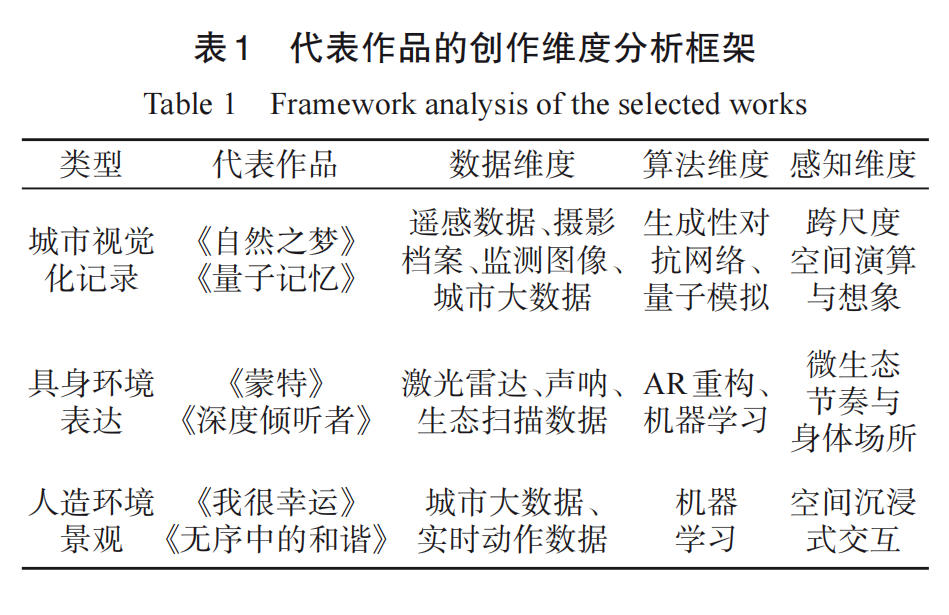
表1 代表作品的创作维度分析框架Table 1 Framework analysis of the selected works |
| 类型 | 代表作品 | 数据维度 | 算法维度 | 感知维度 |
|---|---|---|---|---|
| 城市视觉化记录 | 《自然之梦》《量子记忆》 | 遥感数据、摄影 档案、监测图像、城市大数据 | 生成性对抗网络、 量子模拟 | 跨尺度 空间演算与想象 |
| 具身环境表达 | 《蒙特》《深度倾听者》 | 激光雷达、声呐、生态扫描数据 | AR重构、机器学习 | 微生态 节奏与 身体场所 |
| 人造环境景观 | 《我很幸运》 《无序中的和谐》 | 城市大数据、 实时动作数据 | 机器 学习 | 空间沉浸式交互 |
董 嘉:论文撰写、文献综述、案例分析;
都皓湲:资料整理、案例分析、图表制作;
黄 旭:论文构思、理论框架、研究统筹。
|
Anderson B. 2009. Affective Atmospheres. Emotion, Space and Society, 2(2): 77-81.
|
|
Cant S G and Morris N J. 2006. Geographies of Art and the Environment. Social & Cultural Geography, 7(6): 857-861.
|
|
陈笑葵,毛志睿,易纯,高钰桔. 2025. 数字时代旅游古镇线上线下热度特征及其转化机制——以丽江大研古镇为例. 热带地理,45(7):1189-1200.
Chen Xiaokui, Mao Zhirui, Yi Chun, and Gao Yujie. 2025. Features and Transformation Mechanism of Online and Offline Popularity in Digital EraTourism of Ancient Towns: A Case Study of Lijiang Dayan Ancient Town. Tropical Geography, 45(7): 1189-1200.
|
|
程情仪,曾彬铖,李启军. 2022. 媒介互动下粤港澳大湾区区域空间协同的演变. 热带地理,42(3):409-421.
Cheng Qingyi, Zeng, Bincheng, and Li Qijun. 2022. Transformation of Regional Spatial Coordinative Development of the Guangdong-Hong Kong-Macao Greater Bay Area in the Lens of Media Interaction Process. Tropical Geography, 42(3): 409-421.
|
|
Davies O H, Turnbull J, and Searle A. 2024. Digital Ecologies in Practice. Cultural Geographies, 31(4): 509-517.
|
|
Eynaud P, Juan M, and Mourey D. 2018. Participatory Art as a Social Practice of Commoning to Reinvent the Right to the City. VOLUNTAS: International Journal of Voluntary and Nonprofit Organizations, 29(4): 621-636.
|
|
Goldsworthy A. 2015. Andy Goldsworthy: Ephemeral Works: 2004-2014. New York: Abrams.
|
|
郭文,周尚意,张敏,张骁鸣,艾少伟,李鹏,谢双玉,李亚娟,陈兴,张旭,余志远,李大伟,董皓平. 2024. 网红打卡地的数字化实践与新空间形态生产. 热带地理,44(9):1527-1548.
Guo Wen, Zhou Shangyi, Zhang Min, Zhang Xiaomming, Ai Shaowei, Li Peng, Xie Shuangyu, Li Yajuan, Chen Xing, Zhang Xu, Yu Zhiyuan, Li Dawei, and Dong Haoping. 2024. The Digital Practice of Internet-Famous Sites and the Production of New Spatial Forms. Tropical Geography, 44(9): 1527-1548.
|
|
Hawkins H. 2011. Dialogues and Doings: Sketching the Relationships between Geography and Art. Geography compass, 5(7): 464-478.
|
|
Hawkins H. 2013. For Creative Geographies: Geography, Visual Arts and the Making of Worlds. London: Routledge.
|
|
贺小荣,徐海超,刘雪婷. 2022. 节奏分析视域下的漂流旅游体验研究——以广东省清远市为例. 热带地理,42(10):1665-1676.
He Xiaorong, Xu Haichao, and Liu Xueting. 2022. Rafting Tourism Experience from the Perspective of Rhythm Analysis: A Case Study of Qingyuan City. Tropical Geography, 42(10): 1665-1676.
|
|
胡康,斯科特·麦夸尔,李昕恬. 2024. “建构它们的生存空间”:作为地理媒介实践的“助猫”研究. 热带地理,44(8):1487-1499.
Hu Kang, Mc Quire Scott, and Li Xintian. 2024. Build Their Living Space: Research on the Salvation of Stray Cats via Geomedia. Tropical Geography, 44(8): 1487-1499.
|
|
黄显. 2021. 数字地理研究中的媒介和传播:人与技术的会遇. 新闻记者,(6):15-27.
Huang Xian. 2021. Media and Communication in Digital Geography Research: Human and Technological Encounters. Shanghai Journalism Review, (6): 15-27.
|
|
Lefebvre H. 1991. The Production of Space. Oxford: Basil Blackwell.
|
|
Lefebvre H. 1992. Rhythmanalysis: Space, Time and Everyday Life. Paris: Éditions Syllepse.
|
|
刘倩. 2021. 大数据时代的数字媒体艺术发展趋势——评《数字媒体艺术概论》. 热带作物学报,42(12):3737.
Liu Qian. 2021. Trends in Digital Media Art in the Big Data Era: A Review of "An Introduction to Digital Media Art". Chinese Journal of Tropical Crops, 42(12): 3737.
|
|
Matless D. 2008. A Geography of Ghosts: The Spectral Landscapes of Mary Butts. Cultural Geographies, 15(3): 335-357.
|
|
Pratt A C. 2008. Creative Cities: The Cultural Industries and the Creative Class. Geografiska Annaler: Series B, Human Geography, 90(2): 107-117.
|
|
漆建武,李巍,王录仓,张凯. 2023. 地理学视角下文化记忆空间研究进展与启示. 热带地理,43(5):913-928.
Qi Jianwu, Li Wei, Wang Lucang, and Zhang Kai. 2023. Research Progress and Implication of Cultural Memory Space from the Perspective of Geography. Tropical Geography, 43(5): 913-928.
|
|
邱冰,张帆. 2016. 基于城市集体记忆建构的城市公共艺术规划——一种公共艺术介入环境空间规划设计的路径. 规划师,32(8):12-17.
Qiu Bing and Zhagn Fan. 2016. Urban Public Art Planning Based on Collective Memory: A Pathway for Public Art Intervention in Environmental Spatial Planning and Design. Planners, 32(8): 12-17.
|
|
全燕,陈龙. 2019. 算法传播的风险批判:公共性背离与主体扭曲. 华中师范大学学报:人文社会科学版,58(1):149-156.
Quan Yan and Chen Long. 2019. Public Deviation and Subject Distortion Risk in the Age of Algorithm Communication. Journal of Central China Normal University: Humanities and Social Sciences Edition, 58(1): 149-156.
|
|
Rodaway P. 2006. Sensuous Geographies: Body, Sense and Place. London: Routledge.
|
|
Rycroft S. 2011. Swinging City: A Cultural Geography of London 1950-1974. London: Routledge.
|
|
唐晓岚,徐嘉绮. 2025. 基于数字人文技术的上海松江九峰地区景观空间意象探究. 热带地理,45(3):449-459.
Tang Xiaolan and Xu Jiaqi. 2025. Exploration of Landscape Spatial Imagery in the Jiufeng Area of Songjiang, Shanghai, Based on Digital Humanities Technology. Tropical Geography, 45(3): 449-459.
|
|
王亚芹. 2020. 后人类主义与身体范式的美学思考. 山东社会科学,(5):98-104.
Wang Yaqin. 2020. Post-Humanism and Aesthetic Thinking on Pattern of the Body. Shandong Social Sciences, (5): 98-104.
|
|
文彤,刘璐. 2019. 博物馆文化展演与城市记忆活化传承——基于旅游留言档案的文本分析. 热带地理,39(2):267-277.
Tong Wen and Lu Liu. 2019. Activation and Inheritance of Urban Memory and Cultural Performance in Museums: An Analysis of Tourist Comments on a Museum in Guangzhou. Tropical Geography, 39(2): 267-277.
|
|
Wood D. 2010. Rethinking the Power of Maps. New York: The Guilford Press.
|
|
Zebracki M and Luger J. 2019. Digital Geographies of Public Art: New Global Politics. Progress in Human Geography, 435(5): 890-909.
|
|
张文力,朱喜钢,何思琪,严永红. 2024. “后乡村”语境下成都竹艺村的空间生产研究——基于三重乡村空间模型的视角. 热带地理,44(2):280-291.
Zhang Wenli, Zhu Xigang, He Siqi, and Yan Yonghong. 2024. Spatial Production of Chengdu Bamboo Craft Village in "Post-Rural" Context: From the Perspective of Three-Fold Model of Rural Space. Tropical Geography, 44(2): 280-291.
|
|
赵明. 2020. 艺术与地理的连结基于场所的艺术实践观. 新美术,41(9):121-125.
Zhao Ming. 2020. Connecting Art and Geography A Place-Based View of Art Practice. New Arts, 41(9): 121-125.
|
|
郑春晖,王祎,钱莉莉. 2023. 媒体话语下纪念性恐惧景观神圣性地理想象建构过程研究——以侵华日军南京大屠杀遇难同胞纪念馆为例. 热带地理,43(8):1563-1574.
Zheng Chunhui, Wang Yi, and Qian Lili. 2023. The Process of Constructing the Geographical Imagination of the Sacredness of Memorial Landscape of Fear under the Media Discourse: A Case Study of the Memorial Hall of the Victims of the Nanjing Massacre by Japanese Invaders. Tropical Geography, 43(8): 1563-1574.
|
|
周尚意. 2025. 论艺术与地理结合的四个层次. 民族艺术研究,38(2):56-63. [Zhou Shangyi. 2025. The Four Levels of Integration between Art and Geography. Ethnic Art Studies, 38(2): 56-63. ]
|
|
周彦华. 2021. 从极简主义到介入性艺术——艺术的“现场性”及其历史变迁. 山东社会科学,(1):60-67.
Zhou Yanhua. 2021. From Minimalism to Interventional Art: The "Liveness" of Art and Its Historical Changes. Shandong Social Sciences, (1): 60-67.
|
|
庄诺亚,杨忍,陆进锋,翁时秀. 2022. 艺术介入乡村:两种乡村发展转型典型模式的多级效益比较分析. 热带地理,42(3):396-408.
Zhuang Nuoya, Yang Ren, Lu Jinfeng, and Weng Shixiu. 2022. Art Intervention in Rural Areas: Comparative Analysis of Multi-Level Benefits of Two Typical Modes in Rural Development Transformation. Tropical Geography, 42(3): 396-408.
|
/
| 〈 |
|
〉 |