桂圆桥文化—秦汉时期成都平原农业社会对地形和水文的适应
研究方法讨论
|
鲁心怡(2003—),女,安徽铜陵人,硕士研究生,主要研究方向为环境考古,E-mail:luxinyi200306@163.com |
收稿日期: 2025-06-18
修回日期: 2025-08-24
网络出版日期: 2026-03-07
基金资助
国家自然科学基金青年项目(42307553);国家级大学生创新创业训练计划项目(202310621045)
版权
Adaptation of Agricultural Societies (Settlements) to Topography and Hydrology on Chengdu Plain from Guiyuanqiao Culture to Qin-Han Period
Received date: 2025-06-18
Revised date: 2025-08-24
Online published: 2026-03-07
Copyright
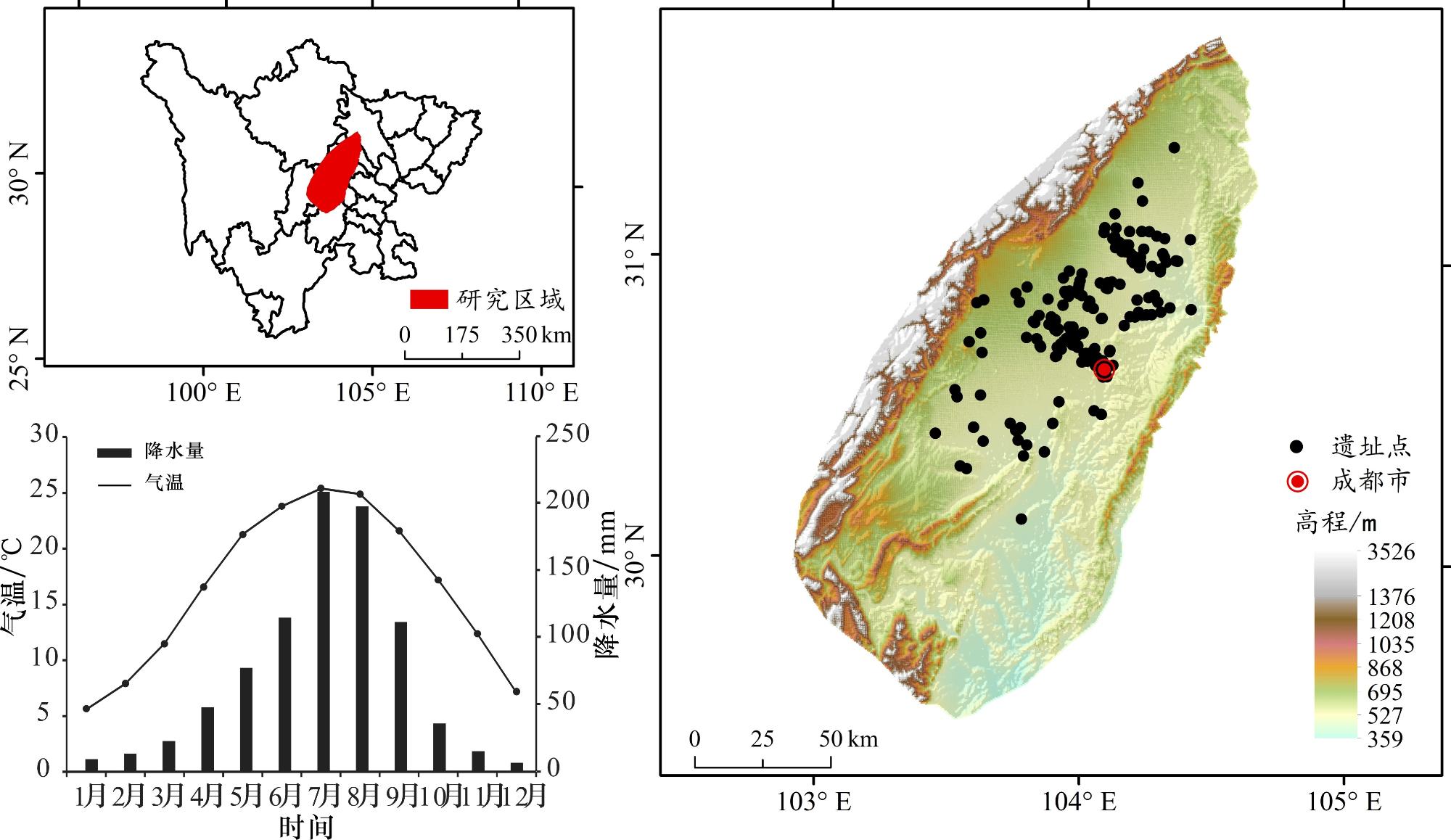
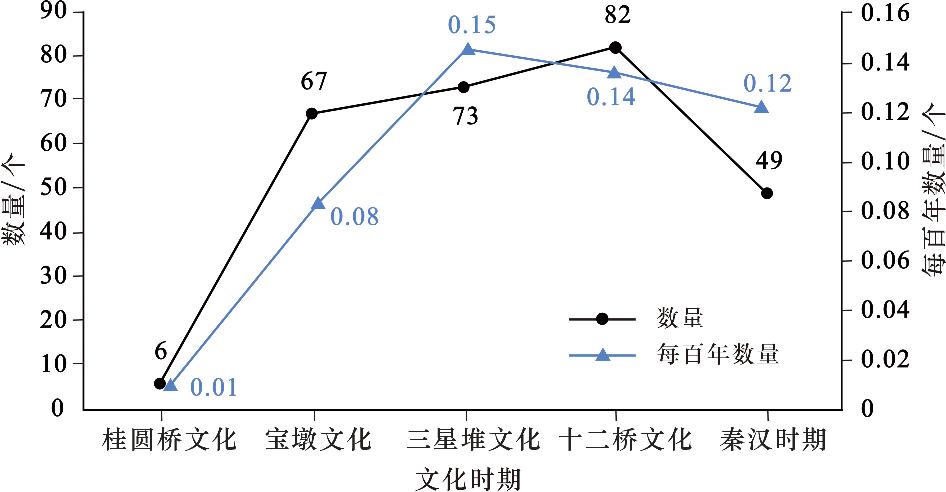
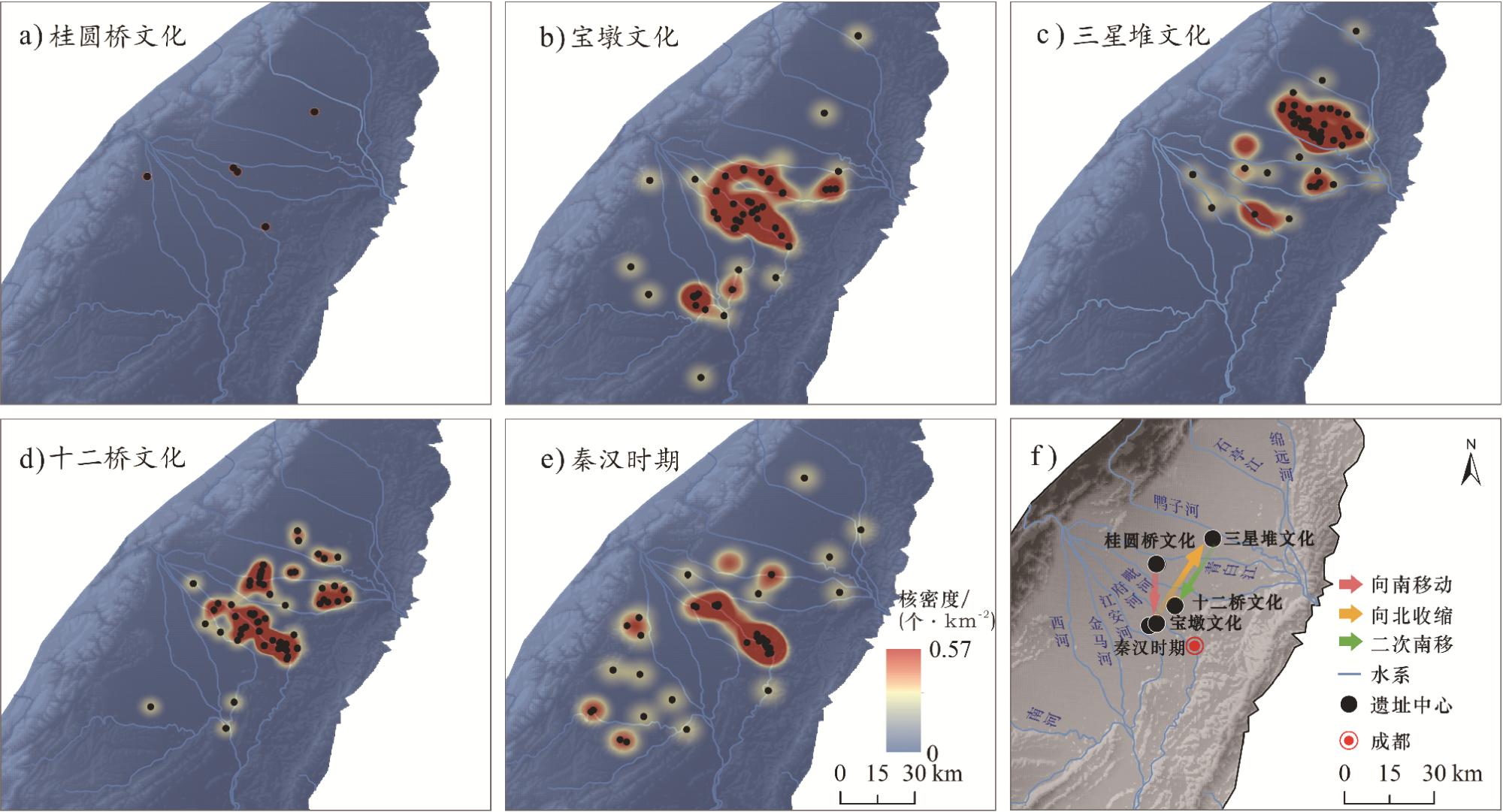
文章聚焦成都平原桂圆桥文化至秦汉时期考古遗址(共223个),运用GIS空间分析与统计学方法,结合高分辨率DEM及矢量河流数据,探讨成都平原在桂圆桥文化—秦汉时期的农业社会发展对地形和水文的适应过程。结果表明,成都平原遗址空间分布演化呈现占据边缘(桂圆桥文化时期)—向南扩散(宝墩文化时期)—向北收缩(三星堆文化时期)—二次南扩(十二桥文化时期)—分散排布(秦汉时期)的特征。域外人群的迁入、人口自然增长与洪水胁迫等因素,极大地影响了成都平原的农业结构以及遗址空间分布格局。在桂圆桥文化和秦汉时期,北方迁入的人群偏爱食用旱地作物,倾向于选择在排水更便利的岗地定居;在宝墩文化和十二桥文化时期,先民大幅度扩散至地势平坦的成都平原核心区,以便更多地种植高产的水稻来应对巨大的人口压力;在宝墩文化后期,受岷江支流频繁的洪水威胁,原本聚集于低洼地区的人口遂迁至鸭子河流域,并由此发展形成三星堆文化。
关键词: 考古遗址; 定居农业; 人地关系; 桂圆桥文化—秦汉时期; 成都平原
鲁心怡 , 李纹 , 叶柳彤 , 何世立 , 李函璐 , 杨庆江 , 王增武 , 褚永彬 , 柳锦宝 . 桂圆桥文化—秦汉时期成都平原农业社会对地形和水文的适应[J]. 热带地理, 2026 , 46(3) : 434 -443 . DOI: 10.13284/j.cnki.rddl.20250417
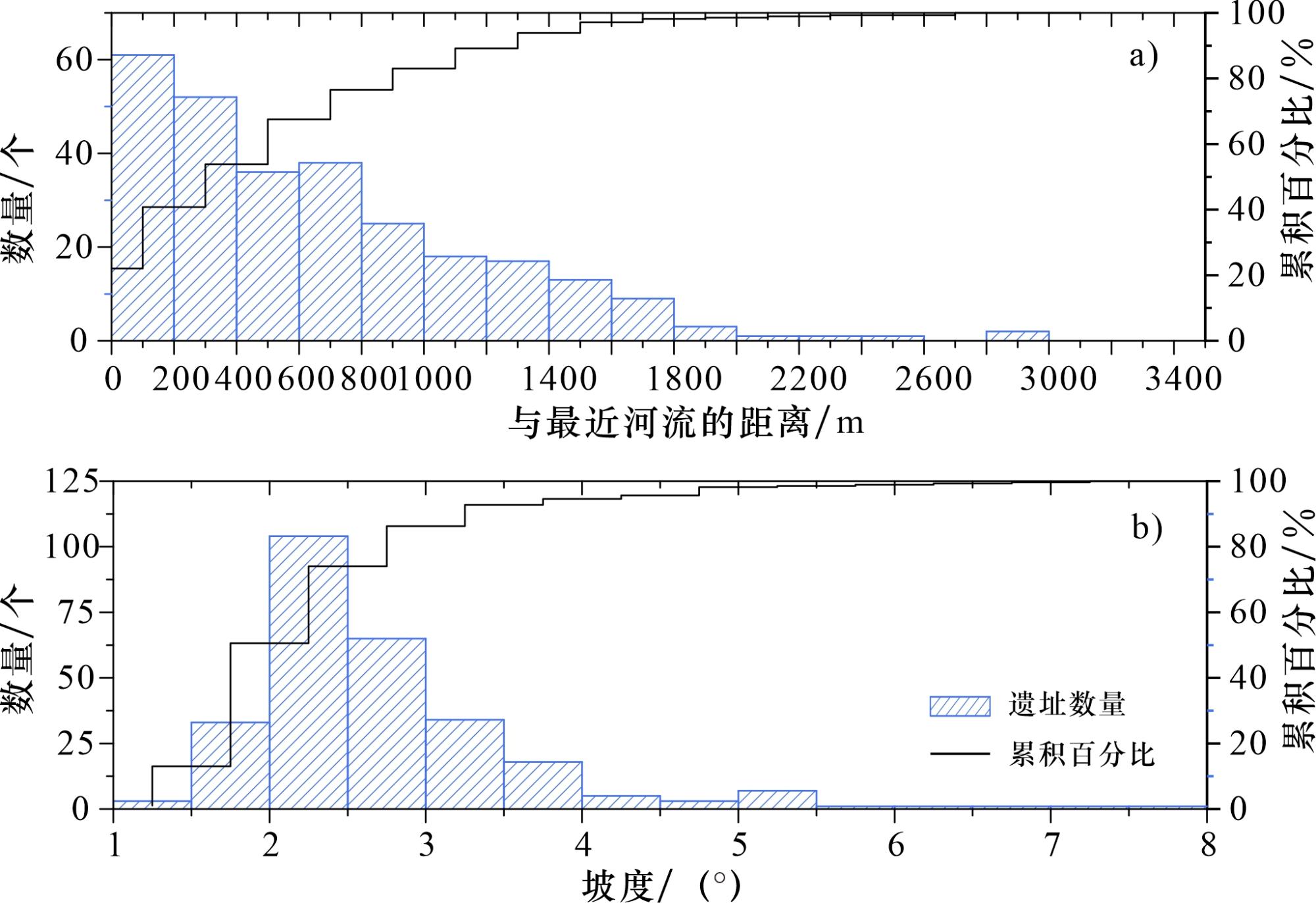
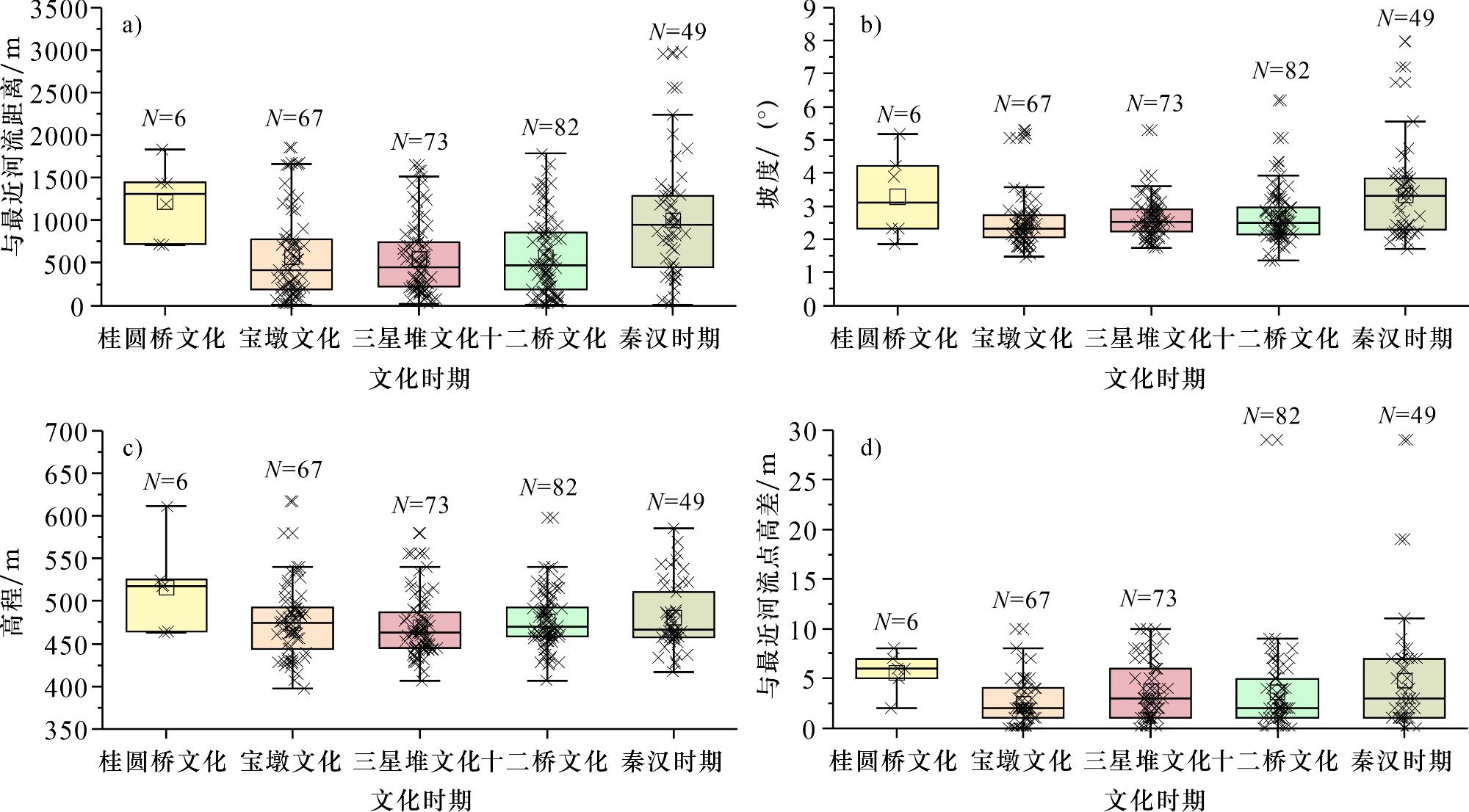
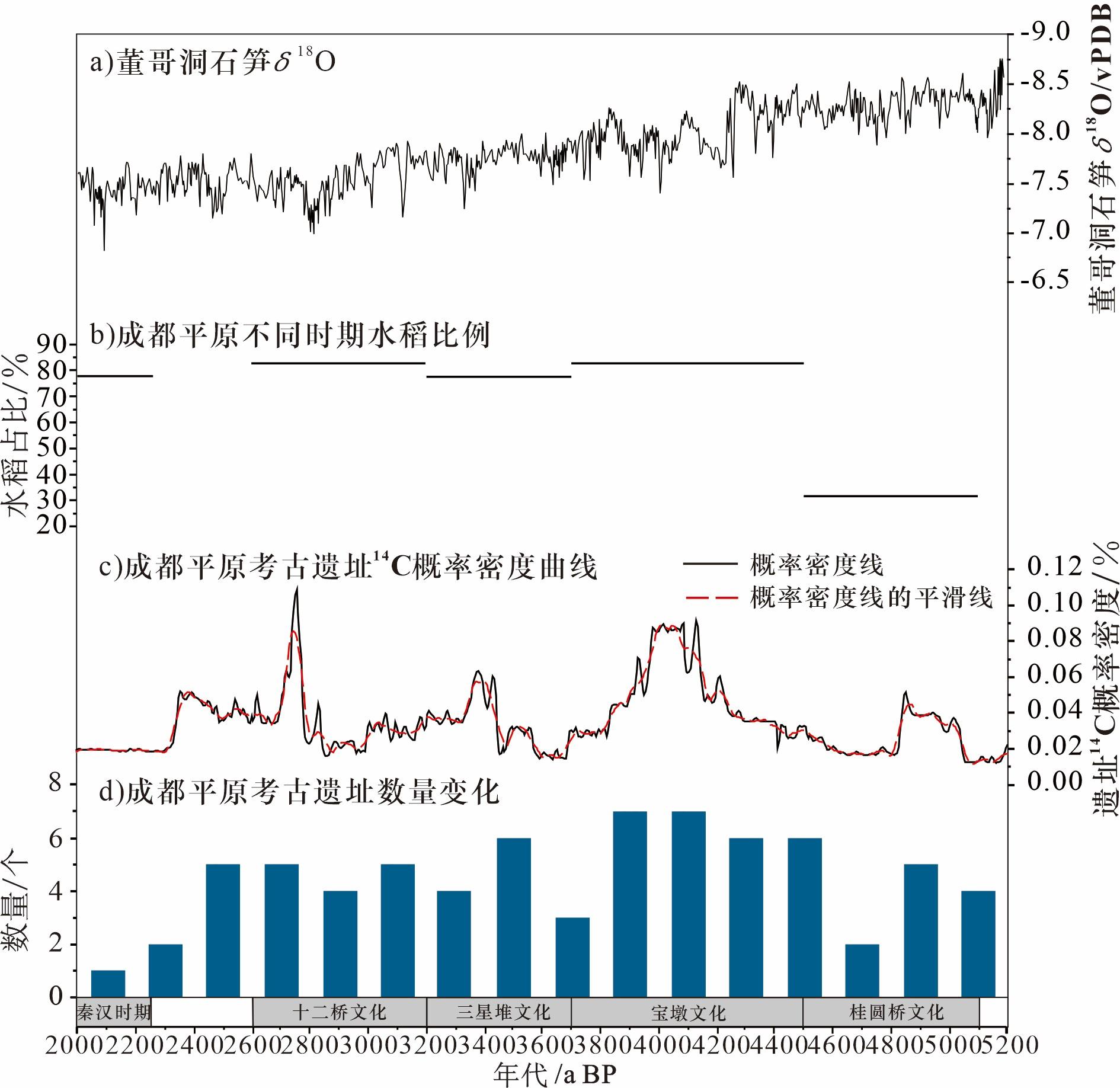
The relationship between prehistoric human activity and the natural environment has long been a central focus of archaeology. Uncovering the dynamic adaptation mechanisms of prehistoric agricultural societies under different topographical and hydrological conditions is of great scientific and practical importance. It deepens our understanding of past human-land interactions and provides insights for addressing rapid future climatic and environmental changes. As a key agricultural center in southwestern China, the Chengdu Plain, with its rich archaeological record spanning the Neolithic Guiyuanqiao Culture to the Qin-Han period, serves as an excellent case study for this research. This study investigated the spatiotemporal evolution of agricultural settlement patterns and their adaptation to topographical and hydrological conditions on the Chengdu Plain from the Guiyuanqiao Culture to the Qin-Han period. By integrating data from 223 archaeological sites with high-resolution digital elevation models (DEMs) and river vector data, we employed GIS-based spatial analysis and statistical methods. The key topographical (slope and elevation) and hydrological variables (distance to the nearest river and difference in elevation from the river) were extracted for each site. Statistical analyses, including probability cumulative distribution and period-wise comparative assessments, were conducted to analyze human preferences for settlement locations. Furthermore, to infer demographic trends, a regional radiocarbon (14C) probability density curve was used as a proxy for relative population changes and correlated with settlement patterns and agricultural information revealed by archaeobotanical evidence. The study revealed a phased settlement distribution pattern: initial occupation of peripheral uplands during the Guiyuanqiao period, southward expansion into the low-lying core plain during the Baodun period, northward contraction to the Yazi River Basin during the Sanxingdui period, renewed southward expansion during the Shierqiao period, and a more dispersed layout during the Qin-Han period. These shifts are closely associated with population pressure, flood risks, and migration events. Statistical results indicated that > 80% of the sites were located within 1,000 m of a river, and 74.7% had slopes < 3°, reflecting an overall preference for flat, river-proximate environments conducive to rice agriculture. However, significant variations were observed across these periods. Sites from the Guiyuanqiao Culture, linked to dryland farming populations migrating from the arid northwest, were predominantly located on higher-elevation slopes (average slope: 3.3°; average elevation: 516.3 m) and at greater distances from rivers (average distance:
图5 成都平原遗址与最近河流距离和坡度概率累积图Fig.5 Probability cumulative diagram of the distance of archaeological sites from nearest rivers and slope value of archaeological sites in the Chengdu Plain |
① https://nasadaacs.eos.nasa.gov/
② https://www.hydrosheds.org/
|
白九江. 巴盐的社会化生产及其对区域文明的构造和影响. 盐业史研究, 2023 (1): 3- 14.
Bai Jiujiang. The Socialized Production of Ba Salt and Its Creation and Influence on Regional Civilization Efficiency in Sichuan Province. Salt Industry History Research, 2023 (1): 3- 14.
|
|
Bronk R C. Bayesian Analysis of Radiocarbon Dates. Radiocarbon, 2009, 51 (1): 337- 360.
|
|
曹兵武. GIS与考古学. 考古与文物, 1997 (4): 79- 84.
Cao Bingwu. GIS and Archaeology. Journal of Archaeology and cultural relics, 1997 (4): 79- 84.
|
|
常经宇. 辽西地区新石器时代晚期至青铜时代早期动物资源的获取和利用. 干旱区资源与环境, 2021, 35 (7): 21- 26.
Chang Jingyu. Acquisition and Utilization of Animal Resources in the West Liao River Basin during the Late Neolithic to Early Bronze Age. Journal of Arid Land Resources and Environment, 2021, 35 (7): 21- 26.
|
|
陈发虎, 刘峰文, 张东菊, 董广辉. 史前时代人类向青藏高原扩散的过程与动力. 自然杂志, 2016, 38 (4): 235- 240.
Chen Fahu, Liu Fengwen, Zhang Dongju, and Dong Guanghui. The Process and Driving Force for Peopling the Tibetan Plateau during Prehistoric Periods. Chinese Journal of Nature, 2016, 38 (4): 235- 240.
|
|
陈卫东, 周科华, 陈剑. 2010年以来四川考古的拓展与创新. 中华文化论坛, 2021 (4): 32- 46,155.
Chen Weidong, Zhou Kehua, and Chen Jian. Development and Innovation of Archaeology in Sichuan Since 2010. Journal of Chinese Culture, 2021 (4): 32- 46,155.
|
|
程雪寒, 王树芝. 树木年轮学在考古学中的应用述评. 世界林业研究, 2022, 35 (5): 13- 19.
Cheng Xuehan and Wang Shuzhi. A Review of the Application of Dendrochronology in Archaeology. World Forestry Research, 2022, 35 (5): 13- 19.
|
|
Demenocal P B. Cultural Responses to Climate Change during the Late Holocene. Science, 2001, 292 (5517): 667- 673.
|
|
傅才武, 单钢新. 论长江文化的时代价值. 湖北大学学报(哲学社会科学版), 2025, 52 (1): 145- 153.
Fu Caiwu and Shan Gangxin. Analysis of the Historical Value of the Yangtze River Culture in the New Era. Journal of Hubei University(Philosophy and Social Science), 2025, 52 (1): 145- 153.
|
|
郭正堂, 羊向东, 陈发虎, 鹿化煜, 吴海斌. 末次冰盛期以来我国气候环境变化及人类适应. 科学通报, 2014, 59 (30): 2937- 2939.
Guo Zhengtang, Yang Xiangdong, Chen Fahu, Lu Huayu, and Wu Haibin. Climate Changes in China Since the Last Glacial Maximum and Holocene Human Adaptation. Chinese Science Bulletin, 2014, 59 (30): 2937- 2939.
|
|
韩英. 除水之害: 岷江水患治理与成都平原早期城市的兴起. 成都大学学报(社会科学版), 2021 (2): 55- 62.
Han Ying. Removing Water Damage: Minjiang River Flood Control and Early Urban Development in Chengdu Plain. Journal of Chengdu University(Social Sciences), 2021 (2): 55- 62.
|
|
何一民. 独具魅力的成都文脉历史文化基因. 先锋, 2023 (11): 25- 28.
He Yimin. The Unique and Charming Historical and Cultural Genes of Chengdu's Cultural Heritage. Pioneer, 2023 (11): 25- 28.
|
|
何一民. 从多元走向一体化进程的样本—“秦并巴蜀”的历史意义. 成都大学学报(社会科学版), 2023 (6): 43- 53.
He Yimin. A Sample of the Process from Pluralism to Integration—The Historical Significance of "the Annexation of Ba-Shu by Qin". Journal of Chengdu University(Social Sciences), 2023 (6): 43- 53.
|
|
何庆. 基于GIS的考古勘探信息系统研究与应用. 测绘与空间地理信息, 2019, 42 (12): 143- 145.
He Qing. Research and Application of Archaeological Exploration Information System Based on GIS. Geomatics & Spatial Information Technology, 2019, 42 (12): 143- 145.
|
|
黄明. 考古遗址所见成都平原史前洪水与治水. 地球环境学报, 2024, 15 (2): 193- 206.
Huang Ming. Prehistoric Floods and Water Control Documented at the Archaeological Sites in the Chengdu Plain. Journal of Earth Environment, 2024, 15 (2): 193- 206.
|
|
霍巍. 成都平原史前农业考古新发现及其启示. 中华文化论坛, 2009 (S2): 155- 158.
Huo Wei. New Discoveries and Implications of Prehistoric Agricultural Archaeology in Chengdu Plain. Journal of Chinese Culture, 2009 (S2): 155- 158.
|
|
IPCC. 2014: Summary for Policymakers. In: Field C B, Barros V R, Dokken D J, Mach M D, Mastrandrea T E, Bilir M, Chatterjee K L, Ebi Y O, Estrada R C, Genova B, Girma E S, Kissel A N, Levy S, MacCracken P R, Mastrandrea M D, and White L L. Climate Change 2014: Impacts, Adaptation, and Vulnerability. Part A: Global and Sectoral Aspects. Contribution of Working Group II to the Fifth Assessment Report of the Intergovernmental Panel on Climate Change. Cambridge: Cambridge University Press, 1-32.
|
|
Jia T J, Ma C M, Zhu C, Guo T H, Xu J J, Guan H C, Zeng M X, Huang M, and Zhang Q. Depositional Evidence of Palaeofloods during 4.0-3.6 ka BP at the Jinsha site, Chengdu Plain, China. Quaternary International, 2017, 440, 78- 89.
|
|
江章华, 王毅, 张擎. 成都平原先秦文化初论. 考古学报, 2002 (1): 1- 22.
Jiang Zhanghua, Wang Yi, and Zhang Qing. A Preliminary Research on the Predynastic Qin Culuture in the Chengdu Plain. Acta Archaeologica Sinica, 2002 (1): 1- 22.
|
|
姜月, 翟有龙, 李谦. 四川省农业高质量发展与耕地利用效率时空耦合及机制. 西南农业学报, 2024, 37 (1): 223- 232.
Jiang Yue, Zhai Youlong, and Li Qian. Spatio-Temporal Coupling and Mechanism of High-Quality Agricultural Development and Cultivated Land Use Efficiency in Sichuan Province. Southwest China Journal of Agricultural Sciences, 2024, 37 (1): 223- 232.
|
|
Kirch P V. Archaeology and Global Change: The Holocene Record. Annual Review of Environment and Resources, 2005, 30, 409- 440.
|
|
刘朋乐, 蔡威. 司马错与蜀道研究的回顾与展望——“司马错入蜀及其重大历史意义”学术研讨会综述. 四川师范大学学报(社会科学版), 2023, 50 (6): 197- 201.
Liu Pengle and Cai Wei. Review and Prospect of Sima Cuo and Shu Dao Research: A Review of the Academic Symposium on "Sima Cuo's Entry into Shu and Its Great Historical Significance". Journal of Sichuan Normal University (Social Sciences Edition), 2023, 50 (6): 197- 201.
|
|
刘文杰, 余德章. 四川汉代陂塘水田模型考述. 农业考古, 1983 (1): 132- 135.
Liu Wenjie and Yu Dezhang. A Study of the Paddy Field Models of Han Dynasty in Sichuan. Agricultural Archaeology, 1983 (1): 132- 135.
|
|
鲁鹏, 杨瑞霞, 田燕. GIS考古研究综述与前景展望. 中原文物, 2008 (2): 104- 108.
Lu Peng, Yang Ruixia, and Tian Yan. A Review and Prospect of GIS Archaeological Research. Cultural Relics of Central China, 2008 (2): 104- 108.
|
|
马玉凤, 武志江, 李双权, 刘洪妍, 任萧, 郭仰山, 王朝栋, 郭丽华. 淮河上游出山店库区桥头遗址存续前后的古环境背景. 古地理学报, 2025, 27 (1): 167- 183.
Ma Yufeng, Wu Zhijiang, Li Shuangquan, Liu Hongyan, Ren Xiao, Guo Yangshan, Wang Chaodong, and Guo Lihua. Palaeoenvironmental Background of Qiaotou Site in Chushandian Reservoir Area in the Upper Reaches of Huai River. Journal of Palaeogeography(Chinese Edition), 2025, 27 (1): 167- 183.
|
|
Petraglia M D, Groucutt H S, Guagnin M, Breeze P S, and Boivin N. Human Responses to Climate and Ecosystem Change in Ancient Arabia. Proceedings of the National Academy of Sciences, 2020, 117 (15): 8263- 8270.
|
|
孙永刚, 贾鑫. 辽西地区红山文化时期生业方式及其相关问题研究. 辽宁师范大学学报(社会科学版), 2016, 39 (4): 129- 134.
Sun Yonggang and Jia Xin. Study on the Relationship between Subsistence Strategy and Relative Problems during Hongshan Period in the West Liaohe River Basin. Journal of Liaoning Normal University (Social Science Edition), 2016, 39 (4): 129- 134.
|
|
田沛玉, 谭熙悦, 黄春梅, 武荣伟. 长江上游地区文化遗产分布特征及其影响因素. 江西科学, 2023, 41 (1): 101- 110,135.
Tian Peiyu, Tan Xiyue, Huang Chunmei, and Wu Rongwei. Distribution Characteristics and Influencing Factors of Cultural Heritage in the Upper Reaches of the Yangtze River. Jiangxi Science, 2023, 41 (1): 101- 110,135.
|
|
万娇, 雷雨. 桂圆桥遗址与成都平原新石器文化发展脉络. 文物, 2013 (9): 59- 63.
Wan Jiao and Lei Yu. The Guiyuanqiao Site and the Development Context of Neolithic Culture in the Chengdu Plain. Cultural Relics, 2013 (9): 59- 63.
|
|
万娇. 成都十二桥遗址早期堆积的性质及成因分析. 文物, 2017 (12): 38- 47.
Wan Jiao. Analysis of the Nature and Genesis of the Early Accumulation at the Twelve Bridges Site in Chengdu. Cultural Relics, 2017 (12): 38- 47.
|
|
Wang C, Lu H Y, Zhang J P, Gu Z Y, and He K Y. Prehistoric Demographic Fluctuations in China Inferred from Radiocarbon Data and Their Linkage with Climate Change over the Past 50, 000 Years. Quaternary Science Reviews, 2014, 98, 45- 59.
|
|
王世磊, 金晓斌, 张辛欣, 石师, 施釉超, 刘晶, 周寅康. 粮食主产区非粮化耕地整治潜力与分区调控——以成都平原为例. 地理科学进展, 2023 (11): 2172- 2185.
Wang Shilei, Jin Xiaobin, Zhang Xinxin, Shi Shi, Shi Youchao, Liu Jing, and Zhou Yinkang. Potential and Differentiated Control of Non-Grain Cultivated Land Consolidation in Major Grain Producing Areas: A Case Study of the Chengdu Plain. Progress in Geography, 2023 (11): 2172- 2185.
|
|
武斌. 川西林盘: 经受时间考验的一种经典生态模式. 自然资源科普与文化, 2025 (2): 38- 45.
Wu Bin. Western Sichuan Linpan: A Classic Ecological model that has Stood the Test of Time. Scientific and Cultural Popularization of Natural Resources, 2025 (2): 38- 45.
|
|
武慧华, 杨瑞霞. 基于GIS的聚落考古研究综述与展望. 科技情报开发与经济, 2009, 19 (19): 125- 126.
Wu Huihua and Yang Ruixia. Summarization and Outlook of Settlement Archaeology Research Based on GIS. Journal of Library and Information Science, 2009, 19 (19): 125- 126.
|
|
许志强. 浅析汉代西南地区陂塘水田模型的分布和传播. 古今农业, 2008 (2): 40- 44.
Xu Zhiqiang. Distribution and Diffusion of the Paddy Field Models of Han Dynasty in Southwest Region. Ancient and Modern Agriculture, 2008 (2): 40- 44.
|
|
Yang Q J, Zhao K L, Chu Y B, Wang J, Han F, Wang Z W, Liu J B, Zhou X Y, and Li X Q. The Adaptation of Dryland Crops to the Climate in Southern China. Journal of Archaeological Science, 2024, 170, 106057.
|
|
赵志军. 新石器时代植物考古与农业起源研究(续). 中国农史, 2020, 39 (4): 3- 9.
Zhao Zhiju. Origin of Agriculture and Archaeobotanical Works in China(Continue). Agricultural History of China, 2020, 39 (4): 3- 9.
|
|
佐佐木正治. 2005. 汉代四川农业考古. 成都: 四川大学.
Masaharu Sasaki. 2005. An Agricultural Archaeology Research of Sichuan Area in Han Period. Chengdu: Sichuan University.
|
/
| 〈 |
|
〉 |