城市直播电商类型的区位分布特征及其影响因素分异——以苏州市为例
修改意见提出,研究素材分析
|
陆建城(1990—),男,江苏苏州人,博士,副教授,研究方向为新经济空间治理,E-mail:183590463@qq.com |
收稿日期: 2025-12-14
修回日期: 2026-02-10
网络出版日期: 2026-05-06
基金资助
国家自然科学基金资助项目(42301205);江苏省研究生科研与实践创新计划项目(KYCX25_3593);江苏省青年科技人才托举工程资助项目
版权
Differentiation in Spatial Distribution Characteristics and Influencing Factors of Urban Live-Streaming E-Commerce Types: A Case Study of Suzhou
Received date: 2025-12-14
Revised date: 2026-02-10
Online published: 2026-05-06
Copyright
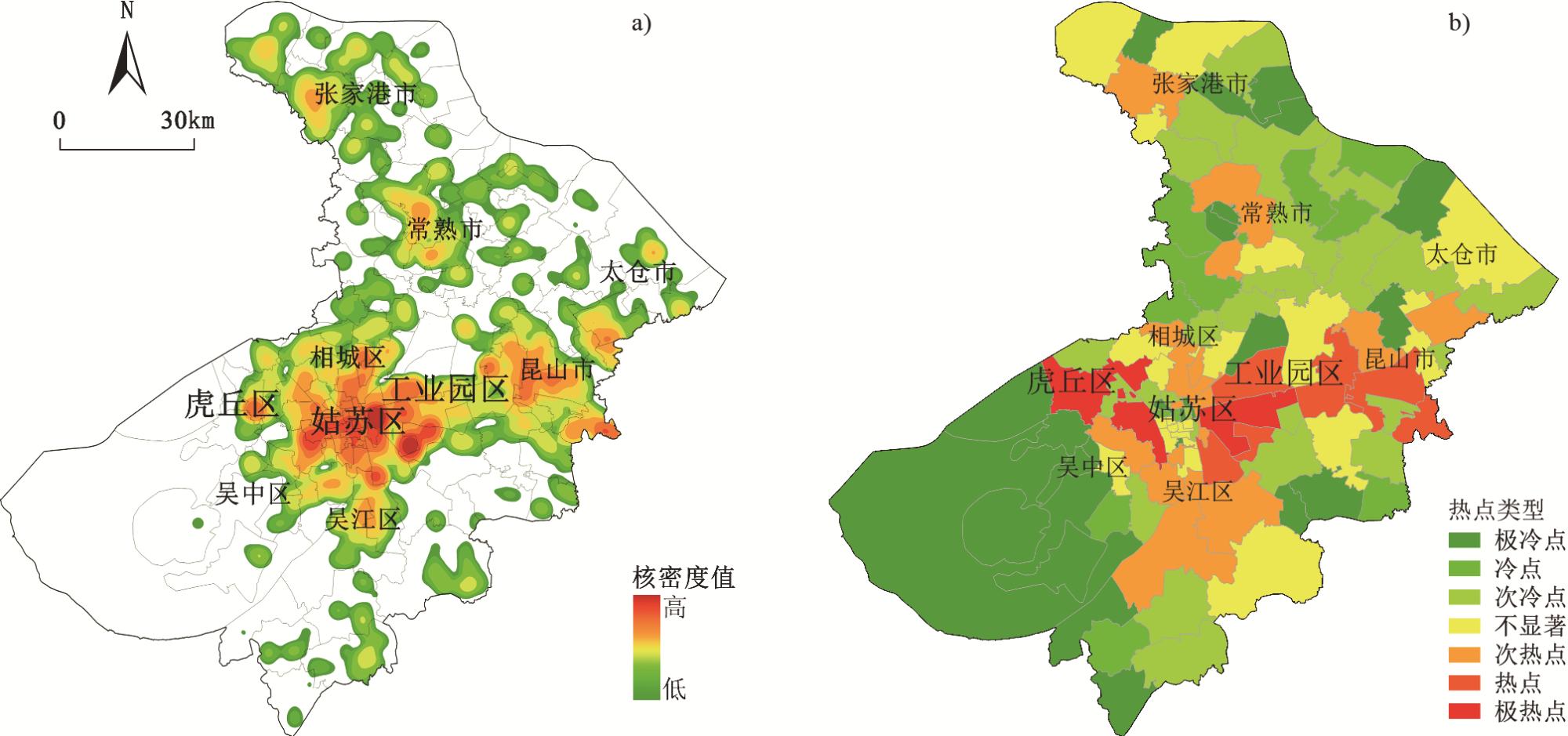
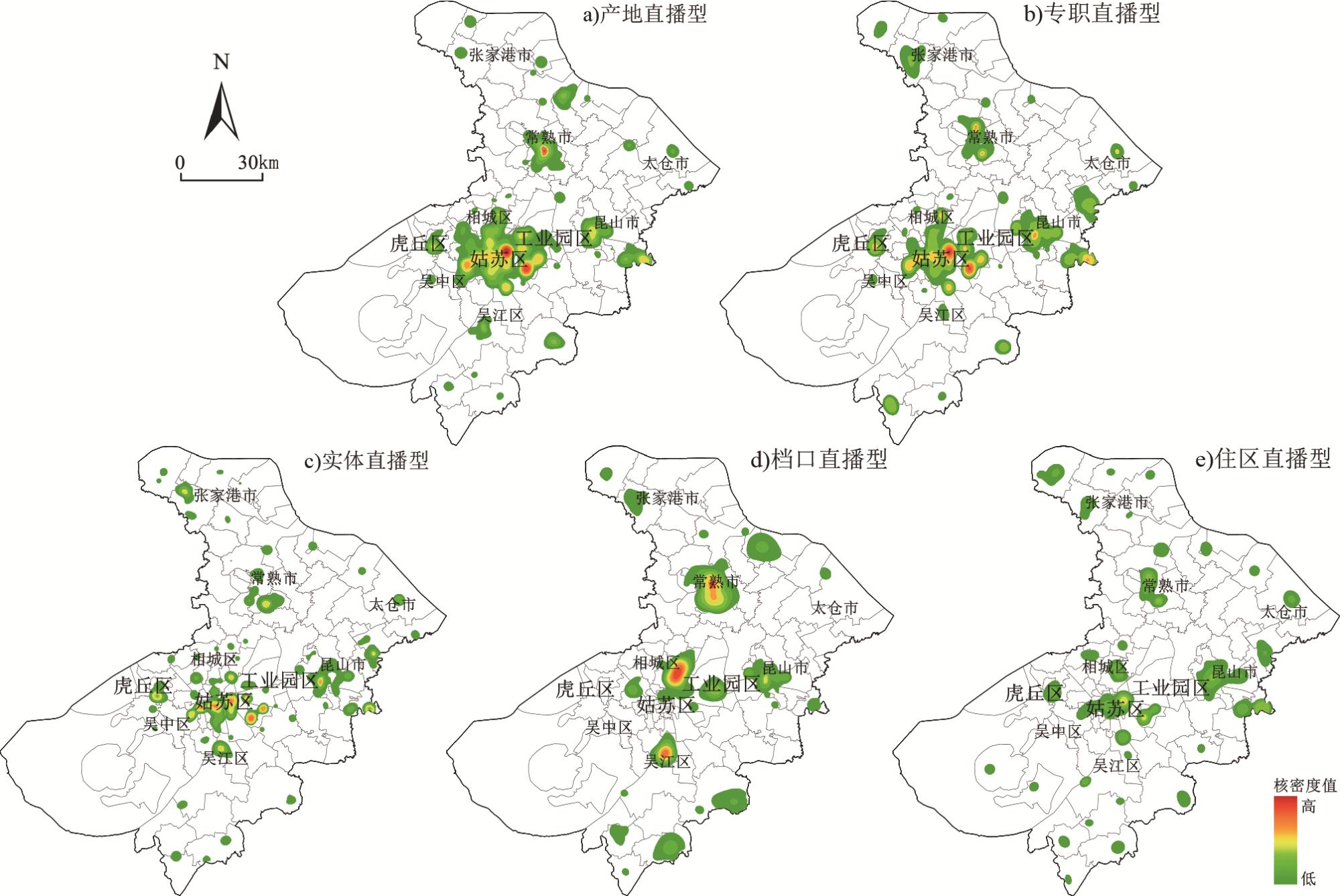
文章以实体经济和直播电商深度融合的苏州市为例,基于电商主播空间坐标数据,从经济地理学的路径依赖与路径创造理论出发,分析城市尺度下不同类型直播电商的区位分布特征与影响因素分异。研究表明:1)苏州直播电商呈现“城区高度集中与郊区多点集聚”的分布格局,并表现出“产品基地导向与产业服务导向”并重的独特性,揭示了苏州直播电商是在传统制造业强路径依赖基础上,通过数字技术与政策干预实现路径创造的复合结果;2)不同类型直播电商的区位分布存在异质性,产地直播呈现“簇群+散点”特征、专职直播呈现“极核+多片”特征、实体直播呈现“轴向+分散”特征、档口直播呈现“核心+据点”特征、住区直播呈现“多片+分散”特征;3)产品生产、制度政策、产业基础、物流条件和产业服务对直播电商区位选择起主导作用,且不同类型直播电商区位分布的影响因素存在差异,其是“路径依赖”与“路径创造”在不同类型中作用方式异质性的微观体现。
陆建城 , 蒋蝉禧 , 罗小龙 , 郑皓 . 城市直播电商类型的区位分布特征及其影响因素分异——以苏州市为例[J]. 热带地理, 2026 : 840 -852 . DOI: 10.13284/j.cnki.rddl.20250885
With the rapid advancement of the internet and digital communication technologies, particularly the widespread adoption of mobile internet and short-video platforms, e-commerce has undergone a new wave of transformation, giving rise to live-streaming e-commerce. As an emerging business model that integrates platform-based live streaming with online retailing, live-streaming e-commerce has, through its distinctive interactivity and immediacy, profoundly reshaped consumer purchasing behavior in China and has become a major driver of the urban digital economy. Against this backdrop, the spatial distribution of live-streaming e-commerce has become an increasingly important topic in geography, particularly in economic geography. However, existing research largely relies on single theoretical perspectives and seldom integrates the analytical logic of path dependence and path creation. In particular, a systematic theoretical explanation and empirical evidence remain lacking regarding how live-streaming e-commerce in cities anchored in the real economy develops distinctive locational patterns through interaction with pre-existing industrial structures. To address this gap, this study draws on the economic-geographical perspectives of path dependence and path creation and considers Suzhou, where the real economy and live-streaming e-commerce are closely intertwined, as a case study. Based on the spatial coordinate data on anchors engaged in live-streaming e-commerce, this study investigates the locational patterns and differentiated determinants of different types of live-streaming e-commerce on the urban scale. The results show that, first, live-streaming e-commerce in Suzhou exhibits a spatial pattern characterized by a high concentration in the urban core and multiple clusters in suburban areas. It also reveals a distinctive dual orientation towards both production bases and industrial service functions, indicating that the development of live-streaming e-commerce in Suzhou is a composite outcome of strong path dependence rooted in traditional manufacturing and path creation enabled by digital technologies and policy intervention. Second, significant heterogeneity exists in the locational patterns of different types of live-streaming e-commerce: production-based live streaming exhibits a“clusters plus dispersed points”pattern; professional live streaming exhibits a“pole plus multiple zones”pattern; brick-and-mortar live streaming an“axis plus dispersion”pattern; stall-based live streaming exhibits a“core plus nodes”pattern; and residential live streaming exhibits a“multiple zones plus dispersion”pattern. Third, the determinants showed both hierarchical and type-specific differentiation. Overall, manufacturing base, institutional policy, industrial foundation, and logistics conditions are the principal factors shaping the locational distribution of live-streaming e-commerce. By type, production-based live streaming is mainly influenced by manufacturing base and logistics; professional live streaming by institutional policy and producer services; brick-and-mortar live streaming by transport and logistics; stall-based live streaming by wholesale markets and logistics; and residential live streaming by producer services, transport, and the cultural environment. This study shows that the digital economy does not disrupted the locational logic of traditional industries; rather, it evolves through deep interaction with and restructuring of local industries, institutions, markets, and socio-spatial environments. Therefore, the locational distribution of live-streaming e-commerce results from the joint operation of path dependence and path creation. These findings enrich the theoretical implications of economic geography in the digital era, and offer a new perspective for understanding the synergistic relationship between inherited local development trajectories and emerging innovation paths in urban digital economic development.
Key words: live-streaming e-commerce; path dependence; path creation; location choice; Suzhou
表1 不同类型直播电商空间莫兰指数Table 1 Moran's I index for different types of live-streaming e-commerce spaces |
| 类型 | 莫兰指数 | Z得分 | P值 | 分布模式 |
| 产地直播型 | 0.63 | 15.45 | 0.00 | 集聚分布 |
| 专职直播型 | 0.53 | 9.44 | 0.00 | 集聚分布 |
| 实体直播型 | 0.21 | 3.82 | 0.00 | 集聚分布 |
| 档口直播型 | 0.24 | 4.58 | 0.00 | 集聚分布 |
| 住区直播型 | 0.11 | 2.64 | 0.00 | 集聚分布 |
表2 苏州市直播电商空间类型划分Table 2 Classification of live-streaming e-commerce spaces in Suzhou |
| 类型 | 比例/% | 功能构成 | 空间载体类型 | 区位分布特征 | 典型案例 |
| 产地 直播型 | 47 | 线上直播销售和 线下生产 | 各级产业园区内的厂房、乡镇特色工业 生产基地和农业产业园等 | 近郊多核心和远郊多散点分布 | 苏州工业园区、 碧螺春生产基地等 |
| 专职 直播型 | 16 | 线上直播销售 | 中心城区内的商务写字楼,近远郊区 空置或低效的存量工业遗存 | 中心城区极核集聚,近远郊区 多片分布 | 元和塘直播电商产业园、 歌德云创直播产业园等 |
| 实体 直播型 | 19 | 线上直播销售和 线下实体销售 | 中心城区内的商业综合体、商业街和 历史街区,郊区的历史文化名镇名村 | 中心城区轴向分布,外围郊区 分散分布 | 平江历史街区文创直播、 马山村的苏绣直播 |
| 档口 直播型 | 13 | 线上直播销售和 线下批发 | 依托现有的大型专业批发市场或 小型的仓库 | 四大核心集聚区和若干据点 | 虎丘婚纱城、 相城家具城等 |
| 住区 直播型 | 4 | 线上直播销售 | 依托现有居住区、城中村和外围 乡村民居 | 四大集聚片区和外围分散节点 | 常熟和莫社区、 甪直镇的澄墩村 |
表3 影响因素指标体系Table 3 Indicator system of influencing factors |
| 维度 | 二级指标 | 指标解释 | 数据来源 |
| 政府维度 | 制度政策(x1) | 各层级直播电商支持政策数量/个 | 苏州各级政府官网公示的政策数量 |
| 孵化平台(x2) | 各层级直播电商企业孵化平台数量/个 | 苏州市政府官网 | |
| 直播电商基地(x3) | 直播电商基地数量/个 | 苏州市商务局官网 | |
| 市场维度 | 人才市场(x4) | 高等院校和科研机构数量/个 | 2024年苏州市POI数据 |
| 实体店铺(x5) | 实体消费店铺数量/个 | 2024年苏州市POI数据 | |
| 批发市场(x6) | 婚纱、服装、农产品等各类批发市场/仓储数量/个 | 2024年苏州市POI数据 | |
| 产业维度 | 产业基础(x7) | 直播电商企业数量/个 | 2024年企查查官网 |
| 产业服务(x8) | MCN机构、直播培训等服务机构数量/个 | 2024年企查查官网 | |
| 产品生产(x9) | 工业和农业生产企业数量/个 | 2024年企查查官网 | |
| 环境维度 | 交通条件(x10) | 地铁站点和高铁站点数量/个 | 2024年苏州市POI数据 |
| 物流条件(x11) | 物流与快递站点数量/个 | 2024年苏州市POI数据 | |
| 文化环境(x12) | 各类文化遗产、名镇名村、传统村落等数量/个 | 苏州国土空间规划文本 |
表4 苏州直播电商区位分布影响因素解释力Table 4 Explanatory power of factors influencing the spatial distribution of live-streaming e-commerce in Suzhou |
| 影响因素 | 影响力q值 |
| 制度政策(x1) | 0.79 |
| 孵化平台(x2) | 0.21 |
| 直播电商基地(x3) | 0.61 |
| 人才市场(x4) | 0.27 |
| 实体店铺(x5) | 0.52 |
| 批发市场(x6) | 0.42 |
| 产业基础(x7) | 0.64 |
| 产业服务(x8) | 0.48 |
| 产品生产(x9) | 0.83 |
| 交通条件(x10) | 0.34 |
| 物流条件(x11) | 0.48 |
| 文化环境(x12) | 0.13 |
注:各指标因素均在0.05的显著性水平下显著。 |
表5 苏州不同类型直播电商区位分布影响因素探测结果Table 5 Detection results of influencing factors on the spatial distribution of different types of live-streaming e-commerce in Suzhou |
| 影响因素 | y1 | y2 | y3 | y4 | y5 |
| 制度政策(x1) | 0.40 | 0.82 | 0.39 | 0.34 | 0.20 |
| 孵化平台(x2) | 0.14 | 0.64 | 0.07 | 0.10 | 0.11 |
| 直播电商基地(x3) | 0.34 | 0.91 | 0.33 | 0.17 | 0.33 |
| 人才市场(x4) | 0.22 | 0.17 | 0.11 | 0.13 | 0.13 |
| 实体店铺(x5) | 0.39 | 0.26 | 0.82 | 0.28 | 0.17 |
| 批发市场(x6) | 0.32 | 0.32 | 0.33 | 0.46 | 0.28 |
| 产业基础(x7) | 0.58 | 0.35 | 0.37 | 0.21 | 0.25 |
| 产业服务(x8) | 0.62 | 0.67 | 0.31 | 0.40 | 0.34 |
| 产品生产(x9) | 0.89 | 0.32 | 0.28 | 0.39 | 0.28 |
| 交通条件(x10) | 0.28 | 0.19 | 0.67 | 0.42 | 0.31 |
| 物流条件(x11) | 0.72 | 0.28 | 0.60 | 0.45 | 0.21 |
| 文化环境(x12) | 0.10 | 0.23 | 0.27 | 0.12 | 0.31 |
注:数值表示因素影响力水平,所有指标因素均在0.05的显著性水平下显著。 |
① “簇群”指围绕一个或多个产业园区形成的紧密型直播集聚组团。
② “散点”指空间上孤立、依托单个特色产品生产基地形成的点位。
③ “极核”指由政策直接塑造、在区域中占据绝对主导地位的核心直播基地;“片区”指具有相当空间范围、内部连续性较强的集聚区域。
④ “轴向”指直播活动沿传统商业中心或主要交通干线形成的高密度连续分布带。
⑤ “据点”指在空间上相对独立、规模有限但功能明确、具有稳定性的关键节点。
|
艾瑞咨询. 2025. 2024年中国直播电商行业研究报告. (2025-02-15)[2026-04-16]. https://report.iresearch.cn/report_pdf.aspx?id=43 88.
IResearch Consulting. 2025. 2024 China Live Streaming E-commerce Industry Research Report. (2025-02-15)[2026-04-16]. https://report.iresearch.cn/report_pdf.aspx?id=4388.
|
|
安俞静, 袁丰, 孙伟, 陈雯. 长三角科技创新平台布局时空演变及其影响因素. 地理科学, 2023, 43 (12): 2173- 2182.
An Yujing, Yuan Feng, Sun Wei, and Chen Wen. Spatial-Tem-Poral Evolution and Influencing Factors of Sci-Tech Innovation Platforms in the Yangtze River Delta. Scientia Geographica Sinica, 2023, 43 (12): 2173- 2182.
|
|
Boschma R and Frenken K. Why is Economic Geography not an Evolutionary Science? Towards an Evolutionary Economic Geography. Journal of Economic Geography, 2006, 6 (3): 273- 302.
|
|
Boschma R, Coenen L, Frenken K, and Truffer B. Towards a Theory of Regional Diversification: Combining Insights from Evolutionary Economic Geography and Transition Studies. Regional Studies, 2017, 51 (1): 31- 45.
|
|
Benvenuti M, Scarpi D, and Zarantonello L. The Impact of Mukbang Live Streaming Commerce on Consumers' Overconsumption Behavior. Journal of Interactive Marketing, 2023, 58, 198- 221.
|
|
Chen W, Shen Y, Wang Y, and Wu Q. The Effect of Industrial Relocation on Industrial Land Use Efficiency in China: A Spatial Econometrics Approach. Journal of Cleaner Production, 2018, 205, 525- 535.
|
|
陈博, 朱华晟, 代嘉欣, 刘若彬. 基于头部企业的城市数字经济网络空间结构及其影响因素. 经济地理, 2024, 44 (10): 108- 116.
Chen Bo, Zhu Huasheng, Dai Jiaxin, and Liu Ruobing. China's Urban Digital Economic Network and Its Influencing Factors: From the Perspective of Top-Tier Digital Enterprises. Economic Geography, 2024, 44 (10): 108- 116.
|
|
陈前虎, 叶雨繁, 陈静. 杭州主城区直播电商企业区位特征及影响机制. 经济地理, 2023, 43 (5): 97- 107,179.
Chen Qianhu, Ye Yufan, and Chen Jing. Characteristics and Influencing Mechanism of the Distribution of Live-Streaming E-Commerce Companies in Main Districts of Hangzhou. Economic Geography, 2023, 43 (5): 97- 107,179.
|
|
陈蔚珊, 柳林, 梁育填. 基于POI数据的广州零售商业中心热点识别与业态集聚特征分析. 地理研究, 2016, 35 (4): 703- 716.
Chen Weishan, Liu Lin, and Liang Yutian. Retail Center Recognition and Spatial Aggregating Feature Analysis of Retail Formats in Guangzhou Based on POl Data. Geographical Research, 2016, 35 (4): 703- 716.
|
|
Holmen A K T and Fosse J K. Regional Agency and Constitution of New Paths: A Study of Agency in Early Formation of New Paths on the West Coast of Norway. European Planning Studies, 2017, 25 (3): 498- 515.
|
|
Kogler D F, Evenhuis E, Giuliani E, Martin R, Uyarra E, and Boschma, R. 2023. Re-Imagining Evolutionary Economic Geography. Cambridge Journal of Regions, Economy and Society, 16(3): 373-390.
|
|
李国平, 王春杨. 我国省域创新产出的空间特征和时空演化——基于探索性空间数据分析的实证. 地理研究, 2012, 31 (1): 95- 106.
Li Guoping and Wang Chunyang. Spatial Characteristics and Dynamic Changes of Provincial Innovation Output in China: An Investigation Using the ESDA. Geographical Research, 2012, 31 (1): 95- 106.
|
|
李宏彬, 李杏, 姚先国, 张海峰, 张俊森. 企业家的创业与创新精神对中国经济增长的影响. 经济研究, 2009, 44 (10): 99- 108.
Li HongBin, Li Xing, Yao Xianguo, Zhang Haifeng, and Zhang Junsen. Examining the Impact of Business Entrepreneurship and Innovation Entrepreneurship on Economic Growth in china. Economic Research Journal, 2009, 44 (10): 99- 108.
|
|
李伟, 贺灿飞. 城市新产业与城市经济增长: 演化经济地理学视角. 城市发展研究, 2020, 27 (6): 51- 61,173.
Li Wei and He Canfei. New Industries and Urban Economic Growth: Perspective from Evolutionary Economic Geography. Urban Development Research, 2020, 27 (6): 51- 61,173.
|
|
陆建城, 罗小龙, 钱俭, 黄诗琴, 肖冰. 城市直播电商空间的演进特征、逻辑与策略研究——以杭州市为例. 城市问题, 2022 (10): 27- 34.
Lu Jiancheng, Luo Xiaolong, Qian Jian, Huang Shiqin, and Xiao Bing. Research on the Evolutionary Characteristics, Logic and Strategy of Urban Live Streaming E-commerce Space: A Case Study of Hangzhou. Urban Issues, 2022 (10): 27- 34.
|
|
MacKinnon D, Cumbers A, Pike A, Birch K, and McMster R. Evolution in Economic Geography: Institutions, Political Economy, and Adaptation. Economic Geography, 2009, 85 (2): 129- 150.
|
|
Maskell P. The Firm in Economic Geography. Economic Geography, 2001, 77 (4): 329- 344.
|
|
Martin R. 1999. The New "Geographical Turn" in Economics: Some Critical Reflections. Cambridge Journal of Economics, 65-91.
|
|
马芳芳, 丁志伟. 中国抖音直播带货行业发展的空间分异及影响因素. 经济地理, 2021, 41 (12): 22- 32.
Ma Fangfang and Ding Zhiwei. Spatial Differentiation and Influencing Factors of Livestreaming Ecommerce Development Level in China: A Case of Douyin. Economic Geography, 2021, 41 (12): 22- 32.
|
|
马晓敏, 张志斌, 公维民, 赵学伟, 郭燕. 兰州市制造业空间格局演化及驱动因子识别. 地理科学, 2023, 43 (3): 519- 529.
Ma Xiaomin, Zhang Zhibin, Gong Weimin, Zhao Xuewei, and Guo Yan. Spatial Pattern Evolution and Driving Factors Identification of Manufacturing Industry in Lanzhou. Scientia Geographica Sinica, 2023, 43 (3): 519- 529.
|
|
Neffke F, Henning M, and Boschma R. How Do Regions Diversify Over Time? Industry Relatedness and the Development of New Growth Paths in Regions. Economic Geography, 2011, 87 (3): 237- 265.
|
|
彭珏, 何金廖. 电商粉丝经济的地理格局及其影响因子探析——以抖音直播带货主播为例. 地理科学进展, 2021, 40 (7): 1098- 1112.
Peng yu and He Jinliao. Spatial Differentiation and Influencing Factors of Fan Economy in China: Taking TikTok Livestreaming Commerce Host as an Example. Progress in Geography, 2021, 40 (7): 1098- 1112.
|
|
苏州市人民政府. 2023. 《苏州市关于支持直播电商高质量发展的若干措施》. (2023-08-17)[2026-02-02]. https://www.suzhou.gov.cn/szsrmzf/bmdt/202308/2713216f016b4ef0bd0526eaa58582ef.shtml.
Suzhou Municipal People's Government. 2023. Several Measures by Suzhou to Support the High-Quality Development of Live Streaming E-commerce. (2023-08-17) [2026-02-02]. https://www.suzhou.gov.cn/szsrmzf/bmdt/202308/2713216f016b4ef0bd0526eaa58582ef.shtml.
|
|
苏州市人民政府. 2025. 《苏州市国土空间总体规划(2021—2035年)》. (2025-01-16)[2026-04-16]. https://www.suzhou.gov.cn/2024ndzt/szsgskjgh/202510/6eb6ca459e6c4a02a969ddb7d33ef946/files/537e08aa2bf540bfa8acd38ca8539dee.pdf.
Suzhou Municipal People's Government. 2025. Suzhou Land and Space Master Plan 2021-2035. (2025-01-16) [2026-04-16]. https://www.suzhou.gov.cn/2024ndzt/szsgskjgh/202510/6eb6ca459e6c4a02a969ddb7d33ef946/files/537e08aa2bf540bfa8acd38ca8539dee.pdf.
|
|
苏州市人民政府. 2026.2025年苏州市经济运行情况. (2026-02-02)[2026-04-16]. https://www.suzhou.gov.cn/szsrmzf/tjsjjd/202602/e6e632df06df43e8b89bf7671d838fb1.shtml.
Suzhou Municipal People's Government. 2026. Suzhou's Economic Operation in 2025. (2026-02-02) [2026-04-16]. https://www.suzhou.gov.cn/szsrmzf/tjsjjd/202602/e6e632df06df43e8b89bf7671d838fb1.shtml.
|
|
Trippl M, Grillitsch M, and Isaksen A. Exogenous Sources of Regional Industrial Change: Attraction and Absorption of Non-Local Knowledge for New Path Development. Progress in Human Geography, 2018, 42 (5): 687- 705.
|
|
Wahome M and Graham M. 2020. Spatially Shaped Imaginaries of the Digital Economy. Information, Communication & Society, 23(8): 1123-1138.
|
|
Wang J, Shi Y, and Shi V. Should We Keep the Tradition or Follow the Trend? The Optimal Live-Streaming E-Commerce Mode Selection in a Sustainable and Circular Supply Chain Under Competition. Annals of Operations Research, 2024 (11): 1- 29.
|
|
王劲峰, 徐成东. 地理探测器: 原理与展望. 地理学报, 2017, 72 (1): 116- 134.
Wang Jinfeng and Xu Chengdong. Geodetector: Principle and Prospective. Acta Geographica Sinica, 2017, 72 (1): 116- 134.
|
|
Wang Q, Zhao N, and Ji X. Reselling or Agency Selling? The Strategic Role of Live Streaming Commerce in Distribution Contract Selection. Electronic Commerce Research, 2022, 24, 983- 1016.
|
|
Wang S and Wang J. 2023. The Live-Streaming E-Commerce Mode Selection under Competition: Self-Run or Third-Party? Electronic Commerce Research, 179: 1-22.
|
|
王伟, 向柯颖, 陈一鸣, 邓智昊, 刘月. 北京数字经济产业的空间融合体模式与规划响应策略. 规划师, 2023, 39 (8): 49- 57.
Wang Wei, Xiang Keying, Chen Yiming, Deng Zhihao, and Liu Yue. Spatial Integration Model and Planning Response Strategy of Beijing's Digital Economy Industry. Planners, 2023, 39 (8): 49- 57.
|
|
武前波, 万为胜, 洪明. 杭州数字经济产业空间演变及其影响机制. 经济地理, 2022, 42 (12): 60- 71.
Wu Qianbo, Wan Weisheng, and Hong Ming. Spatial Evolution and Influencing Mechanism of Digital Economy Industries in Hangzhou. Economic Geography, 2022, 42 (12): 60- 71.
|
|
Yu G, Lin L, and Yu X. Research on Digital Marketing Strategies Based on Live Streaming E-Commerce: A Case Study of the Lily Industry in Northern Fujian, China. Journal of Business and Marketing, 2024 (1): 393- 413.
|
|
于天阳, 关志民, 董经洋, 曲优. 不同权力结构下考虑网红营销努力的直播电商供应链决策研究. 管理学报, 2022, 19 (5): 714- 722,748.
Yu Tianyang, Guan Zhimin, Dong Jingyang, and Qu You. Research on Live E-Commeree Supply Chain Decision-Making Considering Social Media Influencer's Marketing Efforts under Different Power Structures. Chinese Journal of Management, 2022, 19 (5): 714- 722,748.
|
|
Zhu S, Li Z, and He C. Who Leads Regional Industrial Dynamics? "New Industry Creators" in Chinese Regions. Growth and Change, 2019, 50 (1): 69- 89.
|
|
曾国威, 罗震东. 城市直播电商空间集聚与扩散趋势研究——以杭州市主城区为例. 地域研究与开发, 2024, 43 (2): 91- 97.
Zeng Guowei and Luo Zhendong. Spatial Agglomeration and Diffusion Trend of Urban Live-Streaming E-Commerce: Taking the Main Urban Area of Hangzhou City as Example. Areal Research and Development, 2024, 43 (2): 91- 97.
|
|
张帅, 吴珍玮, 陆朝阳, 张娜. 中国省域数字经济与实体经济融合的演变特征及驱动因素. 经济地理, 2022, 42 (7): 22- 32.
Zhang Shuai, Wu Zhenwei, Lu Chaoyang, and Zhang Na. Spatio-Temporal Evolution Characteristics and Driving Factors of the Integration Between Digital Economy and Real Economy in China. Economic Geography, 2022, 42 (7): 22- 32.
|
|
张英浩, 汪明峰, 汪凡, 刘婷婷. 中国直播电商发展的空间差异与影响机理研究. 地理科学, 2022, 42 (9): 1555- 1565.
Zhang Yinghao, Wang Mingfeng, Wang Fan, and Liu Tingting. Spatial Differences in the Development of Livestreaming E-commerce and Influence in China. Scientia Geographica Sinica, 2022, 42 (9): 1555- 1565.
|
|
张永姣, 丁少斌, 方创琳. 中国数字经济产业发展的时空分异及空间收敛性分析——基于企业大数据的考察. 经济地理, 2023, 43 (3): 120- 130.
Zhang Yongjiao, Ding Shaobin, and Fang Chuanglin. Spatiotemporal Variation and Spatial Convergence of China's Digital Eeonomy Industry Development: Based on the Big Data of Enterprise. Economic Geography, 2023, 43 (3): 120- 130.
|
|
郑江淮, 冉征. 智能制造技术创新的产业结构与经济增长效应——基于两部门模型的实证分析. 中国人民大学学报, 2021a, 35 (6): 86- 101.
Zheng Jianghuai and Ran Zheng. The Industrial Structure of Intelligent Manufacturing Tech-Innovation and the Economic Growth Effect It Brings: An Empirical Analysis of the Model Based on the Data from Two Sectors. Journal of Chinese Renmin University, 2021a, 35 (6): 86- 101.
|
|
郑江淮, 冉征. 走出创新“舒适区” : 地区技术多样化的动态性及其增长效应. 中国工业经济, 2021b (5): 19- 37.
Zheng Jianghuai and Ran Zheng. Going Out of the "Comfort Zone" in Innovation: The Dynamics of Regional Technological Diversification and lts Growth Effect. China Industrial Economics, 2021b (5): 19- 37.
|
|
中国互联网络信息中心. 2024. 第53次《中国互联网络发展状况统计报告》发布. (2024-03-22)[2026-04-16]. https://www.cnnic.cn/n4/2024/0321/c208-10962.html.
China Internet Network Information Center. 2024. The 53rd Statistical Report on the Development of China’s Internet Network Released. (2024-03-22) [2026-04-16]. https://www.cnnic.cn/n4/2024/0321/c208-10962.html.
|
/
| 〈 |
|
〉 |