旅华外国客源市场时空结构再分析——基于入境休闲旅游者的数据
|
刘倩倩(1992—),女,山东济南人,博士研究生,主要从事旅游经济、会展经济研究,(E-mail)bisu_liuqianqian@163.com 。 |
收稿日期: 2019-05-15
要求修回日期: 2019-08-15
网络出版日期: 2020-02-24
版权
Temporal and Spatial Structure of Foreign Tourist Markets in China’s Inbound Tourism: A Reanalysis Based on Data from Inbound Leisure Tourists
Received date: 2019-05-15
Request revised date: 2019-08-15
Online published: 2020-02-24
Copyright
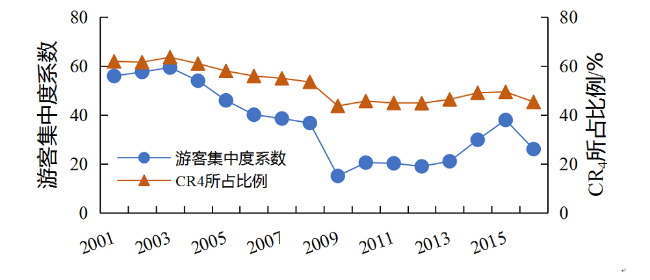
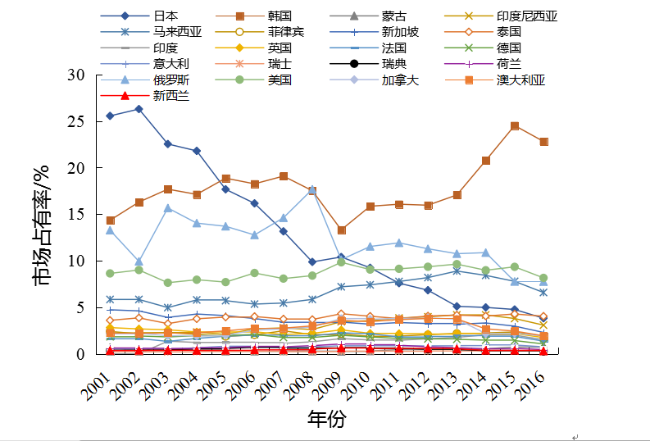
以2001—2016年入境外国休闲旅游者的数据为基础,通过地理集中度、市场收敛性和市场竞争态3项指标再分析旅华外国客源市场的时空特征,结果发现:旅华外国客源市场集中度较高,近6成客源来自亚洲,且主要依赖于韩国、俄罗斯、美国和马来西亚等核心市场;市场多样性不足,远程洲际市场对中国旅游规模的增长贡献不大;韩国最具竞争优势,蒙古最具发展潜力,其他市场的竞争潜力相对较弱。最后,通过比较休闲旅游数据与总体旅游数据的结果,发现以往基于总体入境旅游数据的研究结论有偏差:在市场占有率上,日本、蒙古、菲律宾和印度被高估,泰国和印度尼西亚被低估;在市场贡献上,意大利、瑞士、荷兰和加拿大被高估,马来西亚、菲律宾、泰国、新加坡和美国被低估;在市场竞争地位上,蒙古、菲律宾和印度被高估,泰国被低估。
刘倩倩 , 姚战琪 , 周功梅 . 旅华外国客源市场时空结构再分析——基于入境休闲旅游者的数据[J]. 热带地理, 2020 , 40(1) : 128 -136 . DOI: 10.13284/j.cnki.rddl.003170
This study reexamines the role of tourism marketing in the case of travelers with varied purposes and hypothesizes that only tourists interested in leisure and sightseeing are affected by tourism marketing. Furthermore, in this study, we provide effective guidance to implement tourism marketing through a scientific analysis of the number of inbound leisure travelers. This paper presents an analysis of the spatial and temporal characteristics of the foreign tourist market in China using the foreign leisure tourist data for 2001-2006. This analysis was conducted from the perspective of sources of tourists, with consideration paid to geographic concentration, market convergence, and market competition. We found that in recent years, the foreign tourism market in China has become more dispersed and market diversity has improved. However, market concentration is still comparatively high. Nearly 60% of foreign tourists come from Asia, and Chinese tourism relies mainly on core markets such as South Korea, Russia, the United States, and Malaysia. Consequently, market diversity is a persistent challenge, and the remote intercontinental market has made little contribution to the growth of China's inbound tourism. Among the core markets, South Korea has a competitive edge and therefore outperforms in the foreign tourism market. Meanwhile, Mongolia has the most development potential. Russia, the United States, Malaysia, Japan, and Thailand have high market shares; however, their market growth rate competitive potential in the Chinese foreign tourism market is relatively weak. Other countries’ China-bound tourism markets are relatively uncompetitive and need further development. When the results of leisure tourism data were compared with overall tourism data, the findings revealed that previous research that was based on overall inbound tourism data was biased. The market shares of Japan, Mongolia, the Philippines, and India have been overvalued, while the market shares of Thailand and Indonesia have been underestimated. Market contributions from Italy, Switzerland, the Netherlands, and Canada have been overvalued, while market contributions from Malaysia, the Philippines, Thailand, Singapore, and the United States have been underestimated. Moreover, the competitive positions of Mongolia, the Philippines, and India in the tourism market have been overestimated, while the competitive position of Thailand in this market has been underestimated. The aforementioned conclusions have two implications for the marketing and management of the foreign tourist market in China. First, the market must be further developed and diversified. Second, differentiated marketing strategies that are specific to local conditions should be deployed. Finally, we propose two initiatives. First, researchers should seek to rationally apply the principle of scientific truth-seeking to tourism data, and further, they should study the structure of the tourism market obtained from pure tourism data rather than generalized travel data. Second, government departments should provide more detailed tourism statistics for the purpose of developing standard service practice, such as providing monthly data on inbound tourists that are categorized by nationality and purpose. This will help scholars to conduct a more specific classification study of travelers for different travel purposes.

表1 单位根检验结果Tab.1 The results of unit root tests |
| 检验方法 | 客源国 | LM统计量 | 客源国 | LM统计量 | 客源国 | LM统计量 |
|---|---|---|---|---|---|---|
| A:单变量 单位根检验 (KPSS) | 日本 | 0.087 0 | 泰国 | 0.059 4 | 瑞典 | 0.169 5** |
| 韩国 | 0.110 6 | 印度 | 0.153 6** | 荷兰 | 0.151 4** | |
| 蒙古 | 0.183 4** | 英国 | 0.138 4* | 俄罗斯 | 0.170 4** | |
| 印度尼西亚 | 0.116 6 | 法国 | 0.160 3** | 美国 | 0.106 8 | |
| 马来西亚 | 0.106 2 | 德国 | 0.174 1** | 加拿大 | 0.137 1* | |
| 菲律宾 | 0.077 0 | 意大利 | 0.206 3** | 澳大利亚 | 0.148 4** | |
| 新加坡 | 0.099 9 | 瑞士 | 0.120 2* | 新西兰 | 0.144 7* | |
| B:面板单位根检验(Hadri) | 方法 | 检验值 | P值 | |||
| 假定同方差 | 9.122 58 | 0.000 0 | ||||
| 克服异方差 | 9.722 73 | 0.000 0 | ||||
注:在10%、5%和1%水平下,KPSS检验的临界值分别为0.119 0、0.146 0、0.216 0。*、**和***分别表示在10%、5%和1%水平下显著。表3同。 |
表2 2001—2008年和2009—2016年旅华外国客源市场竞争态Tab.2 The competitive state of foreign tourism markets in China during 2001-2008 and 2009-2016 |
| 市场竞争态 | 2001—2008年 | 2009—2016年 |
|---|---|---|
| 明星市场 | 韩国、俄罗斯、美国、马来西亚 | 韩国 |
| 金牛市场 | 日本 | 美国、俄罗斯、马来西亚、泰国、日本 |
| 瘦狗市场 | 新加坡、菲律宾、 英国、蒙古 | 印度尼西亚、印度、意大利、瑞士、菲律宾、新加坡、英国、法国、加拿大、澳大利亚、荷兰、德国、瑞典、新西兰 |
| 幼童市场 | 意大利、瑞典、荷兰、法国、加拿大、新西兰、瑞士、澳大利亚、印度尼西亚、泰国、印度、德国 | 蒙古 |
表3 基于休闲旅游数据和总体旅游数据的分析结果比较Tab.3 Comparison of analysis results based on leisure tourism data and overall tourism data |
| 客源国 | 2016市场占有率/%(排名) | 市场收敛性 | 市场竞争态(2009—2016) | |||||
|---|---|---|---|---|---|---|---|---|
| 总体旅游 | 休闲旅游 | 总体旅游 | 休闲旅游 | 总体旅游 | 休闲旅游 | |||
| 日本 | 8.22(2) | 3.82(6) | 0.111 8 | 0.087 0 | 金牛市场 | 金牛市场 | ||
| 韩国 | 15.13(1) | 22.81(1) | 0.096 2 | 0.110 6 | 明星市场 | 明星市场 | ||
| 蒙古 | 4.26(5) | 0.81(16) | 0.155 1** | 0.183 4** | 明星市场 | 幼童市场 | ||
| 印度尼西亚 | 2.01(13) | 3.08(7) | 0.095 8 | 0.116 6 | 瘦狗市场 | 瘦狗市场 | ||
| 马来西亚 | 3.70(6) | 6.59(4) | 0.139 4* | 0.106 2 | 金牛市场 | 金牛市场 | ||
| 菲律宾 | 3.60(7) | 1.90(11) | 0.152 1** | 0.077 0 | 明星市场 | 瘦狗市场 | ||
| 新加坡 | 2.93(8) | 2.30(8) | 0.165 1** | 0.099 9 | 瘦狗市场 | 瘦狗市场 | ||
| 泰国 | 2.38(10) | 4.04(5) | 0.128 4* | 0.059 4 | 瘦狗市场 | 金牛市场 | ||
| 印度 | 2.54(9) | 1.52(13) | 0.163 3** | 0.153 6** | 幼童市场 | 瘦狗市场 | ||
| 英国 | 1.89(15) | 1.75(12) | 0.261 8*** | 0.138 4* | 瘦狗市场 | 瘦狗市场 | ||
| 法国 | 1.60(16) | 1.36(14) | 0.138 8* | 0.160 3** | 瘦狗市场 | 瘦狗市场 | ||
| 德国 | 1.98(14) | 1.06(15) | 0.152 7** | 0.174 1** | 瘦狗市场 | 瘦狗市场 | ||
| 意大利 | 0.85(17) | 0.75(17) | 0.105 3 | 0.206 3** | 瘦狗市场 | 瘦狗市场 | ||
| 瑞士 | 0.23(21) | 0.23(21) | 0.110 2 | 0.120 2* | 瘦狗市场 | 瘦狗市场 | ||
| 瑞典 | 0.37(20) | 0.26(20) | 0.158 6** | 0.169 5** | 瘦狗市场 | 瘦狗市场 | ||
| 荷兰 | 0.63(18) | 0.45(18) | 0.082 6 | 0.151 4** | 瘦狗市场 | 瘦狗市场 | ||
| 俄罗斯 | 6.28(4) | 7.75(3) | 0.160 3** | 0.170 4** | 金牛市场 | 金牛市场 | ||
| 美国 | 7.14(3) | 8.16(2) | 0.144 8* | 0.106 8 | 金牛市场 | 金牛市场 | ||
| 加拿大 | 2.35(11) | 1.91(10) | 0.093 9 | 0.137 1* | 瘦狗市场 | 瘦狗市场 | ||
| 澳大利亚 | 2.14(12) | 1.94(9) | 0.131 1* | 0.148 4** | 瘦狗市场 | 瘦狗市场 | ||
| 新西兰 | 0.43(19) | 0.30(19) | 0.121 7* | 0.144 7* | 瘦狗市场 | 瘦狗市场 | ||
| [1] |
曹新向, 苗长虹 . 2009. 20世纪90年代以来河南省入境旅游客源市场结构演化——基于SSM方法的分析. 旅游学刊, 24(2):11-17.
[
|
| [2] |
查瑞波, 伍世代, 孙根年 . 2018. 城市型目的地入境旅游市场演化差异研究——基于中国香港和新加坡市内部结构与外部规模分时段辨析. 地理科学, 38(10):1661-1669.
[
|
| [3] |
陈勇, 刘莉莎 . 2014. 入境游的客源市场结构研究——广东案例及其启示意义. 经济管理, 36(1):122-130.
[
|
| [4] |
|
| [5] |
纪小美, 陈金华 . 2013. 福建省入境旅游市场时空动态变化及其拓展对策. 经济地理, 33(5):158-164.
[
|
| [6] |
纪小美, 陈金华, 付业勤 . 2015. 中国入境旅游流的收敛与空间溢出效应分析. 旅游科学, 29(4):47-60.
[
|
| [7] |
|
| [8] |
李景初 . 2014. 河南省入境旅游市场时间序列演变特征的定量分析——基于时间变化强度指数和指数平滑模型. 企业经济,( 1):127-131.
[
|
| [9] |
罗浩, 张瑜璇 . 2018. 中国的入境旅游客源市场收敛吗?. 旅游学刊, 33(7):28-39.
[
|
| [10] |
吕帅, 汪宇明, 龚伟, 程怡 . 2006. 旅游市场客源结构的SSM分析——以上海市海外游客市场为例. 旅游学刊, 21(11):60-64.
[
|
| [11] |
马耀峰, 梁旺兵 . 2005. 基于亲景度的美国旅华市场拓展研究——以我国六大旅游热点城市为例. 旅游学刊, 20(1):35-38.
[
|
| [12] |
|
| [13] |
|
| [14] |
南宇, 杨永春, 史婧 . 2011. 西北五省区入境旅游客源市场动态演化结构分析研究. 经济地理, 31(9):1558-1565.
[
|
| [15] |
|
| [16] |
全华, 赵磊, 陈田, 杨竹莘 . 2012. 入境旅游客源市场结构实证分析——以江苏省为例. 经济地理, 32(1):146-152.
[
|
| [17] |
|
| [18] |
石斌, 马耀峰 . 2017. “一带一路”背景下陕西入境旅游客源市场拓展——基于DSSM的客源市场结构演变视角. 企业经济, 36(9):80-86.
[
|
| [19] |
孙根年 . 2005. 新世纪中国入境旅游市场竞争态分析. 经济地理, 25(1):121-125.
[
|
| [20] |
孙根年, 周功梅, 李红 . 2015. 中美入境旅游,谁的市场更大——基于多样性、重要性、旅游偏好及市场吨位的比较. 旅游科学, 29(3):15-26.
[
|
| [21] |
唐弘久, 保继刚 . 2018. 我国主要入境客源地游客的时空特征及影响因素. 经济地理, 38(9):222-230,239.
[
|
| [22] |
王克军 . 2017. 主要客源国对中国入境旅游市场的贡献分析. 旅游学刊, 32(1):32-41.
[
|
| [23] |
王力峰 . 2004. 桂林国际客源市场时空演替规律研究. 经济地理, 24(5):688-691.
[
|
| [24] |
王怡 . 2015. 丝绸之路经济带生态旅游发展的收敛性检验. 统计与决策,( 9):143-145.
[
|
| [25] |
谢彦君 . 1998. 论旅游的本质与特征. 旅游学刊,(4):41-44,63.
[
|
| [26] |
谢彦君 . 2010. 旅游的本质及其认识方法——从学科自觉的角度看. 旅游学刊, 25(1):26-31.
[
|
| [27] |
谢彦君 . 2015. 基础旅游学. 北京:商务印书馆.
[
|
| [28] |
徐菊凤 . 2011. 关于旅游学科基本概念的共识性问题. 旅游学刊, 26(10):21-30.
[
|
| [29] |
徐菊凤 . 2016. 论旅游的边界与层次. 旅游学刊, 31(8):16-28.
[
|
| [30] |
宣国富 . 2012. 中国入境旅游规模结构的省际差异及影响因素. 经济地理, 32(11):156-161.
[
|
| [31] |
张凌云 . 2008. 国际上流行的旅游定义和概念综述——兼对旅游本质的再认识. 旅游学刊, 23(1):86-91.
[
|
| [32] |
张鹏, 郑垂勇, 丘萍 . 2010. 中国旅游增长收敛吗——基于1990-2008年入境旅游收敛性研究. 技术经济与管理研究,( 4):148-151.
[
|
| [33] |
周彩屏 . 2008. 基于SSM方法的入境旅游市场客源结构分析——以浙江省为例. 旅游学刊, 23(1):46-51.
[
|
| [34] |
朱沁夫, 李昭, 杨樨 . 2011. 用地理集中指数衡量游客集中程度方法的一个改进. 旅游学刊, 26(4):26-29.
[
|
/
| 〈 |
|
〉 |