21世纪以来国内外人才流动研究进展与比较分析
|
林赛南(1987—),女,浙江永嘉人,副教授,博士生导师,博士,主要研究方向为城市地理、人口流动与城镇化,(E-mail)sainan.lin@whu.edu.cn。 |
收稿日期: 2024-07-19
修回日期: 2024-12-24
网络出版日期: 2025-03-05
基金资助
国家自然科学基金项目(42171205)
Research Progress and Comparative Analysis of Skilled Migration at Home and Abroad during the 21st Century
Received date: 2024-07-19
Revised date: 2024-12-24
Online published: 2025-03-05
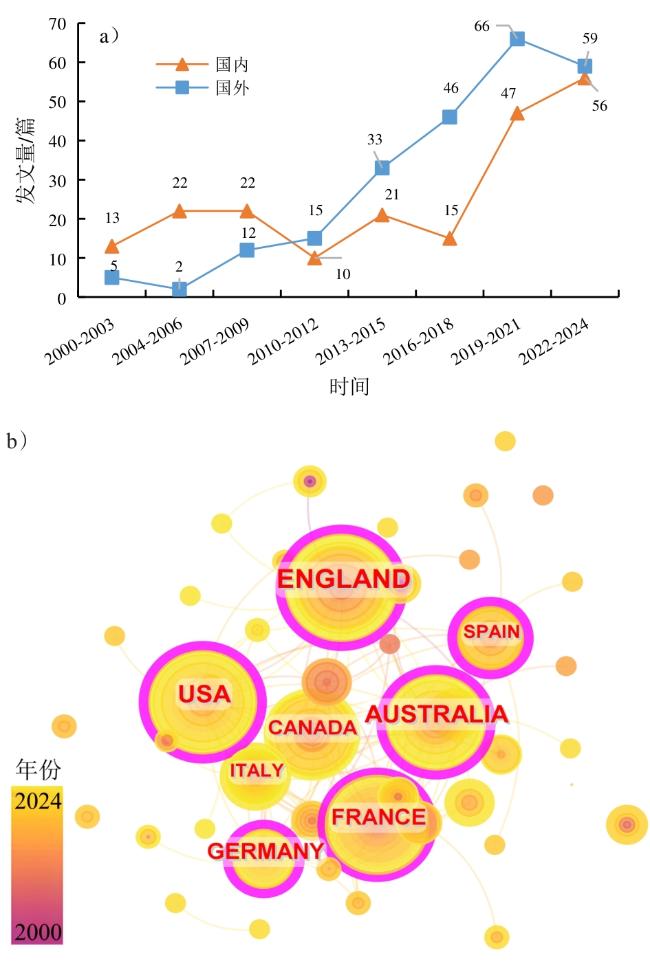
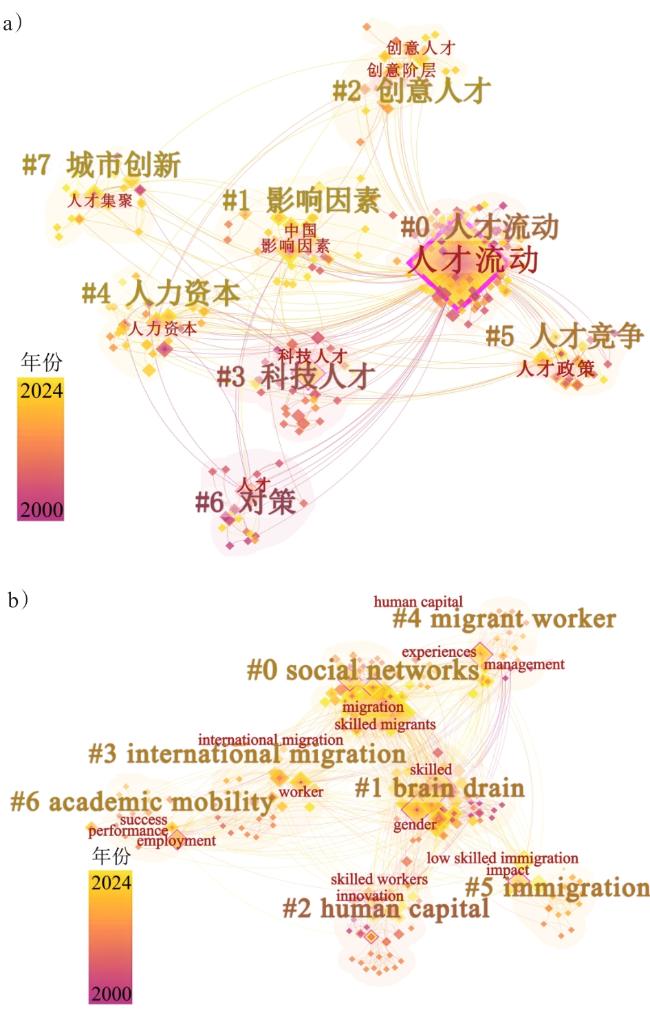
文章利用定量与定性分析相结合的方法,对2000—2024年相关领域有关人才流动的中英文文献进行回顾,归纳国内外人才流动的研究热点,比较相关研究进展。结果表明:1)研究热点方面,国内侧重于不同类型人才的空间分布、城市因素对人才流动的影响及人才与城市创新的互动,而国外更聚焦于全球化背景下高技能移民的流动决策及其在流入国的社会适应;2)理论上,国内外均围绕劳动力迁移理论,从宏观区域与微观个人视角探讨人才迁移机制,并在此基础上拓展了舒适物、创意阶层等理论框架;3)研究进展上,国外逐渐凸显迁移者生命历程及社会文化微观机制对人才流动的影响,方法上趋向定量与质性相结合,而国内主要聚焦于人才流动空间格局及宏观城市因素的影响,以定量分析为主。未来中国人才流动研究应加强微观机制探讨,构建本土理论框架,推动质性与定量研究结合,并利用大数据和新技术突破数据获取的限制。
林赛南 , 彭馨雨 . 21世纪以来国内外人才流动研究进展与比较分析[J]. 热带地理, 2025 , 45(2) : 169 -182 . DOI: 10.13284/j.cnki.rddl.20240479
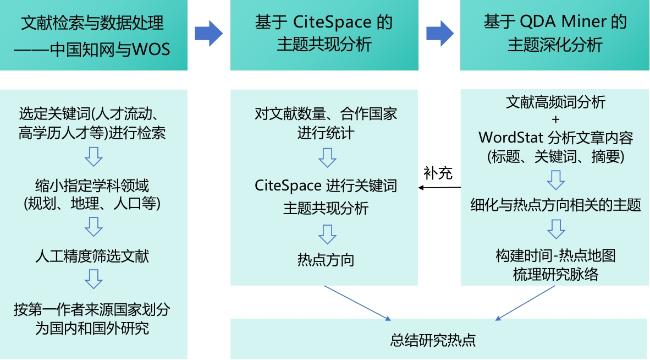
Skilled migration is a pivotal phenomenon underpinning globalization that has attracted widespread scholarly interest; a nuanced understanding of the patterns and mechanisms of skilled migration is considered essential for fostering coordinated regional development and enhancing labor market allocation. To compare the domestic and international talent mobility research in the 21st century and advance China's talent mobility theory, In this paper, we reviewed Chinese and English literature from fields such as geography, urban planning, demography, economics, and management since 2000 via quantitative and qualitative analysis. Initially, we conducted bibliometric and keyword co-occurrence analyses using CiteSpace to identify research hotspots and trends; subsequently, we performed Qualitative Data Analysis Miner qualitative analysis as a supplementary approach to derive in-depth insights and determine connections between literature sources. Herein, we summarize the research hotspots regarding skilled migration, domestically and internationally. We found that concerning research hotpots, domestic research emphasizes the spatial distribution of different types of talent, the impact of urban factors on skilled migration, and the interplay between talent and urban innovation. In contrast, international research emphasizes more on the mobility decisions of highly skilled migrants within a globalization context, focusing on the impact of international high-skilled migration on the destination and origin countries, the micro-level mechanisms of migration decision-making (such as family dynamics, gender roles, and early career stages), and social adaptation in destination countries (including identity, sense of belonging, and related factors). Theoretically, both domestic and international studies are based on labor migration theory, examining skilled migration mechanisms from macro-regional and micro-individual perspectives, and expanding theoretical frameworks to include amenities and the creative class. However, owing to differences in social, economic, institutional, and developmental contexts among countries, these theories are not entirely applicable in practice, particularly regarding their explanatory power in the Chinese context, which requires further examination. Furthermore, in terms of research progress, we found that international studies are increasingly highlighting the life course of migrants and the socio-cultural micro-mechanisms influencing skilled migration, emphasizing the adoption of a combination of quantitative and qualitative analytical methods. Conversely, domestic research predominantly focuses on the spatial patterns of skilled migration and the effects of macro-urban factors, relying on quantitative analyses. Future research in China should aim to examine micro-mechanisms, develop indigenous theoretical frameworks to foster theoretical innovation, and enhance the integration of qualitative and quantitative methods. Moreover, exploiting the potential of big data and emerging technologies could contribute towards overcoming limitations associated with data acquisition. On the basis of our survey of current theories and methods, we propose the following four directions for future research: (1) strengthening investigations into the micro-mechanisms of skilled migration; (2) developing indigenous theoretical frameworks to support theoretical innovation in China; (3) promoting the integration of qualitative and quantitative research methods; and (4) enhancing data acquisition and exploiting big data and advanced technologies to overcome the current limitations associated with acquiring data.
表1 国内外人才流动研究高频词统计Table 1 High-frequency words in domestic and international studies |
| 序号 | 国内地区研究高频词 | 频数/次 | TF·IDF | 国外地区研究高频词 | 频数/次 | TF·IDF |
|---|---|---|---|---|---|---|
| 1 | 科技 | 208 | 148.42 | Labour market(劳动力市场) | 115 | 63.61 |
| 2 | 人力资本 | 86 | 76.90 | Human capital(人力资本) | 75 | 43.40 |
| 3 | 高学历 | 147 | 76.72 | Skilled migrants(技术移民) | 79 | 40.75 |
| 4 | 城市创新 | 44 | 58.10 | Host country(东道国) | 34 | 36.60 |
| 5 | 创意阶层 | 65 | 56.50 | Brain drain(人才流失) | 33 | 41.74 |
| 6 | 经济发展 | 53 | 50.26 | Social networks(社会网络) | 32 | 39.40 |
| 7 | 影响因素 | 47 | 49.53 | International students(国际学生) | 28 | 28.47 |
| 8 | 人才政策 | 44 | 49.30 | Migrant workers(移民工人) | 22 | 32.47 |
| 9 | 空间分布 | 41 | 47.90 | Career development(职业发展) | 21 | 23.82 |
| 10 | 房价 | 57 | 43.52 | Middle class(中产阶级) | 15 | 23.20 |
|
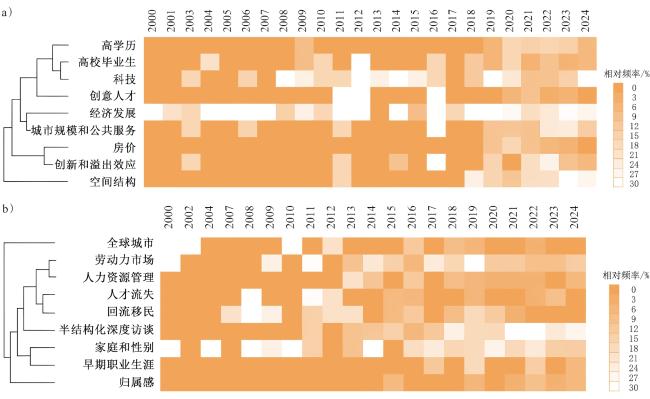
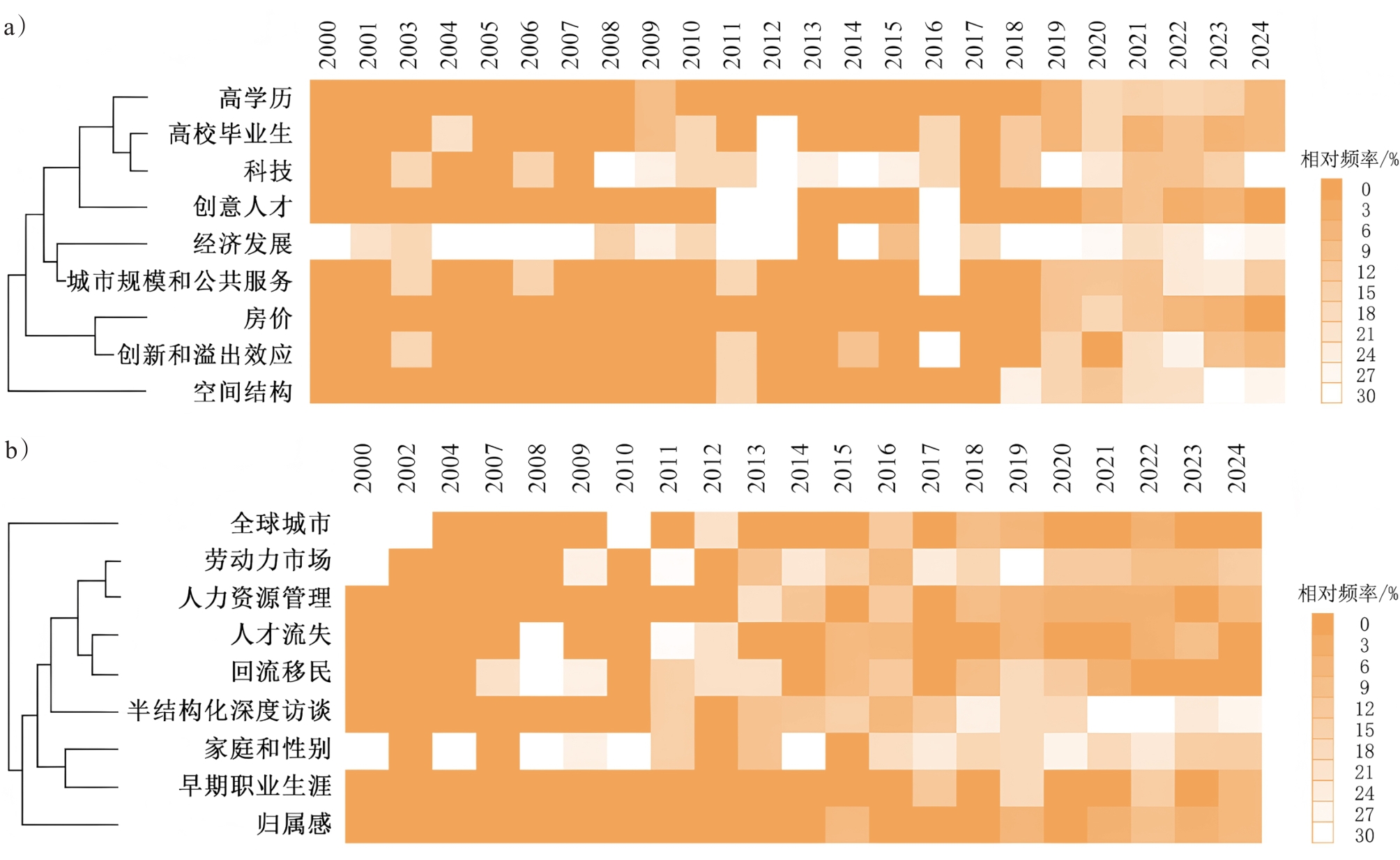
表2 基于WordStat的国内外人才流动研究主题共现Table 2 Domestic and international studies' clusters based on WordStat |
| 国内分类 | 文献数量/篇 | 国内地区 研究主题 | 文章 占比/% | 特征值 | NPMI | 国外分类 | 文献数 量/篇 | 国外地区研究主题 | 文章 占比/% | 特征值 | NPMI |
|---|---|---|---|---|---|---|---|---|---|---|---|
| 不同类型 人才 | 17 | 高学历 | 71.70 | 3.44 | 0.43 | 全球化背景下的 人才流动趋势 | 11 | Global cities(全球城市) | 21.40 | 3.07 | 0.39 |
| 16 | 毕业生 | 25.50 | 3.29 | 0.37 | 18 | Return migrants(回流移民) | 29.80 | 2.47 | 0.40 | ||
| 45 | 科技 | 58.60 | 2.97 | 0.30 | 流入国与 流出国 | 33 | Labour market(劳动力市场) | 28.60 | 2.85 | 0.26 | |
| 10 | 创意人才 | 19.90 | 2.81 | 0.33 | 10 | Brian drain(人才流失) | 39.10 | 2.63 | 0.34 | ||
| 人才流动 空间特征 | 30 | 空间结构 | 26.70 | 4.64 | 0.29 | 11 | Human resource management (人力资源管理) | 20.60 | 3.31 | 0.34 | |
| 人才流动与宏观城市 因素 | 68 | 经济发展 | 73.30 | 3.67 | 0.41 | 微观机制 | 43 | Semi structured depth interviews (半结构化深度访谈) | 24.80 | 3.47 | 0.47 |
| 26 | 城市规模和 公共服务 | 52.90 | 4.05 | 0.43 | 33 | Family and gender(家庭和性别) | 23.50 | 3.81 | 0.55 | ||
| 11 | 房价 | 30.70 | 3.06 | 0.44 | 9 | Early career stage(早期职业生涯) | 23.90 | 2.69 | 0.44 | ||
| 人才流动与区域创新 | 24 | 创新和溢出 效应 | 52.40 | 3.23 | 0.42 | 社会适应 | 13 | Sense of belonging(归属感) | 18.90 | 2.43 | 0.32 |
|
林赛南:研究设计,论文撰写、修改与校对;
彭馨雨:数据收集与分析,论文撰写、修改与校对。
|
Amelina A. 2013. Hierarchies and Categorical Power in Cross-Border Science: Analysing Scientists' Transnational Mobility between Ukraine and Germany. Southeast European and Black Sea Studies, 13(2): 141-155.
|
|
敖荣军,伊尔凡江·艾合买提江,杨彬,王涛. 2023. 技能劳动力区位选择的时空格局及影响因素. 地理研究,42(9):2451-2465.
Ao Rongjun, Yierfanjiang Aihemaitijiang, Yang Bin, and Wang Tao. 2023. Multi-Scale Analysis of Human Capital in China: Spatial Pattern and Scale Relations. Geographical Research, 42(9): 2451-2465.
|
|
Ayala Y, Bayona J A, and Karaeminogullari A. 2020. We are Very Similar but not Really: The Moderating Role of Cultural Identification for Refugee Resettlement of Venezuelans in Colombia. Frontiers in Psychology, 11: 14.
|
|
Babar Z, Ewers M, and Khattab N. 2019. Im/mobile Highly Skilled Migrants in Qatar. Journal of Ethnic and Migration Studies, 45(9): 1553-1570.
|
|
Bailey A and Mulder C H. 2017. Highly Skilled Migration between the Global North and South: Gender, Life Courses and Institutions. Journal of Ethnic and Migration Studies, 43(16): 2689-2703.
|
|
Beaverstock J V. 2002. Transnational Elites in Global Cities: British Expatriates in Singapore's Financial District. Geoforum, 33(4): 525-538.
|
|
Becker R. 2019. Occupational Experiences of High-Skilled Intra-EU Immigrants in a Transnational Space? How European Physicians in Germany Perceive Their Career Prospects. Population, Space and Place, 25(7): 13.
|
|
Berry C R and Glaeser E L. 2005. The Divergence of Human Capital Levels across Cities. Papers in Regional Science, 84(3): 407-444.
|
|
Bongers A, Diaz-Roldan C, and Torres J L. 2022. Highly Skilled International Migration, STEM Workers, and Innovation. Economics-The Open Access, Open-Assessment E-Journal, 16(1): 73-89.
|
|
Bosetti V, Cattaneo C, and Verdolini E. 2015. Migration of Skilled Workers and Innovation: A European Perspective. Journal of International Economics, 96(2): 311-322.
|
|
Botezat A and Ramos R. 2020. Physicians' Brain Drain-A Gravity Model of Migration Flows. Globalization and Health, 16(1): 13.
|
|
Bozzi A. 2024. Digital Nomadism from the Perspective of Places and Mobilities: A Literature Review. European Transport Research Review, 16: 50.
|
|
Cangia F, Davoine E, and Tashtish S. 2021. (Im)mobilities, Waiting and Professional Aspirations: The Career Lives of Highly Skilled Syrian Refugees in Switzerland. Geoforum, 125: 57-65.
|
|
Cenci A. 2018. A Qualitative Viewpoint on the Southern Eurozone Highly Skilled Labour Mobility in the Metropolitan Area of Copenhagen in Times of Crisis and Austerity. Mobilities, 13(4): 551-568.
|
|
陈立中,胡奇,洪建国. 2020. 高房价对城市人才流失和高质量发展的影响. 城市发展研究,27(12):98-105.
Chen Lizhong, Hu Qi, and Hong Jianguo. 2020. Will High Housing Prices Trigger the Loss of Urban Human Capital and the Failure of High-Quality Development? Urban Development Studies, 27(12): 98-105.
|
|
Clark C. 1977. Population Growth & Land Use. London: Palgrave Macmillan.
|
|
Cooke F L. 2007. 'Husband's Career First': Renegotiating Career and Family Commitment among Migrant Chinese Academic Couples in Britain. Work, Employment and Society, 21(1): 47-65.
|
|
Docquier F and Rapoport H. 2012. Globalization, Brain Drain, and Development. Journal of Economic Literature, 50(3): 681-730.
|
|
Doeringer P B and Piore M J. 1971. Internal Labor Market and Manpower Analysis. Lexington: Mass D C Heath.
|
|
Elveren A Y and Toksoz G. 2020. Hidden Gender Dimensions of the Brain Drain: The Case of Turkey. New Perspectives on Turkey, 60: 33-59.
|
|
方远平,曾庆,唐瑶,毛晔. 2016. 广东省创意阶层集聚的时空演变及其影响因素分析. 人文地理,31(6):58-65.
Fang Yuanping, Zeng Qing, Tang Yao, and Mao Ye. 2016. The Spatial Disparities of Agglomeration of Creative Class and Determinates in Guangdong Province. Human Geography, 31(6): 58-65.
|
|
Feldman M P. 2000. Location and Innovation: The New Economic Geography of Innovation, Spillovers, and Agglomeration. Oxford: Oxford University Press.
|
|
Florida R. 2005. The Rise of the Creative Class. Regional Science and Urban Economics, 35(5): 593-596.
|
|
Quan G, Wei N, Zhang Q, Zhou S, and Xie J. 2024. Visualising the Academic Mobility of Nobel Laureates. Environment and Planning B Urban Analytics and City Science, 51(8): 1984-1986.
|
|
高胜楠,吕文婷,吴建华,肖连杰. 2022. 质性研究方法在档案学领域的应用分析与启示. 情报科学,40(7):85-92.
Gao Shengnan, Lyu Wenting, Wu Jianhua, and Xiao Lianjie. 2022. Analysis and Reflection on the Application of Qualitative Research Methods in Archival Science in China. Information Science, 40(7): 85-92.
|
|
Garcia-Rodriguez Y, Mihi-Ramirez A, and Navarro-Pabsdorf M. 2015. Highly-Skilled Migration, Migrant Networks and the Prestige of Academic Institutions. Inzinerine Ekonomika-Engineering Economics, 26(5): 500-506.
|
|
Gatwiri K, Mwanri L, and McPherson L. 2021. Afro-Diasporic Experiences of Highly Skilled Black African Immigrants in Australia. Australian Social Work, 74(4): 480-491.
|
|
Gesing P and Glass C. 2019. STEM Student Mobility Intentions Post-Graduation and the Role of Reverse Push-Pull Factors. International Journal of Educational Development, 65: 227-236.
|
|
Geurts N, Davids T, and Spierings N. 2021. The Lived Experience of An Integration Paradox: Why High-Skilled Migrants from Turkey Experience Little National Belonging in the Netherlands. Journal of Ethnic and Migration Studies, 47(1): 69-87.
|
|
Gu Hengyu and Shen Tiyan. 2021. Modelling Skilled and Less-Skilled Internal Migrations in China, 2010-2015: Application of an Eigenvector Spatial Filtering Hurdle Gravity Approach. Population, Space and Place, 27(6): 1-18.
|
|
古恒宇,沈体雁. 2021. 中国高学历人才的空间演化特征及驱动因素. 地理学报,76(2):326-340.
Gu Hengyu and Shen Tiyan. 2021. Spatial Evolution Characteristics and Driving Forces of Chinese Highly Educated Talents. Acta Geographica Sinica, 76(2): 326-340.
|
|
韩凤芹,蔡佳颖. 2022. 引才政策、空间溢出与创新提升——基于城市空间异质性的实证分析. 科学学研究,40(12):2138-2149.
Han Fengqin and Cai Jiaying. 2022. Talent Introduction Policy, Space Spillover and Innovation Promotion: An Empirical Analysis Based on Urban Spatial Heterogeneity. Studies in Science of Science, 40(12): 2138-2149.
|
|
Hamada I. 2023. Employment Disadvantages among Asian NESB Skilled Migrants in Australia: The Case of Japanese Independent Professionals. Asian Studies Review, 47(4): 720-739.
|
|
何金廖,彭珏,胡浩. 2021. 设计创意人才的空间集聚及其影响机理研究——基于城市舒适性视角. 地理科学,41(9):1525-1535.
He Jinliao, Peng Jue, and Hu Hao. 2021. Spatial Agglomeration of Design Creative Talents and Its Driving Factors: Based on the Perspective of Urban Amenities. Geographical Science, 41(9): 1525-1535.
|
|
何仲禹,翟国方. 2015. 我国大学生就业城市选择意愿及其影响因素分析. 人文地理,30(2):37-42,102.
He Zhongyu and Zhai Guofang. 2015. Employment Location Choice of Chinese College Students and Its Determinants. Human Geography, 30(2): 37-42, 102.
|
|
侯纯光,杜德斌,刘承良,翟晨阳. 2019. 全球人才流动网络复杂性的时空演化——基于全球高校留学生流动数据. 地理研究,38(8):1862-1876.
Hou Chunguang, Du Debin, Liu Chengliang, and Zhai Chenyang. 2019. Spatiotemporal Evolution of Global Talent Mobility Network Based on the Data of International Student Mobility. Geographical Research, 38(8): 1862-1876.
|
|
金文纨,杨博飞,朱晟君. 2022. 西方高技能移民区域影响的研究进展及启示. 人文地理,37(5):8-14.
Jin Wenwan, Yang Bofei, and Zhu Shengjun. 2022. Progress on the Regional Consequences of International High-Skilled Migration. Human Geography, 37(5): 8-14.
|
|
姜炎鹏,王鑫静,马仁锋. 2021. 创新人才集聚的理论探索——全球人才流动的城市选择视角. 地理科学,41(10):1802-1811.
Jiang Yanpeng, Wang Xinjing, and Ma Renfeng. 2021. Theoretical Exploration of Innovative Talent Agglomeration: From the Perspective of City Selection of Global Talent Flow. Scientia Geographica Sinica, 41(10): 1802-1811.
|
|
康雁,吴志伟,寇勇奇,张兰,谢思宇,李浩. 2022. 融合Bert和图卷积的深度集成学习软件需求分类. 计算机科学,49(S1):150-158.
Kang Yan, Wu Zhiwei, Kou Yongqi, Zhang Lan, Xie Siyu, and Li Hao. 2022. Deep Integrated Learning Software Requirement Classification Fusing Bert and Graph Convolution. Computer Science, 49(S1): 150-158.
|
|
Kerr S P, Kerr W, Özden Ç, and Parsons C. 2016. Global Talent Flows. Journal of Economic Perspectives, 30(4): 83-106.
|
|
Khoo S, Hugo G, and McDonald Peter. 2011. Skilled Migration from Europe to Australia. Population, Space and Place, 17(5): 550-566.
|
|
Koen Frenken. 2020. Geography of Scientific Knowledge: A Proximity Approach. Quantitative Science Studies, 1(3): 1007-1016.
|
|
Kõu A, Mulder C H, and Bailey A. 2017. "For the Sake of the Family and Future": The Linked Lives of Highly Skilled Indian Migrants. Journal of Ethnic and Migration Studies, 43(5): 1-18.
|
|
Labrianidis L and Vogiatzis N. 2013. The Mutually Reinforcing Relation between International Migration of Highly Educated Labour Force and Economic Crisis: The Case of Greece. Southeast European and Black Sea Studies, 13(4): 525-551.
|
|
Leal D F and Harder N L. 2021. Global Dynamics of International Migration Systems across South-South, North-North, and North-South Flows, 1990-2015. Applied Network Science, 6(8): 1-27.
|
|
Lewis W Arthur. 1954. Economic Development with Unlimited Supply of Labor. The Manchester School, 22(5): 139-191.
|
|
李杰,陈超美. 2016. CiteSpace科技文本挖掘及可视化. 北京:首都经济贸易大学出版社,2-7.
Li Jie and Chen Chaomei. 2016. CiteSpace: Text Mining and Visualization in Scientific Literature. Beijing: Capital University of Economics & Business Press, 2-7.
|
|
李琴,谢治. 2020. 青年流动人才空间分布及居留意愿影响因素——基于2017年全国流动人口动态监测数据. 经济地理,40(9):27-35.
Li Qin and Xie Zhi. 2020. Spatial Distribution of Floating Young Talents and Influencing Factors of Their Settlement Intention: Based on the Dynamic Monitoring Data of the National Floating Population in 2017. Economic Geography, 40(9): 27-35.
|
|
梁林,赵玉帛,刘兵. 2019. 经济-社会-自然复合影响下的区域人才流动仿真与发展研究——以天津市为例. 科技管理研究,39(22):131-138.
Liang Lin, Zhao Yubo, and Liu Bing. 2019. Research on the Simulation and Development of Regional Talent Flow under the Influence of Economic-Social-Natural Composite: Taking Tianjin as an Example. Science and Technology Management Research, 39(22): 131-138.
|
|
林赛南,王雨,马海涛. 2022. 中国高学历流动人口流动的空间特征及形成机制. 地理研究,41(12):3229-3244.
Lin Sainan, Wang Yu, and Ma Haitao. 2022. Spatial Mobility Pattern of Highly Educated Migrants and Its Mechanisms in China. Geographical Research, 41(12): 3229-3244.
|
|
柳美君,杨杰,石静,步一. 2024. 中国内地科技人才跨境流动网络多样性与互惠性. 科学学研究,[2024-07-29]. https://doi.org/10.16192/j.cnki.1003-2053.20240725.002.
Liu Meijun, Yang Jie, Shi Jing, and Bu Yi. 2024. Diversity and Reciprocity of Cross-Border Mobility Networks of Scientific and Technological Talents Located in China's Mainland. Studies in Science of Science, 1-19[2024-07-29]. https://doi.org/10.16192/j.cnki.1003-2053.202407 25.002.
|
|
Liu Ye and Shen Jianfa. 2014. Jobs or Amenities? Location Choices of Interprovincial Skilled Migrants in China, 2000-2005. Population, Space and Place, 20(7): 592-605.
|
|
刘晔,王若宇,薛德升,曾经元. 2019. 中国高技能劳动力与一般劳动力的空间分布格局及其影响因素. 地理研究,38(8):1949-1964.
Liu Ye, Wang Ruoyu, Xue Desheng, and Zheng Jingyuan. 2019. The Spatial Pattern and Determinants of Skilled Laborers and Less-Skilled Laborers in China: Evidence from 2000 and 2010 Censuses. Geographical Research, 38(8): 1949-1964.
|
|
刘晔,徐楦钫,马海涛. 2021. 中国城市人力资本水平与人口集聚对创新产出的影响. 地理科学,41(6):923-932.
Liu Ye, Xu Xuanfang, and Ma Haitao. 2021. Impact of Human Capital Stock and Population Concentration on Innovative Output in China. Scientia Geographica Sinica, 41(6): 923-932.
|
|
罗守贵. 2001. 我国高校毕业生跨区域流动的机制、影响及其对策. 软科学,15(2):84-88.
Luo Shougui. 2001. The Mechanism, Effects and Countermeasures of Chinese University Graduates' Transregional Flow. Soft Science, 15(2): 84-88.
|
|
Massey D. 1999. Why does Immigration Occur? A Theoretical Synthesis. New York: Sage.
|
|
Mavroudi E and Warren A. 2013. Highly Skilled Migration and the Negotiation of Immigration Policy: Non-EEA Postgraduate Students and Academic Staff at English Universities. Geoforum, 46: 261-270.
|
|
Nagel C. 2005. Skilled Migration in Global Cities from 'Other' Perspectives: British Arabs, Identity Politics, and Local Embededdness. Geoforum, 36(2): 197-210.
|
|
聂晶鑫,刘合林. 2018. 中国人才流动的地域模式及空间分布格局研究. 地理科学,38(12):1979-1987.
Nie Jingxin and Liu Helin. 2018. Spatial Pattern and the Resulting Characteristics of Talent Flows in China. Scientia Geographica Sinica, 38(12): 1979-1987.
|
|
牛冲槐,芮雪琴,王聪,樊燕萍,郭丽芳. 2007. 区域创新系统优化对人才聚集效应的作用研究. 系统科学学报,4(4):64-66.
Niu Chonghuai, Rui Xueqin, Wang Cong, Fan Yanping, and Guo Lifang. 2007. Research on the Action of Regional Innovation System to the Effects of Talents Mass. Journal of Systems Science, 4(4): 64-66.
|
|
Partridge M D. 2010. The Duelling Models: NEG vs Amenity Migration in Explaining US Engines of Growth. Papers in Regional Science, 89(3): 513-536.
|
|
Petty W. 2010. Political Arithmetic. Ma Yan. Trans. Beijing: China Social Sciences Press.
|
|
Pollach I. 2011. Software Review: WordStat 5.0. Organizational Research Methods, 14(4): 741-744.
|
|
Purkayastha B. 2005. Skilled Migration and Cumulative Disadvantage: The Case of Highly Qualified Asian Indian Immigrant Women in the US. Geoforum, 36(2): 181-196.
|
|
Ryan L and Mulholland J. 2014. Trading Places: French Highly Skilled Migrants Negotiating Mobility and Emplacement In London. Journal of Ethnic and Migration Studies, 40(4): 584-600.
|
|
Smith A. 1776. An Inquiry into the Nature and Causes of the Wealth of Nations. Oxford World's Classics. London: W. Strahan and T. Cadell.
|
|
Sue D W. 2010. Microaggressions in Everyday Life: Race, Gender, and Sexual Orientation. Hoboken, NJ: John Wiley & Sons.
|
|
Reichenberger I. 2018. Digital Nomads-A Quest for Holistic Freedom in Work and Leisure. Annals of Leisure Research, 21(3): 364-380.
|
|
Schaer M. 2021. From Mobility Attractiveness to Mobility Fatigue: The Impact of Repeated Transnational Mobility on the Lives and Aspirations of Early-Career Academics. Population, Space and Place, 28(5): e2536.
|
|
Scott S. 2006. The Social Morphology of Skilled Migration: The Case of the British Middle Class in Paris. Journal of Ethnic and Migration Studies, 32(7): 1105-1129.
|
|
Stark O and Bloom D E. 1985. The New Economics of Labor Migration. American Economic Review, 75: 173-178.
|
|
Tabor A, Milfont T, and Ward C. 2015. International Migration Decision-Making and Destination Selection among Skilled Migrants. Journal of Pacific Rim Psychology, 9(1): 28-41.
|
|
Ullman E L. 1954. Amenities as a Factor in Regional Growth. Geographical Review, 44(1): 119.
|
|
Valentine G. 2008. Living with Difference: Reflections on Geographies of Encounter. Progress in Human Geography, 32(3): 323-337.
|
|
Wakisaka D and Cardwell P J. 2021. Exploring the Trajectories of Highly Skilled Migration Law and Policy in Japan and the UK. Comparative Migration Studies, 9(1): 18.
|
|
Wang Y, Lin S, and Tang S. 2024. Individual Preferences, Jobs, or Amenities? Understanding the Destination Choices of Highly and Less-Skilled Migrants in Urban China. Applied Geography, 162: 103169.
|
|
王强,崔璨,劳昕. 2023. 基于空间计量交互模型的人才流动影响因素研究——以中国“双一流”高校毕业生为例. 地理学报,78(6):1392-1407.
Wang Qiang, Cui Can, and Lao Xin. 2023. Talent Migration and Its Influencing Factors Using Spatial Econometric Interaction Model: A Case Study of China's "Double First-Class" University Graduates. Acta Geographica Sinica, 78(6): 1392-1407.
|
|
王秀梅,黄春晓,许宏福,杨志强. 2023. 高端人才流动的网络关联特征与影响因素分析——对长三角地区高端人才流动的观察. 热带地理,43(8):1489-1500.
Wang Xiumei, Huang Chunxiao, Xu Hongfu, and Yang Zhiqiang. 2023. Network Correlation Characteristics and Influencing Factors of High-Level Talent Flow: Observation of the High-Level Talent in the Yangtze River Delta. Tropical Geography, 43(8): 1489-1500.
|
|
Whisler R L, Waldorf B S, Mulligan G F, and Plane D A. 2008. Quality of Life and the Migration of the College-Educated: A Life-Course Approach. Growth and Change, 39(1): 58-94.
|
|
王一凡,崔璨,王强,宁越敏,杨振山. 2021. “人才争夺战”背景下人才流动的空间特征及影响因素——以中国“一流大学”毕业生为例. 地理研究,40(3):743-761.
Wang Yifan, Cui Can, Wang Qiang, Ning Yuemin, and Yang Zhenshan. 2021. Migration of Human Capital in the Context of Vying for Talent Competition: A Case Study of China's "First-Class" University Graduates. Geographical Research, 40(3): 743-761.
|
|
吴传龙,潘源元,罗秋菊. 2023. 景德镇创意阶层的成长与培育. 地理科学,43(8):1463-1470.
Wu Chuanlong, Pan Yuanyuan, and Luo Qiuju. 2023. Social Mobility of the Creative Class in Taoxichuan, Jingdezhen. Scientia Geographica Sinica, 43(8): 1463-1470.
|
|
武荣伟,王若宇,刘晔,古恒宇. 2020. 2000—2015年中国高学历人才分布格局及其影响机制. 地理科学,40(11):1822-1830.
Wu Rongwei, Wang Ruoyu, Liu Ye, and Gu Hengyu. 2020. Spatial Pattern and Determinants of Highly Educated Talents in China, 2000-2015. Scientia Geographica Sinica, 40(11): 1822-1830.
|
|
徐倪妮,郭俊华. 2019. 科技人才流动的宏观影响因素研究. 科学学研究,37(3):414-421,461.
Xu Nini and Guo Junhua. 2019. Research on the Macro Factors Impacting the Flow of Science and Technology Talents. Studies in Science of Science, 37(3): 414-421, 461.
|
|
徐茜,张体勤. 2010. 基于城市环境的人才集聚研究. 中国人口·资源与环境,20(9):171-174.
Xu Qian and Zhang Tiqin. 2010. Talent Agglomeration Based on City Environment. China Population, Resources and Environment, 20(9): 171-174.
|
|
杨开忠,顾芸,董亚宁. 2021. 空间品质、人才区位与人力资本增长——基于新空间经济学. 系统工程理论与实践,41(12):3065-3078.
Yang Kaizhong, Gu Yun, and Dong Yaning. 2021. Qualities of Space, Talent Location and Human Capital Growth: Based on New Spatial Economics. Systems Engineering-Theory & Practice, 41(12): 3065-3078.
|
|
杨振山,杨航. 2022. 多尺度人力资本空间测度:格局分析与尺度关联. 地理研究,41(10):2663-2679.
Yang Zhenshan and Yang Hang. 2022. Multi-Scale Analysis of Human Capital in China: Spatial Pattern and Scale Relations. Geographical Research, 41 (10): 2663-2679.
|
|
颜子明,杜德斌,刘承良,桂钦昌,杨文龙. 2018. 西方创新地理研究的知识图谱可视化分析. 地理学报,73(2):362-379.
Yan Ziming, Du Debin, Liu Chengliang, Gui Qinchang, and Yang Wenlong. 2018. Visualization Analysis of Mapping Knowledge Domain on Western Geography of Innovation. Acta Geographica Sinica, 73(2): 362-379.
|
|
张波. 2022. 海外智力回流的复合动力模型与行动类型——基于中国留学生归国动因的历史检视. 人口与经济,(1):74-89.
Zhang Bo. 2022. On Compound Dynamic Model and Action Type of Overseas Intellectual Return: Based on a Historical Review of the Motivation for Chinese Overseas Students to Return Home. Population & Economics, (1): 74-89.
|
|
张佳宁,李立勋. 2020. 珠三角人才空间分布格局演变与影响因素. 中山大学学报(自然科学版),59(2):120-130.
Zhang Jianing and Li Lixun. 2020. Evolution of Spatial Distribution Pattern and Its Influencing Factors of Talents in the Pearl River Delta. Acta Scientiarum Naturalium Universitatis Sunyatseni, 59(2): 120-130.
|
|
张雅宁,张旭. 2022. 传统创意群体的流动网络与影响因素——以中国名厨为例. 热带地理,42(11):1890-1903.
Zhang Yaning and Zhang Xu. 2022. Patterns and Influencing Factors of the Mobile Network of Traditional Creative Talents: Focus on Chinese Celebrity Chefs. Tropical Geography, 42(11): 1890-1903.
|
|
Zhou Yang, Guo Yuanzhi, and Liu Yansui. 2018. High-Level Talent Flow and Its Influence on Regional Unbalanced Development in China. Applied Geography, 91: 89-98.
|
|
中华人民共和国国家发展和改革委员会. 2021. 中华人民共和国国民经济和社会发展第十四个五年规划和2035年远景目标纲要. (2021-03-23)[2025-01-13]. https://www.ndrc.gov.cn/fggz/fzzlgh/gjfzgh/202103/t20210323_1270102.html.
National Development and Reform Commission of the People's Republic of China. 2021. National Economic and Social Development 14th Five-Year Plan and the 2035 Long-Range Objectives.(2021-03-23)[2025-01-13]. https://www.ndrc.gov.cn/fggz/fzzlgh/gjfzgh/2021 03/t20210323_1270102.html.
|
|
朱竑,张博,马凌. 2019. 新型城镇化背景下中国流动人口研究:议题与展望. 地理科学,39(1):1-11.
Zhu Hong, Zhang Bo, and Ma Ling. 2019. A Review of Chinese Internal Migration Research under the Background of New-Type Urbanization: Topics and Prospects. Scientia Geographica Sinica, 39(1): 1-11.
|
/
| 〈 |
|
〉 |