电子游戏中虚拟与现实空间的互动路径及规划启示
|
师浩辰(1993―),男,广东惠州人,讲师,研究方向为城市游憩行为、城市虚拟现实交互,(E-mail)shc_scut@qq.com。 |
收稿日期: 2025-01-07
修回日期: 2025-02-08
网络出版日期: 2025-10-21
基金资助
国家自然科学基金面上项目“网络社会参与下岭南城镇意象的衍化机理研究”(52178037)
广州大学“2+5”科研创新平台(696229123)
Interactive Pathways and Planning Inspirations between Virtual and Physical Spaces in Video Games
Received date: 2025-01-07
Revised date: 2025-02-08
Online published: 2025-10-21
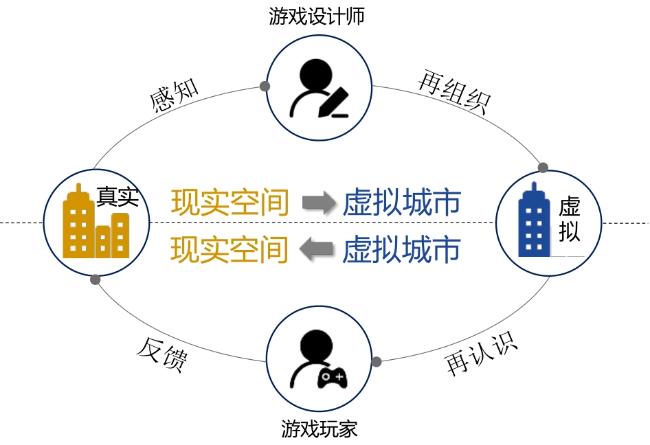
虚拟城市空间作为电子游戏的核心组成,探索其与现实城市场景的互动路径,思考面向该互动情况的规划启示,对数字时代城乡发展、数字孪生技术应用有重要意义。文章通过分析《黑神话:悟空》《原神》《模拟城市》等典型游戏案例,发现虚拟城市与现实空间的交互呈环状路径,现实→虚拟→现实过程历经感知、再组织、再认识、反馈4个阶段,其中感知、再组织阶段对应城市意象理论;再认识、反馈阶段在规划教学实践中被广泛讨论;从规划视角出发,建议构筑人居环境学者与游戏设计师的交流桥梁,探索在游戏世界中传播建成环境内涵的新路径,同时结合游戏强互动性、高参与性特点,提升市民对城市动态系统的再认识,打造基于游戏平台的参与式规划路径,实现规划多主体参与的目标。

师浩辰 . 电子游戏中虚拟与现实空间的互动路径及规划启示[J]. 热带地理, 2025 , 45(12) : 2121 -2131 . DOI: 10.13284/j.cnki.rddl.20250021
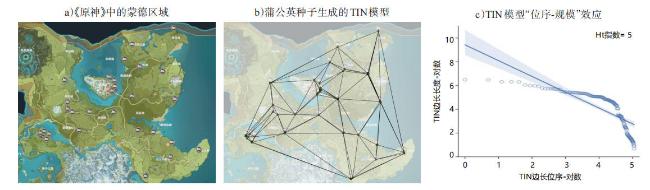
Virtual cities and their built environments play a significant role in video games. Understanding their interactions with physical spaces and considering appropriate planning responses to this interaction are crucial for advancing digital twin technology and urban development in the digital age. Through qualitative and quantitative analyses of representative games such as Black Myth: Wukong, Genshin Impact, and SimCity, this study identifies a cyclical four-stage interaction pathway: (1) Perception: extraction of cultural symbols, (2) Re-organization: gaming-driven reconstruction, (3) Re-understanding: virtual urban areas understanding, and (4) Feedback: real-world application. Perception and Re-organization highlight that virtual space design does not merely replicate real-world spatial characteristics, but rather reorganizes them according to specific aesthetic and functional principles, thereby operationalizing Kevin Lynch's Image of the City theory. This design process is reflected in form and function perspectives. From a form-based perspective, games such as Genshin Impact exemplify how spatial distribution heterogeneity is evident, even in virtual environments. For example, an analysis of the in-game item distribution using the ht-index (value = 5) and log-log plots indicates that although the upper tail approximates a straight line, the lower tail exhibits a rapid decline, suggesting structured spatial heterogeneity. Similarly, a comparative analysis of Florence in video games versus its real-world counterpart supports the idea that virtual spaces selectively reinterpret, rather than mirror physical environments. From a functional perspective, city-building games, such as SimCity and Emperor: Rise of the Middle Kingdom, deconstruct cities into core elements (housing, industry, service facilities, geographic surroundings, and natural resources) and integrate these components through distinct game mechanics. Re-understanding and Feedback emphasize the influence of virtual cities on urban planning education and tourism. In particular, city-building games have a substantial, yet often underestimated, impact on urban planning practices, public participation, and collaborative projects. By lowering the knowledge barriers associated with professional urban planning, virtual cities offer an accessible platform for the public to engage with urban dynamics and foster a more informed and participatory planning approach. Similarly, video games significantly shape place perception in tourism. The immersive experiences provided by virtual cities can inspire players to visit real-world counterparts of game locations, resulting in phenomena such as 'anime pilgrimages.' Notable examples include the Fate series in Japan and the recent Black Myth: Wukong in China, both of which stimulated tourism by reinforcing place attachment through interactive storytelling and visual aesthetics. Based on this interaction pathway, we propose two planning recommendations. First, fostering interdisciplinary collaboration between urban planners, architectural scholars, and game designers can facilitate the dissemination of architectural and urban cultures on digital platforms. Second, leveraging the interactive and participatory nature of video games can enhance the public's understanding of urban systems, paving the way for game-based participatory planning and promoting multi-stakeholder engagement in urban development. This study contributes to emerging theoretical frameworks such as Digital Twins by elucidating the bidirectional relationship between physical and virtual urban spaces, thereby offering new insights into the evolving role of digital environments in shaping real-world urban experiences.
图1 《原神》中蒲公英种子(重要收集物)的异质性分布特征 Fig.1 The heterogenous pattern of dandelion seeds in Genshin Impact |
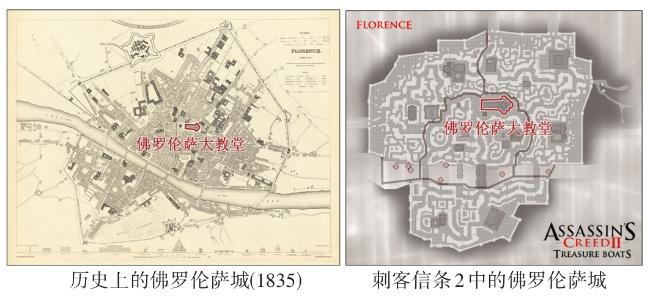
图2 《刺客信条》中弗洛伦萨城与历史真实弗洛伦萨城的比对 Fig.2 The comparison of Florence in the game and the reality |
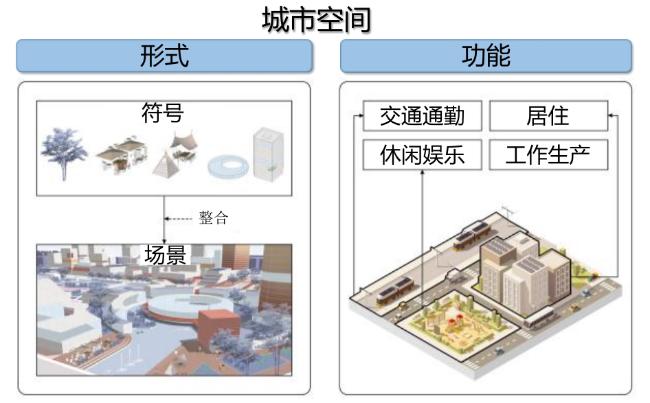
图3 理解城市空间视角:形式与功能Fig.3 The perspectives for understanding cities: form and function |
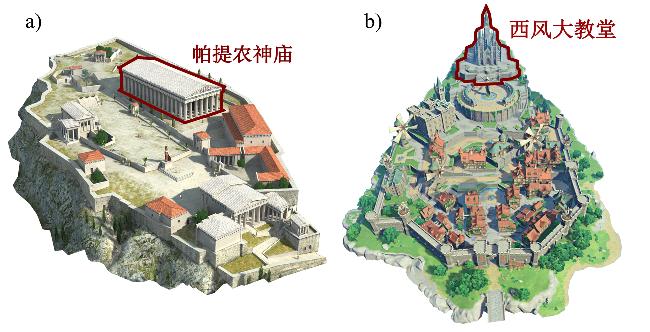
图4 雅典卫城神庙区位(a)和《原神》蒙德城教堂区位(b)Fig.4 The comparison of locations of important buildings in the game and the reality |
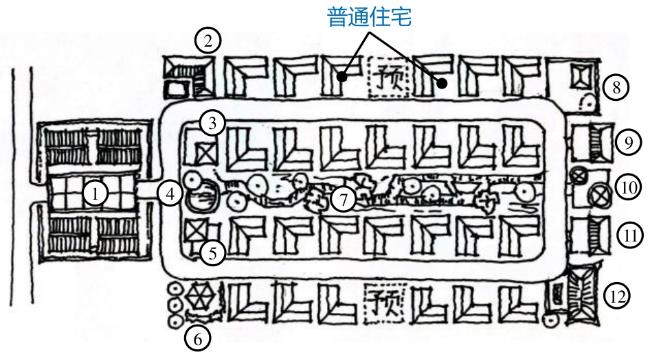
图5 城市经营游戏《帝国:龙之崛起》的典型社区排布平面 Fig.5 The typical mater plan of a community in Emperor: Rise of the Middle Kingdom |
图7 神户市与《Fate》系列的官方联动活动Fig.7 The official collaboration events between Kobe City and the Fate series games |
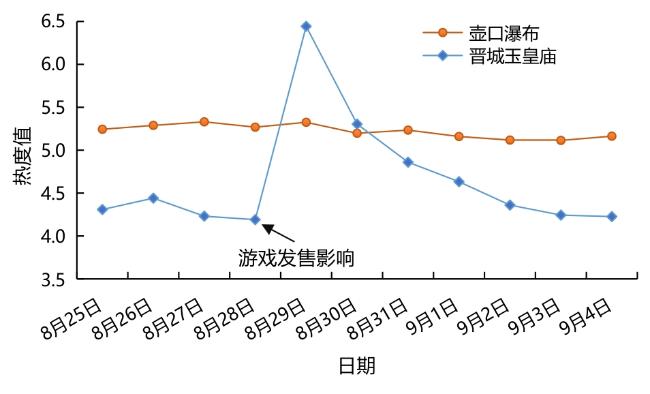
图8 《黑神话:悟空》发售前后游戏取景地百度指数变化(2024年) Fig. 8 Changes in the Baidu Index of game viewfinder locations before and after the release of the Black Myth: Wukong in 2024 |
图9 游戏视角虚拟-现实城市空间的互动逻辑Fig.9 The inter-impacting pathways of virtual and physical cities through the lens of video games |
“我们决定选用文艺复兴的历史时间,……。我们进入细节——城市、建筑、结构和代表这段时间的纹理。我们试图选择、整合并将其带入游戏中,这样才能真正展现一些生动的东西,以及代表过去的拥挤生活……。我们知道这不是在确切的历史中,……。我们试图再组织并重现一些有趣的东西,……”
“稻妻(Inazuma)本意是闪电,象征须臾,……,我们尝试在游戏世界中依托这个理念,去串联稻妻整个的游戏群岛地图,……,创作期间我们也做了不少对现实世界的考据用以参考,将茶室、天守阁等真实世界元素进行整合,呈现给旅行者一种独特的人文风情,……”
表1 基于《都市:天际线》平台进行的城市设计竞赛Table 1 A urban design competition based on video game-Cities: Skylines |
| 项目 | 详情 |
|---|---|
| 活动名称 | 哈梅恩林纳市城市设计比赛 |
| 活动时间 | 2016-03-09—05-22 |
| 活动地点 | 芬兰哈梅恩林纳市 |
| 工具平台 | 游戏《都市:天际线》 |
| 竞赛目标 | 1)贡献市中心总体规划,改善交通网络和服务结构,解决贸易相关问题;2)为坎托拉和卡图曼地区的重建提出建议 |
| 参与方式 | 在图书馆或家中使用已安装的游戏参与 |
| 评选方式 | 评选出12名决赛选手,并基于新颖性、原创性和可行性选择获胜作品 |
| 亮点 | 将数字工具和游戏平台与现实城市规划过程相结合,促进公众参与和创新设计解决方案 |
| 介绍网址 | https://www.rappler.com/technology/123474-finland-hameenlinna-cities-skylines-planning-contest/ |
1 “活力程度”为Livingness概念的中译,本意表明空间异质性的多尺度现象或复杂程度(Jiang, 2018
2 完整采访见:https://www.sohu.com/a/506495016_120099885
3 完整采访见:https://www.bilibili.com/video/BV1Ao4y1X7mg
4 https://www.bbc.com/news/av/39200838
5 “圣地巡礼”指游戏、动漫粉丝前往作品中虚拟场所对应现实城市空间进行旅行的行为(Ono et al., 2020)。
6 https://xueqiu.com/8428129519/313753509
7 搜狐网. 在港大接触虚拟现实与VR建筑,在游戏世界开辟建筑师的天地. https://www.sohu.com/a/477529066_676093。
8 搜狐网. 《黑神话:悟空》为古建筑数字化应用带来启示. https://www.sohu.com/a/803638187_211762
9 注:游戏模组,又名Mod,是游戏的一种修改或增强程序,指将电子游戏中的道具、事物、模式、故事情节等做出修改,又或是加入新的道具及事物。游戏模组通常基于游戏自带平台开发,比如地图编辑器,通常不涉及游戏底代码,复杂程度有限,因此常有游戏爱好者自制Mod并公开供玩家下载使用。
|
Adžić S, Al-mansour J, Naqvi H, and Stambolić S. 2021. The Impact of Video Games on Students' Educational Outcomes. Entertainment Computing, 38: 100412.
|
|
Álvarez R and Duarte F. 2018. Spatial Design and Placemaking: Learning from Video Games. Space and Culture, 21(3): 208-232.
|
|
Batty M. 2008. The Size, Scale, and Shape of Cities. Science, 319(5864): 769-771.
|
|
Batty M. 2013. The New Science of Cities. Cambridge: MIT Press.
|
|
Batty M. 2024. Digital Twins in City Planning. Nature Computational Science, 4(3): 192-199.
|
|
Bereitschaft B. 2016. Gods of the City? Reflecting on City Building Games as an Early Introduction to Urban Systems. Journal of Geography, 115(2): 51-60.
|
|
Bettencourt L M A. 2013. The Origins of Scaling in Cities. Science, 340(6139): 1438-1441.
|
|
Calleja G. 2011. In-Game: From Immersion to Incorporation. Cambridge: MIT Press.
|
|
丁美辰,沈国强. 2024. 城市模拟游戏视角下决策模型技术路径及其价值导向的思考. 城市规划学刊,(2):34-40.
Ding Meichen and Shen Guoqiang. 2024. Reflections on Technical Pathways and Value Orientations of Decision-Making Models in SimCity Games. Urban Planning Forum, (2): 34-40.
|
|
冯君明,李翅,孙悦昕,吕硕,李玥. 2023. 城市公共服务设施供需空间匹配研究——以北京市回天地区为例. 城市规划,47(5):75-85.
Feng Mingjun, Li Chi, Sun Yuexin, Lyu Shuo, and Li Yue. 2023. Spatial Matching between Supply and Demand of Public Service Facilities: A Case of Huilongguan-Tiantongyuan Area in Beijing. City Planning Review, 47(5): 75-85.
|
|
Fullerton T, Swain C, and Hoffman S. 2008. Game Design Workshop: A Play-Centric Approach to Creating Innovative Games. Boston: Elsevier Morgan Kaufmann.
|
|
Gaber J. 2007. Simulating Planning: SimCity as a Pedagogical Tool. Journal of Planning Education and Research, 27(2): 113-121.
|
|
Jiang B. 2018. A Topological Representation for Taking Cities as a Coherent Whole: Topological Representation. Geographical Analysis, 50(3): 298-313.
|
|
Jiang B and Ren Z. 2019. Geographic Space as a Living Structure for Predicting Human Activities Using Big Data. International Journal of Geographical Information Science, 33(4): 764-779.
|
|
Jiang B and Yin J. 2014. Ht-Index for Quantifying the Fractal or Scaling Structure of Geographic Features. Annals of the Association of American Geographers, 104(3): 530-540.
|
|
Juraschek M, Herrmann C, and Thiede S. 2017. Utilizing Gaming Technology for Simulation of Urban Production. Procedia CIRP, 61: 469-474.
|
|
Juul J. 2005. Half-Real: Video Games between Real Rules and Fictional Worlds. Cambridge: MIT Press.
|
|
林奇·凯文. 2001. 城市意象. 北京:华夏出版社. [Kevin L. 2001. The Image of the City. Beijing: Huaxia Publishing House. ]
|
|
Keil J, Edler D, Schmitt T, and Dickmann F. 2021. Creating Immersive Virtual Environments Based on Open Geospatial Data and Game Engines. KN-Journal of Cartography and Geographic Information, 71(1): 53-65.
|
|
Kirillova K, Peng C, and Chen H. 2019. Anime Consumer Motivation for Anime Tourism and How to Harness It. Journal of Travel & Tourism Marketing, 36(2): 268-281.
|
|
Lauwaert M. 2007. Challenge Everything: Construction Play in Will Wright's SIMCITY. Games and Culture, 2(3): 194-212.
|
|
Liu S, Lai D, and Li Z. 2022. The Identity Construction of Chinese Anime Pilgrims. Annals of Tourism Research, 93: 103373.
|
|
Lobo D G. 2005. A city is Not a Toy: How SimCity Plays with Urbanism. London: London School of Economics and Political Science, 1-19.
|
|
Ma D, Osaragi T, Oki T, and Jiang B. 2020. Exploring the Heterogeneity of Human Urban Movements Using Geo-Tagged Tweets. International Journal of Geographical Information Science, 34(12): 2475-2496.
|
|
Mangnus A C, Rebel K T, Vervoort J M, Dotinga R, Hoogendoorn E, Driessen P, and Hajer M. 2022. Picture the Future, Play the Present: Re-Imagining Sustainable Cities through a Large-Scale Location-Based Game. Futures, 135: 102858.
|
|
Mangnus A C, Vervoort J M, Mcgreevy S R, Ota K, Rupprecht C D D, Oga M, and Kobayashi M. 2019. New Pathways for Governing Food System Transformations: A Pluralistic Practice-Based Futures Approach Using Visioning, Back-Casting, and Serious Gaming. Ecology and Society, 24(4): 2.
|
|
Mills S, Ash J, and Gordon R. 2024. Children and Young People's Experiences and Understandings of Gambling-Style Systems in Digital Games: Loot Boxes, Popular Culture, and Changing Childhoods. Annals of the American Association of Geographers, 114(1): 200-217.
|
|
Minnery J and Searle G. 2014. Toying with the City? Using the Computer Game SimCityTM4 in Planning Education. Planning Practice & Research, 29(1): 41-55.
|
|
Ono A, Kawamura S, Nishimori Y, Oguro Y, Shimizu R, and Yamamoto S. 2020. Anime Pilgrimage in Japan: Focusing Social Influences as Determinants. Tourism Management, 76: 103935.
|
|
Paterson I. 2007. Experiencing Architectural Interiors and Exteriors in Computer Games. International Journal of Architectural Computing, 5(1): 127-143.
|
|
Pinos J, Vozenilek V, and Pavlis O. 2020. Automatic Geodata Processing Methods for Real-World City Visualizations in Cities: Skylines. ISPRS International Journal of Geo-Information, 9(1): 17.
|
|
Robinson G M, Hardman M, and Matley R J. 2021. Using Games in Geographical and Planning-Related Teaching: Serious Games, Edutainment, Board Games and Role-Play. Social Sciences & Humanities Open, 4(1): 100208.
|
|
Rufat S and Ter Minassian H. 2012. Video Games and Urban Simulation: New Tools or New Tricks? Cybergeo: European Journal of Geography, 622.
|
|
Shi H, Li Y, Kong Y, Ji Y, Liu H, Huang H, and Zhao M. 2024a. Cities in Electronic Games: How They Present and Impact Real Urban Areas? Journal of Asian Architecture and Building Engineering, 24(5): 4517-4531.
|
|
Shi H, Yao L, Liu Q, Wang Y, Wei Z, Zhao M, and Ma D. 2024b. From Trajectories to Network: Delineating the Spatial Pattern of Recreational Walking in Guangzhou. Applied Geography, 170: 103344.
|
|
Shi H, Xu L, and Ma D. 2025. Does Spatial Distribution Heterogeneity Exist in Video Games? Evidence from Genshin Impact's Map. Cities, 159: 105798.
|
|
师浩辰,赵渺希,陈佩谦. 2021. 土地混合使用视角下的地块间兼容度测度——以湖南省湘潭市市辖区为例. 热带地理,41(4):746-759.
Shi Haochen, Zhao Miao, and Chen Peiqian. 2021. Measuring the Functional Compatibility of Land from the Perspective of Land-Use Mix: A Case Study of Xiangtan. Tropical Geography, 41(4): 746-759.
|
|
Shin D. 2019. How does Immersion Work in Augmented Reality Games? A User-Centric View of Immersion and Engagement. Information, Communication & Society, 22(9): 1212-1229.
|
|
Squire K. 2003. Video Games in Education. International Journal of Intelligent Games & Simulation, 2(1): 46-92.
|
|
Talen E. 2003. Measuring Urbanism: Issues in Smart Growth Research. Journal of Urban Design, 8(3): 195-215.
|
|
Vanolo A. 2018. Cities and the Politics of Gamification. Cities, 74: 320-326.
|
|
Walz S P. 2010. Toward a Ludic Architecture: The Space of Play and Games. Pittsburgh: ETC Press.
|
|
王敏,王盈蓄,黄海燕,田银生. 2018. 基于眼动实验方法的城市开敞空间视觉研究——广州花城广场案例. 热带地理,38(6):741-750.
Wang Min, Wang Yinxu, Huang Haiyan, and Tian Yinsheng. 2018. A Visual Analysis on the Urban Open Spaces: With an Eye-Tracking Experiment on the Case Study of the Flower City Square, Guangzhou. Tropical Geography, 38(6): 741-750.
|
|
Weber M. 1978. Economy and Society: An Outline of Interpretive Sociology. California: University of California Press.
|
|
吴志强,周咪咪,刘琦,甘惟,徐浩文,黑静好. 2024. “跨代孪生”:映射城市的生命特征. 城市规划学刊,(1):9-17.
Wu Zhiqiang, Zhou Mimi, Liu Qi, Gan Wei, Xu Haowen, and Hei Jinghao. 2024. The "Cross-Generational Twin City": Mapping the Life Characteristics of the City. Urban Planning Forum, (1): 9-17.
|
|
Zendle D, Flick C, Gordon-Petrpvskaya E, Ballou N, Xiao L Y, and Drachen A. 2023. No Evidence that Chinese Playtime Mandates Reduced Heavy Gaming in One Segment of the Video Games Industry. Nature Human Behaviour, 7(10): 1753-1766.
|
|
张杨,何依. 2021. 历史图景中的非正规城市形态及当代启示——基于对《清明上河图》的解读. 城市规划,45(11):83-95.
Zhang Yang and He Yi. 2021. Informal Urban Form in Historical Prospect and Its Contemporary Enlightenment: Based on the Interpretation of Riverside Scene at QingMing Festival. City Planning Review, 45(11): 83-95.
|
|
赵渺希,陈汝霜. 2023. 网络社会视角下的城市意象理论辨析与规划应用. 人文地理,38(1):71-78.
Zhao Miaoxi and Chen Rushuang. 2023. Theoretical Progress and Planning Prospect of City Image in the Network Society. Human Geography, 38(1): 71-78.
|
|
赵楠楠,赵渺希,王世福. 2019. 《清明上河图》城市意象的网络图景分析. 南方建筑,(4):104-109.
Zhao Nannan, Zhao Miaoxi, and Wang Shifu. 2019. Internet Analysis of City Image in 'Qingming Shanghe Tu' of Qing Dynasty. South Architecture, (4): 104-109.
|
/
| 〈 |
|
〉 |