场景理论视角下城市孤岛空间生产的文化逻辑与转型路径——以广州车陂村为例
|
唐夕汐(1990—),女,湖南邵阳人,副教授,博士,研究方向为文旅城市更新,(E-mail)348938731@qq.com; |
收稿日期: 2025-08-05
修回日期: 2025-11-03
网络出版日期: 2025-12-29
基金资助
广东省普通高校特色创新类项目(2025WTSCX082)
Cultural Logic and Transformation Pathways of Space Production of Urban Islands from the Perspective of Scene Theory: A Case Study of Chebei Village in Guangzhou, China
Received date: 2025-08-05
Revised date: 2025-11-03
Online published: 2025-12-29
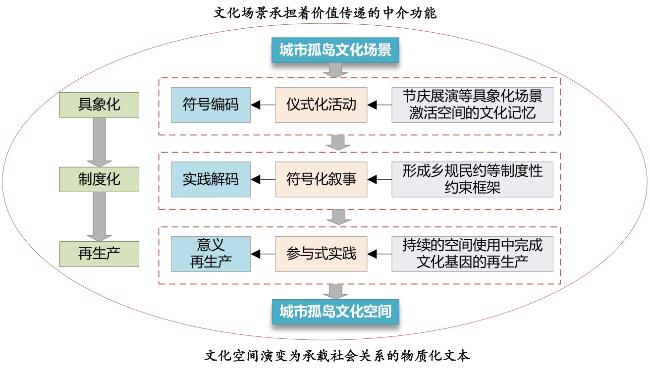
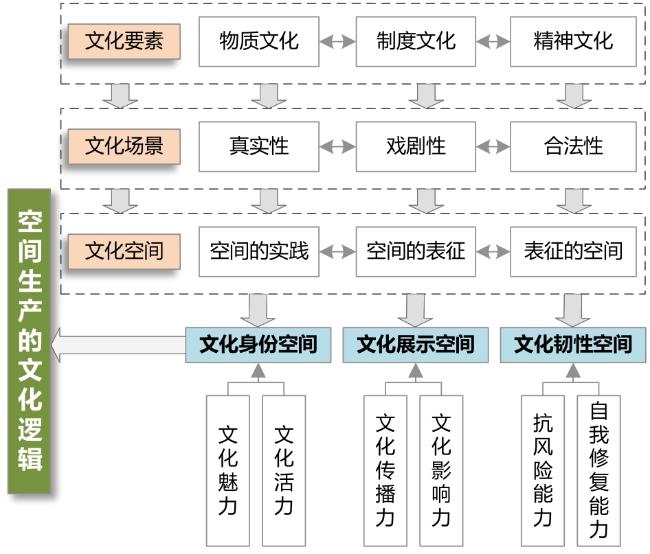
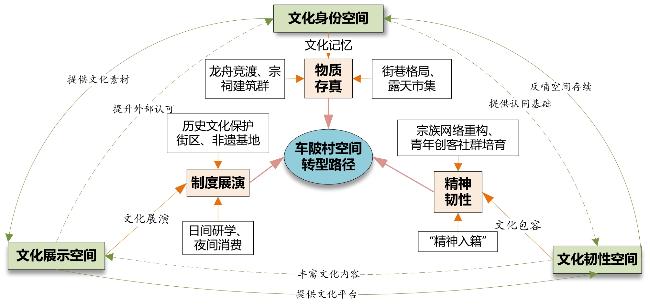
融合场景理论与空间生产理论,以广州车陂村为典型案例,采用参与式观察、深度访谈与多源文本分析等方法,剖析城市孤岛空间生产的文化逻辑与转型路径。研究发现:1)基于构建的“文化要素-文化场景-文化空间”三重对应的分析框架,揭示城市孤岛在文化真实性、戏剧性与合法性的场景化驱动下,分别形塑出文化身份空间、文化展示空间与文化韧性空间。2)三类空间并非孤立存在,而是通过“空间的实践”“空间的表征”与“表征的空间”之间的动态耦合与相互强化,共同推动空间从“文化滞存”向“韧性再生”转型。3)车陂村存在“物质存真―制度展演―精神韧性”的渐进式转型路径,在坚守物质载体原真性的基础上,借助制度赋权与节庆展演实现文化符号的价值转化,并通过社群创新、情感认同与“精神入籍”等机制提升文化系统的适应性与可持续性。
唐夕汐 , 夏青 , 李胜超 . 场景理论视角下城市孤岛空间生产的文化逻辑与转型路径——以广州车陂村为例[J]. 热带地理, 2025 , 45(12) : 2132 -2144 . DOI: 10.13284/j.cnki.rddl.20250526
In China, urban development is transitioning from "incremental expansion" to "stock optimization." Due to this transition, a considerable number of urban villages in the country have evolved into spatially and culturally fragmented enclaves within the modern urban fabric, while retaining their unique socio-cultural structures. Focusing on this phenomenon, this study integrated scene and spatial production theories to systematically deconstruct the cultural logic and transformation pathways that underlay the spatial production of urban islands in China, while considering Chebei Village in Guangzhou as the study area. This region is characterized by cultural preservation amidst rapid urbanization. A mixed-methods approach was employed, including participatory observation, in-depth interviews, and multi-source textual analysis. The results revealed a dynamic correspondence mechanism comprising two core systems: a "cultural elements-cultural scenes-cultural spaces" system that formed a tripartite cultural logic system and a "material authenticity-institutional performance-spiritual resilience" system that formed a concrete spatial transformation pathway. The "cultural elements-cultural scenes-cultural spaces" system comprised three aspects: 1) cultural identity spaces shaped by the authenticity of material culture (e.g., dragon boat practices and ancestral halls) and sustained through everyday spatial practices of residents; 2) cultural exhibition spaces produced through the theatricality of institutional culture, wherein power entities (e.g., local government) employed institutional labeling and festive performances to symbolically reconstruct and commodify cultural symbols; and 3) cultural resilience spaces generated through the legitimacy of spiritual culture, wherein community innovation, emotional solidarity, and inclusive mechanisms (e.g., youth alliances and "spiritual naturalization" for migrants) fostered cultural adaptation and regeneration. The "material authenticity-institutional performance-spiritual resilience" system highlighted the importance of preserving physical heritage and authentic daily practices, leveraging institutional empowerment and staged cultural events to enhance visibility and economic value, and strengthening community-based innovation and reconstructed identities to ensure cultural adaptability and sustainable regeneration. The three spatial types interacted dynamically, driven by the three dimensions of Scene Theory (authenticity, theatricality, and legitimacy) and the three moments of Spatial Production Theory (spatial practice, representations of space, and representational spaces). The novelty of this study lies in the integration of the Scene and Spatial Production theories, providing an analytical framework that captures both the symbolic construction of cultural values and the socio-spatial processes of space production. This study addresses the gaps in the understanding of the endogenous cultural dynamics of urban islands, while offering evidence-based insights into culture-led urban regeneration, demonstrating how culturally stagnant enclaves can transform into resilient and actively engaged cultural spaces. Notably, Chebei Village provides a replicable and expandable model for balancing heritage preservation, economic vitality, and social inclusion within the context of urban regeneration, while presenting valuable empirical and strategic references for enhanced cultural governance in contemporary urban China.
表1 重点访谈样本资料Table 1 Sample data of key interviews |
| 编号 | 称呼 | 年龄/岁 | 身份信息 |
|---|---|---|---|
| A1 | 马生 | 50 | 街道工作人员 |
| A2 | 黄姐 | 43 | 街道工作人员 |
| A3 | 冯生 | 39 | 龙船会工作人员 |
| A4 | 关姐 | 32 | 龙船会工作人员 |
| A5 | 麦生 | 41 | 龙舟文化展览馆工作人员 |
| A6 | 张生 | 45 | 龙舟文化展览馆工作人员 |
| A7 | 王伯 | 56 | 宗族理事会成员 |
| A8 | 马伯 | 51 | 祠堂管理者 |
| A9 | 梁婶 | 49 | 祠堂管理者 |
| B1 | 罗姐 | 32 | 小贩摊主 |
| B2 | 简生 | 38 | 小贩摊主 |
| B3 | 小刘 | 30 | 商户 |
| B4 | 李生 | 55 | 商户 |
| B5 | 叶姐 | 48 | 商户 |
| C1 | 郝伯 | 77 | 本地居民 |
| C2 | 苏姐 | 57 | 本地居民 |
| C3 | 黄伯 | 67 | 本地居民 |
| C4 | 小王 | 28 | 本地居民 |
| C5 | 梁生 | 38 | 本地居民 |
| D1 | 小陈 | 29 | 租户 |
| D2 | 杨生 | 24 | 租户 |
| D3 | 小高 | 21 | 租户 |
| E1 | 小袁 | 19 | 游客 |
| E2 | 刘姐 | 37 | 游客 |
| E3 | 小胡 | 22 | 游客 |
| E4 | 杨姐 | 44 | 游客 |
| F1 | 袁姐 | 36 | 新村民 |
| F2 | 陈生 | 41 | 新村民 |
唐夕汐:论文选题、数据调研、框架构建、全文写作、论文修改;
夏 青:理论与写作思路指导;
李胜超:图表绘制。
|
Archer B. 2021. Book Review: Urban Regeneration in the UK. Urban Studies, 58(9): 1959-1961.
|
|
Balbir S A. 2024. Securing Open Space in an Informal Settlement: Implications for Leisure Activities and Community Participation. Leisure Studies, 43(6):978-991.
|
|
保继刚,孟凯,章倩滢. 2015. 旅游引导的乡村城市化. 地理研究,34(8):1422-1434.
Bao Jigang, Meng Kai, and Zhang Qianying. 2015. Rural Urbanization Led by Tourism. Geographic Research, 34(8): 1422-1434.
|
|
Clark T N. 2004. The City as an Entertainment Machine. Amsterdam: Elsevier.
|
|
陈溢晨,陈墅香. 2025. 场景理论视域下红砖街区保护与更新——以泉州西街历史文化街区为例. 自然资源学报,40(6):1523-1540.
Chen Yichen and Chen Shuxiang. 2025. Protection and Renewal of Red Brick District from the Perspective of Scene Theory:A Case Study of Ouanzhou West Street Historical and Cultural District. Journal of Natural Resources, 40(6):1523-1540.
|
|
段进. 2000. 城市空间发展论. 南京:江苏科学技术出版社,126-127.
Duan Jin. 2000. Urban Spatial Development Theory. Nanjing: Jiangsu Science & Technology Press, 126-127.
|
|
窦银娣,叶玮怡,李伯华,刘沛林. 2022. 基于“三生”空间的传统村落旅游适应性研究:以张谷英村为例. 经济地理,42(7):215-224.
Dou Yindi, Ye Weiyi, Li Bohua,and Liu Peilin.2022. Tourism Adaptability of Traditional Villages Based on the "Production-Living-Ecological" Space: A Case Study of Zhangguying Village. Economic Geography, 42(7): 215-224.
|
|
丁凡,伍江. 2017. 城市更新相关概念的演进及在当今的现实意义. 城市规划学刊,(6):87-95.
Ding Fan and Wu Jiang. 2017. The Evolution of Urban Renewal Related Concepts and Its Practical Significance in Contemporary Era. Urban Planning Forum, (6): 87-95.
|
|
Guo M and Herrmann P C. 2023. Ritual Spaces, Govern Mentality and Cultural Governance in Urban Development: The Case of Shenzhen. Space and Culture, 26(4): 560-578.
|
|
郭晨,冯舒,汤沫熙,唐正宇,杨志鹏. 2022. 场景规划:助力城市群协同发展——以粤港澳大湾区为例. 热带地理,42(2):305-317.
Guo Chen, Feng Shu, Tang Moxi, Tang Zhengyu, and Yang Zhipeng. 2022. Scenes Planning: Boosting the Collaborative Development of Urban Agglomeration-A Case Study of the Guangdong-Hong Kong-Macao Greater Bay Area. Tropical Geography, 42(2): 305-317.
|
|
Imperiale A J and Vanclay F. 2016. Experiencing Local Community Resilience in Action:Learning from Post-Disaster Communities. Journal of Rural Studies, 47 (Part A): 204-219.
|
|
Jia L and June W. 2025. Remaking Urban Village through Culture: The Politics of Urban Aesthetics in Shenzhen, China. Urban Geography, 46(5): 1003-1021.
|
|
Lee R and Wills J. 1997. Geographies of Economies. London: Arnold.
|
|
Lefebvre H. 1991. The Production of Space. Donald N, Trans. Oxford: Blackwell.
|
|
刘易斯. 芒福德. 2009. 城市文化. 宋俊龄,译. 北京:中国建筑工业出版社.
Mumford L. 2009. The Culture of Cities. Song Junling, trans. Beijing: China Architecture & Building Press.
|
|
刘亮,田里. 2023. 旅游孤岛相关概念辨析及其研究进展. 地理科学进展,42(4):809-820.
Liu Liang and Tian Li. 2023. Clarification and Research Progress of Tourism Island-Related Concepts. Progress in Geography, 42(4): 809-820.
|
|
李俊夫. 2004. 城中村的改造. 北京:科学出版社,188-222.
Li Junfu. 2004. Reconstruction of Urban Villages. Beijing: Science Press, 188-222.
|
|
赖亚妮,郑耀贤. 2025. 城市更新背景下拆除重建和综合整治城中村改造实施效果评价与比较分析——基于村民和租户的视角. 自然资源学报,40(1):211-230.
Lai Yani and Zheng Yaoxian. 2025. Evaluation and Comparative Analysis of the Renewal Implementation Effect of Demolition-Reconstruction and Comprehensive Renovation in the Context of Urban Renewal: Based on Perspectives from Villagers and Tenants. Journal of Natural Resources, 40(1): 211-230.
|
|
Mao W, Hong S, Chai T, Mao W, Hong S, Chai T F, Shen J C, and Shen J. 2022. Cultural Landscape Reproduction of Typical Religious Architecture in Qingjiangpu Based on Scene Theory. Applied Sciences, 13(1): 82.
|
|
牟伦超,程励. 2023. 空间生产视域下“古”镇旅游的地方营造:以恩施土家女儿城为例. 旅游学刊,38(3):107-124.
Mou Lunchao and Cheng Li. 2023. The Place Making of”Ancient”Town Tourism from the Perspective of the Theory of Production of Space: A Case from Enshi Tujia Daughter Town. Tourism Tribune, 38(3): 107-124.
|
|
Paolo G. 2025. Filling the Void: Urban Regeneration and Contested Space in Milan's Loreto Square. Anthropology Today, 41(1): 15-19.
|
|
Pollio A. 2020. Architectures of Millennial Development: Entrepreneurship and Spatial Justice at the Bottom of the Pyramid in Cape Town. Environment and Planning A, 52(3): 573-592.
|
|
秦晓楠,杜雪婷,王兴康,王悦. 2023. 黄河旅游文化空间的场景认知与生产机理. 资源科学,45(12):2400-2413.
Qin Xiaonan, Du Xueting, Wang Xingkang, and Wang Yue. 2023. Scene Cognition and Production Mechanism of Yellow River Tourism Cultural Space. Resources Science, 45(12): 2400-2413.
|
|
Ruming K and Melo Z M L. 2024. Care, Urban Regeneration and Forced Tenant Relocation: The Case of Ivanhoe Social Housing Estate, Sydney. Housing Studies, 39(3): 812-830.
|
|
Stellenbosch U and South A. 2025. Customary Land Management Systems and Urban Planning in Peri-Urban Informal Settlements. Urban Studies, 62(2): 310-327.
|
|
Silver D and Nichols Clark T. 2015. The Power of Scenes: Quantities of Amenities and Qualities of Places. Cultural Studies, 29(3): 425-449.
|
|
宋洋洋. 2024. 文旅融合视角下旅游对城市更新的作用. 旅游学刊,39(3):8-10.
Song Yangyang. 2024. The Role of Tourism in Urban Renewal from the Perspective of Cultural and Tourism Integration. Tourism Tribune, 39(3): 8-10.
|
|
仝德,冯长春. 2009. 国内外城中村研究进展及展望. 人文地理,24(6):29-35.
Tong De and Feng Changchun. 2009. Review and Progress of the Research on Urban Villages. Human Geography, 24(6): 29-35.
|
|
唐夕汐,李胜超. 2024a. 从“孤”到“不孤”的城市孤岛文旅空间生产研究——以广州市黄埔古村为例. 人文地理,39(6):162-169,192.
Tang Xixi and Li Shengchao. 2024a. Research on the Production of Cultural Tourism Space in Urban Islands from "Isolation" to "Connection": A Case Study of Huangpu Ancient Village in Guangzhou. Human Geography, 39(6): 162-169, 192.
|
|
唐夕汐. 2024b. 文旅城市更新视角下城中村复合空间质量与韧性建设——广州市多案例研究. 理论月刊,(10):123-131.
Tang Xixi. 2024b. Composite Space Quality and Resilience Construction of Urban Villages from the Perspective of Cultural Tourism Urban Renewal: A Multiple Case Study in Guangzhou. Theory Monthly, (10): 123-131.
|
|
Visser M A, Mullooly J, and Campos-Melchor P. 2020. Diversifying, Trans-Forming, and Last Resorts:The Utilization of Community Based Youth Serving Organizations in the Construction of Livelihood Strategies by Disconnected Youth in Rural America. Journal of Rural Studies, 80: 328-336.
|
|
Wise N. 2022. The Power of New Urban Tourism: Spaces, Representations and Contestations, by Claudia Ba, Sybille Frank, Claus Müller, Anna Laura Raschke, Kristin Wellner and Annika Zecher (eds. ). Journal of Urban Affairs, 44(9): 1372-1374.
|
|
王如渊. 2004. 西方国家城市更新研究综述. 西华师范大学学报(哲学社会科学版),(2):1-6.
Wang Ruyuan. 2004. Summary of the Researches on the Urban Renewal in Western Countries. Journal of Xihua Normal University (Philosophy and Social Sciences Edition), (2): 1-6.
|
|
王月涛,宋婧雯,薛滨夏,张远景. 2021. 基于空间句法的历史城市“孤岛效应”改善策略研究. 城市发展研究,28(4):99-107,2,37.
Wang Yuetao, Song Jingwen, Xue Binxia, and Zhang Yuanjing. 2021. The Improving Strategies of Island Effect of Historical Cities Based on Spatial Syntax. Urban Development Studies, 28(4): 99-107, 2, 37.
|
|
Wang Yuhuan and Zhou Yongbo. 2024. Metro Cultural Scene: A New Community Scale in Urban Scene Research. Environment and Planning B: Urban Analytics and City Science, 51(8): 1931-1947.
|
|
吴军. 2017. 场景理论:利用文化因素推动城市发展研究的新视角. 湖南社会科学,30(2):175-182.
Wu Jun. 2017. Scene Theory: A New Perspective on Promoting Urban Development through Cultural Factors. Hunan Social Sciences, 30(2): 175-182.
|
|
吴军. 2014. 城市社会学研究前沿:场景理论述评. 社会学评论,2(2):90-95.
Wu Jun. 2014. The Latest Theoretical Paradigm of Urban Sociology:The Theory of Seenes. Sociological Review of China, 2(2): 90-95.
|
|
徐晓林,赵铁,特里·克拉克. 2012. 场景理论:区域发展文化动力的探索及启示. 国外社会科学(3):101-106.
Xu Xiaolin, Zhao Tie, and Clark T. 2012. Scene Theory: Exploration and Implications of Cultural Dynamics in Regional Development. Social Sciences Abroad, (3): 101-106.
|
|
殷洁,罗小龙. 2012. 资本、权力与空间:“空间的生产”解析. 人文地理,27(2):12-16.
Yin Jie and Luo Xiaolong. 2012. Capital, Power and Space: Analysis on "the Production of Space". Human Geography, 27(2): 12-16.
|
|
赵楠楠,刘玉亭,朱远哲,文宏. 2024. 政策演进视角下城中村改造模式及治理联盟演化——以广州为例. 城市发展研究,31(5):14-20,29.
Zhao Nannan, Liu Yuting, Zhu Yuanzhe, and Wen Hong. 2024. Evolving Planning Models and Governance Coalitions of Urban Villages Transformation from the Perspective of Policy Change: A Case Study of Guangzhou. Urban Development Studies, 31(5): 14-20, 29.
|
/
| 〈 |
|
〉 |