The Paradox between Tourists' Environmental Responsibility Behavior and Willingness from the Perspective of Rational Integration: Based on the Logistic-ISM Model
Received date: 2020-04-23
Revised date: 2020-10-09
Online published: 2021-02-19
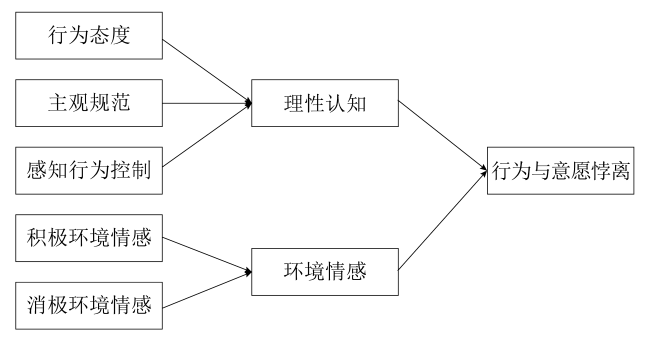
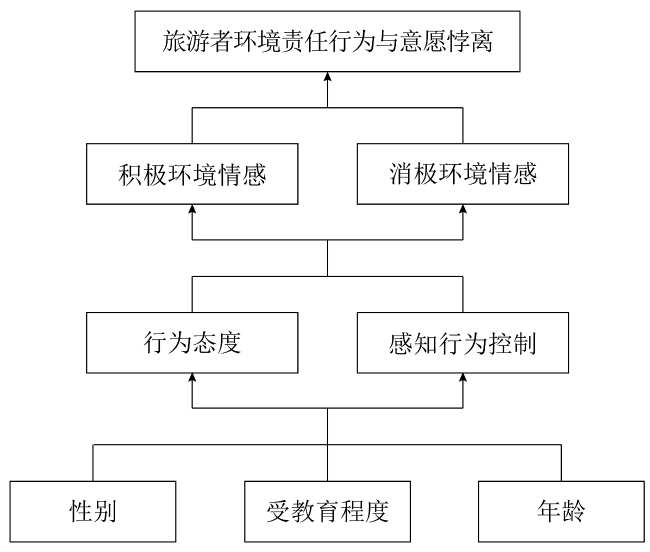
Currently, little research exists on the deviation phenomenon between tourists' environmental responsibility behavior and theoretical willingness. Based on a field survey of 447 tourists visiting Yuelu Mountain, this study used the extended theory of planned behavior combined with a logistic regression model to analyze the factors that affect this deviation phenomenon, and further employed the Interpretative Structural Modeling Method to analyze the logic relationships between these factors. From the logistic regression results, it was found that the basic characteristics of tourists, such as age, gender, and education level; behavioral attitudes in rational cognition and perceived behavior control; positive and negative environmental emotions; and seven other factors caused a deviation away from their environmental responsibility behavior and willingness. The better the tourists' behavioral attitude, perceived behavioral control and other related rational cognition, the lower the possibility of deviations. Both positive and negative environmental emotions of tourists have negative effects on dissonance. The stronger the related environmental emotions are, the lower the possibility of dissonance is. The higher the age and the higher the education level, the more consistent the tourists' environmental responsibility behavior and intention; In terms of gender, male deviation is higher than female. From the results of the Interpretative Structural Modeling Method, tourists' gender, education level and age are the deep root problems, and through the tourists' behavior attitude and perceived behavior control two intermediate factors and two surface direct factors of positive environmental emotion and negative environmental emotion, causing the tourists' actual behavior and environmental responsibility behavior intention conflict. Therefore, it can be inferred that rational cognition plays an important mediating role in the process of the contradiction between behavior and will, and environmental affective factors are important external influencing factors. The formation of this hierarchical structure is mainly due to the tourists in the implementation of environmental responsibility behavior in the non-customary environment, the occurrence of behavior is the result of a variety of factors. Among the deviant surface factors, the most direct influencing factor is the tourists' positive or negative environmental emotion towards the destination, which indicates that tourists' environmental responsibility behavior is influenced by the intuitive environmental emotion. This provides a new research view for studying this deviation phenomenon and a preferable analytical framework, thus enriching and perfecting the theory system of tourists' environmental responsibility behavior to a certain extent. At the same time, this research proposed adding two major factors, positive and negative environmental emotions, to the theory of planned behavior to analyze the deviation phenomenon of tourists' environmental responsibility behavior and willingness, from the perspective of the integration of emotion and reason, which means combining rational cognition with environmental emotion, thereby providing a new entry point for the study of tourists' environmental responsibility behavior. The management implications of this study are as follows: firstly, tourism destination managers should pay attention to tourists' emotional appeal and resonance, and be good at stimulating tourists' environmental emotions. Secondly, tourism destination managers can stimulate tourists' sense of urgency to adopt environmentally responsible behaviors through the publicity and education of environmentally responsible behaviors. Finally, tourism destination managers can reduce the time and physical cost of tourists' environmental responsibility behavior through reasonable allocation of cleaning facilities.
Zhengliang Duan , Zhen Peng , Zuo Yang , Qing Bao , Lien Nguyen Thi . The Paradox between Tourists' Environmental Responsibility Behavior and Willingness from the Perspective of Rational Integration: Based on the Logistic-ISM Model[J]. Tropical Geography, 2021 , 41(1) : 104 -113 . DOI: 10.13284/j.cnki.rddl.003306
表1 样本基本特征Table 1 Basic feature of sample |
| 项目 | 选项 | 样本数量/个 | 百分比/% |
|---|---|---|---|
| 性别 | 男 | 238 | 53.24 |
| 女 | 209 | 46.76 | |
| 年龄/岁 | ≤25 | 81 | 18.12 |
| 26~35 | 146 | 32.66 | |
| 36~45 | 101 | 22.60 | |
| 46~55 | 79 | 17.67 | |
| ≥56 | 40 | 8.95 | |
| 受教育程度 | 初中及以下 | 62 | 13.87 |
| 高中或中专 | 130 | 29.08 | |
| 大专 | 189 | 42.28 | |
| 研究生 | 66 | 14.77 | |
| 行为与意愿 | 一致 | 252 | 56.38 |
| 悖离 | 195 | 43.62 |
表2 变量定义与描述性统计Table 2 Variable definition and statistics |
| 变量名称 | 变量赋值 | 均值 | 标准差 |
|---|---|---|---|
| 被解释变量 | |||
| 行为与意愿是否存在悖离? | 悖离=1,不悖离=0 | 0.436 | 0.496 |
| 解释变量 | |||
| 1. 行为态度 | |||
| ATT1:对环境保护有益 | 完全不同意=1,不同意=2,一般=3,同意=4,完全同意=5 | 3.497 | 1.154 |
| ATT 2:采取环境责任行为是正确的 | 完全不同意=1,不同意=2,一般=3,同意=4,完全同意=5 | 3.362 | 1.122 |
| ATT 3:可以改善生态环境质量 | 完全不同意=1,不同意=2,一般=3,同意=4,完全同意=5 | 3.481 | 1.090 |
| ATT 4:有利于可持续发展 | 完全不同意=1,不同意=2,一般=3,同意=4,完全同意=5 | 3.289 | 1.214 |
| 2. 主观规范 | |||
| SN1:家人对我采取环境责任行为的态度 | 完全不赞同=1,不赞同=2,不确定=3,赞同=4,完全赞同=5 | 3.747 | 0.881 |
| SN2:朋友对我采取环境责任行为的态度 | 完全不赞同=1,不赞同=2,不确定=3,赞同=4,完全赞同=5 | 3.720 | 0.860 |
| SN3:同事对我采取环境责任行为的态度 | 完全不赞同=1,不赞同=2,不确定=3,赞同=4,完全赞同=5 | 3.866 | 0.998 |
| SN4:其他游客对我采取环境责任行为的态度 | 完全不赞同=1,不赞同=2,不确定=3,赞同=4,完全赞同=5 | 3.743 | 1.004 |
| 3. 感知行为控制 | |||
| PBC1:对采取环境责任行为难易程度的认知 | 非常困难=1,困难=2,一般=3,容易=4,非常容易=5 | 3.609 | 0.894 |
| PBC 2:对自身参与环境责任行为时间和精力的评价 | 非常困难=1,困难=2,一般=3,容易=4,非常容易=5 | 3.832 | 0.891 |
| PBC 3:对环境保护知识和要求的掌握程度 | 完全不了解=1,不了解=2,一般=3,较为了解=4,非常了解=5 | 3.600 | 0.986 |
| PBC 4:对基础设施便利程度的认知 | 完全不了解=1,不了解=2,一般=3,较为了解=4,非常了解=5 | 3.671 | 0.971 |
| PBC 5:对采取环境责任行为成功结果的预判 | 完全不了解=1,不了解=2,一般=3,较为了解=4,非常了解=5 | 3.579 | 0.958 |
| 4. 积极环境情感 | |||
| 自己或他人做了有利于环境保护的事: | |||
| PEA1:我会感到自豪 | 完全不同意=1,不同意=2,一般=3,同意=4,完全同意=5 | 3.660 | 1.044 |
| PEA2:我会感到开心 | 完全不同意=1,不同意=2,一般=3,同意=4,完全同意=5 | 3.727 | 1.121 |
| PEA3:我会感到兴奋 | 完全不同意=1,不同意=2,一般=3,同意=4,完全同意=5 | 3.732 | 1.130 |
| PEA4:我会感到愉快 | 完全不同意=1,不同意=2,一般=3,同意=4,完全同意=5 | 3.761 | 1.136 |
| PEA5:我会感到高兴 | 完全不同意=1,不同意=2,一般=3,同意=4,完全同意=5 | 3.664 | 1.122 |
| 5. 消极环境情感 | |||
| 自己或他人没有做有利于环境保护的事: | |||
| NEA1:我会感到丢脸 | 完全不同意=1,不同意=2,一般=3,同意=4,完全同意=5 | 3.595 | 1.138 |
| NEA2:我会感到懊悔 | 完全不同意=1,不同意=2,一般=3,同意=4,完全同意=5 | 3.575 | 1.167 |
| NEA3:我会感到内疚 | 完全不同意=1,不同意=2,一般=3,同意=4,完全同意=5 | 3.517 | 1.122 |
| NEA4:我会感到难过 | 完全不同意=1,不同意=2,一般=3,同意=4,完全同意=5 | 3.530 | 1.142 |
| NEA5:我会感到愤怒 | 完全不同意=1,不同意=2,一般=3,同意=4,完全同意=5 | 3.611 | 1.213 |
| 6. 性别(Sex) | 男=1,女=0 | 0.532 | 0.500 |
| 7. 年龄(Age) | ≤25岁=1,26~35岁=2,36-45岁=3,46~55岁=4,≥56岁=5 | 2.667 | 1.216 |
| 8. 受教育程度(Edu) | 初中及以下=1,高中或中专=2,大专=3,研究生=4 | 2.579 | 0.905 |
表3 指标权重与信效度检验Table 3 Index weight and reliability and validity test |
| 潜变量 | 观测指标 | 权重 |
|---|---|---|
| 行为态度(ATT) Cronbach`s =0.935 KMO=0.840 Sig.=0.000 | ATT1 | 0.245 |
| ATT2 | 0.253 | |
| ATT3 | 0.247 | |
| ATT4 | 0.255 | |
| 主观规范(SN) Cronbach`s α=0.901 KMO=0.817 Sig.=0.000 | SN1 | 0.248 |
| SN2 | 0.251 | |
| SN3 SN4 | 0.252 0.249 | |
| 感知行为控制(PBC) Cronbach`s α=0.817 KMO=0.764 Sig.=0.000 | PBC1 | 0.196 |
| PBC2 | 0.205 | |
| PBC3 | 0.201 | |
| PBC4 | 0.199 | |
| PBC5 | 0.199 | |
| 积极环境情感(PEA) Cronbach`s α=0.910 KMO=0.974 Sig.=0.000 | PEA1 | 0.197 |
| PEA2 | 0.207 | |
| PEA3 | 0.197 | |
| PEA4 | 0.197 | |
| PEA5 | 0.203 | |
| 消极环境情感(NEA) Cronbach`s α=0.923 KMO=0.896 Sig.=0.000 | NEA1 | 0.196 |
| NEA2 NEA3 | 0.199 0.202 | |
| NEA4 | 0.201 | |
| NEA5 | 0.201 |
表4 二元Logistic模型回归结果Table 4 Binary logistic model regression results |
| 变量类别 | 变量名称 | 回归系数B | 检验误差S.E | 统计量Wald | 显著性Sig. | 幂值Exp |
|---|---|---|---|---|---|---|
| 理性认知 | 行为态度 | -0.609*** | 0.120 | 25.635 | 0.000 | 0.544 |
| 主观规范 | 0.187 | 0.148 | 1.586 | 0.208 | 1.205 | |
| 感知行为控制 | -0.745*** | 0.175 | 18.071 | 0.000 | 0.475 | |
| 环境情感 | 积极环境情感 | -0.336** | 0.149 | 5.069 | 0.024 | 0.715 |
| 消极环境情感 | -0.719*** | 0.141 | 26.170 | 0.000 | 0.487 | |
| 个体特征 | 性别 | 1.017*** | 0.249 | 16.708 | 0.000 | 2.766 |
| 年龄 | -0.344*** | 0.101 | 11.744 | 0.001 | 0.709 | |
| 受教育程度 | -0.794*** | 0.144 | 30.334 | 0.000 | 0.452 | |
| -2倍对数似然值 | 425.486 | |||||
| Cox & Snell R 2 | 0.342 | |||||
| Nagelkerke R 2 | 0.458 | |||||
| H-L Tests | Sig.=0.777 | |||||
| Sig. | 0.000 | |||||
| 模型预测准确率/% | 77.6 | |||||
|
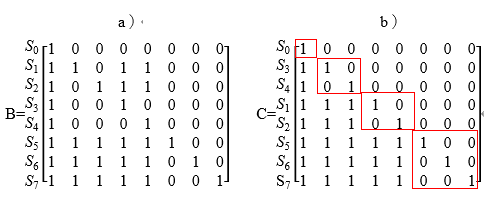
图2 影响因素间的逻辑关系Fig.2 Logical relationship between influencing factors |
| V | V | V | V | V | V | V | S 0 |
|---|---|---|---|---|---|---|---|
| 0 | 0 | 0 | U | 0 | 0 | S 1 | |
| 0 | 0 | 0 | U | U | S 2 | ||
| 0 | 0 | 0 | 0 | S 3 | |||
| 0 | 0 | 0 | S 4 | ||||
| U | U | S 5 | |||||
| 0 | S 6 | ||||||
| S 7 |
|

|
Ajzen I.1991.The Theory of Planned Behavior.Organizational Behavior & Human Decision Processes, 50(2): 179-211.
|
|
Ajzen I.2011.The Theory of Planned Behaviour: Reactions and Reflections.Psychology and Health, 26(9): 1113-1127.
|
|
陈振,郭杰,欧名豪.2018.农户农地转出意愿与转出行为的差异分析.资源科学,40(10):2039-2047.[Chen Zhen, Guo Jie and Ou Minghao.2018. Characterization of the Differences Between Farmers' Intention for Farmland Transfer and their Circulation Behavior.Resources Science, 40(10): 2039-2047.]
|
|
Cheng T M and Wu H C.2015.How Do Environmental Knowledge, Environmental Sensitivity, and Place Attachment Affect Environmentally Responsible Behavior? An Integrated Approach for Sustainable Island Tourism.Journal of Sustainable Tourism, 23(3): 557-576.
|
|
陈虎,梅青,王颖超,张博,李爽.2017.历史街区旅游意象对环境责任行为的驱动性研究——以满意度为中介变量.中国人口·资源与环境,27(12):106-116.[Chen Hu, Mei Qing, Wang Yingchao, Zhang Bo and Li Shuang.2017.A Research on the Driving Power About Environmentally Responsible Behavior from the Destination Image of Historic Blocks: Satisfaction as Mediator Variable.China Population, Resources and Environment, 27(12): 106-116.]
|
|
Chiu Y T H, Lee W I and Chen T H.2014.Environmentally Responsible Behavior in Ecotourism: Exploring the Role of Destination Image and Value Perception.Asia Pacific Journal of Tourism Research, 19(8): 876-889.
|
|
高键,魏胜.2018.基于计划行为理论的生活方式绿色化形成的双重交互效应研究.经济与管理评论,34(2):51-61.[Gao Jian and Wei Shen.2018.Research on Dual Interactive Effects of Green Lifestyle Formation Based on the Theory of Planning Behavior.Review of Economy and Management, 34(2): 51-61.]
|
|
Han H, Hsu J and Shue C.2009.Application of the Theory of Planned Behavior to Green Hotel Choice: Testing the Effect of Environmentally-Friendly Activities.Tourism Management, (3): 1-10.
|
|
Han H.2015.Travelers, Pro-Environmental Behavior in a Green Lodging Context: Converging Value-Belief-Norm Theory and the Theory of Planned Behavior.Tourism Management, 47: 164-177.
|
|
何学欢,胡东滨,粟路军.2017.境外旅游者环境责任行为研究进展及启示.旅游学刊,32(9):57-69.[He Xuehuan, Hu Dongbing and Su Lujun.2017.Research Progress and the Enlightenment of Tourist Environmentally Responsible Behavior (TERB) Based on Outbound Literature.Tourism Tribune, 32(9): 57-69.]
|
|
胡乃娟,孙晓玲,许雅婷,周子阳,朱利群.2019.基于Logistic-ISM模型的农户有机肥施用行为影响因素及层次结构分解.资源科学,41(6):1120-1130.[Hu Naijuan, Sun Xiaoling, Xu Yating, Zhou Ziyang and Zhu Liqun.2019.Influencing Factors of Farmers' Organic Fertilizer Application Behavior and Their Stratification Based on Logistic-ISM Model.Resources Science, 41(6): 1120-1130.]
|
|
Huang H C, Lin T H, Lai M C and Lin T L.2014.Environmental Consciousness and Green Customer Behavior: An Examination of Motivation Crowding Effect.International Journal of Hospitality Management, 40: 139-149.
|
|
Kanchanapibul M, Lacka E, Wang X and Chan H K.2014.An Empirical Investigation of Green Purchase Behaviour Among the Young Generation.Journal of Cleaner Production, 66: 528-536.
|
|
Kim M and Thapa B.2018.Perceived Value and Flow Experience: Application in a Nature-Based Tourism Context.Journal of Destination Marketing & Management, 8: 373-384.
|
|
Koenig-Lewis N, Palmer A, Dermody J and Urbye A.2014.Consumers' Evaluations of Ecological Packaging-Rational and Emotional Approaches.Journal of Environmental Psychology, 37: 94-105.
|
|
Lee T H and Jan F H.2015.The Effects of Recreation Experience, Environmental Attitude, and Biospheric Value on the Environmentally Responsible Behavior of Nature-Based Tourists.Environmental Management, 56(1): 193-208.
|
|
李楠楠,李同昇,于正松,芮旸,苗园园,李永胜.2014.基于Logistic-ISM模型的农户采用新技术影响因素——以甘肃省定西市马铃薯种植技术为例.地理科学进展,33(4):542-551.[Li Nannan, Li Tongsheng, Yu Zhengsong, Rui Yang, Miao Yuanyuan and Li Yongsheng.2014.Factors Influencing Farmers' Adoption of Newtechnology Based on Logistic ISM Model:a Case Study of Potato Planting Technology in Ding xi City, Gan Su Province.Progress in Geography, 33(4): 542-551.]
|
|
李文明,殷程强,唐文跃,李向明,杨东旭,张玉玲.2019.观鸟旅游游客地方依恋与亲环境行为——以自然共情与环境教育感知为中介变量.经济地理,39(1):215-224.[Li Wenming, Yin Chengqiang, Tang Wenyue, Li Xiangming, Yang Dongxu and Zhang Yuling.2019.Place Attachment and Pro-Environmental Behaviors of Bird-Watching Tourists:Taking Natural Empathy and Perception of Environmental Education as Mediating Variables.Economic Geography, 39(1): 215-224.]
|
|
罗文斌,张小花,钟诚,孟贝,Timothy D J.2017.城市自然景区游客环境责任行为影响因素研究.中国人口·资源与环境,27(5):161-169.[Luo Wenbing, Zhang Xiaohua, Zhong Cheng, Meng Bei and Timothy D J.2017.Research on the Influencing Factors of Tourists' Environmental Responsibility Behavior in Urban Natural Scenic Spots.China Population,Resources and Environment, 27(5): 161-169. ]
|
|
潘丽丽,王晓宇.2018.基于主观心理视角的游客环境行为意愿影响因素研究——以西溪国家湿地公园为例.地理科学,38(8):1337-1345.[Pan Lili and Wang Xiaoyu.2018.The Factors Affecting the Intention to Exhibit Environmental Behavior by Tourists: A Case Study of Xixi National Wetland Park in Hangzhou.Scientia Geographica Sinica, 38(8): 1337-1345.]
|
|
祁潇潇,赵亮,胡迎春.2018.敬畏情绪对旅游者实施环境责任行为的影响——以地方依恋为中介.旅游学刊,33(11):110-121.[Qi Xiaoxiao, Zhao Liang and Hu Yingchun.2018.Tourists' Awe and Environmentally Responsible Behavior: The Mediating Role of Place Attachment.Tourism Tribune, 33(11): 110-121.]
|
|
邱宏亮,范钧,赵磊.2018.旅游者环境责任行为研究述评与展望.旅游学刊,33(11):122-138.[Qiu Hongliang, Fan Jun and Zhao Lei.2018.Development of the Academic Study of Tourists' Environmentally Responsible Behavior: A Literature Review.Tourism Tribune, 33(11): 122-138.]
|
|
沈雪,张露,张俊飚,骆兰翎.2018.稻农低碳生产行为影响因素与引导策略——基于人际行为改进理论的多组比较分析.长江流域资源与环境,27(9):2042-2052.[Shen Xue, Zhang Lu, Zhang Junbiao and Luo Lanling.2018.Influencing Factors and Guiding Strategies for Low-Carbon Production in Rice Planting:Multiple-Group Analysis Using Interpersonal Behavior Improvement Theory.Resources and Environment in the Yangtze Basin, 27(9): 2042-2052.]
|
|
Su Lujun and Swanson S R.2017.The Effect of Destination Social Responsibility on Tourist Environmentally Responsible Behavior:Compared Analysis of First-Time And Repeat Tourists.Tourism Management, 49: 308-321.
|
|
王建明,吴龙昌.2015.亲环境行为研究中情感的类别、维度及其作用机理.心理科学进展,23(12):2153-2166.[Wang Jianming and Wu Longchang.2015.The Categories, Dimensions and Mechanisms of Emotions in the Studies of Pro-Environmental Behavior.Advances in Psychological Science, 23(12): 2153-2166.]
|
|
王建明.2015.环境情感的维度结构及其对消费碳减排行为的影响——情感—行为的双因素理论假说及其验证.管理世界,(12):82-95.[Wang Jianming.2015.The Dimensional Structure of Environmental Emotion and Its Influence on Consumption Carbon Emission Reduction Behavior—Two-factor Theory Hypothesis of Emotion-Behavior and Its Verification.Management World, (12): 82-95.]
|
|
王凯,李志苗,肖燕.2016.城市依托型山岳景区游客亲环境行为——以岳麓山为例.热带地理,36(2):237-244.[Wang Kai, Li Zhimiao and Xiao Yan.2016.Tourists' Pro-Environmental Behavior in Urban Mountainous Scenic Spot: A Case Study of the Yuelu Mountain.Tropical Geography, 36(2): 237-244.]
|
|
Warfield J N.2007.Binary Matrices in System Modeling.IEEE Transactions on Systems Man & Cybernetics, SMC-3(5): 441-449.
|
|
谢贤鑫,陈美球.2019.农户生态耕种采纳意愿及其异质性分析——基于TPB框架的实证研究.长江流域资源与环境,28(5):1185-1196.[Xie Xianxing and Chen Meiqiu.2019.Farmers' Willingness to Adopt Ecological Farming and Their Heterogeneity: Based on the TPB Framework.Resources and Environment in the Yangtze Basin, 28(5): 1185-1196.]
|
|
许增巍,姚顺波,苗珊珊.2016.意愿与行为的悖离:农村生活垃圾集中处理农户支付意愿与支付行为影响因素研究.干旱区资源与环境,30(2):1-6.[Xu Zengwei, Yao Shunbo and Miao Shanshan.2016.The Paradox Between Willingness and Behavior: Factors Influencing the Households' Willingness to Pay and Real Payment Behavior on Rural Domestic Garbage Centralized Treatment.Journal of Arid Land Resources and Environment, 30(2): 1-6.]
|
|
余威震,罗小锋,李容容,薛龙飞,黄磊.2017.绿色认知视角下农户绿色技术采纳意愿与行为悖离研究.资源科学,39(8):1573-1583.[Yu Weizhen, Luo Xiaofeng, Li Rongrong, Xue Longfei and Huang Lei.2017.The Paradox Between Farmer Willingness and Their Adoption of Green Technology from the Perspective of Green Cognition.Resources Science, 39(8): 1573-1583.]
|
|
余晓婷,吴小根,张玉玲,王媛.2015.游客环境责任行为驱动因素研究——以台湾为例.旅游学刊,30(7):49-59.[Yu Xiaoting, Wu Xiaogen, Zhang Yuling and Wang Yuan.2015.Factors Driving Environmentally Responsible Behaviors by Tourists: A Case Study of Taiwan, China.Tourism Tribune, 30(7): 49-59.]
|
/
| 〈 |
|
〉 |