Assessment of the Implementation Path of Urban Renewal from the Perspective of Interest Coordination: A Case Study on Guangzhou Urban Village Redevelopment
Received date: 2021-05-17
Revised date: 2021-06-15
Online published: 2021-08-16
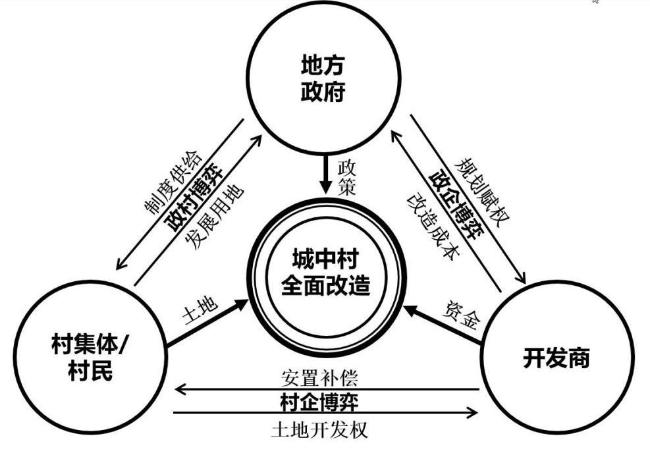
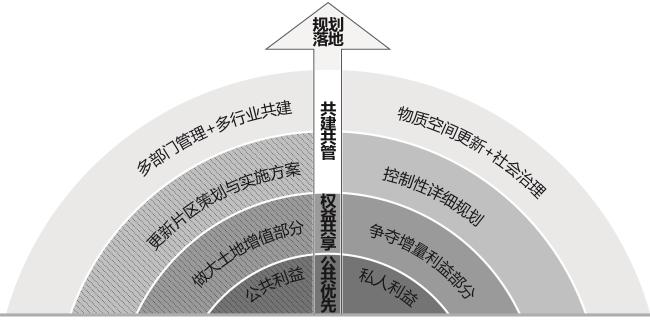
During the processes of stock land redevelopment, appropriate profit allocation is key to promoting the implementation of urban renewal. Meanwhile, its intricate, multi-participant interest games tends to obstruct the progress of urban renewal programs. Many scholars have studied the various types of interest conflicts among different stakeholders, their game models, and cooperation patterns of urban renewal. However, studies on how to effectively coordinate the diverse demands of multiple stakeholders and solve the problems of profit allocation management derived from the land value increments in different urban renewal stages are insufficient. By reviewing the development of Guangzhou urban renewal policies and their impact on the profit allocation pattern in practices during the past decades, this study clarifies the intrinsic interrelationships among the interests of local governments, investors, and original owners in urban renewal, as they struggle to maximize their benefit. Using Guangzhou urban village redevelopment as an example, this study summarizes the interest concerns and difficulties in urban renewal implementation in terms of value orientation, identification of rights and interests, and management system. Simultaneously, it proposes an innovated urban renewal implementation path of interest coordination based on public priority, profit sharing, co-planning, and co-management. In the coming reserve planning era, to progress urban renewal programs, not only the financial balance but also other comprehensive impact factors should be well-considered. Further studies on multi-dimension and whole-process implementation path of urban renewal in the field of interest coordination could make the planning decisions and working scheme more feasible, which promote urban regeneration.
Maoying Deng , Cefang Deng . Assessment of the Implementation Path of Urban Renewal from the Perspective of Interest Coordination: A Case Study on Guangzhou Urban Village Redevelopment[J]. Tropical Geography, 2021 , 41(4) : 760 -768 . DOI: 10.13284/j.cnki.rddl.003355

|
丁寿颐. 2019. “租差”理论视角的城市更新制度——以广州为例. 城市规划,43(12):69-77. [Ding Shouyi. 2019. Urban Renewal System from the Perspective of 'Rent Gap' Theory: A Case Study of Guagnzhou. City Planning Review, 12: 69-77. ]
|
|
郭旭,田莉. 2018. “自上而下”还是“多元合作”:存量建设用地改造的空间治理模式比较. 城市规划学刊,(1):66-72. [Guo Xu and Tian Li. 2018. Top-Down or Multi-Party Collaboration: A Comparative Study on Spatial Governance of Built-Up Areas in the Developed Regions of China. Urban Planning Forum, (1): 66-72. ]
|
|
何深静,刘玉亭. 2008. 房地产开发导向的城市更新——我国现行城市再发展的认识和思考. 人文地理,23(4):6-11. [He Shenjing and Liu Yuting. 2008. Property-Led Redevelopment- the Pattern of China's Urban Redevelopment Urban Market Transition. Human Geography, 23(4): 6-11. ]
|
|
姜克芳,张京祥. 2016. 城市工业园区存量更新中的利益博弈与治理创新——深圳、常州高新区两种模式的比较. 上海城市规划,(2):8-14. [Jiang Kefang and Zhang Jingxiang. 2016. Benefit Game and Governance Innovation in Inventory Land Regeneration of Urban Industrial Parks: Based on Pattern Comparison between Shenzhen and Changzhou National Hi-Tech District. Shanghai Urban Planning Review, (2): 8-14. ]
|
|
李剑锋. 2019. 城市更新的模式选择及综合效益评价研究. 广州:华南理工大学. [Li Jianfeng. 2019. Research on Mode Selection and Comprehensive Benefit Evaluation of Urban Renewal- A Case of Urban Village Transformation in Guangzhou. Guangzhou: South China University of Technology. ]
|
|
彭恺. 2018. 新马克思主义视角下我国治理型城市更新模式——空间利益主体角色及合作伙伴关系重构. 规划师(6):5-11. [Peng Kai. 2018. A Study on Governance Based Urban Renewal Model from the Perspective of New Marxism: Restructuring of the Roles and Partnership of Different Spatial Stakeholders. Planners, (6): 5-11. ]
|
|
Roberts P. 2000. The Evolution, Definition and Purpose of Urban Regeneration. In: Roberts P and Sykes H. Urban Regeneration: A Handbook. London: SAGE Publications,9-36.
|
|
田莉. 2018. 摇摆之间:三旧改造中个体、集体与公众利益平衡. 城市规划,(2):78-84. [Tian Li. 2018. Exploring the Path of Balancing Individual Benefits, Collective Benefits, and Public Interests in the Three Olds Renewal. City Planning Review, (2): 78-84. ]
|
|
田莉,郭旭. 2017. “三旧改造”推动的广州城乡更新:基于新自由主义的视角. 南方建筑,(4):9-14. [Tian Li and Guo Xu. 2017. The Urban and Rural Renewal in Guangzhou under "Three Old Transformation": A Perspective of Neo-Liberalism. South Architecture, (4): 9-14. ]
|
|
田莉,陶然,梁印龙. 2020. 城市更新困局下的实施模式转型:基于空间治理的视角. 城市规划学刊,(3):41-47. [Tian Li, Tao Ran and Liang Yinlong. 2020. Transition of Implementation Pattern in the Predicament of Urban Renewal: A Perspective of Spatial Governance. Urban Planning Forum, (3): 41-47. ]
|
|
杨璇. 2020. 城市更新政策的治理结构与长效机制构建. 上海城市规划,(4):69-75. [Yang Xuan. 2020. Governance Structure and Long-Term Mechanism Construction of Urban Renewal Policy. Shanghai Urban Planning Review, (4): 69-75. ]
|
|
姚之浩,田莉. 2017. 21世纪以来广州城市更新模式的变迁及管治转型研究. 上海城市规划,(5):29-34. [Yao Zhihao and Tian Li. 2017. Transition of Pattern and Modes of Governance for Urban Renewal in Guangzhou since the 21st Century. Shanghai Urban Planning Review, (5): 29-34. ]
|
|
袁利平,谢涤湘. 2010. 广州城市更新中的资金平衡问题研究. 中华建设,(8):45-47. [Yuan Liping and Xie Dixiang. 2010. Study on the Concerns of Financial Balance in Guangzhou Urban Renewal. China Construction, (8): 45-47. ]
|
|
万成伟,于洋. 2020. 公共产品导向:多中心治理的城中村更新——以深圳水围柠盟人才公寓为例. 国际城市规划[2021-01-21]. https://kns.cnki.net/kcms/detail/11.5583.tu.20200120. 1541.004.html. [Wan Chengwei, Yu Yang. 2020. Public Product Orientation: Urban Village Renewal under Polycentric Governance: A Case Study of Ningmeng Talent Apartment in Shuiwei Village, Shenzhen. Urban Planning International[2021-01-21]. https://kns.cnki.net/kcms/detail/11. 5583.tu.20200120. 1541.004.html. ]
|
|
王世福,沈爽婷. 2015. 从“三旧改造”到城市更新——广州市成立城市更新局之思考. 城市规划学刊,(3):22-27. [Wang Shifu and Shen Shuangting. 2015. From "Three-Old" Reconstruction to Urban Renewal-Thinking around the Newly-Established Urban Renewal Bureau in Guangzhou. Urban Planning Forum, (3): 22-27. ]
|
|
王世福,卜拉森,吴凯晴. 2017. 广州城市更新的经验与前瞻. 城乡规划,(6):80-87. [Wang Shifu, Bouhouch Lahcen and Wu Kaiqing. 2017. Experience and Prospects of Urban Renewal in Guangzhou. Urban and Rural Planning, (6): 80-87. ]
|
|
王世福,张晓阳,费彦. 2018. 城市更新中的管治困境与创新策略思考. 城乡规划,(4):14-21,32. [Wang Shifu, Zhang Xiaoyang and Fei Yan. 2018. The Governance Dilemma and Innovative Strategies in Urban Regeneration. Urban and Rural Planning, (4): 14-21, 32. ]
|
|
王世福,张晓阳,费彦. 2019. 广州城市更新与空间创新实践及策略. 规划师,35(20):46-52. [Wang Shifu, Zhang Xiaoyang and Fei Yan. 2019. Guangzhou Urban Regeneration and Spatial Innovation. Planners, 35(20): 46-52. ]
|
|
吴良镛.1994. 北京旧城与菊儿胡同.北京:中国建筑工业出版社 [Wu Liangyong. 1994. The Old City of Beijing and Its Juer Hutong Neighborhood. Beijing: China Architecture & Building Press. ]
|
|
赵艳莉. 2012. 公共选择理论视角下的广州市“三旧”改造解析. 城市规划,(6):61-65. [Zhao Yanli. 2012. Analysis on Old City Renovation of Guangzhou from the Perspective of Public Choice Theory. City Planning Review, (6): 61-65. ]
|
|
张京祥,胡毅. 2012. 基于社会空间正义的转型期中国城市更新批判. 规划师,28(12):5-9. [Zhang Jingxiang and Hu Yi. 2012. A Critique on China's Urban Renewal from Social Space Justice Viewpoint. Planners, 28(12): 5-9. ]
|
|
周婷婷,熊茵. 2013. 基于存量空间优化的城市更新路径研究. 规划师,(S2):36-40. [Zhou Tingting and Xiong Yin. 2013. Inventory Optimization of Land Use and Urban Renewal. Planners,(S2): 36-40. ]
|
|
邹兵. 2013. 增量规划、存量规划与政策规划. 城市规划,(2):35-37,55. [Zou Bing. 2013. Increment Planning, Inventory Planning and Policy Planning. City Planning Review, (2): 35-37, 55. ]
|
|
左为,吴晓,汤林浩. 2015. 博弈与方向:面向城中村改造的规划决策刍议——以经济平衡为核心驱动的理论梳理与实践操作. 城市规划,(8):29-38. [Zuo Wei, Wu Xiao and Tang Linhao. 2015. Games and Directions: A Reflection on Planning Strategies for Urban Village Redevelopment- Economic Balance-Oriented Theories and Practices. City Planning Review, (8): 29-38. ]
|
/
| 〈 |
|
〉 |