Received date: 2021-08-14
Revised date: 2021-10-07
Online published: 2021-11-16
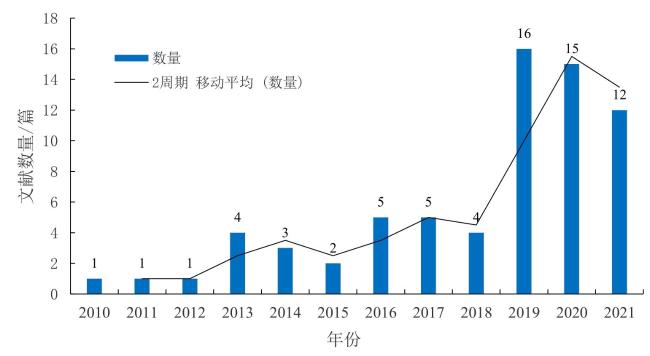
Emotional geopolitics, as a new field of geopolitical research, advocates that geopolitics should pay more attention to the analysis of emotion. It breaks the dualistic opposition between emotion and reason in classical geopolitical theory, and places emotion at the center of geopolitical analysis. Through the application of non-representational theory, emotional geopolitics takes individual emotion from the periphery to the core. At present, studies on emotional geopolitics in the West have focused on the power geometric relationship of "everyday life-emotion-global politics" from both the macro and micro views. The macroscopic approach constructs the structural relations between different emotions and political actions, attempting to develop general theories on how emotions matter in geopolitics, whereas micro studies focus on how specific emotions gain resonance in particular political circumstances. Microscopic approaches investigate how specific emotions are constituted by and function in particular cultural and political environments, and how emotions in different cultural contexts are localized and serve to interact with global geopolitics. By searching "emotional geopolitics" and "affective geopolitics" as key words in the Web of Science, 145 articles were detected, and 73 of these were reviewed in this study. The number of articles related to emotional geopolitics fluctuated before 2018 and has increased significantly in recent years. The study subjects of this emerging field include youth, housewives, diplomats, and border migrants. The research topics are diverse, mainly including critical geopolitics on global fear, daily life and emotional geopolitical practices, and the relationship between emotion and policy/diplomatic action. First, the emergence of globalized fear associated with terrorism and the War on Terror since 2001 played an important role in shaping the Western geopolitical environment in the past decades. Some scholars tend to criticize the discursive strategies and specific actions of fear geopolitics by arguing that governments and public policies increasingly exploit and recreate the emotion of fear to control and manipulate state decision-making and community actions. Second, emotional geopolitics inspired by feminism, popular geopolitics, and anthropology theoretical approaches, focus on exploring the emotional lives of individuals with the intervention of geopolitical action. Most emotional geopolitics literature draws on the everyday lives of ordinary people, not only focusing on the affective intervention of geopolitics in individuals' daily lives, but also continuously exploring how people emotionally respond to geopolitical events and how these emotions are related to collective action in different contexts. Third, some studies have examined the roles emotions play in policy/diplomacy. As a force of public opinion, emotions provide legitimacy or impetus to geopolitical action. This paper argues that the study of emotional geopolitics can provide a new perspective on the changes in the world system and geopolitical relations caused by the rise of China, enriching the understanding of subjectivity and multi-scale of geopolitics in theory.
Peng Li , Luchao Yao , Yuqian Lin , Da Feng . The Research Progress of Emotional Geopolitics in the West[J]. Tropical Geography, 2021 , 41(6) : 1166 -1174 . DOI: 10.13284/j.cnki.rddl.003408
图1 2010—2021年情感地缘政治论文数量与变化趋势Fig.1 Trends in the quantity of emotional geopolitical papers during 2010-2021 |
表1 情感地缘政治被引频次排名前十文章Table1 Top 10 cited papers in emtional geopolitics |
| 文章名称 | 作者(国家) | 发表年份 | 刊物 | 被引频次 | 关键词 |
|---|---|---|---|---|---|
| Globalized fear? Towards an emotional geopolitics | Rachel Pain (英国) | 2009 | Progress in Human Geography | 262 | conscientization; emotion; fear; feminism geopolitics |
| Film, geopolitics and the affective logics of intervention | Sean Carter; D.P. Mc-Cormack (英国) | 2006 | Political Geography | 115 | critical geopolitics; Affect; Film; Intervention; Somalia; Black Hawk Down |
| Intimate war | Rachel Pain (英国) | 2015 | Political Geography | 114 | domestic violence; War; Intimacy Geopolitics; Emotions; Military tactics; Militarism |
| “Just Out Looking for a Fight”:American Affect and the Invasion of Iraq | Gearóid Ó Tuathail(美国) | 2003 | Antipode | 110 | — |
| After the red passport: towards an anthropology of the everyday geopolitics of entrapment in the EU's 'immediate outside' | Stef Jansen (英国) | 2009 | Journal of The Roya Lanthro- Pological Institute | 85 | cis-regulatory modules; transcription factor binding sites; comparative genomics |
| A subaltern critical geopolitics of the war on terror: Postcolonial security in Tanzania | Joanne Sharp (英国) | 2011 | Geoforum | 58 | critical geopolitics; postcolonialism; tanzania; popular geopolitics |
| Moments in everyday /distant geopolitics: Young people's fears and hopes | Rachel Pain;Ruth Panelli;Sara Kindon;Jo Little(英国,新西兰) | 2010 | Geoforum | 56 | geopolitics; everyday; young people; emotions |
| Affective nationalism: Banalities of belonging in Azerbaijan | Elisabeth Militz; Carolin Schurr (瑞士) | 2016 | Political Geography | 52 | nationalism; Affect; Emotion Embodiment; Feminist political geography; Affective; methodology; Azerbaijan |
| On the creative (re)turn to geography: poetry, politics and passion | Clare Madge (英国) | 2014 | Area | 35 | creativity; poetry; affective geopolitics; empathy; Syria |
| Fear, Loathing and the Everyday Geopolitics of Encounter in the Arizona Borderlands | Jill Williams; Geoffrey Alan Boyce(美国) | 2013 | Geopolitics | 34 | geographies; security; feminist; emotion |

1 也称“affectual geopolitics”。情感地缘政治研究中有将“emtion”和“affect”相区别的倾向,其差别主要集中在认知/非认知上,鉴于目前对二者的根本区别尚为模糊,且二者之间显而易见的、重视情感因素的相似性,加之本文以介绍情感地缘政治领域总体面貌为目的,故未对这两个概念进行明确区分,而本文对“情感地缘政治”的定义可见文章内容。
|
Agathangelou A M and Ling L H M. 2004. Power, Borders, Security, Wealth: Lessons of Violence and Desire from September 11. International Studies Quarterly, 48(3): 517-538.
|
|
Ahmed S. 2004. The Cultural Politics of Emotion. Edinburgh: Edinburgh University Press.
|
|
Ahmed S. 2015. The Emotionalization of the "War on Terror": Counter Terrorism, Fear, Risk, Insecurity and Helplessness. Criminology & Criminal Justice, 15(5): 545-560.
|
|
Anderson K and Smith S. 2001. Emotional Geographies. Transactions of the Institute of British Geographers, 26(1): 7-10.
|
|
Bleiker R and Leet M. 2006. From the Sublime to the Subliminal: Fear, Awe and Wonder in International Politics. Millennium: Journal of International Studies, 34: 713-37.
|
|
Bourne M. 2014. Understanding Security. New York: Palgrave Macmillan.
|
|
Carter S and Mccormack D P. 2006. Film, Geopolitics and the Affective Logics of Intervention. Political Geography, 25(2): 228-245.
|
|
Connolly W E. 1999. Why I am not a Secularist. Minneapolis MN: University of Minnesota Press.
|
|
Crawford N C. 2000. The Passion of World Politics: Propositions on Emotions and Emotional Relationships. International Security, 24(4): 116-136.
|
|
Davidson J, Bondi L and Smith M. 2005. Introduction: Geography's 'Emotional Turn'. In: Davidson J, Bondi L and Smith M. Emotional Geographies. Burlington VT and Aldershot: Ashgate,1-16.
|
|
Denzin N. 1985. Emotion as Lived Experience. Symbolic Interaction, 8(2): 223-240.
|
|
Dittmer J and Sharp J. 2014. Geopolitics: An Introductory Reader. Abingdon: Routledge.
|
|
多米尼克·莫伊西. 2010. 情感地缘政治学. 北京:新华出版社. [Moysey D. 2010. The Geopolitics of Emotion. Beijing: Xinhua Press. ]
|
|
Fluri J L. 2019. What's so Funny in Afghanistan?: Jocular Geopolitics and the Everyday Use of Humor in Spaces of Protracted Precarity- ScienceDirect. Political Geography, 68:125-130.
|
|
Houtum H and Pijpers R. 2006. The European Union as a Gated Community: The Two-Faced Border and Immigration Regime of the EU. Antipode: A Radical Journal of Geography, 39(2): 291-309.
|
|
Horschelmann K. 2008. Youth and the Geopolitics of Risk after 11th September 2001. Aldershot: Ashgate, 139-156.
|
|
Hyndman J. 2001. Towards a Feminist Geopolitics. The Canadian Geographer, 2: 210-222.
|
|
胡志丁,刘卫东,宋涛. 2015. 主体间共识、地缘结构与共建“一带一路”. 热带地理,35(5):621-627. [Hu Zhiding,Liu Weidong and Song Tao. 2015. Inter-Subjectivity Consensus, Geopolitical Structure and Building "One Belt and One Road". Tropical Geography, 35(5): 621-627. ]
|
|
Hutchison E and Bleiker R. 2014. Theorizing Emotions in World Politics. International Theory, 6: 491-514.
|
|
Jones A and Clark J. 2019. Performance, Emotions, and Diplomacy in the United Nations Assemblage in New York. Annals of the American Association of Geographers, 109(4): 1-17.
|
|
Katz C. 2007. Banal Terrorism: Spatial Fetishism and Everyday Insecurity. London: Routledge, 349-361.
|
|
Militz E and Schurr C. 2016. Affective Nationalism: Banalities of Belonging in Azerbaijan. Political Geography, 54: 54-63.
|
|
Mythen G, Walklate S and Khan F. 2012. 'Why Should We Have to Prove We're Alright?': Counter-Terrorism, Risk and Partial Securities. Sociology, 47(2): 383-398.
|
|
Megoran N. 2005. The Critical Geopolitics of Danger in Uzbekistan and Kyrgyzstan. Environment and Planning D: Society and Space, 23: 555-580.
|
|
Mutimer D, Grayson K and Beier J. 2013. Critical Studies on Security: An Introduction. Critical Studies on Security, 1(1): 1-12.
|
|
Massumi B. 2002. Parables for the Virtual: Movement, Affect, Sensation. Durham: Duke University Press.
|
|
Mercer J. 2005. Rationality and Psychology in International Politics. International Organization, 59(1): 77-106.
|
|
O' Tuathail G. 2003. "Just out Looking for a Fight": American Affect and the Invasion of Iraq. Antipode, 35: 856-870.
|
|
Oslender U. 2007. Spaces of Terror and Fear on Colombia's Pacific Coast. London: Routledge, 111-132.
|
|
Pain R. 2010. The New Geopolitics of Fear. Geography Compass, 4(3): 226-240.
|
|
Pain R and Smith S. 2008. Fear: Critical Geopolitics and Everyday Life. Aldershot: Ashgate.
|
|
Pain R. 2014. Everyday Terrorism: Connecting Domestic Violence and Global Terrorism. Progress in Human Geography, 38(4): 531-550.
|
|
Pain R. 2015. Intimate War. Political Geography, (44): 64-73.
|
|
Pain R. 2009. Globalized Fear? Towards an Emotional Geopolitics. Progress in Human Geography, 33: 466-486.
|
|
Philo C. 2012. Security of Geography/Geography of Security. Transactions of the Institute of British Geographers, 37: 1-7.
|
|
Pile S. 2010. Emotions and Affect in Recent Human Geography. Transactions of the Institute of British Geographers, 35(1): 5-20.
|
|
Ramshorst V and Jared P. 2017. Laughing about It: Emotional and Affective Spaces of Humour in the Geopolitics of Migration. Geopolitics, 24(4): 1-20.
|
|
Robin C. 2004. Fear: the History of a Political Idea. Oxford: Oxford University Press.
|
|
Sharp J. 2000. Remasculinising Geo-Politics? Comments on Gearoid O'Tuathail's Critical Geopolitics. Political Geography, 19: 361-364.
|
|
Stef J. 2009. After the Red Passport: Towards an Anthropology of the Everyday Geopolitics of Entrapment in the EU's 'Immediate Outside'. Journal of the Royal Anthropological Institute, 15(4): 815-832.
|
|
Thrift N. 2007. Halos: New Apprehensions of Political Time and Space. Toronto: the Mobile Nation Conference.
|
|
Thrift N. 2008. Non-Representational Theory: Space, Politics, Affect. London: Routledge.
|
|
Williams J and Boyce G. 2013. Fear, Loathing and the Everyday Geopolitics of Encounter in the Arizona Borderlands. Geopolitics, 18(4): 895-916.
|
|
朱竑,高权. 2015. 西方地理学“情感转向”与情感地理学研究述评. 地理研究,34(7):1394-1406. [Zhu Hong and Gao Quan. 2015. Review on "Emotional Turn" and Emotional Geographies in Recent Western Geography. Geographical Research, 34(7): 1394-1406. ]
|
/
| 〈 |
|
〉 |