Emotional Reconstruction of Farmers in Poverty-Alleviated Villages from the Perspective of Emotional Geography: A Case Study of Shibadong Village in Hunan Province
Received date: 2021-08-11
Revised date: 2021-12-05
Online published: 2022-04-25
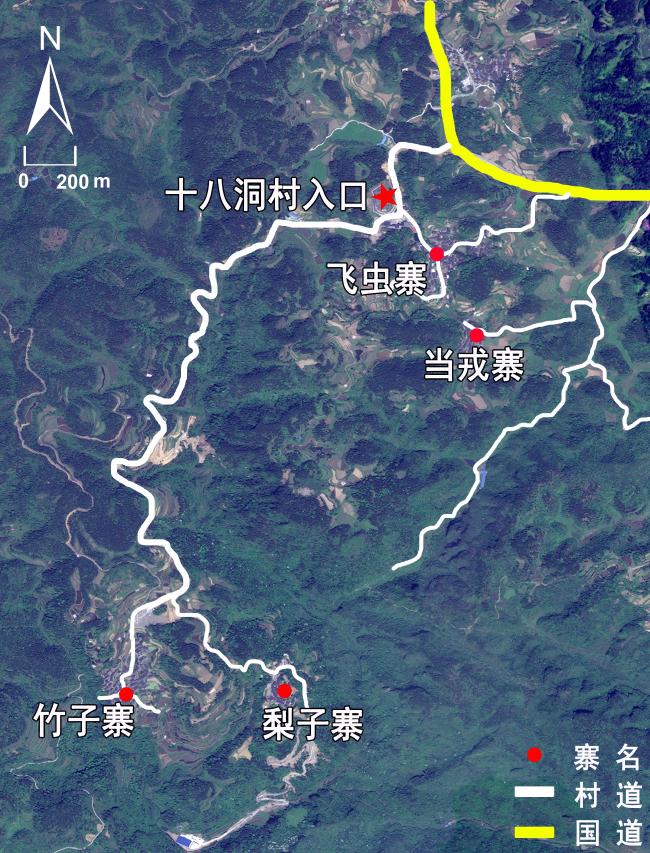
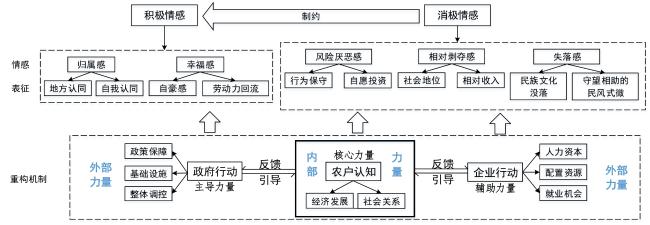
The aim of rural revitalization is to improve the prosperity of farmers. However, farmers are not purely "economics-driven people." In fact, their behavioral logic is driven by internal emotions, which can affect the external environment. At the same time, changes in the external environment can alter a farmer's emotions toward the place. Therefore, research on the emotional reconstruction of farmers in villages where poverty has been alleviated is not only conducive to guiding the direction of construction and governance of such villages and maintaining their harmonious and stable development but also helpful for retaining "returning" farmers. These farmers make up for the absence of the "main body" of the economic development of the village, all of which is significant for the smooth realization of effective connections between poverty alleviation and rural revitalization. For this article, Shibadong Village in Huayuan County, Hunan Province was chosen as the case study, with the "left behind" farmers and "returning" farmers in the village as the research subjects. From the perspective of emotional geography, we used in-depth interviews and participatory observation methods to explore the emotional reconstruction of the farmers and the related mechanism involved under the influence of the targeted poverty alleviation policy. The research showed that 1) the emotional reconstruction of farmers in poverty-alleviated villages mainly includes the reconstruction of five perceptions sense of belonging, sense of happiness, sense of risk aversion, sense of relative deprivation, and sense of loss. 2) The implementation of the targeted poverty alleviation policy has optimized or improved the material space, industrial structure, economic income, and governance services of poverty-alleviated villages, resulting in increases in the farmers' senses of local belonging and happiness and a decrease in their sense of risk aversion. However, an imbalance in poverty alleviation efforts leads to an enhancement of their sense of relative deprivation. The dissolution of traditional cultures and the reconstruction of social relationships result in the farmers feeling lost. These five senses of emotions affect and restrict one another. 3) In the process of emotional reconstruction of farmers in poverty-alleviated villages, the cognition of the individuals is the core force of the process. However, farmers find it difficult to make long-term and wise decisions because of their low cognitive level, which is not conducive to the positive development of emotions. As the leading force driving the emotional reconstruction of farmers, the government—through various poverty alleviation measures—coordinates the order of other individuals participating in poverty alleviation governance, optimizes the rural regional system in the poverty relief village, and improves the farmers' cognition to reshape their local emotions. Enterprises play an auxiliary role in this process, participating in poverty alleviation in various ways. In addition, they facilitate the market economy in optimizing the allocation of resources and improving both the efficiency of poverty alleviation and the resilience of poverty-alleviated villages to resist risks. To consolidate the achievements of poverty alleviation and realize rural revitalization, poverty-alleviated villages should take relevant measures based on the characteristics of emotional space, time, sociality, and hierarchy to cultivate positive emotions, and reduce negative ones, in the farmers. Use of the "place-emotion-behavior" analysis model is helpful for elucidating the interactive processes between the emotions, behaviors, and social material environments of farmers and the significance of those individuals in the reconstruction of the rural regional system in the context of macro policies. This article provides a useful reference for promoting the effective connection between targeted poverty alleviation and rural revitalization.
Chirui Chen , Feng He , Fanghua Tang . Emotional Reconstruction of Farmers in Poverty-Alleviated Villages from the Perspective of Emotional Geography: A Case Study of Shibadong Village in Hunan Province[J]. Tropical Geography, 2022 , 42(4) : 579 -591 . DOI: 10.13284/j.cnki.rddl.003459
表1 访谈者及其基本信息Table 1 Interviewers and their basic information |
| 序号 | 职业 | 性别 | 年龄 | 农户类型 | 村寨 |
|---|---|---|---|---|---|
| 1 | 餐馆经营者 | 男 | 25 | “返乡” | 飞虫 |
| 2 | 售票员 | 女 | 27 | “返乡” | 飞虫 |
| 3 | 务农 | 男 | 39 | “返乡” | 飞虫 |
| 4 | 待业 | 男 | 40 | “返乡” | 飞虫 |
| 5 | 景区讲解员 | 女 | 40 | “返乡” | 飞虫 |
| 6 | 务农 | 女 | 41 | “返乡” | 飞虫 |
| 7 | 务农、打零工 | 男 | 45 | “返乡” | 飞虫 |
| 8 | 务农 | 男 | 47 | “留守” | 飞虫 |
| 9 | 民宿经营者 | 男 | 50 | “返乡” | 飞虫 |
| 10 | 务农、打零工 | 男 | 50 | “返乡” | 飞虫 |
| 11 | 零售经营者、务农 | 女 | 58 | “留守” | 飞虫 |
| 12 | 务农、打零工 | 男 | 59 | “返乡” | 飞虫 |
| 13 | 苗绣合作社经营者、务农 | 女 | 68 | “留守” | 飞虫 |
| 14 | 民宿经营者 | 男 | 73 | “留守” | 飞虫 |
| 15 | 务农 | 男 | 75 | “留守” | 飞虫 |
| 16 | 待业 | 女 | 30 | “返乡” | 当戎 |
| 17 | 打零工 | 男 | 40 | “返乡” | 当戎 |
| 18 | 保安 | 女 | 48 | “返乡” | 当戎 |
| 19 | 讲解员 | 女 | 33 | “返乡” | 竹子 |
| 20 | 讲解员 | 女 | 37 | “返乡” | 竹子 |
| 21 | 务农、打零工 | 男 | 45 | “返乡” | 竹子 |
| 22 | 民宿经营者 | 男 | 50 | “返乡” | 竹子 |
| 23 | 护林员 | 男 | 55 | “留守” | 竹子 |
| 24 | 务农 | 男 | 69 | “留守” | 竹子 |
| 25 | 务农 | 男 | 75 | “留守” | 竹子 |
| 26 | 务农 | 男 | 83 | “留守” | 竹子 |
| 27 | 讲解员 | 女 | 26 | “返乡” | 梨子 |
| 28 | 民宿经营者 | 女 | 40 | “留守” | 梨子 |
| 29 | 教师 | 女 | 46 | “返乡” | 梨子 |
| 30 | 民宿经营者 | 女 | 55 | “留守” | 梨子 |
| 31 | 务农 | 男 | 55 | “返乡” | 梨子 |
| 32 | 民宿经营者 | 女 | 68 | “留守” | 梨子 |
| 33 | 零售经营者 | 男 | 72 | “留守” | 梨子 |
|

陈驰蕊:搭建论文框架,实地调研,资料整理与分析, 论文撰写与修订;
何 峰:提出研究选题和研究思路,指导研究过程,提出修改意见,提升论文质量;
汤放华:提出研究思路和修改意见。
感谢匿名审稿专家提出宝贵的修改意见和建议!参考文献(References):
|
曹艳春,侯万锋. 2018. 新时代精神扶贫的现实困境与路径选择. 甘肃社会科学,(6):177-182. [Cao Yanchun and Hou Wanfeng. 2018. Realistic Dilemma of Spiritual Poverty Alleviation and Path Selection. Gansu Social Sciences, (6): 177-182. ]
|
|
陈淇淇. 2019. 社会空间变迁视域下易地扶贫搬迁移民群体的社会适应研究. 贵阳:贵州大学. [Chen Qiqi. 2019. Social Adaptation of the Displaced Groups in the Context of Social Space Change. Guiyang: Guizhou University. ]
|
|
陈述,盛毅华. 2005. 现代系统科学学. 上海:上海科学技术文献出版社. [Chen Shu and Sheng Yihua. 2005. Modern System Science. Shanghai: Shanghai Scientific and Technological Literature Press. ]
|
|
程军. 2019. 精准扶贫:当代中国国家治理的情感逻辑. 深圳大学学报(人文社会科学版),36(3):116-124. [Cheng Jun. 2019. Targeted Poverty Alleviation: The Emotional Logic of Contemporary Chinese National Governance. Journal of Shenzhen University (Humanities and Social Sciences Edition), 36(3): 116-124. ]
|
|
程肇基. 2016. 精神扶贫:一个亟待关注的精准扶贫新领域. 江西社会科学,36(11):210-216. [Cheng Zhaoji. 2016. Spiritual Poverty Alleviation: A New Field of Targeted Poverty Alleviation that Needs Urgent Attention. Jiangxi Social Sciences, 36(11): 210-216. ]
|
|
邓遂. 2003. 现代城市社区情感障碍分析. 城市问题,(4):47-49,36. [Deng Sui. 2003. On the Community Emotional-Segregation. Urban Problems, (4): 47-49, 36. ]
|
|
丁波. 2020. 新主体陌生人社区:民族地区易地扶贫搬迁社区的空间重构. 广西民族研究,(1):56-62. [Ding Bo. 2020. New Subject Stranger Communities: Spatial Reconstruction of Relocated Poor Populations from Inhospitable Areas Communities in Ethnic Areas. Guangxi Ethnic Studies, (1): 56-62. ]
|
|
丁凤琴. 2010. 关于社区情感的理论发展与实证研究. 城市问题,(7):23-27. [Ding Fengqin. 2010. Theoretical and Practical Development of Community Feelings. Urban Problems, (7): 23-27. ]
|
|
杜宗斌,苏勤,姜辽. 2013. 乡村旅游地居民社区归属感模型构建及应用——以浙江安吉为例. 旅游学刊,28(6):65-74. [Du Zongbin, Su Qin and Jiang Liao. 2013. A Structural Model of Residents' Sense of Community in Rural Tourism Destinations and Its Application: A Case Study of Anji County in Zhejiang Province. Tourism Tribune, 28(6): 65-74. ]
|
|
房彬,房婷. 2021. 精神脱贫:内涵阐释与路径探索. 昆明理工大学学报(社会科学版),21(2):78-83. [Fang Bin and Fang Ting. 2021. Spiritual Poverty Alleviation: Connotation Interpretation and Path Exploration. Journal of Kunming University of Science and Technology (Social Sciences), 21(2): 78-83. ]
|
|
古丽扎克伯,辛自强,李丹. 2011. 地方依恋研究进展:概念、理论与方法. 首都师范大学学报(社会科学版),(5):86-93. [Gulizakbo, Xin Ziqiang and Li Dan. 2011. Research Progress of Place Attachment: Concept, Theory and Method. Journal of Capital Normal University (Social Sciences Edition), (5): 86-93. ]
|
|
蒋莉莉. 2012. 农户行为理论的基本总结. 青春岁月,(12):385-386. [Jiang Lili. 2012. Basic Summary of Farmer Behavior Theory. Youth Years, (12): 385-386. ]
|
|
Kiss E. 2000. Rural Restructuring in Hungary in the Period of Socio-Economic Transition. GeoJournal, 51(3): 221-233.
|
|
杭承政,胡鞍钢. 2017. “精神贫困”现象的实质是个体失灵——来自行为科学的视角. 国家行政学院学报,(4):97-103,147. [Hang Chengzheng and Hu An'gang. 2017. The Essence of "Mental Poverty" Phenomenon Is Individual Failure-from the Perspective of Behavioral Science. Journal of Chinese Academy of Governance, (4): 97-103, 147. ]
|
|
李平,宋宛锋,刘晓石,周晓贞. 2013. 旅游地社区居民“相对剥夺感”的心理疏导对策研究——以丽江束河古镇为例. 市场论坛,(9):87-89. [Li Ping, Song Wanfeng, Liu Xiaoshi and Zhou Xiaozhen. 2013. Study on Psychological Counseling Countermeasures for "Relative Deprivation" of Community Residents in Tourist Destination: A Case Study of Shuhe Ancient Town in Lijiang. Market Forum, (9): 87-89. ]
|
|
林亦平,魏艾. 2018. “返乡”人口在乡村振兴战略中的“补位”探究. 农业经济问题,(8):91-97. [Lin Yiping and Wei Ai. 2018. Study on the Supplement of "City Return" Population Under the Vision of Rural Revitalization Strategy. Issues in Agricultural Economy, (8): 91-97. ]
|
|
林元城,杨忍,赖秋萍,王敏. 2020. 地方感的塑造与乡村治理:潮汕宗祠案例. 热带地理,40(4):732-743. [ Lin Yuangcheng, Yang Ren, Lai Qiuping and Wang Min. 2020. Construction of Sense of Place and Rural Governance: A Case Study of Chaoshan Ancestral Hall. Tropical Geography, 40(4): 732-743. ]
|
|
刘彦随,周扬,刘继来. 2016. 中国农村贫困化地域分异特征及其精准扶贫策略. 中国科学院院刊,31(3):269-278. [Liu Yansui, Zhou Yang and Liu Jilai. 2016. Regional Differentiation Characteristics of Rural Poverty and Targeted Poverty Alleviation Strategy in China. Bulletin of Chinese Academy of Sciences, 31(3): 269-278. ]
|
|
刘逸,保继刚,朱毅玲. 2017. 基于大数据的旅游目的地情感评价方法探究. 地理研究,36(6):1091-1105. [Liu Yi, Bao Jigang and Zhu Yiling. 2017. Exploring Emotion Methods of Tourism Destination Evaluation: A Big-Data Approach. Geographical Research, 36(6): 1091-1105. ]
|
|
刘玉珍. 2019. 农村精准扶贫实践中的情感逻辑及其治理路径. 云南社会科学,(5):29-36,186. [ Liu Yuzhen. 2019. Emotional Logic and Governance Path in the Practice of Rural Targeted Poverty Alleviation. Yunnan Social Science Press, (5): 29-36, 186. ]
|
|
罗婷. 2020. 斯科特农民生存伦理思想研究. 南京:南京师范大学. [Luo Ting. 2020. Research on Scott's Farmer Survival Ethics. Nanjing: Nanjing Normal University. ]
|
|
吕龙,陈晓艳. 2021. 乡村文化记忆的场域认知、依恋与传承关系——以苏州金庭镇为例. 热带地理,41(3):485-494. [Lyu Long and Chen Xiaoyan. 2021. The Relationships Among Field Cognition, Place Attachment, and Inheritance Path in Rural Cultural Memories from the Perspective of Residents: A Case Study of Jinting Town, Suzhou. Tropical Geography, 41(3): 485-494. ]
|
|
Maclver R M. 1931. Society: Its Structure and Changes. New York: Long & R R Smith.
|
|
Micklson K D and Williamd D L. 2008. Perceived Stigma of Poverty and Depression: Examination of Interpersonal and Intrapersonal Mediators. Journal of Social and Clinical Psychology, 27(9): 903-930.
|
|
Mike Krone. 2003. Cultural Geography. Nanjing: Nanjing University Press.
|
|
Moeinaddini M, Assdi-Shekari Z, Aghaabbasi M, Saadi I, Shah M Z and Cools M. 2020. Proposing a New Score to Measure Personal Happiness by Identifying the Contributing Factors. Measurement, 151: 1-15.
|
|
麻三山. 2009. 族群、情感与和谐社会构建. 宣宾学院学报,9(3):48-51. [Ma Sanshan. 2019. Ethnic Group, Motion and Construction of Harmonious Society. Journal of Yibin University, 9(3): 48-51. ]
|
|
Nancy Ettlinger. 2004. Toward a Critical Theory of Untidy Geographies: The Spatiality of Emotions in Consumption and Production. Feminist Economics, 10(3): 21-54.
|
|
Pranken R F. 2005. 人类动机:当代心理学经典教材译丛. 郭本禹,译. 西安:陕西师范大学出版社. [Pranken R F. 2005. Human Motivation. Guo Benyu. Trans. Xi'an: Shanxi Normal University Press. ]
|
|
邵培仁,林群. 2011. 时间、空间、社会化:传播情感地理学研究的三个维度. 中国传媒报告,10(1):17-29. [Shao Peiren and Lin Qun. 2011. Time, Space and Socialization: Three Dimensions of Communication Emotion Geography. China Media Report, 10(1): 17-29. ]
|
|
孙小龙,郜捷,林璧属,李磊. 2019. 旅游者在场情感体验建构:理论模型与实证检验. 热带地理,39(3):430-439. [Sun Xiaolong, Gao Jie, Lin Bishu and Li Lei. 2019. Construction of Tourists' Emotional Experience in the On-Site Stage: Theoretical Model and Empirical Investigation. Tropical Geography, 39(3): 430-439. ]
|
|
陶伟,蔡少燕,余晓晨. 2019. 流动性视角下流动家庭的空间实践和情感重构. 地理学报,74(6):1252-1266. [Tao Wei, Cai Shaoyan and Yu Xiaochen. 2019. The Emotional Reconstruction and Spatial Practices of Mobilizing Family: A Perspective from Mobility. Acta Geographica Sinica, 74(6): 1252-1266. ]
|
|
William M R. 2001. The Navigation of Feeling: A Framework for the History of Emotions. Cambridge : Cambridge University Press.
|
|
Woods M. 2011. Rural. London & New York: Routledge.
|
|
汪三贵,冯紫曦. 2020. 脱贫攻坚与乡村振兴有效衔接的逻辑关系. 贵州社会科学,(1):4-6. [Wang Sangui and Feng Zixi. 2020. Logic in Effective Connection of Poverty Alleviation and Rural Revitalization. Guizhou Social Sciences, (1): 4-6. ]
|
|
王孟永. 2018. 社区认同、环境情感结构与城市形态发生学机制研究——基于上海曹杨新村的测量与评价. 城市规划,42(12):43-54. [Wang Mengyong. 2018. Research on Community Identity, Emotional Structure of the Environment, and Urban Morphogenetic Mechanism: Based on the Measurement and Evaluation of Caoyang Xincun in Shanghai. City Planning Review, 42(12): 43-54. ]
|
|
王雁. 2002. 普通心理学. 北京:人民教育出版社. [Wang Yan. 2002. General Psychology. Beijing: People's Education Press. ]
|
|
吴丽敏. 2020. 古镇旅游地居民“情感-行为”分异与情感空间建构. 北京:经济管理出版社. [Wu Limin. 2020. The "Emotion Behavior" Differentiation and Emotion Space Construction of Residents in Ancient Town Tourism Area. Beijing: Economic Management Press. ]
|
|
吴良镛. 2001. 人居环境科学导论. 北京:中国建筑工业出版社. [Wu Liangyong. 2001. Introduction to Human Settlements. Beijing: China Construction Industry Press. ]
|
|
向德平,向凯. 2020. 情感治理:驻村帮扶如何连接国家与社会. 南开学报(哲学社会科学版),(6):84-93. [ Xiang Deping and Xiang Kai. 2020. Emotion Governance: How Do Assigned Cadres in Villages Connect the State and Society. Nankai Journal (Philosophy, Literature and Social Science Edition), (6): 84-93. ]
|
|
行腾辉,王晓峰. 2021. 疫情期间武汉樱花的情感效应研究. 热带地理,41(1):25-35. [Xing Tenghui and Wang Xiaofeng. 2021. Emotional Effect of Cherry Blossoms in Wuhan During the COVID-19 Epidemic. Tropical Geography, 41(1): 25-35. ]
|
|
杨宝泉,贾晓辉. 2008. 对家庭经济困难学生进行情感关怀和心理救助的探索与实践. 中国高教研究,(2):67-68. [Yang Baoquan and Jia Xiaohui. 2008. Exploration and Practice of Emotional Care and Psychological Assistance for Students with Financial Difficulties. China Higher Education Research, (2): 67-68. ]
|
|
赵明. 2020. 农户视角的城镇化动力与模式研究:基于传统农区周口市的调查. 北京:中国建筑工业出版社. [Zhao Ming. 2020. Research on the Driving Force and Mode of Urbanization from the Perspective of Farmers: Based on the Investigation of Zhoukou City, A Traditional Agricultural Area. Beijing: China Architecture & Building Press. ]
|
|
赵昭,张朝枝. 2018. 历史背景认知对殖民遗产旅游情感体验的影响——以广州沙面岛为例. 热带地理,38(5):707-716. [Zhao Zhao and Zhang Chaozhi. 2018. Influence of Background Knowledge on Colonial Heritage Tourist Emotional Experience: A Case Study of Shameen, Guangzhou. Tropical Geography, 38(5): 707-716. ]
|
|
中共中央党史和文献研究院. 2019. 习近平关于“三农”工作论述摘编. 北京:中央文献出版社. [Research Institute of CPC Central Committee History and Documents. 2019. Excerpt from Xi Jinping's Discussion on the Work of "Agriculture, Rural Areas and Farmers". Beijing: Central Party Literature Press. ]
|
|
中国政府网. 2011. 中国农村扶贫开发纲要(2011-2020). (2011-12-15)[2015-10-21]. http://www. gov. cn/gongbao/content/2011 /content_2020905. htm. [Chinese Government Website. 2011. Outline of Poverty Alleviation and Development in Rural China (2001-2010). (2011-12-15) [2015-10-21]. http://www.gov.cn/gongbao/content/2011/content_2020905. htm. ]
|
|
朱竑,高权. 2015. 西方地理学“情感转向”与情感地理学研究述评. 地理研究,34(7):1394-1406. [Zhu Hong and Gao Quan. 2015. Reviews on "Emotional Turn" and Emotional Geographies in Recent Western Geography. Geographical Research, 34 (7): 1394-1406. ]
|
|
邹雪瓶,谢波,李志刚,陈宏胜,刘晔. 2020. 中国城市流动人口情感及其社区生活感知研究——以广州市为例. 城市规划,44(6):31-38. [Zou Xueping, Xie Bo, Li Zhigang, Chen Hongsheng and Liu Ye. 2020. A Study on Urban Migrants' Emotion and Perceived Neighborhood Life in China: Taking Guangzhou as an Example. Urban Planning, 44(6): 31-38. ]
|
|
左昭,付少平. 2018. 精准扶贫背景下移民生计空间再造与优化——基于陕西S县的实地调查. 农村经济与科技,29(9):130-131. [Zuo Zhao and Fu Shaoping. 2018. Reconstruction and Optimization of Livelihood Planning Under the Background of Targeted Poverty Alleviation-Based on the Field Survey of S County of Shaanxi Province. Rural Economy and Science-Technology, 29(9): 130-131. ]
|
/
| 〈 |
|
〉 |