The Memory Map Pattern of Trafficked Children and Its Influencing Elements: Evidence from Successful Cases of Seeking Relatives
Received date: 2022-07-14
Revised date: 2022-09-04
Online published: 2022-10-07
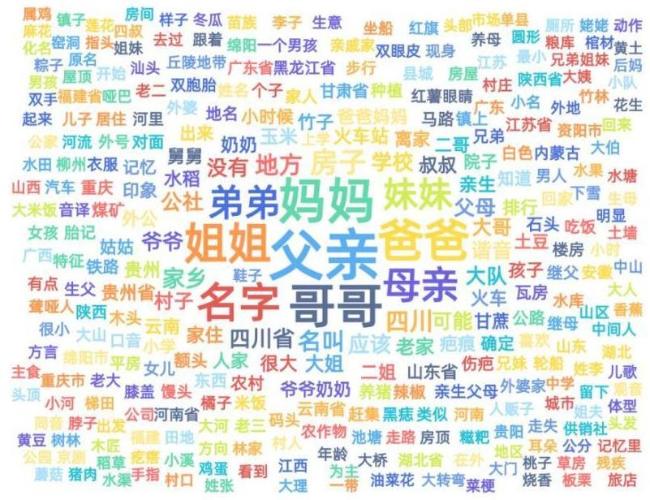
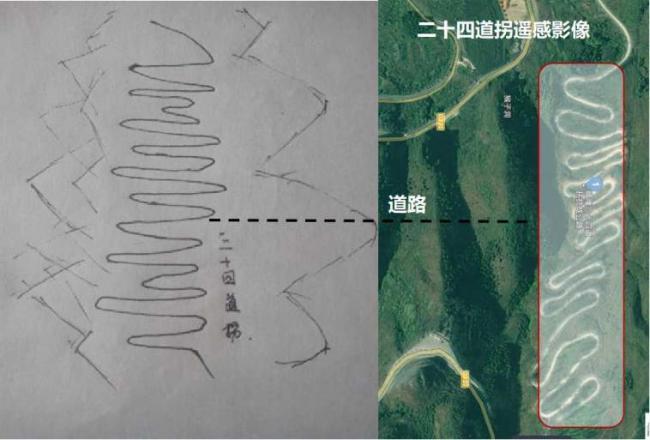
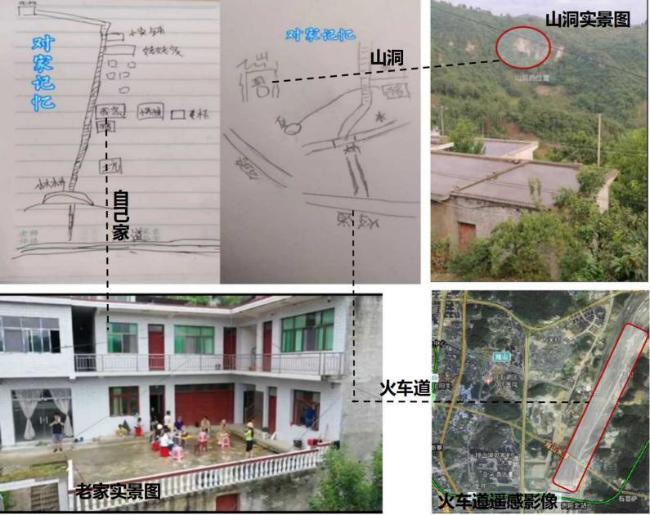
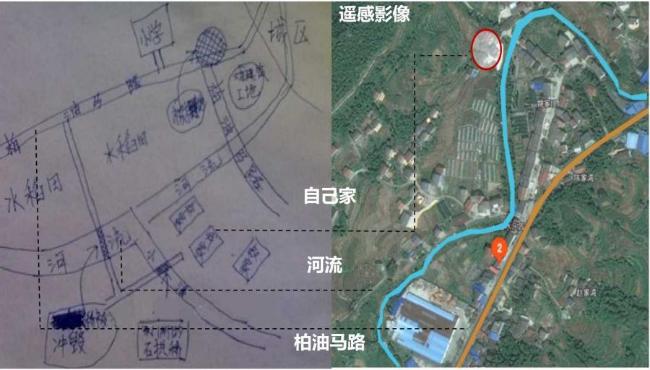
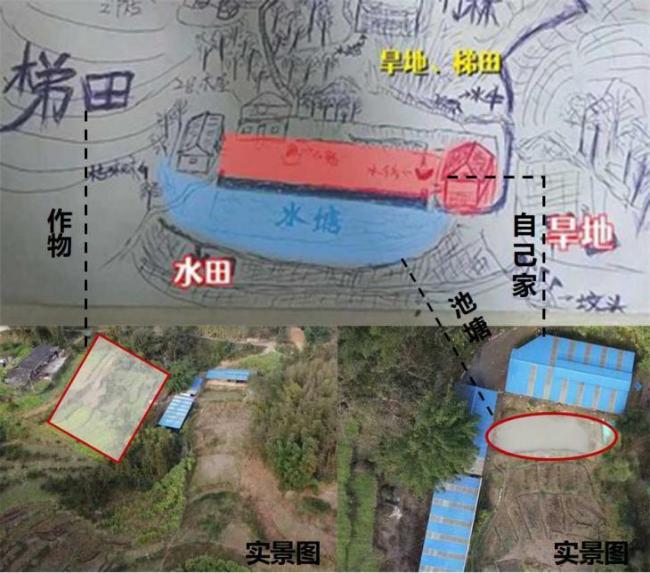
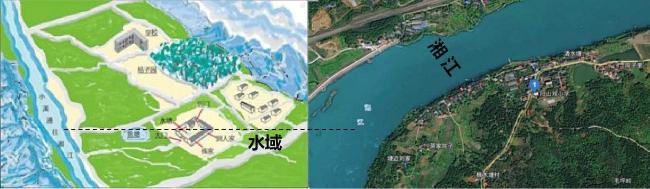
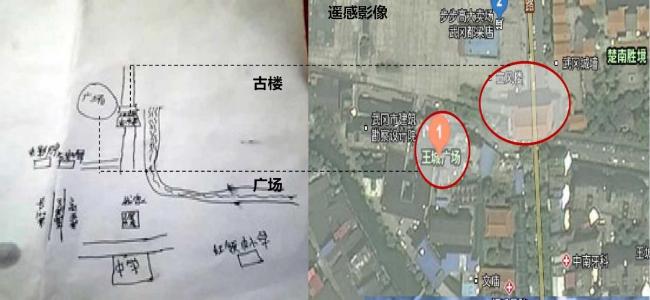
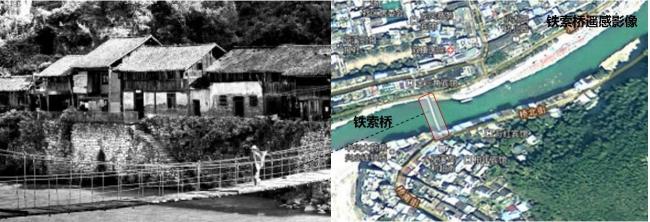
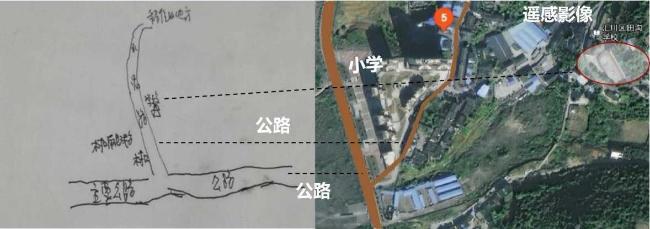
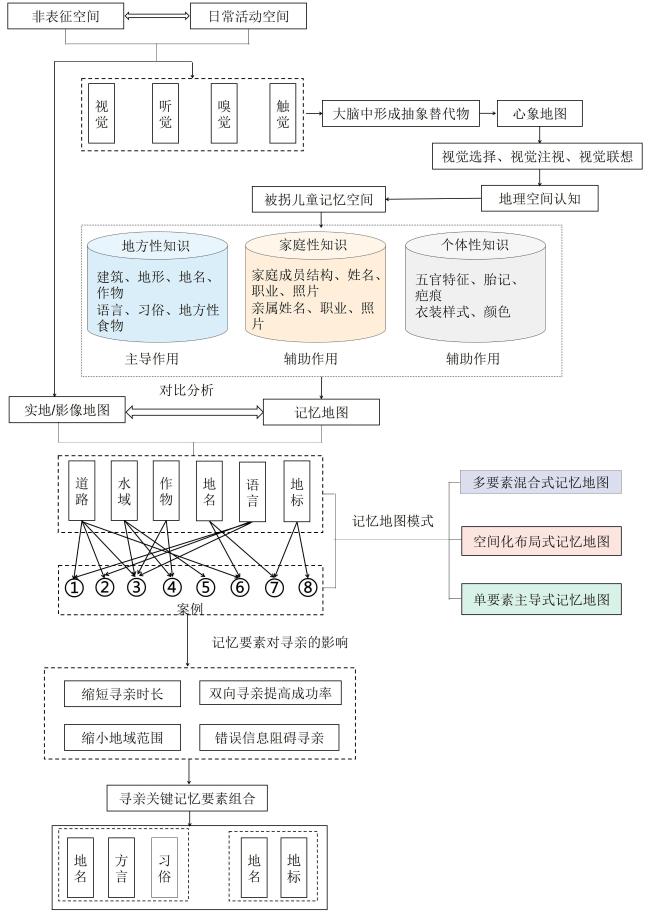
Child trafficking has been repeatedly criminalized and has become a timely and important issue of concern to society and academia. Most existing studies focus on macro-analyses and lack a memory-space discussion based on typical trafficking cases. Based on case data extracted from the "Baobeihuijia" public service platform, this study explores the memory space/map pattern and its influencing elements in the process of seeking for relatives of trafficked children. Text analysis, cognitive map analysis, and case studies were used. The results show the following: (1) The memory space of trafficked children is composed of local, family, and individual knowledge. Local knowledge includes the natural physical environment and social and cultural environment factors; family knowledge includes family member information, kinship, and other elements; and individual knowledge includes factors such as self-identification characteristics and the clothing they were wearing. (2) The memory space of trafficked children is formed in their daily activity space, which is the memory of the objective characteristics of their hometown and a combination of geographical space and humanistic emotion. With an increase in children's age and changes over time, the elements of their memory space will change accordingly, enabling them to form unique individual memories in different stages and times. Changes in children's living environments make it easy to shape complex memory spaces. (3) The memory map of trafficked children has three modes: a multifactor mixed memory map, spatial layout memory map, and single-element dominant memory map. The multifactor mixed memory map relies on a variety of sensory cognitions to form complex memory content. The multifactor positioning of the hometown area promotes the success of seeking relatives. The spatial layout memory map is mainly based on a hand-drawn complete map, which is spatial and to scale, and plays a two-way perception function to help native families and volunteers identify information and promote the success of seeking relatives. The single-element dominant memory map uses landmarks and place names as key elements to accurately locate the geographical location of trafficked children's families. However, these elements are not easily remembered, and the process of seeking relatives depends mainly on other elements. (4) Children leave a deep impression of places of frequent contact in their daily activities; uniquely shaped road and surface waters are more likely to form memory and become important promoting factors in the process of seeking relatives; the combination of place names, dialects, customs, and place names and landmarks have become key elements in the success of seeking relatives. This study draws on memory space-related research methods with case studies as the core from an individual perspective, selects trafficked children as research objects, and explores the influence of trafficked children's memory space and memory maps on the search process from the perspective of geographical memory space. This study enriches the research on memory space and is a positive attempt to expand the related literature.
Juan Wang , Gang Li , Yue Yu , Meifeng Zhao , Chenxi Feng , Nuo Chen . The Memory Map Pattern of Trafficked Children and Its Influencing Elements: Evidence from Successful Cases of Seeking Relatives[J]. Tropical Geography, 2022 , 42(9) : 1559 -1570 . DOI: 10.13284/j.cnki.rddl.003549
表1 典型案例被拐儿童基本信息Table 1 Basic information of trafficked children in typical cases |
| 案例编号 | 姓名 | 性别 | 被拐时间 | 被拐时长/a | 案发年龄/岁 | 拐出省份 | 拐入省份 | 拐出地域 |
|---|---|---|---|---|---|---|---|---|
| ① | 德某 | 女 | 1985年 | 35 | < 18 | 贵州省 | 河南省 | 乡村 |
| ② | 杨某某 | 女 | 1994年 | 27 | 5 | 贵州省 | 河北省 | 乡村 |
| ③ | 罗某 | 男 | 1990年 | 22 | 5 | 四川省 | 福建省 | 乡村 |
| ④ | 李某某 | 男 | 1989年 | 33 | 4 | 云南省 | 河南省 | 乡村 |
| ⑤ | 牛某 | 男 | 1995年 | 10 | 5 | 湖南省 | 河南省 | 乡村 |
| ⑥ | 刘某某 | 男 | 1991年 | 29 | 6 | 贵州省 | 福建省 | 乡村 |
| ⑦ | 肖某 | 男 | 1993年 | 28 | 10 | 湖南省 | 广东省 | 城市 |
| ⑧ | 翁某某 | 女 | 1987年 | 24 | 6 | 重庆市 | 福建省 | 乡村 |
表2 被拐儿童记忆内容的基本构成Table 2 Basic composition of memory contents of trafficked children |
| 记忆内容 | 要素 | 示例 |
|---|---|---|
| 个体性知识 | 识别性特征 | 五官特征、胎记、疤痕、氟斑牙 |
| 失踪时穿着 | 衣装样式、颜色 | |
| 家庭性 知识 | 家庭成员信息 | 家庭结构、成员人数,家人姓名、 职业、照片 |
| 亲缘关系 | 亲属姓名、职业、照片 | |
| 地方性 知识 | 自然景观 | 水域、地形、道路、气候 |
| 种植作物 | 橘子、香蕉、甘蔗、水稻、小麦、柳树 | |
| 当地建筑物 | 房屋结构、建筑物布局、桥梁、涵洞 | |
| 方言/地方性语言 | 苗语、佤语、布依族语、客家话、川渝口音 | |
| 地方性食物 | 糍粑、辣椒、腊肉、酥油茶 | |
| 节庆习俗 | 过年会打糍粑;过年会围着柱子跳舞;端午节会把鸡蛋染成红色然后用网袋挂在胸前吃 |

1 http://www.baobeihuijia.com/
王娟:数据收集整理,论文撰写与修改;
李钢:论文指导与修改;
于悦、赵美风:提出论文修改建议;
冯忱熹、陈诺:审阅论文,提出修改建议。
|
曹坤,傅文棋,薛志伟,范凯博. 2011. 浅议地图空间认知中的心象地图. 地矿测绘,27(1):5-7.
Cao Kun, Fu Wenqi, Xue Zhiwei and Fan Kaibo. 2011. Discussion the Mental Map of Geo-Spatial Cognition. Surveying and Mapping of Geology and Mineral Resources, 27(1): 5-7.
|
|
程炎焱. 2018. 记忆理论视角下当代文化建筑叙事空间设计研究. 广州:华南理工大学.
Cheng Yanyan. 2018. Study on Design of Narrative Space of Contemporary Cultural Architecture in the View of Memory Theory. Guangzhou: South China University of Technology.
|
|
戴菲,章俊华. 2009. 规划设计学中的调查方法5——认知地图法. 中国园林,25(3):98-102.
Dai Fei and Zhang Junhua. 2009. The Survey Methods in Planning and Design 5: Cognitive Map. Chinese Landscape Architecture, 25(3): 98-102.
|
|
Dottridge Mike. 2002. Trafficking in Children in West and Central Africa. Informa UK Limited, 10(1): 38-42.
|
|
Elder Glen H. 1998. The Life Course as Developmental Theory. JSTOR, (1): 1.
|
|
Fedina Lisa, Williamson Celia and Perdue Tasha. 2016. Risk Factors for Domestic Child Sex Trafficking in the United States. Sage Publications, 34(13): 2653-2673.
|
|
高晓莹. 2010. 拐卖儿童罪之犯罪学探析. 中国青年政治学院学报,29(6):90-94.
Gao Xiaoying. 2010. Criminological Analysis of the Crime of Child Trafficking. Journal of China Youth University of Political Science, 29(6): 90-94.
|
|
管众. 2017. 基于“记忆地图”方法的拆迁村庄公共空间研究//中国城市规划学会. 持续发展 理性规划——2017中国城市规划年会论文集(14规划实施与管理). 北京:中国建筑工业出版社,653-664.
Guan Zhong. 2017. Research on Public Space of Demolition Villages Based on 'Memory Map' Method. In:Chinese Society of Urban Planning. Rational Planning for Sustainable Development: Proceedings of the 2017 Annual Conference on Urban Planning in China (14 Planning Implementation and Management). Beijing:China Construction Industry Press, 653-664.
|
|
Jiang Zuoming and Sun Yang. 2022. Exploring the Spatial Image of Traditional Villages from the Tourists' Hand-Drawn Sketches. Sustainability, 14(10): 5977.
|
|
孔祥群. 2009. 联想加上想象 形象记忆地图. 地理教学,(5):44.
Kong Xiangqun. 2009. Association Plus Imaginative Image Memory Map. Geography Teaching, (5): 44.
|
|
兰立宏. 2014. 论国际视域下我国被拐儿童保护和救助制度的完善. 青少年犯罪问题,(4):48-56.
Lan Lihong. 2014. On the Improvement of the Protection and Assistance System of Abducted Children in China from the International Perspective. Issues on Juvenile Crimes and Delinquency, (4): 48-56.
|
|
李宁. 2019. “社会记忆”理论的发展概述. 新闻研究导刊,10(9):73-74.
Li Ning. 2019. An Overview of the Development of 'Social Memory' Theory. Journal of News Research, 10 (9): 73-74.
|
|
李钢,谭然,王会娟,颜祥,邵琰,2017a. 中国拐卖儿童犯罪的地理特征研究. 地理科学,37(7):1049-1058.
Li Gang, Tan Ran, Wang Huijuan, Yan Xiang and Shao Yan. 2017a. Geographic Characteristics of Child Trafficking Crime in China. Scientia Geographica Sinica, 37(7): 1049-1058.
|
|
李钢,王会娟,谭然,付莹. 2017b. 中国拐卖儿童犯罪的时空特征与形成机制——基于“成功案例”的管窥. 地理研究,36(12):2505-2520.
Li Gang, Wang Huijuan, Tan Ran and Fu Ying. 2017b. Spatiotemporal Characteristics and Formation Mechanism of Child Trafficking Crime in China Based on "Successful Cases". Geographical Research, 36(12): 2505-2520.
|
|
李钢,谭然,王会娟,林依硕,梁燕均. 2018. 中国拐卖儿童犯罪时空格局演变及其影响因素. 人文地理,33(2):26-34.
Li Gang, Tan Ran, Wang Huijuan, Lin Yishuo and Liang Yanjun. 2018. Spatio-Temporal Change and Influencing Factors of Child Trafficking Crime in China. Human Geography, 33(2): 26-34.
|
|
李钢,王莺莺,杨兰,谭然,苟思远. 2019. 拐入侧视域下我国拐卖儿童犯罪的时空格局. 陕西师范大学学报(自然科学版),47(3):95-102.
Li Gang, Wang Yingying, Yang Lan, Tan Ran and Gou Siyuan. 2019. Spatiotemporal Pattern of Child Trafficking Crime in China: A Demand front Perspective. Journal of Shaanxi Normal University (Natural Science Edition), 47(3): 95-102.
|
|
李钢,薛淑艳,马雪瑶,周俊俊,王皎贝,徐婷婷. 2020. 中国儿童非正常迁移的时空分异及综合机制——拐卖与抱养对比视角. 人口研究,44(3):102-117.
Li Gang, Xue Shuyan, Ma Xueyao, Zhou Junjun, Wang Jiaobei and Xu Tingting. 2020. Spatio-Temporal Differentiation and Comprehensive Mechanism of Irregular Migration of Children in China: Comparison between Child Trafficking and Informal Adoption. Population Research, 44(3): 102-117.
|
|
李钢,薛淑艳,马雪瑶,周俊俊,徐婷婷,王皎贝. 2021. 中国失踪人口的时空格局演变与形成机制. 地理学报,76(2):310-325.
Li Gang, Xue Shuyan, Ma Xueyao, Zhou Junjun, Xu Tingting and Wang Jiaobei. 2021. Spatio-Temporal Pattern Evolution and Formation Mechanism of Missing Person Incidents in China. Acta Geographica Sinica, 76(2): 310-325.
|
|
李巍,漆建武,张凯. 2021. 甘肃省文化记忆空间识别与格局演化. 经济地理,41(1):74-86.
Li Wei, Qi Jianwu and Zhang Kai. 2021. Spatial Identification and Pattern Evolution of Cultural Memory in Gansu Province. Economic Geography, 41(1): 74-86.
|
|
刘玲,李钢,薛淑艳,马雪瑶,周俊俊,徐婷婷,王皎贝. 2020. 四川省拐卖儿童犯罪的时空演变过程及影响因素分析. 地理科学进展,39(5):853-865.
Liu Ling, Li Gang, Xue Shuyan, Ma Xueyao, Zhou Junjun, Xu Tingting and Wang Jiaobei. 2020. Spatiotemporal Change and Influencing Factors of Child Trafficking Crime in Sichuan Province. Progress in Geography, 39(5): 853-865.
|
|
刘啸莳,曹中平,李丹. 2017. 自传体记忆的开端:最早记忆的诱发与评估. 心理科学进展,25(10):1713-1725.
Liu Xiaoshi, Cao Zhongping and Li Dan. 2017. Origins of Autobiographical Memory: How to Elicit, Measure and Code the Earliest Memory. Advances in Psychological Science, 25(10): 1713-1725.
|
|
刘雨薇. 2020. 拐卖儿童犯罪量刑的影响因素. 南昌:江西财经大学.
Liu Yuwei. 2020. Factors Influencing the Sentencing of Child Abduction Crime. Nanchang: Jiangxi University of Finance and Economics.
|
|
陆敏,汤虞秋,陶卓民. 2016. 基于认知地图法的历史街区居民集体记忆研究——以常州青果巷历史街区为例. 现代城市研究,(3):127-132.
Lu Min, Tang Yuqiu and Tao Zhuomin. 2016. Study on the Resident's Collective Memory in Historic District Based on Cognitive Map: A Case Study of the Changzhou Qingguo Historic District. Modern Urban Research, (3): 127-132.
|
|
潘卉. 2006. 城市特色及意象研究在城市规划中的应用. 南方建筑,(6):108-110.
Pan Hui. 2006. The Application of City Characteristic and Imago Study in City Planning. South Architecture, (6): 108-110.
|
|
潘毅,许百华,陈晓芬. 2006. 选择性注意与视觉空间工作记忆的交互作用. 心理科学,(2):323-326.
Pan Yi, Xu Baihua and Chen Xiaofen. 2006. Interactions between Selective Attention and Visuospatial Working Memory. Journal of Psychological Science, (2): 323-326.
|
|
Shen Anqi, Antonopoulos Georgios A and Papanicolaou Georgios. 2012. China's Stolen Children: Internal Child Trafficking in the People's Republic of China. Springer Science and Business Media LLC, 16(1): 31-48.
|
|
Stöckl Heidi, Kiss Ligia, Koehler Jobst,Dong Dung Thuy and Zimmerman Cathy. 2017. Trafficking of Vietnamese Women and Girls for Marriage in China. Springer Science and Business Media LLC, 2(1): 28.
|
|
盛晓明. 2000. 地方性知识的构造. 哲学研究,(12):36-44,76-77.
Sheng Xiaoming. 2000. The Construction of Local Knowledge. Philosophical Research, (12): 36-44, 76-77.
|
|
孙杰远,乔晓华. 2021. 地方性知识的内涵、特征及其教育意蕴——读吉尔兹《地方性知识——阐释人类学论文集》. 教育理论与实践,41(13):55-60.
Sun Jieyuan and Qiao Xiaohua. 2021. Connotations, Characteristics and Educational Implications of Local Knowledge: Reading Clifford Geertz's Local Knowledge: Further Essays in Interpretive Anthropology. Theory and Practice of Education, 41(13): 55-60.
|
|
谭然. 2018. 地理学视角下的中国拐卖儿童犯罪研究. 西安:西北大学.
Tan Ran. 2018. Research on Child Trafficking Crime in China from the Perspective of Geography. Xi'an: Northwest University.
|
|
谭侠. 2008. 文脉传承载体. 重庆:重庆大学.
Tan Xia. 2008. The Inheritance Carriers of Context. Chongqing: Chongqing University.
|
|
田壮. 2019. 居民集体记忆的时空演变与耦合特征研究——以合肥市城隍庙街区为例.建筑与文化,(7):87-88.
Tian Zhuang. 2019. Study on the Spatial and Temporal Evolution and Coupling Characteristics of Residents' Collective Memory: Taking Chenghuang Temple Block in Hefei as an Example. Architecture and Culture, (7): 87-88.
|
|
王会娟. 2017. 我国拐卖儿童犯罪的时空特征与影响因素研究. 西安:西北大学.
Wang Huijuan. 2017. Research on Spatio-Temporal Characteristics and Influencing Factors of Child Trafficking Crime in China. Xi'an: Northwest University.
|
|
王皎贝,李钢,周俊俊,马雪瑶,徐婷婷,薛淑艳. 2021. 湖北省拐卖儿童犯罪的时空特征及其影响因素. 人文地理,36(1):73-83.
Wang Jiaobei, Li Gang, Zhou Junjun, Ma Xueyao, Xu Tingting and Xue Shuyan. 2021. Spatio-Temporal Pattern and Influencing Factors of Child Trafficking in Hubei Province. Human Geography, 36(1): 73-83.
|
|
许崇峰. 2016. 拐卖儿童犯罪刑法规制体系的完善. 长春:吉林大学.
Xu Chongfeng. 2016. Improvement in the Regulation System of the Criminal Law in the Crime of Abducting and Trafficking in Children. Changchun: Jilin University.
|
|
薛淑艳,李钢,马雪瑶,刘玲,杨兰. 2020. 贵州省拐卖儿童犯罪的多维时空格局及影响因素研究. 地理研究,39(7):1691-1706.
Xue Shuyan, Li Gang, Ma Xueyao, Liu Ling and Yang Lan. 2020. The Multidimensional Spatio-Temporal Pattern and Influencing Factors of Child Trafficking in Guizhou Province, China. Geographical Research, 39(7): 1691-1706.
|
|
薛淑艳,李钢,王会娟,付莹,刘玲. 2021. 被拐儿童生命历程变迁与原生家庭融入研究——基于寻亲成功案例的实证. 人文地理,36(3):58-66.
Xue Shuyan, Li Gang, Wang Huijuan, Fu Ying and Liu Ling. 2021. Life Course Chance and Biological Family Integration of Trafficked Children: Evidence from the Successful Cases of Seeking Relatives. Human geography, 36 (3): 58-66.
|
|
叶舒宪. 2001. “地方性知识”. 读书,(5):121-125.
Ye Shuxian. 2001. "Local Knowledge". Dushu, (5): 121-125.
|
|
袁同凯,房静静. 2017. 论记忆的空间性叙事. 新疆师范大学学报(哲学社会科学版),38(1):53-60,2.
Yuan Tongkai and Fang Jingjing. 2017. On Spacial Narratives of the Memories. Journal of Xinjiang Normal University (Edition of Philosophy and Social Sciences), 38(1): 53-60, 2.
|
|
张玲玉. 2019. 拐卖儿童犯罪刑罚的法理反思及完善. 重庆:西南政法大学.
Zhang Lingyu. 2019. Reflection and Improvement of the Legal Principle of Criminal Punishment of Child Abduction. Chongqing: Southwest University of Politics and Law.
|
|
郑束蕾,黎雪儿. 2022. 认知(心象)地图助力寻亲成功. 武汉大学学报(信息科学版)[2022-02-19],http://ch.whu.edu.cn/cn/article/doi/10.13203/j.whugis20220068.
Zheng Shulei and Li Xue'er. 2022. Home Leading by Mental Map. Geomatics and Information Science of Wuhan University[2022-02-19], http://ch.whu.edu.cn/cn/article/doi/10.13203/j.whugis20220068.
|
|
周尚意,成志芬,夏侯明健. 2016. 记忆空间表达及其传承研究——以北京西四北头条至八条历史文化保护区为例. 现代城市研究,(8):11-16,32.
Zhou Shangyi, Cheng Zhifen and Xia Hou Mingjian. 2016. Representation and Inheritance of Memory Space: A Case Study of a Historical Cultural Area in 1st to 8th Lanes in Xisi Area in Beijing. Modern Urban Research, (8): 11-16, 32.
|
|
周尚意,苏娴,陈海明. 2019. 地方性知识与空间治理——以苏州东山内圩治理为例. 地理研究,38(6):1333-1342.
Zhou Shangyi, Su Xian and Chen Haiming. 2019. Local Knowledge and Spatial Governance: A Case Study of the Governance of Dongshan Town, Suzhou. Geographical Research, 38(6): 1333-1342.
|
|
祝晓光. 1986. 犯罪地理学初探. 河北师范大学学报(社会科学版),(3):113-118.
Zhu Xiaoguang. 1986. Preliminary Study on Criminal Geography. Journal of Hebei Normal University (Philosophy and Social Sciences), (3): 113-118.
|
/
| 〈 |
|
〉 |