Would You Still Travel to Wuhan? Empathy, Destination Image, and Travel Willingness in the Post-Pandemic Period: The Intermediary Role of Destination Image
Received date: 2021-11-22
Revised date: 2022-01-08
Online published: 2023-01-05
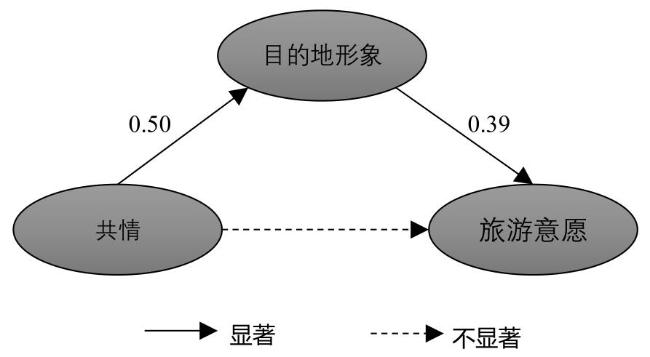
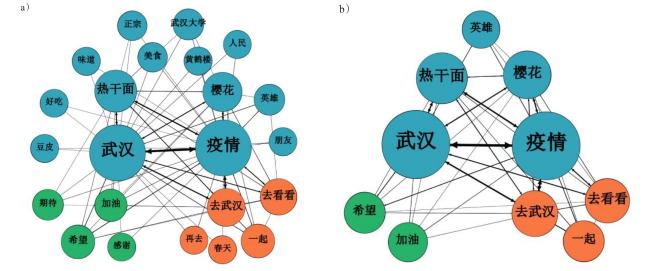
With the normalization of the coronavirus disease (COVID-19) pandemic, people are encouraged to stay at home as much as possible. This has deeply affected the tourism industry. The tourism market size is decreasing sharply, and the restoration of tourism destinations faces great difficulties. Wuhan, the first city to have fought the COVID-19 pandemic head-on, attracted all Chinese people's attention, as everybody said, "come on, Wuhan!" on social media and lent it great support in fighting the pandemic. People discussed the pandemic, became more aware about Wuhan, made plans to travel to Wuhan after the pandemic, and celebrated the stage victory when Wuhan was reopened, which constitutes a meaningful phenomenon in the tourism industry. To reveal the theoretical relationship between people's empathy and travel willingness, this article crawls the microblog data of Wuhan for one month before and after the reopening, from March 24 to April 23, and introduces the destination image as a mediator variable to reflect people's cognition about Wuhan. Then, the data are analyzed and the theoretical model is tested through qualitative and quantitative methods. The main conclusions are as follows: in the post-pandemic period, people's empathy toward Wuhan is dominated by positive emotions, accounting for 85.09% of responses. Respectively, neutral and negative emotions account for 3.42% and 11.49%, respectively. In addition to Wuhan's traditional image, "oriental cherry," "Wuhan hot-dry noodles," a specialty breakfast meal in the Hubei province, many new images of Wuhan have emerged, such as "hero" and "heroic," owing to its tenacious spirit and deep sacrifices during the pandemic. Generally, people have a strong willingness to travel to Wuhan, and the pandemic has transformed it into a special tourism attraction. Many inspiring emotions have emerged, such as "Wuhan," "come on," "hope," "pandemic," "definitely," "go again," and eat "Wuhan hot-dry noodles." According to the hypothesis model test results, empathy affects travel willingness significantly, however, the direct effect between empathy and travel willingness is completely mediated after the destination image is added, and its effect size is 0.191. In conclusion, the influence of empathy upon tourism willingness is fully implemented with the help of the destination image. Empathy between potential tourists and the destination produces emotional resonance, admiration, and other emotions. Such empathy spurs people's insight about the destination, produces a new destination image, and creates a strong travel willingness. This article clarifies why people travel to a specific destination after a public emergency. Additionally, the results suggest that it is necessary to guide the propagation of positive emotions, and consider the possible impact of emergency upon the destination image, by which the tourism industry may reach its revitalization after the pandemic crisis effectively. For Wuhan, it is a plausible approach to rely on people's empathy in the COVID-19 pandemic, and the new destination image can also stimulate people's travel willingness. Furthermore, many new tourism marketing activities based on the destination image may change, such as "come and enjoy the hot-dry noodles," "come and enjoy the oriental cherry again," and may play unique roles in the restoration of the tourism industry.
Ying Zheng , Gaojun Zhang , Ruoyu Zhang . Would You Still Travel to Wuhan? Empathy, Destination Image, and Travel Willingness in the Post-Pandemic Period: The Intermediary Role of Destination Image[J]. Tropical Geography, 2022 , 42(12) : 2110 -2120 . DOI: 10.13284/j.cnki.rddl.003600
表1 武汉疫情网络文本情感分析Table 1 Emotion analysis of Wuhan's pandemic text |
| 情绪类别 | 区间 | 数量/条 | 百分比/% |
|---|---|---|---|
| 积极 | 合计 | 274 | 85.09 |
| 一般(0,10] | 104 | 32.3 | |
| 中度(10,20] | 76 | 23.6 | |
| 高度(20,∞) | 94 | 29.19 | |
| 中性 | 合计 | 11 | 3.42 |
| 消极 | 合计 | 37 | 11.49 |
| 一般[-10,0) | 30 | 9.32 | |
| 中度[-20,-10) | 5 | 1.55 | |
| 高度(-∞,-20) | 1 | 0.31 |
表2 武汉疫情高频特征词汇Table 2 Wuhan pandemic high-frequency characteristic vocabulary |
| 类型 | 排序 | 词汇 | 频数 | 类型 | 排序 | 词汇 | 频数 | |
|---|---|---|---|---|---|---|---|---|
| 共情 | 1/8 | 希望 | 62 | 目的地 形象 | 15/30 | 中国 | 14 | |
| 2/14 | 加油 | 33 | 16/31 | 味道 | 13 | |||
| 3/25 | 期待 | 19 | 17/32 | 安全 | 13 | |||
| 4/38 | 开心 | 11 | 18/35 | 小龙虾 | 12 | |||
| 5/39 | 想起 | 11 | 旅游 意愿 | 1/4 | 去武汉 | 174 | ||
| 6/40 | 感受 | 11 | 2/6 | 去看看 | 90 | |||
| 7/42 | 感谢 | 10 | 3/9 | 一起 | 60 | |||
| 8/43 | 想念 | 10 | 4/11 | 春天 | 47 | |||
| 9/44 | 喜欢 | 9 | 5/16 | 再去 | 29 | |||
| 目的地 形象 | 1/1 | 武汉 | 523 | 6/34 | 等到 | 12 | ||
| 2/2 | 疫情 | 403 | 7/36 | 五一 | 11 | |||
| 3/3 | 热干面 | 190 | 8/37 | 计划 | 11 | |||
| 4/5 | 樱花 | 108 | 9/41 | 打算 | 10 | |||
| 5/13 | 英雄 | 37 | 其他 | 1/7 | 一定 | 76 | ||
| 6/15 | 朋友 | 33 | 2/10 | 解封 | 58 | |||
| 7/18 | 人民 | 23 | 3/12 | 过后 | 41 | |||
| 8/19 | 湖北 | 23 | 4/17 | 彻底 | 26 | |||
| 9/21 | 黄鹤楼 | 22 | 5/20 | 早日 | 23 | |||
| 10/22 | 美食 | 22 | 6/27 | 隔离 | 17 | |||
| 11/23 | 武汉大学 | 22 | 7/29 | 第一次 | 15 | |||
| 12/24 | 好吃 | 19 | 8/33 | 重启 | 13 | |||
| 13/26 | 正宗 | 17 | 9/45 | 医院 | 9 | |||
| 14/28 | 豆皮 | 16 |
|
表3 武汉疫情高频共现词Table 3 Wuhan pandemic high-frequency co-occurrence words |
| 排序 | 共现词语 | 频数 | 排序 | 共现词语 | 频数 |
|---|---|---|---|---|---|
| 1 | 武汉 疫情 | 282 | 16 | 希望 武汉 | 64 |
| 2 | 疫情 去武汉 | 178 | 17 | 一起 疫情 | 64 |
| 3 | 疫情 热干面 | 148 | 18 | 解封 武汉 | 62 |
| 4 | 武汉 去武汉 | 142 | 19 | 解封 疫情 | 61 |
| 5 | 热干面 武汉 | 132 | 20 | 一起 武汉 | 58 |
| 6 | 疫情 樱花 | 117 | 21 | 去看看 去武汉 | 56 |
| 7 | 樱花 武汉 | 112 | 22 | 英雄 武汉 | 53 |
| 8 | 去看看 疫情 | 103 | 23 | 英雄 疫情 | 53 |
| 9 | 去看看 武汉 | 98 | 24 | 一定 去武汉 | 52 |
| 10 | 一定 武汉 | 91 | 25 | 樱花 去看看 | 48 |
| 11 | 热干面 去武汉 | 85 | 26 | 热干面 一定 | 45 |
| 12 | 一定 武汉 | 84 | 27 | 一定 去看看 | 44 |
| 13 | 樱花 去武汉 | 76 | 28 | 去看看 热干面 | 43 |
| 14 | 希望 疫情 | 72 | 29 | 希望 去武汉 | 41 |
| 15 | 樱花 热干面 | 66 | 30 | 加油 疫情 | 41 |
表4 文本编码赋值示例Table 4 Text encoding assignment examples |
| 微博内容 | 共情 | 目的地形象 | 旅游意愿 | |||||
|---|---|---|---|---|---|---|---|---|
| 关键词 | 赋分 | 关键词 | 赋分 | 关键词 | 赋分 | |||
| #张文宏说解封后武汉或成最安全城市#寒冬过后,春天一定会到来。待疫情彻底过去的时候,去看长江,看黄鹤楼,吃热干面,还有鸭脖,我确信,我定会去看看,武汉的樱花。(春要来等不到夏夏) | “春天” “一定会到来” “彻底过去” | 5 | “长江”“黄鹤楼” “热干面”“鸭脖” “最安全”“樱花” | 5 | “确信” “定会去看看” | 5 | ||
| 又是一个下雨天,突如其来的新冠肺炎疫情,导致今年的开头就像这天气一样阴沉沉的,原本过年期间还想去武汉大学看樱花,现在连拜年到亲戚家恰饭,说一声恭喜发财都变成了一种奢望,只能在微信上拜年了。武汉不是很安全,还是不去武汉了,等再安全点再说吧。(少年心思你来猜) | “阴沉沉” “奢望” | 2 | “武汉大学” “樱花” “不是很安全” | 3 | “不去” “再说吧” | 2 | ||
| 日常想走人的,一天疫情搞得想走无处可去,倒霉的武汉 (fox记得smile) | “想走人” | 1 | “倒霉的武汉” | 1 | “无处可去” | 1 | ||
表5 假设模型的层次回归分析结果Table 5 Hierarchical regression analysis of hypothesis model |
| 因变量 | 常数项 | 共情(自变量) | 目的地形象(中介变量) | R 2 | 调整R 2 | F值 | |
|---|---|---|---|---|---|---|---|
| 目的地形象 | M1 | 2.317***(-14.26) | 0.451***(-10.23) | — | 0.246 | 0.244 | 104.69*** |
| 旅游意愿 | M2 | 3.491***(-19.32) | 0.191***(-3.90) | — | 0.045 | 0.042 | 15.18*** |
| M3 | 2.614***(-12.01) | 0.02(-0.38) | 0.379***(-6.48) | 0.156 | 0.151 | 29.56*** | |
|

郑 颖:参与选题讨论和设计实验,进行相关数据采集、数据分析以及数据解释,并完成文章撰写;
张高军:提出选题,制定论文撰写方案,参与数据分析,负责文本校订与修改;
张若愚:参与数据分析,文本校订与修改。
|
Abubakar A M and Ilkan M. 2016. Impact of Online WOM on Destination Trust and Intention to Travel: A Medical Tourism Perspective. Journal of Destination Marketing & Management, 5(3): 192-201.
|
|
白凯,马耀峰,李天顺,孙天宇. 2010. 西安入境旅游者认知和感知价值与行为意图. 地理学报,65(2):244-255.
Bai Kai, Ma Yaofeng, Li Tianshun and Sun Tianyu. 2010. An Association Study on Tourists' Cognition, Perceived Value and Behavior Intention Based on Structural Equation Model (SEM): A Case Study of Inbound Tourists in Xi'an City. Acta Geographica Sinica, 65(2): 244-255.
|
|
Bagozzi R P and Moore D J. 1994. Public Service Advertisements: Emotions and Empathy Guide Prosocial Behavior. Journal of Marketing, 58(1): 56-70.
|
|
Bauman M J, Yuan J J and Williams H A. 2019. Developing a Measure for Assessing Tourists' Empathy towards Natural Disasters in the Context of Wine Tourism and the 2017 California Wildfires. Current Issues in Tourism, (2): 1-16.
|
|
Berger J. 2011. Arousal Increases Social Transmission of Information. Psychological Science, 22(7): 891-893.
|
|
Crompton J L. 1979. An Assessment of the Image of Mexico as a Vacation Destination and the Influence of Geographical Location upon that Image. Journal of Travel Research, 17(4): 18-23.
|
|
Crossley É. 2017. Cosmopolitan Empathy in Volunteer Tourism: A Psychosocial Perspective. Tourism Recreation Research, 42(2): 150-163.
|
|
Eisenberg N, Guthrie I K, Cumberland A, Murphy B C, Shepard S A, Zhou Q and Carlo G. 2002. Prosocial Development in Early Adulthood: A Longitudinal Study. Journal of Personality and Social Psychology, 82(6): 993-1006.
|
|
Escalas J E and Stern B B. 2003. Sympathy and Empathy: Emotional Responses to Advertising Dramas. Journal of Consumer Research, 29(4): 566-578.
|
|
Goodrich J N. 1978. The Relationship between Preferences for and Perceptions of Vacation Destinations: Application of a Choice Model. Journal of Travel Research, 17(2): 8-13.
|
|
郭功星,周星,涂红伟. 2016. 消费者敌意、自我效能与旅游意愿——基于对青少年出境旅游市场的实证研究. 旅游学刊,31(2):44-52.
Guo Gongxing, Zhou Xing and Tu Hongwei. 2016. Consumer Animosity, Self-Efficacy and Willingness-to-Visit: An Empirical Study on Young Outbound Tourism Market. Tourism Tribune, 31(2): 44-52.
|
|
Hunt J D. 1971. Image as a Factor in Tourism, Unpublished Doctoral Dissertation. Fort Collins: Colorado State University.
|
|
侯毅. 2020. 情感的呼唤:突发公共事件报道中的共情策略——以人民日报新冠肺炎疫情报道为例. 传媒,(11):28-31.
Hou Yi. 2020. The Call of Emotion: The Empathy Strategy in the Reporting of Public Emergencies: Taking the People's Daily New Coronary Pneumonia Epidemic Report as an Example. Media, (11): 28-31.
|
|
胡家镜,万秋,刘悦,Christina G CHI. 2020. 负面事件对旅游目的地的影响及应对策略——基于动态视角的实验研究. 旅游学刊,35(5):108-123.
Hu Jiajing, Wan Qiu, Liu Yue and Christina G Chi. 2020. The Impact of Negative Events on Tourism Destinations and Their Response Strategies: An Experiment Study from Dynamic Perspective. Tourism Tribune, 35(5): 108-123.
|
|
胡伟,王琼,陈慧玲,蒋一鹤. 2020. 新冠肺炎疫情中公众风险认知和无意/有意传谣行为的关系:负性情绪的中介作用. 中国临床心理学杂志,28(4):734-738.
Hu Wei, Wang Qiong, Chen Huiling and Jiang Yihe. 2020. Relationship between Risk Perception and Unintentional/Intentional Rumor Spread Behavior during the COVID-19 Pneumonia Outbreak in China: The Mediating Role of Negative Emotion. Chinese Journal of Clinical Psychology, 28(4): 734-738.
|
|
黄纯辉,黎继子,周兴建. 2015. 游客出游意愿影响因素研究——基于突发公共卫生事件的实证. 人文地理,30(3):145-150.
Huang Chunhui, Li Jizi and Zhou Xingjian. 2015. Study on Impact of Travel Intention: An Empirical Study Facing Public Health Emergency. Human Geography, 30(3): 145-150.
|
|
黄倩,谢朝武,陈岩英. 2020. 客源地―目的地关系质量对游客多分类旅游意愿的影响机制研究——以大陆赴台湾潜在客源市场为例. 人文地理,35(3):140-150.
Huang Qian, Xie Chaowu and Chen Yanying. 2020. Influence Mechanism of the Relationship Quality between Source and Destination on Mutiple Travel Intention: Take the Potential Market of Tourists from Mainland to Taiwan as an Example. Human Geography, 35(3): 140-150.
|
|
Hsiao K L, Lu H P and Lan W C. 2013. The Influence of the Components of Storytelling Blogs on Readers' Travel Intentions. Internet Research, 23: 160-182.
|
|
Kozak M. 2001. Repeaters' Behavior at Two Distinct Destinations. Annals of Tourism Research, 28(3): 784-807.
|
|
Lazarus R S. 1991. Emotion and Adaptation. Oxford: Oxford University Press, 87-214.
|
|
雷雅钦,王波,刘俊,赵莹. 2021. 基于游客感知的成都旅游目的地认知形象演变研究. 热带地理,41(5):1110-1119.
Lei Yaqin, Wang Bo, Liu Jun and Zhao Ying. 2021. Spatiotemporal Evolution of the Cognitive Image of a Tourism Destination: An Explorative Analysis in Chengdu Based on Online Reviews. Tropical Geography, 41(5): 1110-1119.
|
|
Li C H and Liu C C. 2020. The Effects of Empathy and Persuasion of Storytelling via Tourism Micro-Movies on Travel Willingness. Asia Pacific Journal of Tourism Research, 25(4): 382-392.
|
|
李勇,蒋冠文,毛太田,蒋知义. 2019. 基于情感挖掘和话题分析的旅游舆情危机演化特征——以“丽江女游客被打”事件为例. 旅游学刊,34(9):101-113.
Li Yong, Jiang Guanwen, Mao Taitian and Jiang Zhiyi. 2019. The Evolution Characteristics of Tourism Opinion Crisis Based on Emotion Mining and Topic Analysis: A Case Study of the Incident of "Female Tourist Attacked in Lijiang". Journal of Tourism, 34(9): 101-113.
|
|
李月调,黄倩,张江驰. 2019. 负面舆论对游客忠诚度的曲线影响——安全感知和旅游形象感知的中介作用. 旅游学刊,34(5):105-116.
Li Yuetiao, Huang Qian and Zhang Jiangchi. 2019. Mechanisms of Negative Public Opinion on Tourist Loyalty as Mediated by Tourist Safety Perceptions and Destination Image. Tourism Tribune, 34(5): 105-116.
|
|
刘欢,岳楠,白长虹. 2018. 红色旅游情境下情绪唤起对游客认知的影响. 社会科学家,(3):84-90.
Liu Huan, Yue Nan and Bai Changhong. 2018. Influence of Emotional Arousal on Tourists' Cognition in Red Tourism Contexts. Social Scientist, (3): 84-90.
|
|
刘世明,李蔚. 2011. 灾后旅游市场赢回策略影响研究——基于汶川地震后四川旅游的实证. 旅游学刊,26(12):41-48.
Liu Shiming and Li Wei. 2011. Study on the Impact of Tourists' Winning-Back Tactics after Disasters: Based on the Empirical Study of Tourism in Sichuan Province after Wenchuan Earthquake. Tourism Tribune, 26(12): 41-48.
|
|
刘艳丽,陆桂芝,张守臣,金童林,张亚利. 2016. 大学生共情在亲社会行为与尴尬间的中介作用. 中国心理卫生杂志,30(10):785-790.
Liu Yanli, Lu Guizhi, Zhang Shouchen, Jin Tonglin and Zhang Yali. 2016. Mediating Effect of Empathy on Relationship between Pro-Social Behavior and Embarrassment in College Students. Chinese Mental Health Journal, 30(10): 785-790.
|
|
刘逸,保继刚,朱毅玲. 2017. 基于大数据的旅游目的地情感评价方法探究. 地理研究,36(6):1091-1105.
Liu Yi, Bao Jigang and Zhu Yiling. 2017. Exploring Emotion Methods of Tourism Destination Evaluation: A Big-Data Approach. Geographical Research, 36(6): 1091-1105.
|
|
陆泉,陈仕,陈静,郝志同,朱安琪. 2020. 高维稀疏情境下微博专业领域热点话题挖掘研究. 情报理论与实践,43(11):137-143.
Lu Quan, Chen Shi, Chen Jing, Hao Zhitong and Zhu Anqi. 2020. Research on Hot Topic Mining in Microblog Professional Fields in High-Dimensional Sparse Context. Information Theory and Practice, 43(11): 137-143.
|
|
孟昭兰. 1985. 当代情绪理论的发展. 心理学报,(2):209-215.
Meng Zhaolan. 1985. The Development of Contemporary Emotional Theory. Journal of Psychology, (2): 209-215.
|
|
祁凯,杨志. 2018. 政府参与下旅游公共危机演化的三方博弈分析. 旅游学刊,33(4):46-58.
Qi Kai and Yang Zhi. 2016. Analysis on the Evolution of Tourism Public Crisis Based on the Tripartite Game under the Participation of Government. Journal of Tourism, 33(4): 46-58.
|
|
Rogers C R A. 1959. A Theory of Therapy, Personality and Interpersonal Relationships, as Developed on the Client-Centered Framework. Cancer Research, 65(9): 3958-3965.
|
|
申军波,徐彤,陆明明,翟燕霞. 2020. 疫情冲击下旅游业应对策略与后疫情时期发展趋势. 宏观经济管理,(8):55-60.
Shen Junbo, Xu Tong, Lu Mingming and Zhai Yanxia. 2020. Countermeasures for Coping with the Impacts of the COVID-19 and the Development Tendency of the Tourist Industry in the Post-Epidemic Period. Macroeconomic Management, (8): 55-60.
|
|
Singer T and Klimecki M. 2014. Empathy and Compassion. Current Biology, 24(18): 875-878.
|
|
孙九霞. 2019. 共同体视角下的旅游体验新论. 旅游学刊,34(9):10-12.
Sun Jiuxia. 2019. A New Theory of Tourism Experience from the Perspective of Community. Tourism Tribune, 34(9): 10-12.
|
|
Tigre Moura F, Gnoth J and Deans K R. 2015. Localizing Cultural Values on Tourism Destination Websites: The Effects on Users' Willingness to Travel and Destination Image. Journal of Travel Research, 54(4): 528-542.
|
|
涂红伟,骆培聪. 2017. 消费者愤怒情绪对旅游意愿和负面口碑传播的影响——基于目的地非道德事件情境下的实证研究. 旅游科学,31(2):42-54.
Tu Hongwei and Luo Peicong. 2017. The Impacts of Consumers' Anger on Their Willingness of Visit and the Spread of Negative Word of Mouth: An Empirical Study Based on Immoral Tourism Events. Tourism Science, 31(2): 42-54.
|
|
王德胜. 2020. 信息时代公共事件中的共情引导策略. 人民论坛,(19):108-111.
Wang Desheng. 2020. The Strategy of Empathy Guidance in Public Events in the Information Age. People's Forum, (19): 108-111.
|
|
王庆西. 2020. 重大公共危机治理中的社会动员何以成功:基于新冠肺炎防控的案例分析. 天津行政学院学报,22(5):43-50.
Wang Qingxi. 2020. How Can Social Mobilization Succeed in the Major Public Crisis Governance: The Case Study Based on COVID-19 Prevention and Control. Journal of Tianjin Administration Institute, 22(5): 43-50.
|
|
王婷,薛涛,王芳,吴必虎. 2020. 基于抗疫音乐视频共情的目的地涉入对行为意图的影响研究. 西南大学学报(自然科学版),42(9):26-39.
Wang Ting, Xue Tao, Wang Fang and Wu Bihu. 2020. The International Effect of Destination Involvement Based on Empathy from Anti-Epidemic Music Video on Behavioral Intention. Journal of Southwest University (Natural Science Edition), 42(9): 26-39.
|
|
吴仁献,谢朝武,谈天然. 2019. 突发事件政务舆情内部人际传播机制研究——以8·8九寨沟地震旅游政务微信传播为例. 情报杂志,38(9):118-125.
Wu Renxian, Xie Chaowu and Tan Tianran. 2019. Research on Insider Mechanism of Government Public Opinion in Emergencies: A Case Study of the 8·8 Jiuzhaigou Earthquake Government WeChat. Journal of Intelligence, 38(9): 118-125.
|
|
张高军,李君轶,张柳. 2011. 华山风景区旅游形象感知研究——基于游客网络日志的文本分析. 旅游科学,25(4):87-94.
Zhang Gaojun, Li Junyi and Zhang Liu. 2011. A Research on Tourism Destination Image Perception of Huashan Scenic Spot: Based on Text Analysis of Weblogs. Tourism Science, 25(4): 87-94.
|
|
张宏梅,陆林,蔡利平,黄琢玮. 2011. 旅游目的地形象结构与游客行为意图——基于潜在消费者的本土化验证研究. 旅游科学,25(1):35-45.
Zhang Hongmei, Lu Lin, Cai Liping and Huang Zhuowei. 2011. Tourism Destination Image Structural Model and Visitors' Behavioral Intentions: Based on a Confirmatory Study of Localization of Potential Consumers. Tourism Science, 25(1): 35-45.
|
|
Zhang S, Kardes F R and Cronley M L. 2002. Comparative Advertising: Effects of Structural Alignability on Target Brand Evaluations. Journal of Consumer Psychology, 12(4): 303-311.
|
|
赵青,孙炳海,李伟健,谢佳链,陈海德. 2010. 感知需求对高中生助人行为的影响:共情反应的中介作用. 心理研究,3(5):79-83.
Zhao Qing, Sun Binghai, Li Weijian, Xie Jialian and Chen Haide. 2010. The Effects of Perceived Need on Helping Behavior: The Mediation of Empathic Response. Psychological Research, 3(5): 79-83.
|
|
中国社会科学院,腾讯文旅,腾讯用户研究与体验设计部. 2020. 新冠肺炎疫情下的旅游需求趋势调研报告. (2020-04-28)[2022-12-06]. https://research.tencent.com/pdf/web/viewer.html?r=304&a=/.
Chinese Academy of Social Sciences, Tencent Cultural Tourism, Tencent User Research and Experience Design Department. 2020. Research Report on Tourism Demand Trends under the Covid-19 Pandemic. (2020-04-28) [2022-12-06]. https://research.tencent.com/pdf/web/viewer.html?r=304&a=/.
|
/
| 〈 |
|
〉 |
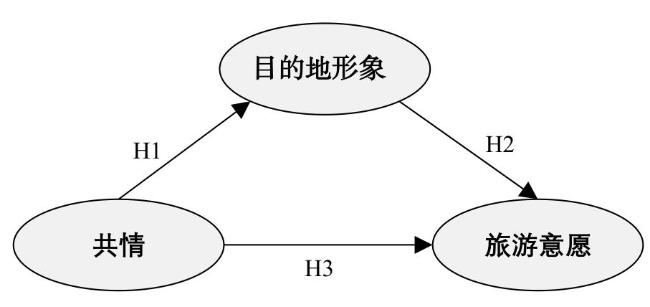
 为共情,
为共情, 为目的地形象,
 为旅游意愿
为旅游意愿