Challenge or Opportunity: Comparison of Rural Tourist Behavior before and after the COVID-19 Outbreak
Received date: 2022-04-26
Revised date: 2022-06-27
Online published: 2023-01-05
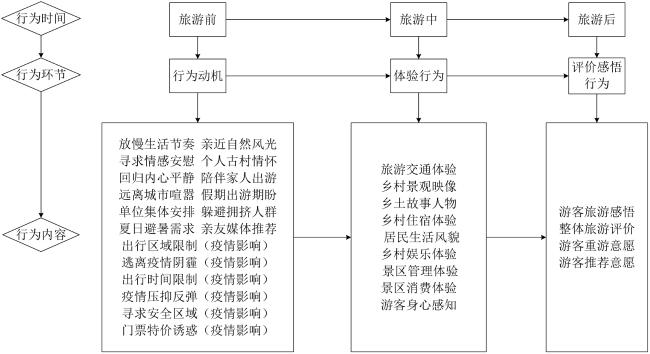
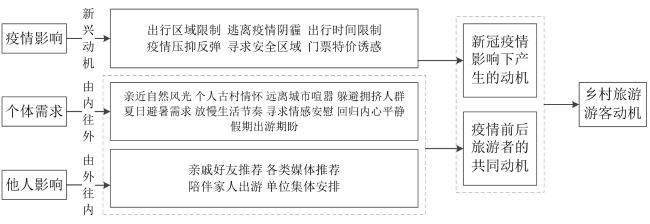
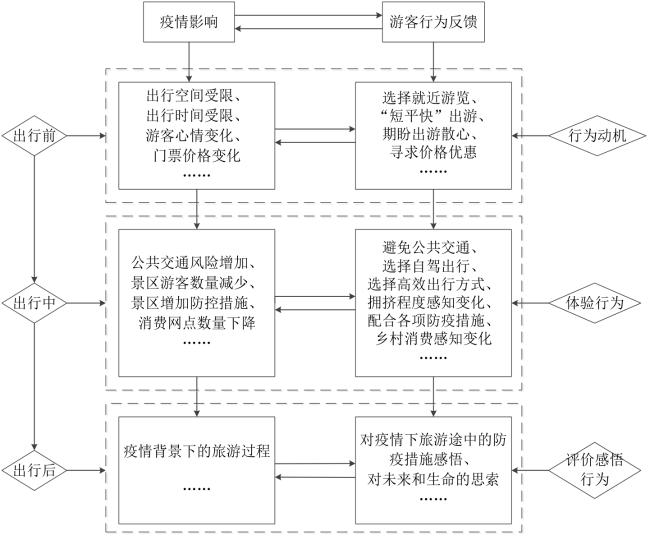
Tourism is a sensitive industry that is extremely vulnerable to crisis situations. The development of China's tourism industry was halted altogether after the massive outbreak of COVID-19 in early 2020. Entering the phase of normalization of epidemic prevention, rural tourism becomes the main force of tourism recovery. This study uses online travelogues to determine the behavioral changes of rural tourists before and after the occurrence of COVID-19. The study applies rooting theory and constructs a rural tourism behavior model based on the temporal logic of tourism progress. The following results were obtained: First, rural tourism behavior includes three stages (behavior motivation, experience behavior, and evaluation behavior), and its framework can be organized into four aspects (behavior time, behavior link, behavior content, and behavior level). Second, while the COVID-19 outbreak poses a serious impediment, it also brings development opportunities. Rural tourism, as the "dark horse" of tourism recovery speed, has obvious advantages. The vast space and good environment of the countryside in the post-epidemic era have become an ideal tourist destination for the urban population during the epidemic. Six rural tourism objectives emerged during the epidemic: epidemic suppression rebound, escape from the epidemic haze, the lure of ticket specials, search for safe areas, travel time constraints, and travel space constraints. Third, rural tourism's tourist experience behavior in the context of the epidemic presents a series of new features, including transportation choice behavior, perceived degree of congestion, and consumption behavior. Changes in the number of visitors to scenic areas, scenic management measures, and scenic consumption places can influence tourist behavior accordingly. Finally, owing to the specificity of the tourism experience process, its physical and mental contradictions and interaction mechanisms are systematic and complex. The contradictions between the need to travel during the epidemic and reality fiercely affect the emotions of tourists, whose emotional expression is more complex and adds a layer to the perception of life. Ultimately, the process of the tourism experience is reflected in the individual, thereby facilitating the visitor's satisfaction of self-growth and discovery. The novelty of this study lies in its research perspective, which takes tourist behavior as an entry point to explore the impact of the epidemic on the behavior of rural tourists from their point of view. The study findings can point to new directions for the tourism industry to achieve market recovery and industry revitalization after the epidemic and guide rural tourism destinations to better assess and respond to changes in tourism demand.
Yuqing Xi , Guangshu Sang . Challenge or Opportunity: Comparison of Rural Tourist Behavior before and after the COVID-19 Outbreak[J]. Tropical Geography, 2022 , 42(12) : 2121 -2131 . DOI: 10.13284/j.cnki.rddl.003583
表1 部分乡村游客旅游行为游记资料开放性编码示例Table 1 Some examples of open coding in the travelogue information section of rural tourists' tourism behavior |
| 范畴化 | 概念化 | 原始语句 |
|---|---|---|
| 满足 自身 需求 | 亲近自然 | 可以轻松避开市区内人满为患的热门景区,来这亲自感受大自然赐予的风水宝地 |
| 释放压力 | 平时工作忙到了周末,终于可以释放压力,如此宝贵的时间,怎么能在无聊中度过 | |
| 古村情怀 | 对古村落有种特别情怀,今天随旅行社走进了新叶古村 | |
| 放松身心 | 心累需要出去走一走,散散心 | |
| 逃离城市 | 一年就要结束,多数都耗在穿梭于城市的钢铁森林,总想着要去看山看海才完整 | |
| 寻找初心 | 这次出游计划也是临时约起,不是被某一个著名旅游景点吸引,而是我们心中都有着重温儿时记忆、童年味道的 一颗初心 | |
| 展望新生活 | 2017年过得七零八落,仿佛所有的不顺都集合到了这一年,2018的元旦小长假顺理成章地成为告别2017和展望 新生活的时间 |
表2 乡村游客旅游行为游记资料的主轴编码表Table 2 Axial coding table for travelogue information on tourism behavior of rural tourists |
| 主范畴 | 对应范畴 | 包含概念 |
|---|---|---|
| 行为 动机 | 满足自身需求 | 亲近自然、释放压力、古村情怀、放松身心、逃离现实、寻找初心、展望生活 |
| 他人影响 | 团建活动、他人邀请、新闻介绍、亲友介绍、网络种草、朋友推荐 | |
| 疫情影响 | 出行区域限制、逃离疫情、出行时间限制、疫情压抑、寻找安全区域、门票特价诱惑 | |
| 攻略准备行为 | 查找攻略、搜索视频资料、找游记、查找网络评价、查寻公众号、百度介绍、制作计划 | |
| 旅游地初印象 | 梦想的乡村、最美乡村、世外桃源、森林氧吧、打卡红地、生态旅游区、绿色村庄 | |
| 行为 体验 | 旅游交通体验 | 公共交通不便、有些闭塞、可达性差、自驾前往、搭乘班车、拥堵 |
| 乡村景观印象 | 山清水秀、风景秀美、蓝天白云、丰收、生活气息浓郁、原汁原味、寂静深远 | |
| 乡土故事人物 | 老妇、手艺人、历史悠久、积淀丰厚、文化气息浓厚、民俗活动丰富、民俗表演 | |
| 乡村住宿体验 | 民宿非常文艺、民宿很不错、条件很一般、民宿特别古朴、干净、文艺 | |
| 乡村饮食体验 | 体验感较好(丰盛、厨艺精湛、食材新鲜、鲜美可口)、体验感较差(太辣了、种类少) | |
| 居民生活风貌 | 收割农作物、休息谈天、盥洗衣物、充满生活气息、晾晒稻米、辛勤劳作 | |
| 乡村娱乐行为 | 室内活动(烧烤夜宵、KTV)、室外活动(品茶采茶、钓溪鱼、户外攀岩、漂流) | |
| 景区消费体验 | 体验感较好(物美价廉、物品丰富、有特色)、体验感较差(购物不便、昂贵、店家少) | |
| 游客身心感知 | 身心愉悦、享受、心情畅快、勾起回忆、身心放松、休闲、神清气爽、舒适、令人陶醉 | |
| 拥挤程度感知 | 几乎没人、人不多、人比想象中少、假人期流量大 | |
| 景区管理体验 | 体验感较好(商业气息不浓郁、管理有序)、体验感较差(管理差、服务态度好) | |
| 评价感悟 行为 | 游客重游意愿 | 积极意愿(打算再来、期待下次出行)、消极意愿(不会再来) |
| 旅游评价行为 | 积极评价(性价比高、非常满意、累并快乐着)、消极评价(枯燥无味、失望) | |
| 游客旅游感悟 | 怀念乡村美好、回归故我、珍惜出行机会、期盼疫情结束、知足常乐、收获良多 | |
| 游客推荐意愿 | 推荐出行、五星推荐、值得游玩、不值得去 |
1 https://www.mafengwo.cn/
奚雨晴:设计研究方案,资料收集与分析,论文初稿撰写,修订论文;
桑广书:确定研究选题;搭建论文框架;修订论文。
|
Bhati A S, Mohammadi Z, Agarwal M, Kamble Z and Donough-Tan G. 2021. Motivating or Manipulating: The Influence of Health-Protective Behaviour and Media Engagement on Post-COVID-19 Travel. Current Issues in Tourism, 24(15): 2088-2092.
|
|
陈钢华,李默涵.2022. 与新冠肺炎疫情相关的旅游者行为研究——回顾与反思. 中国生态旅游,12(1):114-124.
Chen Ganghua and Li Mohan. 2022. Tourist Behavior Research Related to the COVID-19 Pandemic Published in English-Language Journals: A Critical Review and Reflections. Journal of Chinese Ecotourism, 12(1): 114-124.
|
|
陈岩英,谢朝武. 2021. 常态化疫情防控下的旅游发展:转型机遇与战略优化. 旅游学刊,36(2):5-6.
Chen Yanying and Xie Chaowu. 2021. Tourism Development under Normal Epidemic Prevention and Control: Transformational Opportunities and Strategic Optimization. Tourism Tribune, 36(2): 5-6.
|
|
戴景文,蒋星怡. 2021. 后新冠肺炎疫情时代旅游景区发展趋势及对策研究——以陕西省问卷调查和数据分析为例. 特区经济,(10):128-132.
Dai Jingwen and Jiang Xingyi. 2021. Trend and Countermeasures of Tourism Scenic Spots in Post Novel Coronavirus Pneumonia Era: Taking the Questionnaire Survey and Data Analysis of Shaanxi Province as an Example. Special Zone Economy, (10): 128-132.
|
|
党红艳. 2020. 重大疫情中旅游危机的演化机理及应对策略. 宏观经济管理,(5):43-50.
Dang Hongyan. 2020. Evolution Mechanism and Countermeasures of Tourism Crisis in Major Epidemic. Macroeconomic Management, (5): 43-50.
|
|
Donaire J A, Gali N and Camprubi R. 2021. Empty Summer: International Tourist Behavior in Spain during COVID-19. Sustainability, 13(8): 1-14.
|
|
冯晓华,黄震方. 2021. 疫情常态化防控下游客旅游行为意向研究. 干旱区资源与环境,39(4):203-208.
Feng Xiaohua and Huang Zhenfang. 2021. Research on Tourism Behavior Intention of Tourists under the Normal Epidemic Prevention and Control. Journal of Arid Land Resources and Environment, 35(4): 203-208.
|
|
Glaser B G and Strauss A L. 1967. The Discovery of Grounded Theory: Strategies for Qualitative Research. Chicago: Aldine Press.
|
|
黄炜,廖姿曼,张婷婷,徐婷. 2013. 旅游演艺产业业态创新驱动机制研究——以张家界旅游演艺产业为例. 中国证券期货,(2):162-163.
Huang Wei, Liao Ziman, Zhang Tingting and Xu Ting. 2013. Research on Driving Mechanism of Tourism and Performing Arts Industry Innovation: A Case Study of Zhangjiajie Tourism and Performing Arts Industry. Securities & Futures of China, (2): 162-163.
|
|
李东和,蒋璐璇,年四锋. 2022. 居民生活观念变化对旅游行为意愿的影响研究. 合肥工业大学学报(社会科学版),36(1):43-51.
Li Donghe, Jiang Luxuan and Nian Sifeng. 2022. Research on the Impact of Changes of Residents' Life Concept on Tourism Behavior Intention. Journal of Hefei University of Technology (Social Sciences), 36(1): 43-51.
|
|
李锋,孙根年. 2006. 基于旅游本底线法(TBLM)的旅游危机事件研究——以2003年“SARS”事件为例. 人文地理,21(4):102-5.
Li Feng and Sun Gennian. 2006. Research on Tourism Unexpected Crisis on the Basis of Tourism Background-Line Method (TBLM): A Case Study of "SARS" Event in 2003. Human Geography, 21(4): 102-5.
|
|
李九全,李开宇,张艳芳. 2003. 旅游危机事件与旅游业危机管理. 人文地理,18(6):35-39.
Li Jiuquan, Li Kaiyu and Zhang Yanfang. 2003. Crisis Accidents and Itʾs Management in Tourism. Human Geography, 18(6): 35-39.
|
|
刘秀丽. 2020. 基于旅游行业数据的疫情后消费者旅游行为偏好变化研究. 安阳师范学院学报,(5):59-62.
Liu Xiuli. 2020. A Study of Changes in Consumer Travel Behavior Preferences after the Epidemic Based on Travel Industry Data. Journal of Anyang Normal University, (5): 59-62.
|
|
罗秋菊,陈可耀. 2011. 基于扎根理论的民营会展企业成长路径研究——以广州光亚展览公司为例. 旅游学刊,26(7):71-79.
Luo Qiuju and Chen Keyao. 2011. Research on the Growth Path of Private Exhibition Enterprises Based on Grounded Theory: A Case Study of Guangzhou Guangya Exhibition Company. Tourism Tribune, 26(7): 71-79.
|
|
罗伟,靳梦婷,林雅慧,陈会玲,程丛喜. 2020. 危机与振兴:新冠肺炎疫情后我国乡村旅游产业发展研究. 武汉轻工大学学报,39(2):73-79.
Luo Wei, Jin Mengting, Lin Yahui, Chen Huilin and Cheng Congxi. 2020. Crisis and Revitalization: A Study on the Development of China's Rural Tourism Industry after COVID-19. Journal of Wuhan Polytechnic University, 39(2): 73-79.
|
|
明庆忠,赵建平. 2020. 新冠肺炎疫情对旅游业的影响及应对策略. 学术探索,(3):124-131.
Ming Qingzhong and Zhao Jianping. 2020. The Impact of the Novel Coronavirus Epidemic on China's Tourism Industry and Its Countermeasures. Academic Exploration,(3): 124-131.
|
|
覃建雄. 2020. 新冠疫情对全球旅游格局的影响及其对策研究. 中国软科学,(S1):72-82.
Tan Jiangxiong. 2020. Study of COVID-19 Impact on Global Tourism Framework and Its Countermeasures. China Soft Science, (S1): 72-82.
|
|
申军波,徐彤,陆明明,翟燕霞. 2020. 疫情冲击下旅游业应对策略与后疫情时期发展趋势. 宏观经济管理,(8):55-60.
Shen Junbo, Xu Tong, Lu Mingming and Zhai Yanxia. 2020. Coping Strategies and Development Trends of Tourism in the Post-Epidemic Period under the Impact of COVID-19. Macroeconomic Management, (8): 55-60.
|
|
宋竹芳,张高军,李树民. 2019. 黑亦非黑:基于线上数据的黑色旅游体验及群体比较. 旅游学刊,34(5):90-104.
Song Zhufang, Zhang Gaojun and Li Shumin. 2019. Is Dark Tourism All Darkness? A Group Comparison Study of Tourist Experience Based on UGC. Tourism Tribune, 34(5): 90-104.
|
|
宋洪波,郑建瑜. 2003. 突发事件影响下,旅游企业危机管理的思考——以“非典”为例. 桂林旅游高等专科学校学报,(6):60-64.
Song Hongbo and Zheng Jianyu. 2003. Reflections on Crisis Management of Tourism Enterprises under the Influence of Emergencies: Taking SARS as an Example. Journal of Guilin Institute of Tourism, (6): 60-64.
|
|
宋振春,王颖,葛新雨,孟瑶. 2020. 身体痛苦如何成为情感享受——身心交互视角下的旅游体验研究. 旅游学刊,35(10):109-121.
Song Zhenchun, Wang Yin, Ge Xinyu and Meng Yao. 2020. How Physical Discomfort Can Become a Source for Emotional Satisfaction: A Study on Tourist Experience from the Perspective of Body-Mind Interactionism. Tourism Tribune, 35(10): 109-121.
|
|
孙晓娥. 2011. 扎根理论在深度访谈研究中的实例探析. 西安交通大学学报(社会科学版),31(6):87-92.
Sun Xiao'e. 2011. Grounded Theory: Theory-Development in In-Depth Interview Research. Journal of Xi'an Jiaotong University (Social Sciences), 31(6): 87-92.
|
|
Thompson D, Muriel P and Russell D. 2002. Economic Costs of the Foot and Mouth Disease Outbreak in the United Kingdom in 2001. Revue Scientifique et Technique (International Office of Epizootics), 21(3): 675-687.
|
|
王庆生,刘诗涵. 2020. 新冠肺炎疫情对国内游客旅游意愿与行为的影响. 地域研究与开发,36(2):5-6.
Wang Qingsheng and Liu Shihan. 2021. Impact of COVID-19 Epidemic Situation on the Travel Intention and Behavior of Domestic Tourists. Areal Research and Development, 36(2): 5-6.
|
|
薛刚,孙根年. 2008. 2003年SARS对国内旅游影响的后评价——基于本底趋势线的31个省、市、自治区客流量损失的估算. 经济地理,28(6):1059-1063.
Xue Gang and Sun Gennian. 2008. Market Potential and Exploitation of Natural Resources in West China. Economic Geography, 28(6): 1059-1063.
|
|
杨振之. 2014. 论旅游的本质. 旅游学刊,29(3):13-21.
Yang Zhenzhi. 2014. On the Essence of Tourism. Tourism Tribune, 29(3): 13-21.
|
|
依绍华. 2003. 浅析非典对旅游经济的影响. 桂林旅游高等专科学校学报,(3):27-29,51. [Yi Shaohua. 2003. An Analysis of SARS Impacts on Tourism Economy. Journal of Guilin Institute of Tourism, (3): 27-29, 51. ]
|
|
游静,彭国川,李强. 2020. 疫情对旅游经济造成的影响与应对策略研究. 特区经济,(7):85-88.
You Jing, Peng Guochuan and Li Qiang. 2020. The Impact of Epidemic on Tourism Economy and Coping Strategies. Special Zone Economy, (7): 85-88.
|
|
Zenker S, Braun E and Gyimothy S. 2021. Too Afraid to Travel? Development of a Pandemic (COVID-19) Anxiety Travel Scale (PATS). Tourism Manage, 84 (5): 104286.
|
|
张凌云,朱新芝. 2010. 社会实验:旅游业对地区国民经济影响测度的一种简易方法——以“非典”时期的北京为例. 旅游学刊,25(6):32-36.
Zhang Lingyun and Zhu Xinzhi. 2010. Social Experiment: A Simple Method to Measure the Impact of Tourism on Regional National Economies: The Case of Beijing during the SARS Perio. Tourism Tribune, 25(6): 32-36.
|
/
| 〈 |
|
〉 |