Nexus between Railway Construction and National Territorial Development Strategies in China: A Multi-Level Governance Perspective
Received date: 2022-06-29
Revised date: 2022-10-08
Online published: 2023-06-13
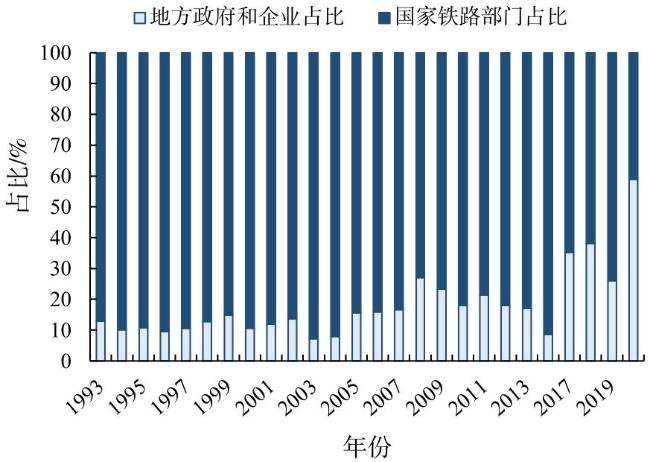
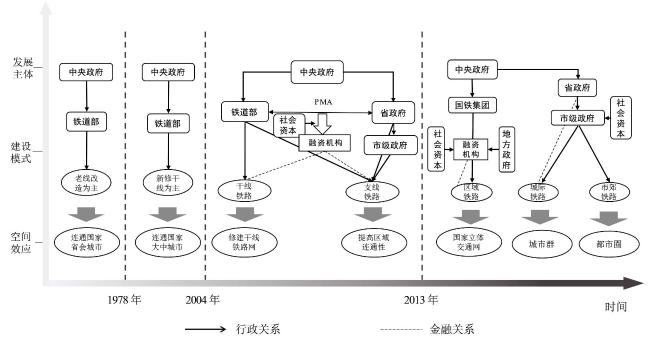
Based on a literature review and policy analysis, this study investigates the evolution of China's railway investment and financing, planning, and development in the context of its market-oriented reform. The relationship between railway and multi-level spatial development is divided into specific periods. The features of different stages are summarized from the perspective of railway financing structure, route arrangement, station location, and their spatial effects. This study contributes to our understanding of the changing multi-level governance of railway development in China in the long run and the rationale of the pattern of high-speed rail network development in the country. With the establishment of China's market-oriented economy and its integration into economic globalization, the central and local governments have different interests and objectives in railway development, which have affected railway investment and financing structure, route arrangement, and station location, and finally resulted in different spatial effects of railway development. Since the establishment of the People's Republic of China, the relationship could be divided into four periods: i) railway services adapted to national economic and spatial development (1949-1978), ii) railway services lagged behind national economic and spatial development (1978-2004), iii) railway construction followed national economic and spatial development (2004-2013), and iv) railway construction led national economic and spatial development (2013-present). The main body of railway development, construction mode, and spatial effects were significantly varied across different periods. In the planned economy period, railway planning construction adapted to national strategic policies and social and economic needs. As China's institution of the market economy was established and urbanization and industrialization developed rapidly, railway construction was hindered by funding constraints, resulting in a significant gap between railway services supply and the increasing national transportation demand. Consequently, railway construction has gradually fallen behind national economic and spatial development. However, there are differences in the national and local interests between the central and local governments in planning and developing railway networks, which have driven the evolution of railway construction toward a multi-level construction mode. This mode centers around the national backbone network, dominated by the central government, and aims to promote the construction of national development corridors and urban agglomerations. The planning for metropolitan areas has been facilitated via inter-city rail networks, led by provincial and municipal governments. In this process, conventional railways are gradually being replaced by high-speed railways (HSR), which have become the priority of railway development. Subsequently, development has shifted from the construction of conventional railways to meet regional transportation and population flow needs toward the planning and construction of HSR that lead multiscale spatial restructuring. In the context of rapid expansion of high-speed rail development, some spatial problems emerged, such as negative impacts of HSR development on small and middle-sized cities, low land use efficiency in station areas, and weak functional connections between station areas and central cities. Therefore, to promote the coordinated development of urban agglomerations and metropolitan areas, it is necessary to develop station areas based on local and regional conditions and enhance the interaction of high-speed rail effects at different scales.
Bingqing Kong , Lei Wang , Xuejun Duan . Nexus between Railway Construction and National Territorial Development Strategies in China: A Multi-Level Governance Perspective[J]. Tropical Geography, 2023 , 43(5) : 859 -871 . DOI: 10.13284/j.cnki.rddl.003675
表1 中国铁路建设与国土空间发展关系演变Table 1 The nexus between railway construction and national territorial development in China |
| 阶段 | 铁路建设追随国土空间发展(1949—1978年) | 铁路建设适应国土空间发展 (1978—2004年) | 铁路建设追随国土空间发展(2004—2013年) | 铁路建设引领国土空间发展(2013年至今) | |
|---|---|---|---|---|---|
| 背景 | 短缺经济、重工业发展、 满足国防建设 | 经济体制转型、快速工业化、 打工潮兴起 | 深度融入经济全球化;快速 城镇化;区域发展不平衡 | 内需扩大,区域经济重要性提高;铁道部实现政企分离 | |
| 主体与 融资 | 中央政府; “拨改贷”到“大包干” | 铁道部全权负责; 银行贷款和铁路建设基金 | 中央政府为主,地方政府起辅助作用;省部协议商议投资比重 | 中央和地方分工协作; 社会资本、站点土地融资 | |
| 发 展 模 式 | 空间 布局 | 货运铁路建设主导;重点在中西部规划大批新线铁路 | 货运铁路主导;铁路建设布局东南沿海地区、开放城市等重点区域 | 客运铁路建设加快; 规划线路促进东西部均衡发展 | 铁路引领国家立体交通网,高铁建设促进城市群、都市圈建设 |
| 线路 设置 | 中西部新线建设为主, 东部老线改造为辅 | 有重点的新线建设,加强老线改造,连通国家大中城市 | 修建干线、支线铁路,地方政府对支线铁路有支持作用。 | 干线:国铁集团负责,完善国家立体交通网;支线:主要地方政府负责,围绕城市群和都市圈建设。 | |
| 站点 设置 | 工业集中区 | 城市中心 | 城市边缘 | 城市边缘、郊区 | |
| 空间 效应 | 正效应:维护国家国土完整,促进经济发展。 负效应:资金压力大;中小 城市铁路发展受限。 | 正效应:连通国家大中城市的骨干铁路网基本形成。 负效应:融资压力过大;在长三角,珠三角等经济发达地区,铁路建设无法满足快速增长的交通运输需求。 | 正效应:缓解区域间发展不平衡,减轻部分融资压力。 负效应:融资渠道狭窄、地方财政风险加大,高铁建设加强东中部沿线城市空间联系,但西部仍较薄弱。 | 正效应:高铁引领城市群、都市圈的建设,完善国家交通网络,有效缓解融资压力。负效应:高铁站周边开发滞后,城市与站点融合发展程度低。 | |

孔冰清:数据及文献采集与处理、分析与图表制作、论文撰写;
王 磊:论文思路与研究设计、内容修改完善、经费支持;
段学军:论文思路指导、内容审阅。
|
Bertolini L. 1999. Spatial Development Patterns and Public Transport: The Application of an Analytical Model in the Netherlands. Planning Practice & Research, 14(2): 199-210.
|
|
崔艳萍,侯敬. 2013. 关于德国铁路改革的探讨. 铁道运输与经济,35(7):94-97.
Cui Yanping, and Hou Jing. 2013. Discussion on German Railway Reform. Railway Transport and Economy, 35(7): 94-97.
|
|
段阳,何震子,杨家文. 2021.高铁时代交通与土地利用一体化挑战——我国高铁站点选址问题辨析. 西部人居环境学刊,36(4):29-35.
Duan Yang, He Zhenzi, and Yang Jiawen. 2021. The Challenge of Integrated Transport and Land Use in the Era of High-Speed Rail: Decoding Station Placement in China. Journal of Human Settlements in West China, 36(4): 29-35.
|
|
范文. 2012. 关于深入推进铁路投融资体制改革的思考. 铁道运输与经济,34(11):11-15.
Fan Wen. 2012. Thoughts on Furthering Reform of Railway Investment and Financing System. Railway Transport and Economy, 34(11): 11-15.
|
|
Gutiérrez J, González R, and Gómez G. 1996. The European High-Speed Train Network: Predicted Effects on Accessibility Patterns. Journal of Transport Geography, 4(4): 227-238.
|
|
Givoni M. 2006. Development and Impact of the Modern High-Speed Train: A Review. Transport Reviews, 26(5): 593-611.
|
|
国务院. 2004. 关于投资体制改革的决定.(2004-07-16) [2023-05-03]. http://www.gov.cn/zhengce/content/2008-03/28/content_1387.htm.
State Council. 2004. Decision on the Reform of the Investment System. (2004-07-16) [2023-05-03]. http://www.gov.cn/zhengce/content/2008-03/28/content_1387.htm.
|
|
国务院. 2005. 关于鼓励支持和引导个体私营等非公有制经济发展的若干意见.(2005-02-09)[2023-05-03]. http://www.gov.cn/gongbao/content/2005/content_63162.htm.
State Council. 2005. Several Opinions on Encouraging, Supporting and Guiding the Development of Individual, Private and Other Non-public Economies.(2005-02-09)[2023-05-03]. http://www.gov.cn/gongbao/content/2005/content_63162.htm.
|
|
国务院. 2006. 中国铁路百年史话. (2006-06-19)[2023-05-03] http://www.gov.cn/test/2006-06/19/content_314321_6.htm.
State Council. 2006. A Century of Chinese Railway History (2006-06-19)[2023-05-03] http://www.gov.cn/test/2006-06/19/content_314321_6.htm.
|
|
国务院. 2013. 关于改革铁路投融资体制加快推进铁路建设的意见.(2013-08-09)[2023-05-03]. http://www.gov.cn/zwgk/2013-08/19/content_2469759.htm.
State Council. 2013. Opinions on Reforming the Railway Investment and Financing System to Speed Up Railway Construction. (2013-08-09) [2023-05-03]. http://www.gov.cn/zwgk/2013-08/19/content_2469759.htm.
|
|
国家铁路局. 2012. 《铁路“十二五”发展规划》.(2012-12-20)[2023-05-03]. https://www.nra.gov.cn/jglz/ghyj/202104/t20210428_199679.shtml.
National Railroad Administration. 2012. Railroad "Twelfth Five-Year Plan" Development. (2012-12-20)[2023-05-03]. https://www.nra.gov.cn/jglz/ghyj/202104/t20210428_199679.shtml.
|
|
国家发展和改革委员会. 2005. 国家《中长期铁路网规划》内容简介. (2005-09-16)[2023-05-03] https://www.ndrc.gov.cn/fggz/zcssfz/zcgh/200507/t20050720_1145646.html.
National Development and Reform Commission. 2005. National "Medium and Long-Term Railway Network Planning" Content Introduction. (2005-09-16) [2023-05-03] https://www.ndrc.gov.cn/fggz/zcssfz/zcgh/200507/t20050720_1145646.html.
|
|
国家发展和改革委员会. 2015. 关于进一步鼓励和扩大社会资本投资建设铁路的实施意见.(2015-07-10)[2023-05-03]. http://www.gov.cn/zhengce/2016-05/24/content_5076275.htm.
National Development and Reform Commission. 2015. Implementation Opinions on Further Encouraging and Expanding Social Capital Investment in Railway Construction. (2015-07-10) [2023-05-03]. http://www.gov.cn/zhengce/2016-05/24/content_5076275.htm.
|
|
国家发展和改革委员会. 2016. 中长期铁路网规划.(2016-07-20)[2023-05-03] http://www.gov.cn/xinwen/2016-07/20/content_5093165.htm.
National Development and Reform Commission. 2016. Medium and Long-Term Railway Network Planning. (2016-07-20) [2023-05-03]. http://www.gov.cn/xinwen/2016-07/20/content_5093165.htm.
|
|
国家发展和改革委员会. 2017. 铁路“十三五”发展规划. http://www.gov.cn/xinwen/2017-11/24/content_5242034.htm. (2017-11-24)[2023-05-03]. [National Development and Reform Commission. 2017. Railroad "Thirteenth Five-Year" Development Plan. (2017-11-24)[2023-05-03]. http://www.gov.cn/xinwen/2017-11/24/content_5242034.htm. ]
|
|
国家发展和改革委员会. 2018. 关于推进高铁站周边区域合理开发建设的指导意见.(2018-04-24)[2023-05-03]. https://www.ndrc.gov.cn/xxgk/zcfb/tz/201805/t20180507_962719_ext.html.
National Development and Reform Commission. 2018. Guidance on Promoting Rational Development and Construction of Areas around High Speed Rail Stations. (2018-04-24) [2023-05-03]. https://www.ndrc.gov.cn/xxgk/zcfb/tz/201805/t20180507_962719_ext.html.
|
|
国务院. 2021. 国家综合立体交通网规划纲要.(2021-02-24)[2023-05-03]. http://www.gov.cn/gongbao/content/2021/content_5593440.htm.
State Council. 2021. Outline of the National Comprehensive Three-Dimensional Transport Network Plan. (2021-02-24) [2023-05-03]. http://www.gov.cn/gongbao/content/2021/content_5593440.htm.
|
|
国家发展和改革委员会,交通运输部,国家铁路局,中国国家铁路集团有限公司. 2021. 关于进一步做好铁路规划建设工作的意见.(2021-03-15)[2023-05-03]. http://www.gov.cn/gongbao/content/2021/content_5598117.htm.
National Development and Reform Commission, Ministry of Transport, State Railway Administration, and China National Railways Group Corporation. 2021. Opinions on Further Improvement of Railway Planning and Construction Work. (2021-03-15)[2023-05-03]. http://www.gov.cn/gongbao/content/2021/content_5598117.htm.
|
|
国家铁路局. 2014-2021. 铁道统计公报2013-2020. https://www.mot.gov.cn/tongjishuju/tielu/201510/t20151016_1906139.html.
National Railway Bureau. 2014-2021. Railway Statistical Bulletin 2013-2020. https://www.mot.gov.cn/tongjishuju/tielu/201510/t20151016_1906139.html.
|
|
郭文帅,荣朝和. 2015. 中央与地方政府关系对公共资源配置影响的时空分析——以交通基础设施发展为例. 北京交通大学学报(社会科学版),14(1):24-35.
Guo Wenshuai, and Rong Zhaohe. 2015. Spatial-Temporal Analysis of the Impact of the Relationship between Central and Local Governments on the Allocation of Public Resources: A Case Study of Transportation Infrastructure Development. Journal of Beijing Jiaotong University(Social Sciences Edition), 14(1): 24-35.
|
|
洪世键,姚超. 2016.高速铁路站点与城市空间演化:述评与反思. 国际城市规划,31(2):84-89.
Hong Shijian, and Yao Chao. 2016. High-Speed Rail Station and Urban Spatial Evolution: Review and Introspection. Urban Planning International, 31(2): 84-89.
|
|
胡序威. 2006. 中国区域规划的演变与展望. 地理学报,61(6):585-592.
Hu Xuwei. 2006. Evolution and Prospect of China's Regional Planning. Acta Geographica Sinica, (6): 585-592.
|
|
蒋海兵. 2019. 可达性视角下中国高铁线路空间效率与供需关系研究. 长江流域资源与环境,28(10):2299-2308.
Jiang Haibing. 2019. China's High-Speed Rail Network Space Efficiency and Study on the Relationship between the Supply and Demand in Perspective of Accessibility. Resources and Environment in the Yangtze Basin, 28(10): 2299-2308.
|
|
金凤君,王姣娥,孙炜,牛树海. 2003.铁路客运提速的空间经济效果评价. 铁道学报,(6):1-7.
Jin Fengiun, Wang Jiao'e, Sun Wei, and Niu Shuhai. 2003. Spatial Impact of China's Train Network Behind Its Upgrading:1995-2002. Journal of the China Railway Society, (6): 1-7.
|
|
金凤君,陈卓. 2019. 1978年改革开放以来中国交通地理格局演变与规律. 地理学报,74(10):1941-1961.
Jin Fengjun, and Chen Zhuo. 2019. Evolution of Transportation in China since Reform and Opening-Up: Patterns and Principles. Acta Geographica Sinica, 74(10): 1941-1961.
|
|
金凤君,陈卓. 2023. 新时代交通强国的地理内涵与目标. 经济地理,43(2):1-9.
Jin Fengjun, and Chen Zhuo. 2023. Geographical Connotations and Objectives of a Strong Transport Nation in the New Era. Economic Geography, 43(2): 1-9.
|
|
金凤君,王姣娥. 2004. 20世纪中国铁路网扩展及其空间通达性. 地理学报,59(2):293-302.
Jin Fengiun, and Wang Jiao'e. 2004. Railway Network Expansion and Spatial Accessibility Analysis in China: 1906-2000. Acta Geographica Sinica, 59(2): 293-302.
|
|
李红昌. 2009. 铁路投融资体制建设的国际经验与启示. 中国金融,(12):68-69.
Li Hongchang. 2009. International Experience and Enlightenment of Railway Investment and Financing System Construction. China Finance, (12): 68-69.
|
|
李红昌,鲍越,王正锴,陈思斌. 2021. 我国铁路产业财务可持续:一个基于结构方程的分析. 技术经济,40(7):91-102.
Li Hongchang, Bao Yue, Wang Zhengkai, and Chen Sibin. 2021. Financial Sustainability of China's Railway Industry: A Structural Equation-Based Analysis. Journal of Technology Economics, 40(7): 91-102.
|
|
李建光,刘庆,殷勇. 2018. 我国城际铁路建设的融资模式探讨. 城市轨道交通研究,21(12):1-4.
Li Jianguang, Liu Qing, and Yin Yong. 2018. Discussion on the Financing Mode for Intercity Railway Construction in China. Urban Mass Transit, 21(12): 1-4.
|
|
李涛,马卫,高兴川,曹小曙. 2017. 基于Super-DEA模型的厦深高铁可达性效应综合评估与空间分异. 经济地理,37(8):67-76.
Li Tao, Ma Wei, Gao Xingchuan, and Cao Xiaoshu. 2017. Evaluating the Impacts of the "Xiamen-Shenzhen High-Speed" Railways on Accessibility and Its Differentiation: A Super-DEA Approach. Economic Geography, 37(8): 67-76.
|
|
李廷智,杨晓梦,赵星烁,梁进社. 2013. 高速铁路对城市和区域空间发展影响研究综述. 城市发展研究,20(2):71-79.
Li Tingzhi, Yang Xiaomeng, Zhao Xingshuo, and Liang Jinshe. 2013. High-Speed Rail's Influence on Urban and Regional Spatial Development: A Review. Urban Development Studies, 20(2): 71-79.
|
|
李晓江. 2012. “钻石结构”——试论国家空间战略演进. 城市规划学刊,(2):1-8.
Li Xiaojiang. 2012.The Diamond Structure: on the Evolution of the National Spatial Strategy. Urban Planning Forum, (2): 1-8.
|
|
李欣泽,纪小乐,周灵灵. 2017. 高铁能改善企业资源配置吗?——来自中国工业企业数据库和高铁地理数据的微观证据. 经济评论,(6):3-21.
Li Xinze, Ji Xiaole, Zhou Lingling. 2017.Can High-Speed Railway Improve Enterprises' Resource Allocation? Micro-Evidence from the Annual Survey of Industrial Firms in China and High-Speed Railway Geographic Data. Economic Review, (6): 3-21.
|
|
李紫玥,唐子来. 2021. 高铁网络视角下中国城市体系空间结构审视. 规划师,37(8):18-25.
Li Ziyue, and Tang Zilai. 2021. Reinvestigation of China's Urban System from the Perspective of High-Speed Rail Network. Planners, 37(8): 18-25.
|
|
林晓言,罗燊,王慧云. 2017. 土地发展权博弈视角下高铁站区开发权及开发利益分配. 技术经济,36(6):80-90.
Lin Xiaoyan, Luo Shen, and Wang Huiyun. 2017. HSR Station Area Development Interest Distribution Based on Land Property Rights Game Theory. Journal of Technology Economics, 36(6): 80-90.
|
|
刘冬梅,韩同银. 2008. 对我国铁路建设中PPP融资模式的探讨. 铁道工程学报,(9):88-90.
Liu Dongmei, and Han Tongyin. 2008. Discussion on the PPP Financing Pattern in Railway Construction of China. Journal of Railway Engineering Society, (9): 88-90.
|
|
刘剑,孙华灿. 2015. 我国高速铁路影响效应实证研究——兼析长三角与武广沿线地区的差异. 城市规划,39(7):30-37,49.
Liu Jian, and Sun Huacan. 2015. An Empirical Research on HSR Effect in China: Differences between the Yangtze River Delta and the Areas along Wuhan-Guangzhou HSR. City Planning Review, 39(7): 30-37, 49.
|
|
刘牧涵. 2018. 区际铁路通道投融资模式研究. 铁道经济研究,(4):6-11.
Liu Muhan. 2018. Research on the Investment and Financing Pattern of Interregioal Railway Corridor. Railway Economics Research, (4): 6-11.
|
|
刘卫东,陆大道. 2005. 新时期我国区域空间规划的方法论探讨——以“西部开发重点区域规划前期研究”为例. 地理学报,60(6):16-24.
Liu Weidong, and Lu Dadao. 2005. Methodological Basis for Making Regional Spatial Planning in China in the New Era: A preliminary Study Based on Planning of Key Economic Regions in Developing Western China. Acta Geographica Sinica, 60(6): 894-902.
|
|
柳进,陶然,金祖德. 2003. 德国铁路改革与发展模式的分析与思考. 铁道运输与经济,(10):60-62.
Liu Jin, Tao Ran, and Jin Zude. 2003. Analysis and Thinking on the Reform and Development Mode of German Railway. Railway Transport and Economy, (10): 60-62.
|
|
Macleod G, and Jones M. 2010. Territorial, Scalar, Networked, Connected: In What Sense a 'Regional World'?. Regional Studies, 41(9): 1177-1191.
|
|
Ortega E, Lopez E, and Monzon A. 2012. Territorial Cohesion Impacts of High-Speed Rail at Different Planning Levels. Journal of Transport Geography, 24: 130-141.
|
|
马学广,唐承辉. 2019. 新国家空间理论视角下城市群的国家空间选择性研究. 人文地理,34(2):105-115.
Ma Xueguang, and Tang Chenghui. 2019. Study on State Spatial Selectivity of Urban Agglomeration from the Perspective of New State Space Theory. Human Geography, 34(2): 105-115.
|
|
潘振锋,荣朝和. 2004. 从英国铁路引入竞争的尝试看铁路改革与重组. 铁道学报,(3):103-107.
Pan Zhenfeng, and Rong Zhaohe. 2004. On Railway Reform and Re-Organization from the View Point of Introducing Competition into British Railway Reform. Journal of the China Railway Society, (3): 103-107.
|
|
荣朝和. 2019. 铁路可持续发展必须明确事权与支出责任. 北京交通大学学报(社会科学版),18(3):16-28.
Rong Zhaohe. 2019. Railways Must be Clear in Their Authority and Expenditure Responsibilities for Sustainable Development. Journal of Beijing Jiaotong University(Social Sciences Edition), 18(3): 16-28.
|
|
任鑫,周宇. 2016. 我国铁路投融资:现状分析、问题剖析及改革政策取向. 宏观经济研究,(5):16-22.
Ren Xin, and Zhou Yu. 2016. China's Railway Investment and Financing: Analysis of the Current Situation, Problem Analysis and Reform Policy Orientation. Macroeconomics, (5): 16-22.
|
|
肜新春. 2018. 新中国成立初期交通发展战略的演进与绩效. 安徽师范大学学报(人文社会科学版),46(4):90-96.
Rong Xinchun. 2018. Evolution and Performance of Transportation Development Strategies in the Early Years of the Founding of New China. Journal of Anhui Normal University(Hum.& Soc.Sci.), 46(4): 90-96.
|
|
Sanchez-Mateos H S M, and Givoni M. 2012. The Accessibility Impact of a New High-Speed Rail Line in the UK- A Preliminary Analysis of Winners and Losers. Journal of Transport Geography, 25: 105-114.
|
|
沈怡辰,臧鑫宇,陈天. 2019. 我国高铁新城建设的现状反思与优化路径. 西部人居环境学刊,34(4):57-64.
Shen Yichen, Zang Xinyu, and Chen Tian. 2019. The Reflection and Optimization of China's HSR New Town Construction. Journal of Human Settlements in West China, 34(4): 57-64.
|
|
宋文杰,朱青,朱月梅,孔翠翠,史煜瑾,顾永涛. 2015. 高铁对不同规模城市发展的影响. 经济地理,35(10):57-63.
Song Wenjie, Zhu Qing, Zhu Yuemei, Kong Cuicui, Shi Yujin, and Gu Yongtao. 2015 .The Impacts of High Speed Railways for Different Scale Cites. Economic Geography, 35(10): 57-63.
|
|
宋欣,孙伟,王磊. 2020. 长三角高铁网络时空演化格局及区域经济影响测度研究. 长江流域资源与环境,29(2):296-309.
Song Xin, Sun Wei, and Wang Lei. 2020. Spatial-Temporal Evolution Patterns of High-Speed Rail Network and Its Impact on Regional Economy in the Yangtze River Delta. Resources and Environment in the Yangtze Basin, 29(2): 296-309.
|
|
孙毅,张于心,陈志业,张迎春. 2004. 经济区城际铁路发展的战略框架. 综合运输,(12):20-23.
Sun Yi, Zhang Yuxin, Chen Zhiye, and Zhang Yingchun. 2004. The Strategic Framework of Economic Zone Inter-City Railway Development. China Transportation Review, (12): 20-23.
|
|
孙永福. 2004. 对铁路投融资体制改革的思考. 管理世界,(11):1-4.
Sun Yongfu. 2004. Think of Railway Investment and Financing System Reform. Management World, (11): 1-4.
|
|
孙竹生,孙翔. 1987. 充分发挥旧线在我国铁路运输中的主力军作用. 铁道工程学报,(1):155-162.
Sun Zhusheng, and Sun Xiang. 1987. Give Full Play to the Main Role of the Old Line in China's Railway Transport. Journal of Railway Engineering Society, (1): 155-162.
|
|
铁道部.1999-2013.中国铁道年鉴1999-2013. http://cnki.nbsti.net/CSYDMirror/trade/Yearbook/Single/N2015100225?z=Z014.
Ministry of Railways. 1999-2013. China Railway Yearbook 1999-2013. http://cnki.nbsti.net/CSYDMirror/trade/Yearbook/Single/N2015100225?z=Z014.
|
|
谭劲松,宋娟,陈晓红. 2021. 产业创新生态系统的形成与演进:“架构者”变迁及其战略行为演变. 管理世界,37(9):167-191.
Tan Jingsong, Song Juan, and Chen Xiaohong. 2021. The Formation and Evolution of Industrial Innovation Ecosystems: The Evolution of "Architects" and Their Strategic Behaviour. Journal of Management World, 37(9): 167-191.
|
|
Urena J M, Menerault P, and Garmendia M. 2009. The High-Speed Rail Challenge for Big Intermediate Cities: A National, Regional and Local Perspective. Cities, 26(5): 266-279.
|
|
Wang L. 2018. "High-Speed Rail Services Development and Regional Accessibility Restructuring in Megaregions: A Case of the Yangtze River Delta, China." Transport Policy, 72: 34-44.
|
|
Wang L, and Huang Y. 2021. Changing Accessibility and Connectivity from High-Speed Rail Development in Metropolitan China. Proceedings of the Institution of Civil Engineers-Transport, 174(7): 458-466.
|
|
Wang J J, Rong C, Xu J, and Or S W O. 2012. The Funding of Hierarchical Railway Development in China. Research in Transportation Economics, 35(1): 26-33.
|
|
汪德根,陈田,陆林,王莉,Lew A A. 2015. 区域旅游流空间结构的高铁效应及机理——以中国京沪高铁为例. 地理学报,70(2):214-233.
Wang Degen, Chen Tian, Lu Lin, Wang Li, and Lew A A. 2015. Mechanism and HSR Effect of Spatial Structure of Regional Tourist Flow: Case Study of Beijing-Shanghai HSR in China. Acta Geographica Sinica, 70(2): 214-233.
|
|
汪德根,钱佳,牛玉. 2016. 高铁网络化下中国城市旅游场强空间格局及演化. 地理学报,71(10):1784-1800.
Wang Degen, Qian Jia, and Niu Yu. 2016. Evolution and Spatial Characteristics of Tourism Field Strength of Cities under High Speed Rail Network in China. Acta Geographica Sinaica, 71(10): 1784-1800.
|
|
汪光焘,李芬,刘翔,高楠楠,高渝斐斐. 2021. 新发展阶段的城镇化新格局研究——现代化都市圈概念与识别界定标准. 城市规划学刊,(2):15-24.
Wang Guangtao, Li Fen, Liu Xiang, Gao Nannan, and Gao Wenfeifei. 2021. New Patterns of Urbanization in the New Development Stage: The Concept and Identification Standards of Modern Metropolitan Areas. Urban Planning Forum, (2): 15-24.
|
|
王慧云. 2015. 基于土地发展权的高铁站区开发权利分配研究. 北京:北京交通大学.
Wang Huiyun. 2015. The Development Power and Interest Distribution of High Speed Railway Station on the Basis of Land Develpomet Right. Beijing: Beijing Jiaotong University.
|
|
王缉宪,林辰辉. 2011. 高速铁路对城市空间演变的影响:基于中国特征的分析思路. 国际城市规划,26(1):16-23.
Wang James J, and Lin Chenhui. 2011. High-Speed Rail and Its Impacts on the Urban Spatial Dynamics in China: The Background and Analytical Framework. Urban Planning International, 26(1): 16-23.
|
|
王兰. 2011. 高速铁路对城市空间影响的研究框架及实证. 规划师,27(7):13-19.
Wang Lan. 2011. Research Frame Work of High-Speed Railway Impact on Urban Space. Planners, 27(7): 13-19.
|
|
王磊,沈建法. 2013. 空间规划政策在中国五年计划/规划体系中的演变. 地理科学进展,32(8):1195-1206.
Wang Lei, and Shen Jianfa. 2013. Evolution of Spatial Planning in the Five-Year Plan/Planning System of China. Progress in Geography, 32(8): 1195-1206.
|
|
王磊,沈建法. 2014. 五年计划/规划、城市规划和土地规划的关系演变. 城市规划学刊,(3):45-51.
Wang Lei, and Shen Jianfa. 2014. The Changing Relations among the Socio-Economic Five-Year Plan, Urban-Rural Planning and Land-Use Planning in China. Urban Planning Forum, (3): 45-51.
|
|
王丽,曹有挥,姚士谋. 2012. 高速铁路对城市空间影响研究述评. 长江流域资源与环境,21(9):1073-1079.
Wang Li, Cao Youhui, and Yao Shimou. 2012. Review and Evaluation of High-Speed Rail Impact on Urban Space. Resources and Environment in the Yangtze Basin, 21(9): 1073-1079.
|
|
王鹏. 2017. 我国铁路建设融资模式探讨. 铁路工程技术与经济,32(2):1-4.
Wang Peng. 2017. Discussion on Financing Mode of Railway Construction in China. Railway Engineering Technology and Economy, 32(2): 1-4.
|
|
王书会. 2007. 中国铁路投融资体制改革研究. 四川:西南交通大学.
Wang Shuhui. 2007. Study on Railway Investment and Financing. Sichuan: Southwest Jiaotong University.
|
|
王腾,卢济威. 2006. 火车站综合体与城市催化——以上海南站为例. 城市规划学刊,(4):76-83.
Wang Teng, and Lu Jiwei. 2006. Railway Station Complex and Urban Catalyst: Example of Shanghai South Railway Station. Urban Planning Forum, (4): 76-83.
|
|
王雨飞,倪鹏飞. 2016. 高速铁路影响下的经济增长溢出与区域空间优化. 中国工业经济,(2):21-36.
Wang Yufei, and Ni Pengfei. 2016. Economic Growth Spillover and Spatial Optimization of High-Speed Railway. China Industrial Economics, (2): 21-36.
|
|
王姣娥,丁金学. 2011. 高速铁路对中国城市空间结构的影响研究. 国际城市规划,26(6):49-54.
Wang Jiao'e, and Ding Jinxue. 2011. High-Speed Rail and Its Impacts on the Urban Spatial Structure of China. Urban Planning International, 26(6): 49-54.
|
|
王姣娥,焦敬娟. 2014. 中国高速铁路网络的发展过程、格局及空间效应评价.热带地理,34(3):275-282. [Wang Jiao'e, and Jiao Jingjuan. 2014. Development Process, Spatial Pattern and Effects of High-Speed Rail Network in China. Tropical Geography, 34(3): 275-282.
|
|
王姣娥. 2018. 简明中国交通历史地图集. 北京:星球地图出版社.
Wang Jiao'e. 2018. The Concise Historical Atlas of China's Transport Network. Beijing: Star Map Press.
|
|
吴康,方创琳,赵渺希,陈晨. 2013. 京津城际高速铁路影响下的跨城流动空间特征. 地理学报,68(2):159-174.
Wu Kang, Fang Chuanglin, Zhao Miaoxi, and Chen Chen. 2013. The Intercity Space of Flow Influenced by High-Speed Rail: A Case Study for the Rail Transit Passenger Behavior between Beijing and Tianjin. Acta Geographica Sinica, 68(2): 159-174.
|
|
吴威,曹有挥,梁双波,曹卫东. 2009. 中国铁路客运网络可达性空间格局. 地理研究,28(5):1389-1400.
Wu Wei, Cao Youhui, Liang Shuangbo, and Cao Weidong. 2009. The Accessibility Pattern of Railway Passenger Transport Network in China. Geographical Research, 28(5): 1389-1400.
|
|
许闻博,王兴平. 2016. 高铁站点地区空间开发特征研究——基于京沪高铁沿线案例的实证分析. 城市规划学刊,(1):72-79. [Xu Wenbo, and Wang Xingping. 2016. A Study on Characteristics of Spatial Development and Construction of High-Speed Railway Station Areas An Empirical Analysis Based on the Case of Beijing-Shanghai High-Speed Railway Line. Urban Planning Forum, (1): 72-79.
|
|
薛婧,张梅青. 2018. 市场化进程、铁路基础设施与区域经济增长——基于空间杜宾模型的研究. 华东经济管理,32(2):68-74.
Xue Jing, and Zhang Meiqing. 2018. Marketization, Railway Infrastructure and Regional Economic Growth: A Study Based on Spatial Durbin Model. East China Economic Management, 32(2): 68-74.
|
|
谢毅,寇峻瑜,姜梅,余浩伟. 2020. 中国铁路发展概况与技术展望. 高速铁路技术,11(1):11-16.
Xie Xin, Kou Junyu, Jiang Mei, and Yu Haowei. 2020. Overview of Railway Development and Technological Outlook in China. High Speed Railway Technology, 11(1): 11-16.
|
|
杨春. 2008. 多中心跨境城市一区域的多层级管治——以大珠江三角洲为例. 国际城市规划,(1):79-84.
Yang Chun. 2008. Multi-Level Governance of the Polycentric Cross-Border City-Region: The Case of the Greater Pearl River Delta, China. Urban Planning International, (1): 79-84.
|
|
游悠洋,杨浩然,王姣娥. 2020. “高铁流”视角下的中国城市网络层级结构演变研究. 世界地理研究,29(4):773-780.
You Youyang, Yang Haoran, and Wang Jiao'e. 2020. The Structure Evolution of China's Urban Networks from the Perspective of HSR Flows.World Regional Studies, 29(4): 773-780.
|
|
余巧凤,梁栋. 2017. 中长期高速铁路网规划相关问题研究. 铁道经济研究,(1):5-9.
Yu Qiaofeng, and Liang Dong. 2017. Research on the Related Problems of the Medium and Long-Term High-Speed Railway Network Planning. Railway Economics Research, (1): 5-9.
|
|
袁锦富. 2015. 高铁效应下我国城市总体规划的应对. 城市规划,39(7):19-24.
Yuan Jinfu. 2015. Response of China's Urban Master Planning Under HSR Effects. City Planning Review, 39(7): 19-24.
|
|
张衔春,胡国华,单卓然,李禕. 2021. 中国城市区域治理的尺度重构与尺度政治. 地理科学,41(1):100-108.
Zhang Xianchun, Hu Guohua, Shan Zhuoran, and Li Yi. 2021. Rescaling and Politics of Scale in China's City-Regional Governance. Scientia Geographica Sinica, 41(1): 100-108.
|
|
张学良,聂清凯. 2010. 高速铁路建设与中国区域经济一体化发展. 现代城市研究,25(6):7-10.
Zhang Xueliang, and Nie Qingkai. 2010. High-Speed Rail Construction and the Regional Economic Integration in China. Modern Urban Research, 25(6): 7-10.
|
|
张雪永. 2018. 外部影响与内在理路:百年变局视野下的中国铁路改革开放历程. 西南交通大学学报(社会科学版),19(6):1-8.
Zhang Xueyong. 2018. External Demands and Internal Motivations: The History of China's Railway Reform and Opening-Up in the View of Centennial Changes. Journal of Southwest Jiaotong University (Social Sciences), 19(6): 1-8.
|
|
赵倩,陈国伟. 2015. 高铁站区位对周边地区开发的影响研究——基于京沪线和武广线的实证分析. 城市规划,39(7):50-55.
Zhao Qian, and Chen Guowei. 2015. Influence of HSR Station Location on the Development of Surrounding Areas: A Case Study of Beijing-Shanghai HSR and Wuhan-Guangzhou HSR. City Planning Review, 39(7): 50-55.
|
|
郑艳婷. 2020. 中国城市群的空间模式——分散性区域集聚的理论背景、形成机理及最新进展. 地理科学进展,39(2):339-352.
Zheng Yanting. 2020. Spatial Pattern of China's Urban Agglomerations: Theoretical Background, Formation Mechanisms, and Latest Progress of Research of Dispersed Regional Concentration. Progress in Geography, 39(2): 339-352.
|
|
钟业喜,黄洁,文玉钊. 2015. 高铁对中国城市可达性格局的影响分析. 地理科学,35(4):387-395.
Zhong Yexi, Huang Jie, and Wen Yuzhao. 2015. Impact of High-Speed Railway on Spatial Pattern of Chinese Cities' Accessibility. Scientia Geographica Sinica, 35(4): 387-395.
|
|
周浩,郑筱婷. 2012. 交通基础设施质量与经济增长:来自中国铁路提速的证据. 世界经济,35(1):78-97.
Zhou Hao, and Zheng Xiaoting. 2012. Transportation Infrastructure Quality and Economic Growth: Evidence from China's Railway Acceleration. The Journal of World Economy, 35(1): 78-97.
|
|
中国国家铁路集团有限公司. 2014-2021. 中国铁道年鉴2014-2021. http://cnki.nbsti.net/CSYDMirror/trade/Yearbook/Single/N2015100225?z=Z014.
China National Railway Group Co. 2014-2021. China Railway Yearbook 2014-2021.http://cnki.nbsti.net/CSYDMirror/trade/Yearbook/Single/N2015100225?z=Z014.
|
|
宗会明,黄言. 2020. 高速铁路的社会经济影响与空间效应的研究进展——基于国际SCI和SSCI期刊论文的分析. 人文地理,35(2):1-15.
Zomg Huiming, and Huang Yan. 2020. Research Process of Socio-Economic and Spatial Impacts of High-Speed Rail: Based on Literatures from SCI and SSCI Journals. Human Geography, 35(2): 1-15.
|
/
| 〈 |
|
〉 |