Examining Competitive and Collaborative Intercity Relations amidst the Regional Integration of the Yangtze River Delta: A Case of Pinghu Science and Technology Park
Received date: 2023-11-14
Revised date: 2023-11-30
Online published: 2024-12-11
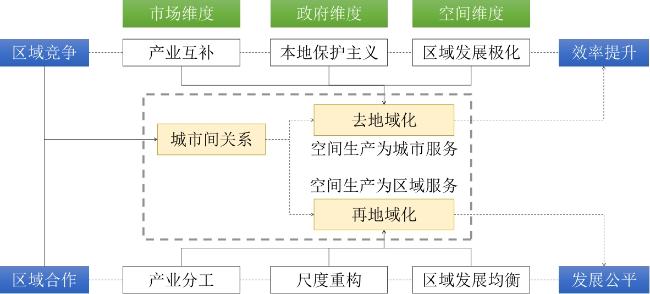
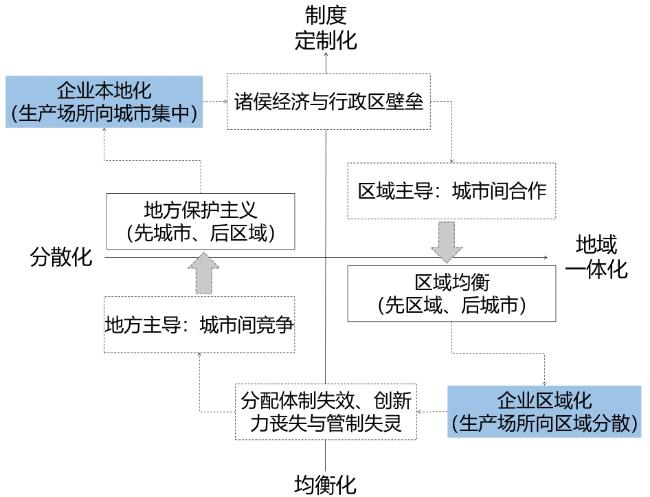
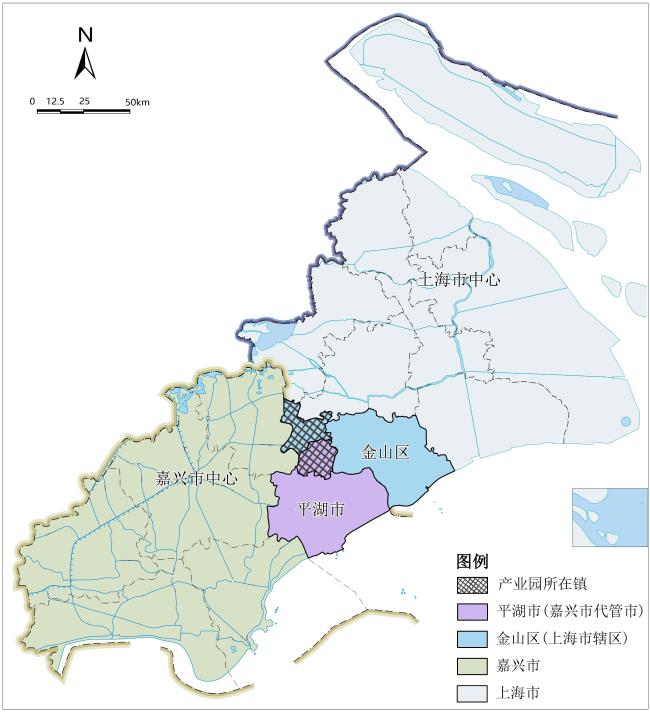
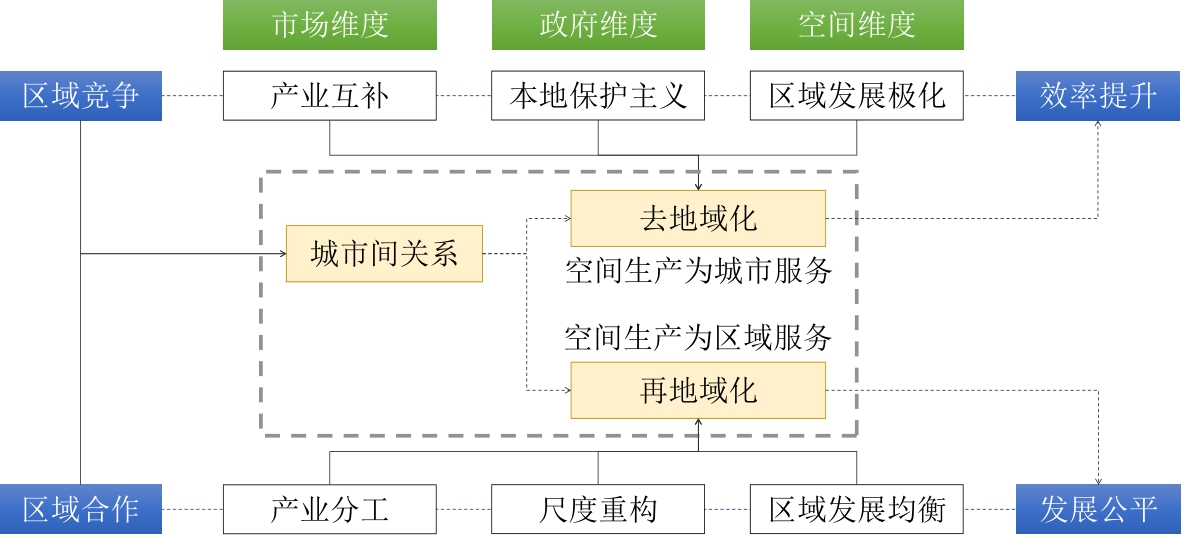
This study examined the intricate dynamics of competition and cooperation within the framework of city regionalism using Zhangjiang-Pinghu Science and Technology Park as a case study. Drawing from the theoretical background of city regionalism, this study synthesizes various academic perspectives on regionalization and interregional relationships. It identifies competition and cooperation as the two pivotal forces shaping the regional integration process. By integrating the "territorial-institutional structure" from existing studies and grounding the analysis in the characteristics of urban governance under China's socialist market economy, this paper proposes a "relationship circuit" as an analytical tool to elucidate the transformation between competition and cooperation. Employing semi-structured interviews and case study methods, this study investigated the competitive and cooperative dynamics among multiple stakeholders in the context of enclave industrial parks, as exemplified by the Zhangjiang-Pinghu Science and Technology Park, revealing that regional cooperation fosters intercity linkages, reducing production costs and public service expenditures, while promoting balanced regional development. However, this often comes at the expense of local interests. By contrast, regional competition accelerates the flow of production factors, enabling capital and labor to redistribute regional resources through market mechanisms. However, market-driven allocation can exacerbate these regional disparities. This study posits that in China's socialist market economy, the dynamic interplay between competition and cooperation reflects the evolving developmental needs of city regions. Competition enhances industrial profitability and efficiency, whereas cooperation improves the welfare-oriented provision of public services. This study highlights the limitations of applying western neoliberal theories of regional governance to China's unique institutional and economic context. Unlike the "small government" model prevalent in neoliberal systems, China's regional governance is characterized by strong state intervention, hierarchical administrative divisions, and a governance framework emphasizing flexibility. Local governments empowered by formal authority and administrative autonomy play dual roles in fostering competition and cooperation. This study identifies the coexistence of conflict and synergy as a defining feature of regional governance in China. It argues that the dynamic transformation between competition and cooperation is driven by external economic conditions, industrial development, and stakeholder interests. Using the Zhangjiang-Pinghu Science and Technology Park as a focal point, this study explored how the enclave industrial park model facilitates cross-boundary regional development. The park, jointly established by Shanghai Zhangjiang, Pinghu City, and the Jinshan District, exemplifies the interplay between competition and cooperation. Although competition for resources and investments initially strained inter-regional relations, the eventual alignment of industrial goals and resource-sharing mechanisms enabled the park to achieve complementary development. The research underscores the pivotal role of government-led initiatives in navigating these dynamics, showcasing how local governments mediate conflicts and foster cooperation to achieve regional integration. The study also examined the role of spatial planning and policy alignment in mitigating inter-regional competition. Through strategic reorientation and differentiation, the Zhangjiang-Pinghu Science and Technology Park was successfully integrated into the regional economic ecosystem, leveraging the strengths of Shanghai's industrial base while addressing the developmental needs of Pinghu. Moreover, this study highlighted the benefits of regional cooperation in public service provision, infrastructure development, and talent cultivation. Initiatives such as shared educational and medical resources, coordinated spatial planning, and collaborative transportation infrastructure underscore the potential for cooperative strategies to enhance regional development outcomes. In conclusion, this study provided a nuanced understanding of the competition-cooperation nexus in China's regional governance context. By proposing a "relationship circuit" framework, it offered a dynamic perspective on the transformation between these two forces, contributing to the theoretical discourse on city regionalism. Furthermore, the findings offer practical insights for policymakers seeking to balance efficiency and equity in regional development, emphasizing the importance of adaptive governance mechanisms in fostering sustainable regional integration.
Yingying Wang , Huiling Ma , Zihang Zhou , Xiuting Cao . Examining Competitive and Collaborative Intercity Relations amidst the Regional Integration of the Yangtze River Delta: A Case of Pinghu Science and Technology Park[J]. Tropical Geography, 2024 , 44(12) : 2192 -2201 . DOI: 10.13284/j.cnki.rddl.20230873
表1 访谈信息Table 1 Information of interviews |
| 访谈单位 | 时间 | 职位(身份) | 主要内容 | 形式 | 次数/次 |
|---|---|---|---|---|---|
| 平湖园管委会 | 2023年3月 | 副书记 | 园区历史及行政架构 | 半结构化访谈 | 3 |
| 副主任 | 园区企业运营及招商情况 | ||||
| 会计 | 财务收支情况 | ||||
| 民营企业 | 2024年1月 | 企业负责人 | 企业运营情况、土地租赁情况及政企关系 | 座谈会访谈 | 1 |
| 2024年1月 | 企业负责人A | 企业运营情况及迁入园区的动机与需求 | 半结构化访谈 | 2 | |
| 2024年1月 | 企业负责人B | 企业生产需求 | 半结构化访谈 | ||
| 走访 | 2023年4月 | 随机市民 | 生活质量及产城融合水平 | 街头走访 | 2 |
“上海(张江)不是送给我们的,产业和项目都是我们(平湖园管委会)自己争取和挖掘过来。”(2023-04-12访谈)。
“平湖园和金山园的竞争与合作并存。我们发现不协同也是一种好的状态,因为各自为政反而能充分发挥竞争优势,总体是竞争与合作并存。”(2023-04-10访谈)
“客户来这边(园区)待一周(办理业务),吃饭的时候就是个老大难问题,配套不够。这里(园区)仅有一个四星级酒店叫华美达,吃饭一般般,入住还可以,你(客户)不能天天在一个地方吃饭。”(2024-01-06访谈)

王迎英:文章撰写、实地调研及统筹研究;
马惠玲:实地调研及统筹研究;
周子航:文章撰写、理论化;
曹秀婷:实地调研。
|
Brenner N and Theodore N. 2002. Cities and the Geographies of "Actually Existing Neoliberalism". Antipode, 34(3): 349-379.
|
|
Brenner N, Peck J, and Theodore N. 2010. Variegated Neoliberalization: Geographies, Modalities, Pathways. Global Networks, 10(2): 182-222.
|
|
Cartier C. 2015. Territorial Urbanization and the Party-State in China. Territory, Politics, Governance, 3(3): 294-320.
|
|
Harrison J. 2010. Networks of Connectivity, Territorial Fragmentation, Uneven Development: The New Politics of City-Regionalism. Political Geography, 29(1): 17-27.
|
|
He S. 2020. Urban Entrepreneurialism 2.0? Financialization, Cross-Scale Dynamics, and Post-Political Governance. Dialogues in Human Geography, 10(3): 322-325.
|
|
贺灿飞.2018.区域产业发展演化:路径依赖还是路径创造? 地理研究,37(7):1253-1267.
He Canfei. 2018. Regional Industrial Development and Evolution: Path Dependence or Path Creation? Geographical Research, 37(7): 1253-1267.
|
|
Healey P. 2009. City Regions and Place Development. Regional Studies, 43(6): 831-843.
|
|
Jessop B. 2013. Hollowing out the 'Nation-State' and Multi-Level Governance. In: Kennett P. A Handbook of Comparative Social Policy. 2nd Edition. Cheltenham: Edward Elgar Publishing, 11-26.
|
|
Jonas A. 2012. City-Regionalism: Questions of Distribution and Politics. Progress in Human Geography, 36(6): 822-829.
|
|
Li Y and Wu F. 2018. Understanding City-Regionalism in China: Regional Cooperation in the Yangtze River Delta. Regional Studies, 52(3): 313-324.
|
|
林毅夫.2017.中国经验:经济发展和转型中有效市场与有为政府缺一不可.行政管理改革,98(10):12-14.
Lin Yifu. 2017. Chinese Experience: Effective Markets and Effective Governments are Indispensable in Economic Development and Transformation. Administration Reform, 98(10): 12-14.
|
|
刘云刚,叶清露,许晓霞.2015.空间、权力与领域:领域的政治地理研究综述与展望.人文地理,30(3):1-6.
Liu Yungang, Ye Qinglu, and Xu Xiaoxia. 2015. Space, Power and Territory: A Review on Territory in Political Geography. Human Geography, 30(3): 1-6.
|
|
罗小龙,沈建法.2006.中国城市化进程中的增长联盟和反增长联盟——以江阴经济开发区靖江园区为例.城市规划,(3):48-52.
Luo Xiaolong and Shen Jianfa. 2006. Urban Growth Coalition and Anti-Coalition in China's Urbanization: A Case Study of Jiangyin Economic Development Zone in Jinjiang. Town Planning Review, (3): 48-52.
|
|
Phelps N and Miao J. 2020. Varieties of Urban Entrepreneurialism. Dialogues in Human Geography, 10(3): 304-321.
|
|
Porter M. 1985. Technology and Competitive Advantage. Journal of Business Strategy, 5(3): 60-78.
|
|
Schoenberger E. 2004. The Spatial Fix Revisited. Antipode, 36(3): 427-433.
|
|
Swyngedouw E. 2004. Globalisation or 'Glocalisation'? Networks, Territories and Rescaling. Cambridge Review of International Affairs, 17(1): 25-48.
|
|
王丰龙,刘云刚.2017.尺度政治理论框架.地理科学进展,36(12):1500-1509.
Wang Fenglong and Liu Yungang. 2017. Toward a Theoretical Framework of 'Politics of Scale'. Progress in Geography, 36(12): 1500-1509.
|
|
Ward K and Jonas A. 2004. Competitive City-Regionalism as a Politics of Space: A Critical Reinterpretation of the New Regionalism. Environment and Planning A, 36(12): 2119-2139.
|
|
Wu F. 2018. Planning Centrality, Market Instruments: Governing Chinese Urban Transformation under State Entrepreneurialism. Urban Studies, 55(7): 1383-1399.
|
|
线实,陈振光.2014.城市竞争力与区域城市竞合:一个理论的分析框架.经济地理,34(3):1-5.
Xian Shi and Chen Zhenguang. 2014. Urban Competitiveness and Co-Opetition: A Theoretical Exploration. Economic Geography, 34(3): 1-5.
|
|
殷洁,罗小龙.2013.尺度重组与地域重构:城市与区域重构的政治经济学分析.人文地理,28(2):67-73.
Yin Jie and Luo Xiaolong. 2013. Rescaling, Deterritorialization and Reterritorialization: The Political Economic Analysis for City and Regional Restructuring. Human Geography, 28(2): 67-73.
|
|
叶玉瑶,王翔宇,许吉黎,张虹鸥,刘郑倩,孙嘉仪,卢秦.2022.新时期粤港澳大湾区协同发展的内涵与机制变化.热带地理,42(2):161-170.
Ye Yuyao, Wang Xiangyu, Xu Jili, Zhang Hong'ou, Liu Zhengqian, Sun Jiayi, and Lu Qin. 2022. The Connotation and Mechanism Changes of Coordinated Development of the Guangdong-Hong Kong-Macao Greater Bay Area in the New Period. Tropical Geography, 42(2): 161-170.
|
|
张京祥,殷洁,罗小龙.2006.地方政府企业化主导下的城市空间发展与演化研究.人文地理,21(4):1-6.
Zhang Jingxiang, Yin Jie, and Luo Xiaolong. 2006. Research of Urban Spatial Development under the Circumstances of Local Government's Entrepreneuralization. Human Geography, 21(4): 1-6.
|
|
张衔春,栾晓帆,李志刚.2020.“城市区域”主义下的中国区域治理模式重构——珠三角城际铁路的实证.地理研究,39(3):483-494.
Zhang Xianchun, Luan Xiaofan, and Li Zhigang. 2020. The Restructuring of Regional Governance under the City Regionalism of China: A Case Study of the Pearl River Delta intercity railway. Geographical Research, 39(3): 483-494.
|
|
张衔春,唐承辉,岳文泽.2022.地域重构视角下区域空间生产与治理——以深汕特别合作区为例.地理科学,42(3):373-380.
Zhang Xianchun, Tang Chenghui, and Yue Wenze. 2022. Investigating the Regional Spatial Production and Regional Governance from the Perspective of Territorial Restructuring: A Case Study of Shenzhen-Shanwei Cooperation Zone. Scientia Geographica Sinica, 42(3): 373-380.
|
|
周子航,施德浩,王雨.2022.港深协同发展:香港北部都会区与前海合作区的跨界治理——基于新国家空间理论的考察.城市发展研究,29(10):1-11.
Zhou Zihang, Shi Dehao, and Wang Yu. 2022. Integrated Relationships of Hong Kong and Shenzhen: Cross-Border Governance between Northern Metropolis and Qianhai. Urban Development Studies, 29(10): 1-11 .
|
|
周子航,张京祥,杨洁莹. 2023. 风险社会视角下国家级新区治理格局检视——以南京江北新区为例. 国际城市规划,38(1):91-99.
Zhou Zihang, Zhang Jingxiang, and Yang Jieying. 2023. Governance Modality of State-Level New Areas from the Perspective of Risk Society: A Case Study of Jiangbei New Area, Nanjing. Urban Planning International, 38(1): 91-99.
|
/
| 〈 |
|
〉 |