Regional Differences and Dynamic Evolution of the Integration of China's Digital Economy and Cultural and Tourism Industries under the Perspective of Industrial Cycle
Received date: 2024-11-19
Revised date: 2025-07-29
Online published: 2025-11-01
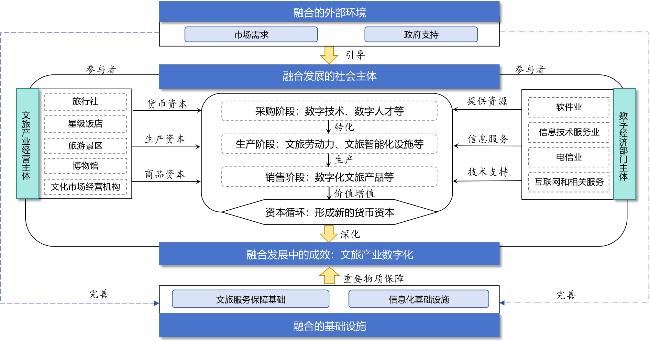
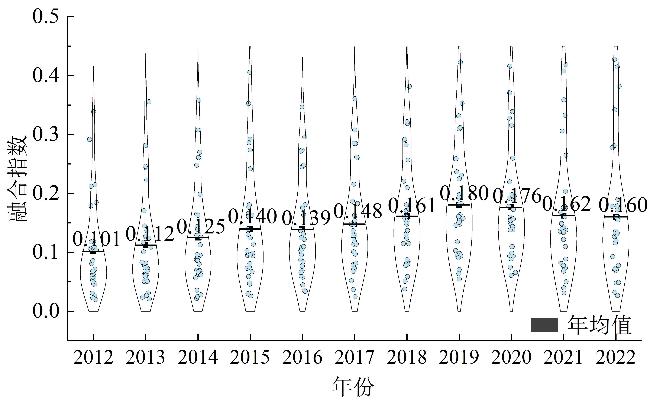
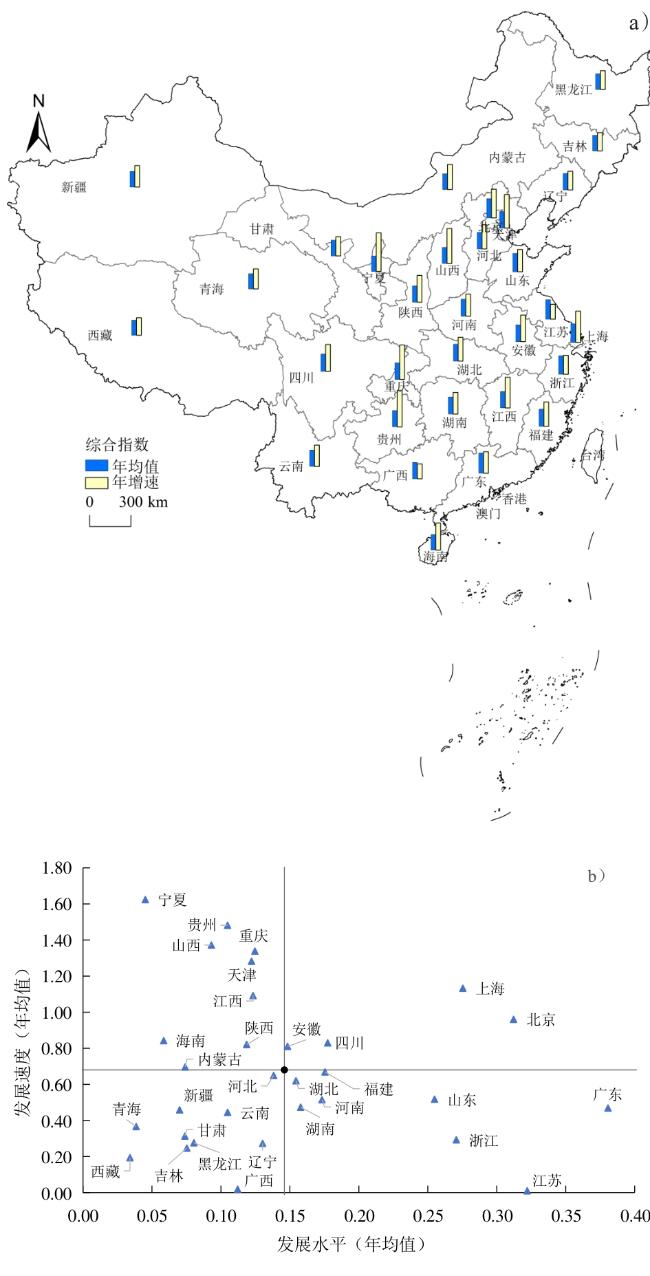
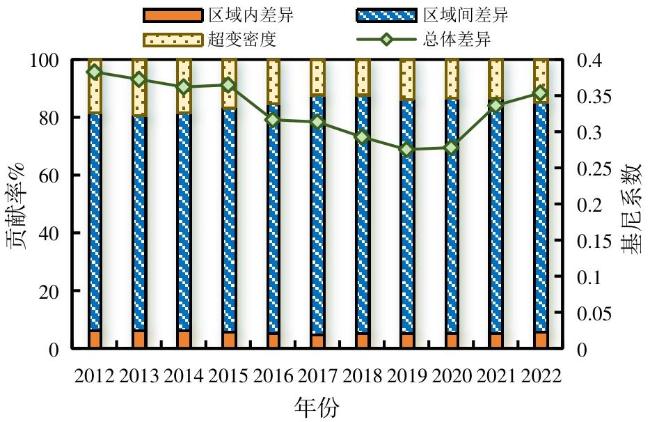
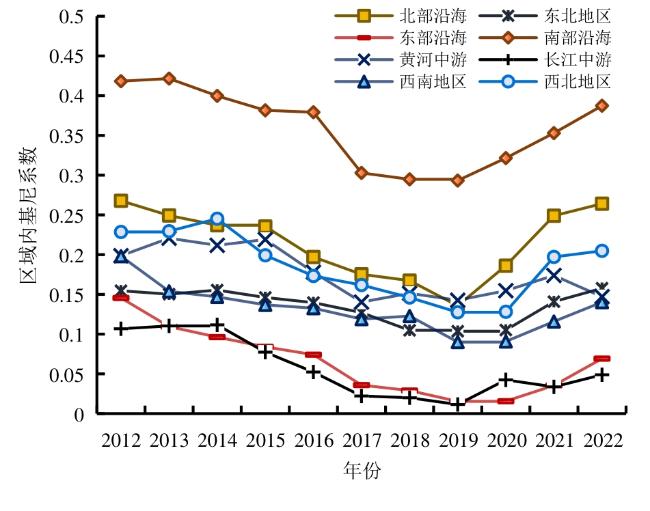
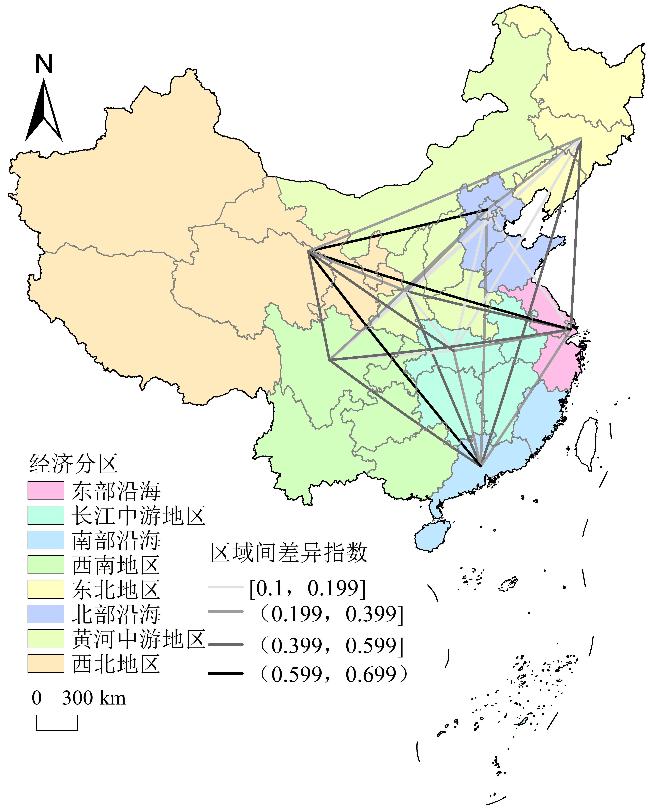
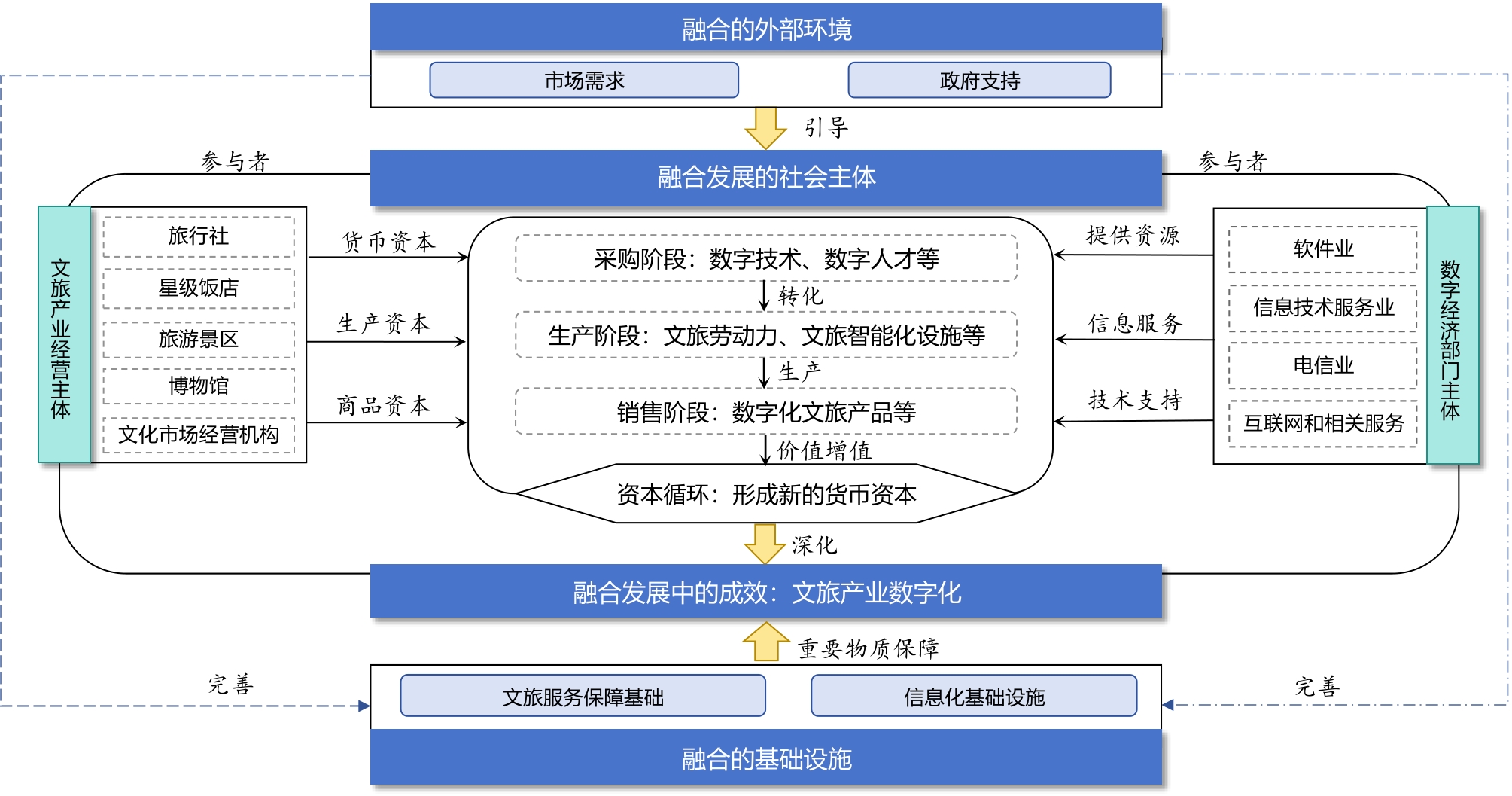
Exploring the new pattern of the integration of the digital economy, culture, and tourism industry is one way to promote the high-quality development of the cultural and tourism industry. This study takes Marx's theory of the industrial capital cycle as a guide and constructs an evaluation index system to integrate the digital economy and cultural and tourism industries, and infrastructure, social subjects, external environment, and effectiveness. It adopts the entropy value method, Dagum Gini coefficient, and Markov chain to measure and analyze the level of development of the integration of the digital economy and cultural and tourism industry in 31 Chinese provinces and cities from 2012 to 2022, the regional differences, and their spatiotemporal evolution patterns. The study found the following. The development level of digital cultural tourism integration in China showed a fluctuating upward trend during the study period; however, the overall level remained relatively low. Only four provinces and municipalities, namely Shanghai, Beijing, Sichuan, and Anhui, achieved a "high level–high speed" development status. Significant disparities in digital cultural tourism integration exist among the eight major comprehensive economic zones, although a regional catch-up effect has emerged. The eastern, northern, and southern coastal regions form the first-tier group; the Middle Yangtze, Southwest, and Middle Yellow River regions constitute the second tier; and the Northeast and Northwest regions fall into the third tier. The Eastern Coastal region leads the country in the transformation and upgrading stages, whereas the northern coastal, middle Yellow River, and northwest regions show the most evident catch-up momentum. The overall disparity in digital cultural tourism integration across China has gradually narrowed. However, the gap between the eastern coastal and northwestern regions remains the primary obstacle to the coordinated development of digital cultural tourism integration. Meanwhile, the northeast region faces internal imbalance, indicating the existence of a "digital cultural tourism integration divide" within the region. This highlights the need to address development shortcomings and promote coordinated development among provinces within the northeast. The development trend of digital cultural tourism integration in China has remained relatively stable, with the emergence of four types of convergence "clubs": low-level, lower-middle-level, upper-middle-level, and high-level. Among them, convergence is most significant in the low- and high-level groups, reflecting a pronounced "Matthew effect." Cross-club transitions are rare, with higher probabilities of shifts occurring between adjacent levels than nonadjacent ones, and upward transitions are more likely to occur than downward transitions. Notably, the eastern and southwestern regions show a clear trend of upward mobility in digital cultural tourism integration, whereas the northern coastal and northeastern regions display roughly equal probabilities of upward and downward transitions, indicating a lack of clear directional tendencies in their development. This study systematically reveals the spatial patterns and dynamic trends of the integration between the digital economy and the cultural tourism industry in China in three dimensions: theoretical logic, indicator system, and evolutionary mechanism. This study provides theoretical support and policy references for enhancing the quality of digital cultural tourism integration, narrowing regional disparities, and promoting high-quality tourism.
Ying Zhou , Jianxiong Tang , Yue Lyu . Regional Differences and Dynamic Evolution of the Integration of China's Digital Economy and Cultural and Tourism Industries under the Perspective of Industrial Cycle[J]. Tropical Geography, 2025 , 45(10) : 1815 -1827 . DOI: 10.13284/j.cnki.rddl.20240744
表1 数字文旅融合发展评价指标Table 1 Evaluation indicators for digital literature and tourism integration development |
| 系统层 | 一级指标 | 二级指标 | 指标性质 | 权重 |
|---|---|---|---|---|
| 基础 设施 条件 | 信息化 基础 设施 | 移动电话基站密度/(个·km-2) | + | 0.076 |
| 光缆线路长度/万km | + | 0.032 | ||
| 域名数/万个 | + | 0.063 | ||
| 互联网宽带接入用户数/个 | + | 0.059 | ||
| 文旅服务 保障基础 | 旅游从业人数/万人 | + | 0.023 | |
| 文化从业人数/万人 | + | 0.066 | ||
| 社会 主体 | 文旅经营 企业 | 旅行社/个 | + | 0.022 |
| 星级饭店/个 | + | 0.019 | ||
| 景区/个 | + | 0.022 | ||
| 博物馆/个 | + | 0.024 | ||
| 文化市场经营机构/个 | + | 0.094 | ||
| 数字经济 部门 | 软件业收入/万元 | + | 0.064 | |
| 信息技术服务收入/万元 | + | 0.073 | ||
| 电信业务总量/万元 | + | 0.037 | ||
| 信息传输、软件和信息技术服务业从业人员/万人 | + | 0.051 | ||
| 外部 环境 | 文旅市场 需求 | 居民消费水平/万元 | + | 0.012 |
| 旅游总人数/万人 | + | 0.023 | ||
| 政府 支持 | 数字文旅词频与省市政府报告政策文本词频的比值/% | + | 0.015 | |
| 旅游发展基金支出/万元 | + | 0.025 | ||
| 融合成效 | 文旅数字化转型 | 文旅企业电子商务销售额/万元 | + | 0.062 |
| 文旅企业拥有网站占比/% | + | 0.033 | ||
| 文化收入/万元 | + | 0.071 | ||
| 旅游收入/万元 | + | 0.034 |
表2 数字文旅融合指数的马尔科夫链转移矩阵Table 2 Markov chain transfer matrix for the digital cultural and tourism integration index |
| 区域 | t/(t+1) | Ⅰ | Ⅱ | Ⅲ | Ⅳ |
|---|---|---|---|---|---|
| 全样本 | Ⅰ | 0.81 | 0.19 | 0 | 0 |
| Ⅱ | 0.07 | 0.72 | 0.21 | 0 | |
| Ⅲ | 0.01 | 0.07 | 0.78 | 0.14 | |
| Ⅳ | 0 | 0 | 0.1 | 0.9 | |
| 北部沿海 | Ⅰ | 0.8 | 0.2 | 0 | 0 |
| Ⅱ | 0.09 | 0.82 | 0.09 | 0 | |
| Ⅲ | 0 | 0 | 0.70 | 0.3 | |
| Ⅳ | 0 | 0 | 0.11 | 0.89 | |
| 东北地区 | Ⅰ | 0.57 | 0.29 | 0.14 | 0 |
| Ⅱ | 0.25 | 0.5 | 0.25 | 0 | |
| Ⅲ | 0 | 0.18 | 0.58 | 0.25 | |
| Ⅳ | 0 | 0 | 0.14 | 0.86 | |
| 东部沿海 | Ⅰ | 0.63 | 0.38 | 0 | 0 |
| Ⅱ | 0.13 | 0.38 | 0.5 | 0 | |
| Ⅲ | 0 | 0.13 | 0.38 | 0.5 | |
| Ⅳ | 0 | 0.33 | 0.17 | 0.5 | |
| 南部沿海 | Ⅰ | 0.86 | 0.14 | 0 | 0 |
| Ⅱ | 0.11 | 0.67 | 0.22 | 0 | |
| Ⅲ | 0 | 0.14 | 0.57 | 0.29 | |
| Ⅳ | 0 | 0 | 0.14 | 0.86 | |
| 黄河中游 | Ⅰ | 0.7 | 0.3 | 0 | 0 |
| Ⅱ | 0.09 | 0.64 | 0.27 | 0 | |
| Ⅲ | 0 | 0.11 | 0.67 | 0.22 | |
| Ⅳ | 0 | 0 | 0.1 | 0.9 | |
| 长江中游 | Ⅰ | 0.64 | 0.36 | 0 | 0 |
| Ⅱ | 0 | 0.5 | 0.33 | 0.17 | |
| Ⅲ | 0 | 0.29 | 0.43 | 0.29 | |
| Ⅳ | 0 | 0.1 | 0.2 | 0.7 | |
| 西南地区 | Ⅰ | 0.62 | 0.38 | 0 | 0 |
| Ⅱ | 0.15 | 0.46 | 0.31 | 0.08 | |
| Ⅲ | 0.08 | 0.25 | 0.25 | 0.42 | |
| Ⅳ | 0 | 0 | 0.33 | 0.67 | |
| 西北地区 | Ⅰ | 0.71 | 0.29 | 0 | 0 |
| Ⅱ | 0.09 | 0.49 | 0.41 | 0 | |
| Ⅲ | 0.08 | 0.15 | 0.54 | 0.23 | |
| Ⅳ | 0 | 0.08 | 0.12 | 0.79 |
|
1 中国八大经济区包括北部沿海(北京、天津、河北、山东)、东北(辽宁、吉林、黑龙江)、东部沿海(上海、江苏、浙江)、南部沿海(福建、广东、海南)、黄河中游(陕西、山西、河南、内蒙古)、长江中游(湖北、湖南、江西、安徽)、西南(云南、贵州、四川、重庆、广西)、西北(甘肃、青海、宁夏、西藏、新疆)。
诚挚感谢匿名评审过程中各位专家、编辑对本文提出的修改意见,使得本文得以完善。
|
Akhunova S and Abdusattorova M. 2023. Digital Marketing: Near Future and Perspectives. European Journal of Economics, Finance and Business Development, 1(2): 18-25.
|
|
白长虹. 2019. 文旅融合背景下的行业人才培养——实践需求与理论议题. 人民论坛·学术前沿,(11):36-42.
Bai Changhong. 2019. Industry Talent Cultivation in the Context of Culture and Tourism Integration—Practical Needs and Theoretical Issues. People's Forum-Academic Frontier, (11): 36-42.
|
|
Barefoot K, Curtis D, Jolliff W, Nicholson J R, and Omohundro R. 2018. Defining and Measuring the Digital Economy. (2018-03-15) [2024-10-01]. https: //www.bea.gov/sites/default/files/papers/defining-and-measuring-the-digital-economy.pdf.
|
|
Bukht R and Heeks R. 2017. Defining, Conceptualising and Measuring the Digital Economy. International Organisations Research Journal, 13(2): 143-172.
|
|
蔡尚伟,丁锦箫. 2021. 产业融合视阈下文旅产业与数字经济融合发展现状与对策——基于对成都的考察. 广西社会科学,(1):118-123.
Cai Shangwei and Ding Jinxiao. 2021. The Current Situation and Countermeasures for the Integrated Development of the Tourism Industry and Digital Economy under the Threshold of Industrial Integration—Based on the Examination of Chengdu. Guangxi Social Science, (1): 118-123.
|
|
陈琳琳,徐金海,李勇坚. 2022. 数字技术赋能旅游业高质量发展的理论机理与路径探索. 改革,(2):101-110.
Chen Linlin, Xu Jinhai, and Li Yongjian. 2022. Theoretical Mechanism and Path Exploration of Digital Technology Enabling High-Quality Development of Tourism. Reform, (2): 101-110.
|
|
陈明华,张晓萌,刘玉鑫,仲崇阳. 2020. 绿色TFP增长的动态演进及趋势预测——基于中国五大城市群的实证研究. 南开经济研究,(1):20-44.
Chen Minghua, Zhang Xiaomeng, Liu Yuxin, and Zhong Chongyang. 2020. Dynamic Evolution and Trend Forecasting of Green TFP Growth—An Empirical Study Based on Five Major Urban Agglomerations in China. Nankai Economic Research, (1): 20-44.
|
|
郭晗,全勤慧. 2022. 数字经济与实体经济融合发展:测度评价与实现路径. 经济纵横,(11):72-82.
Guo Han and Quan Qinhui. 2022. Integration of Digital Economy and Real Economy: Measurement Evaluation and Realisation Path. Economic Journal, (11): 72-82.
|
|
国家统计局. 2011—2023. 中国统计年鉴. 北京:中国统计出版社.
National Bureau of Statistics of China. 2011—2023. China Statistical Yearbook. Beijing: China Statistics Press.
|
|
国家统计局社会科技和文化产业统计司,科学技术部战略规划司. 2011—2023. 中国科技统计年鉴. 北京:中国统计出版社.
Department of Social, Science, Technology and Cultural Statistics, National Bureau of Statistics of China, and Department of Strategy and Planning, Ministry of Science and Technology. 2011-2023. China Science and Technology Statistical Yearbook. Beijing: China Statistics Press.
|
|
国家统计局社会科技和文化产业统计司,中宣部文化改革发展局. 2011—2023. 中国文化及相关产业统计年鉴. 北京:中国统计出版社.
Department of Social, Science, Technology and Cultural Statistics, National Bureau of Statistics of China, and Department of Cultural Reform and Development, Publicity Department of the CPC Central Committee. 2011-2023. China Cultural and Related Industries Statistical Yearbook. Beijing: China Statistics Press.
|
|
国务院. 2023. 关于释放旅游消费潜力推动旅游业高质量发展的若干措施.(2023-09-27)[2024-10-01] https://www.gov.cn/zhengce/content/202309/content_6907051.htm.
State Council. 2023. Several Measures on Unleashing Tourism Consumption Potential and Promoting High-Quality Development of the Tourism Industry. (2023-09-27) [2024-10-01]. https://www.gov.cn/zhengce/content/202309/content_6907051.htm.
|
|
何红,拓守恒. 2023. 数字经济驱动旅游产业高质量发展的作用机理与耦合协调关系——基于西北五省的实证. 统计与决策,39(20):78-83.
He Hong and Tuo Shouheng. 2023. The Role Mechanism and Coupling Coordination Relationship of Digital Economy Driving the High Quality Development of Tourism Industry—Empirical Evidence Based on Five Northwestern Provinces. Statistics and Decision Making, 39(20): 78-83.
|
|
贺小荣,陈文灏. 2024. 中国数字经济与文旅产业融合的协同关系及其影响因素. 热带地理,44(7):1314-1328.
He Xiaorong and Chen Wenhao. 2024. The Synergistic Relationship between Digital Economy and Cultural and Tourism Industry Integration in China and Its Influencing Factors. Tropical Geography, 44(7): 1314-1328.
|
|
黄震方,张子昂,李涛,候国林,靳诚,张郴. 2024. 数字赋能文旅深度融合的理论逻辑与研究框架. 旅游科学,38(1):1-16.
Huang Zhenfang, Zhang Zi’ang, Li Tao, Hou Guolin, Jin Cheng, and Zhang Chen. 2024. Theoretical Logic and Research Framework of Digital-Enabled Deep Integration of Culture and Tourism. Tourism Science, 38(1): 1-16.
|
|
科技部,中央宣传部,中央网信办,财政部,文化和旅游部,广电总局. 2019. 关于促进文化和科技深度融合的指导意见. (2019-08-13)[2024-10-01]. https://www.most.gov.cn/xxgk/xinxifenlei/fdzdgknr/fgzc//gfxwj/gfxwj2019/201908/t20190826_148424.html.
Ministry of Science and Technology, Publicity Department of the CPC Central Committee, Cyberspace Administration of China, Ministry of Finance, Ministry of Culture and Tourism, and National Radio and Television Administration. 2019. Guiding Opinions on Promoting the Deep Integration of Culture and Technology. (2019-08-13) [2024-10-01]. https://www.most.gov.cn/xxgk/xinxifenlei/fdzdgknr/fgzc//gfxwj/gfxwj2019/201908/t20190826_148424.html.
|
|
李重芬. 2008. 马克思的资本循环理论研究. 生产力研究,(10):12-14. [Li Chongfen. 2008. A Study of Marx's Theory of the Capital Cycle. Productivity Research, (10): 12-14. ]
|
|
李健旋. 2025. 制造业与数字经济产业关联融合测度及异质性研究. 中国管理科学,33(8):112-122.
Li Jianxuan. 2025. A Study on the Measurement and Heterogeneity of Industrial Linkage Integration between Manufacturing and Digital Economy. China Management Science, 33(8): 112-122.
|
|
Li K, Kim D J, Lang K R, Kauffman R J, and Naldi M. 2020. How should We Understand the Digital Economy in Asia? Critical Assessment and Research Agenda. Electronic Commerce Research and Applications, 44: 101004.
|
|
李研. 2021. 中国数字经济产出效率的地区差异及动态演变. 数量经济技术经济研究,38(2):60-77.
Li Yan. 2021. Regional Differences and Dynamic Evolution of Output Efficiency in China's Digital Economy. Research on Quantitative and Technical Economics, 38(2): 60-77.
|
|
李志远,冯学钢,何静,左文俊,夏赞才. 2024. 韧性与效率协同视角下旅游生态系统评估. 中国人口·资源与环境,34(10):150-159.
Li Zhiyuan, Feng Xuegang, He Jing, Zuo Wenjun, and Xia Zancai. 2024. Tourism Ecosystem Assessment from the Perspective of Resilience and Efficiency Synergy. China Population-Resources and Environment, 34(10): 150-159.
|
|
林文凯,林璧属. 2018. 区域旅游产业生态效率评价及其空间差异研究——以江西省为例. 华东经济管理,32(6):19-25.
Lin Wenkai and Lin Bishu. 2018. Evaluation of Regional Tourism Industry Eco-Efficiency and Its Spatial Difference Research—Taking Jiangxi Province as an Example. East China Economic Management, 32(6): 19-25.
|
|
刘英基,邹秉坤,韩元军,余超. 2023. 数字经济赋能文旅融合高质量发展——机理、渠道与经验证据. 旅游学刊,38(5):28-41.
Liu Yingji, Zou Bingkun, Han Yuanjun, and Yu Chao. 2023. Digital Economy Empowers High-Quality Development of Cultural and Tourism Integration-Mechanisms, Channels and Empirical Evidence. Journal of Tourism, 38(5): 28-41.
|
|
马丽君,敖烨. 2023. 数字经济对旅游业高质量发展的影响及空间溢出效应. 地理科学进展,42(12):2296-2308.
Ma Lijun and Ao Ye. 2023. The Impact and Spatial Spillover Effect of Digital Economy on the High-Quality Development of Tourism. Advances in Geoscience, 42(12): 2296-2308.
|
|
马越斐,李海. 2023. 数字经济赋能文体旅产业深度融合的内在机理、现实困境与实践路径. 沈阳体育学院学报,42(5):108-113.
Ma Yuefei and Li Hai. 2023. Digital Economy Empowers the Deep Integration of Culture, Sports and Tourism Industry of the Inner Mechanism, the Reality of the Dilemma and the Practical Path. Journal of Shenyang Sports Institute, 42(5): 108-113.
|
|
Mossberger K, LaCombe S, and Tolbert C J. 2022. A New Measure of Digital Economic Activity and Its Impact on Local Opportunity. Telecommunications Policy, 46(1): 102231.
|
|
Pan W, Xie T, Wang Z W, and Ma L S. 2022. Digital Economy: An Innovation Driver for Total Factor Productivity. Journal of Business Research, 139: 303-311.
|
|
谭春桥,吴欣,崔春生. 2021. 促销模式下基于纳什谈判的线上旅行商与线下旅行社定价策略研究. 中国管理科学,29(3):143-152.
Tan Chunqiao, Wu Xin, and Cui Chunsheng. 2021. A Study on Pricing Strategies of Online Travellers and Offline Travel Agencies Based on Nash Negotiation under the Promotion Model. China Management Science, 29(3): 143-152.
|
|
Tang Chengcai, Shangguan L, Liu L, and Mei J. 2024. The Model and Path for Digital Cultural Tourism to Promote Rural Revitalization. Journal of Resources and Ecology, 15(3): 528-540.
|
|
唐睿. 2022. 长三角数字经济和旅游业高质量发展的空间特征分析. 经济体制改革,(5):51-59.
Tang Rui. 2022. Analysis of the Spatial Characteristics of High-Quality Development of the Digital Economy and Tourism Industry in the Yangtze River Delta. Economic System Reform, (5): 51-59.
|
|
王定祥,彭政钦,李伶俐. 2023. 中国数字经济与农业融合发展水平测度与评价. 中国农村经济,(6):48-71.
Wang Dingxiang, Peng Zhengqin, and Li Lingyi. 2023. Measuring and Evaluating the Level of Integrated Development of Digital Economy and Agriculture in China. China Rural Economy, (6): 48-71.
|
|
王金伟,王启翔,冯凌. 2024. 中国数字经济与旅游业高质量发展的协调格局及驱动机制. 地理科学,44(1):130-139.
Wang Jinwei, Wang Qixiang, and Feng Ling. 2024. Coordination Pattern and Driving Mechanism of High-Quality Development of Digital Economy and Tourism in China. Geoscience, 44(1): 130-139.
|
|
王胜鹏,滕堂伟,胡森林,李炜. 2024. 中国数字经济空间网络结构演化及其驱动因素. 地理科学,44(5):743-753.
Wang Shengpeng, Teng Tangwei, Hu Linlin, and Li Wei. 2024. Evolution of Spatial Network Structure of China's Digital Economy and Its Driving Factors. Geoscience, 44(5): 743-753.
|
|
Williams L D. 2021. Concepts of Digital Economy and Industry 4.0 in Intelligent and Information Systems. International Journal of Intelligent Networks, 2: 122-129.
|
|
吴丽,梁皓,虞华君,霍荣棉. 2021. 中国文化和旅游融合发展空间分异及驱动因素. 经济地理,41(2):214-221.
Wu Li, Liang Hao, Yu Huajun, and Huo Rongmian. 2021. Spatial Differentiation and Driving Factors of Integrated Development of Culture and Tourism in China. Economic Geography, 41(2): 214-221.
|
|
杨利,李梦含,张名杰,张怡琼. 2023. 数字经济赋能文旅融合的影响机制与门槛效应研究. 统计与决策,39(12):29-34.
Yang Li, Li Menghan, Zhang Mingjie, and Zhang Yiqiong. 2023. Research on the Influence Mechanism and Threshold Effect of Digital Economy Empowering the Integration of Culture and Tourism. Statistics and Decision Making, 39(12): 29-34.
|
|
杨莎莎,胡隆. 2024. 数字赋能背景下中国城市文旅融合水平测度及其时空特征. 经济地理,44(5):202-211.
Yang Shasha and Hu Long. 2024. Measuring the Level of Cultural and Tourism Integration in Chinese Cities and Its Spatial and Temporal Characteristics under the Background of Digital Empowerment. Economic Geography, 44(5): 202-211.
|
|
叶紫青,夏杰长. 2024. 数字技术赋能文化产业创新发展:内部共生与外部协同. 科学管理研究,42(5):49-56.
Ye Ziqing and Xia Jiechang. 2024. Digital Technology Empowers the Innovation and Development of Cultural Industry: Internal Symbiosis and External Synergy. Science Management Research, 42(5): 49-56.
|
|
张嘉贝,王珂珂,施天乐,刘润歌. 2023. 黄河流域生态保护、数字经济与文旅融合耦合协调发展研究. 资源开发与市场,39(12):1684-1692.
Zhang Jiabei, Wang Keke, Shi Tianle, and Liu Runge. 2023. Research on the Coupled and Coordinated Development of Ecological Protection, Digital Economy and Cultural Tourism Integration in the Yellow River Basin. Resource Development and Market, 39(12): 1684-1692.
|
|
赵云,成燕. 2023. 数字经济赋能四川民族地区文旅产业融合发展. 民族学刊,14(9):59-66.
Zhao Yun and Cheng Yan. 2023. Digital Economy Enabling the Integrated Development of Culture and Tourism Industry in Ethnic Areas of Sichuan. Journal of Ethnicity, 14(9): 59-66.
|
|
周锦. 2022. 数字经济推动文化产业价值共创:逻辑、动因与路径. 南京社会科学,(9):165-172.
Zhou Jin. 2022. Digital Economy Promotes Value Co-Creation in Cultural Industry: Logic, Motivation and Path. Nanjing Social Science, (9): 165-172.
|
|
朱媛媛,周笑琦,顾江,陈京. 2022. 长江中游城市群“文-旅”产业融合发展的空间效应及驱动机制研究. 地理科学进展,41(5):785-796.
Zhu Yuanyuan, Zhou Xiaoqi, Gu Jiang, and Chen Jing. 2022. Research on the Spatial Effect and Driving Mechanism of the Integrated Development of Culture-Tourism Industry in the City Cluster in the Middle Reaches of the Yangtze Rive. Progress in Geographical Sciences, 41(5): 785-796.
|
|
曾鹏,覃意晗,周联超. 2024. 中国城市新质生产力水平的测算及时空格. 地理科学进展,43(6):1102-1117.
Zeng Peng, Qin Yihan, and Zhou Lianchao. 2024. Measurement and Spatial and Temporal Patterns of New Quality Productivity Levels in Chinese Cities. Advances in Geoscience, 43(6): 1102-1117.
|
|
Zhang J, Lyu Y, Li Y, and Geng Y. 2022. Digital Economy: An Innovation Driving Factor for Low-Carbon Development. Environmental Impact Assessment Review, 96: 106821.
|
|
中共中央办公厅,国务院办公厅. 2016. 国家信息化发展战略纲要. 北京:人民出版社.
General Office of the Central Committee of the Communist Party of China, and General Office of the State Council. 2016. Outline of the National Information Development Strategy. Beijing: People's Publishing House.
|
/
| 〈 |
|
〉 |