Enlightenment of Practice and Experience of Crime Prevention Through Environment Design (CPTED) in South Korea
Received date: 2024-12-07
Revised date: 2025-05-06
Online published: 2025-12-02
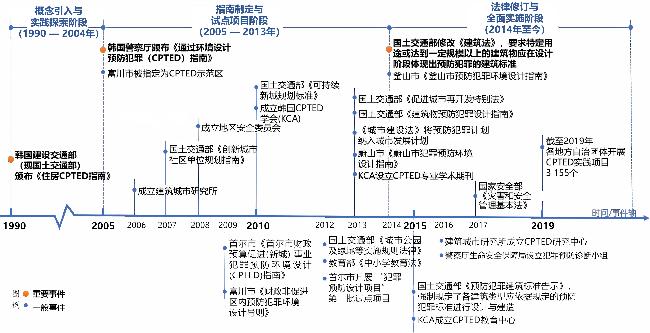
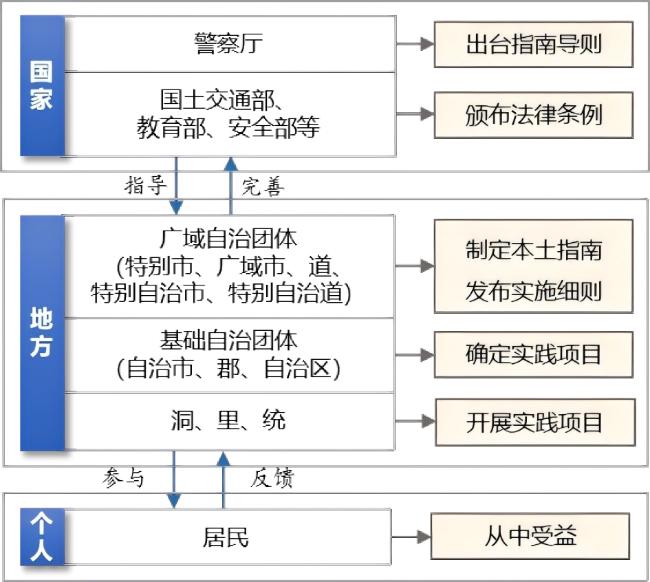
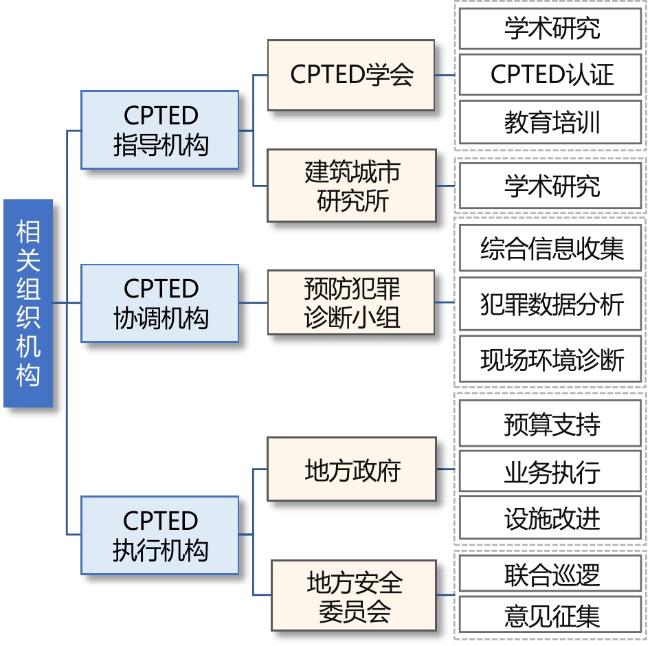
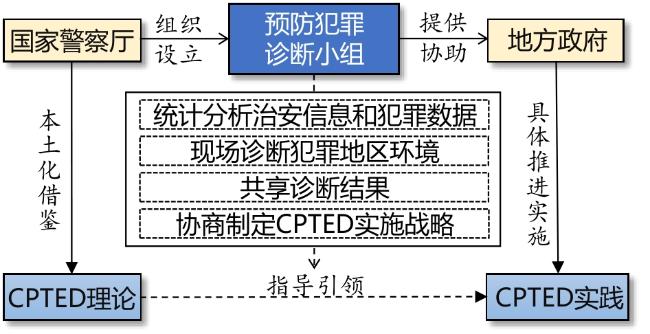
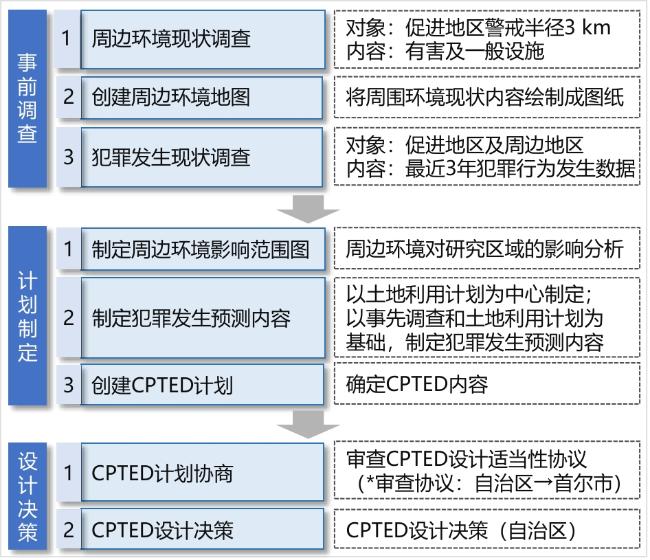
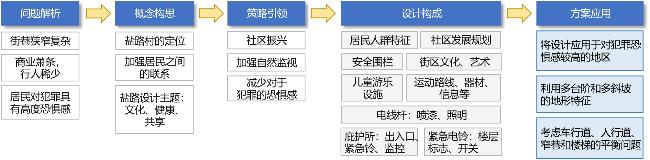
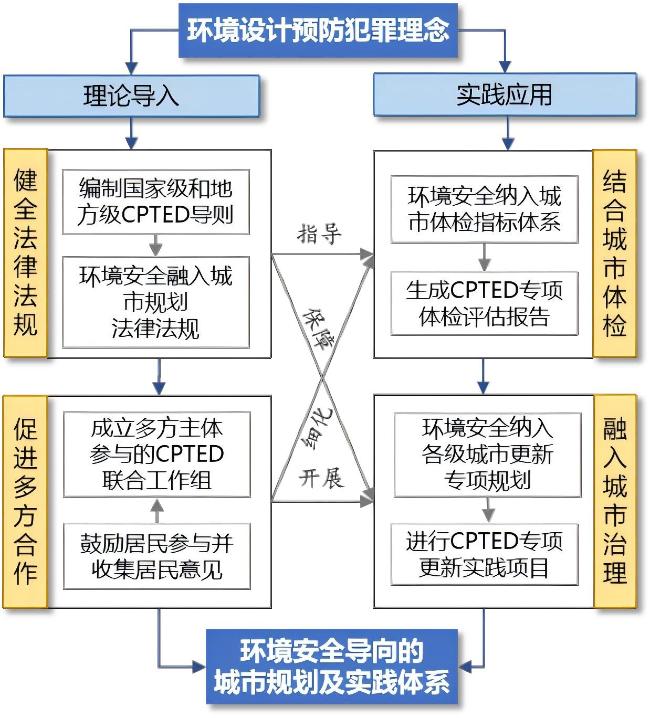
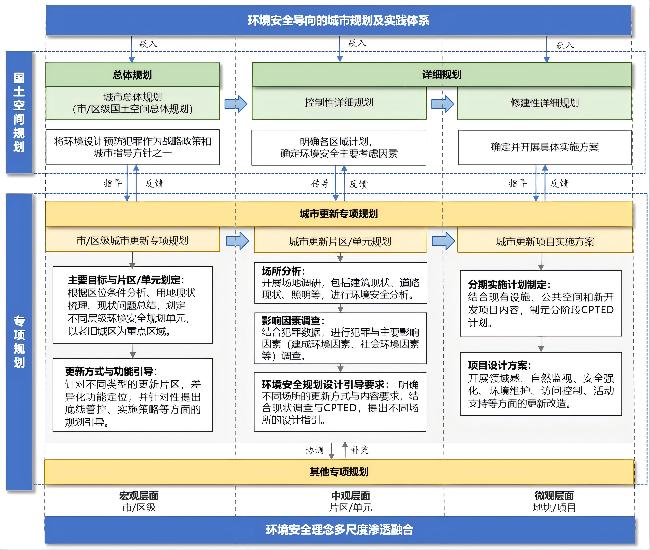
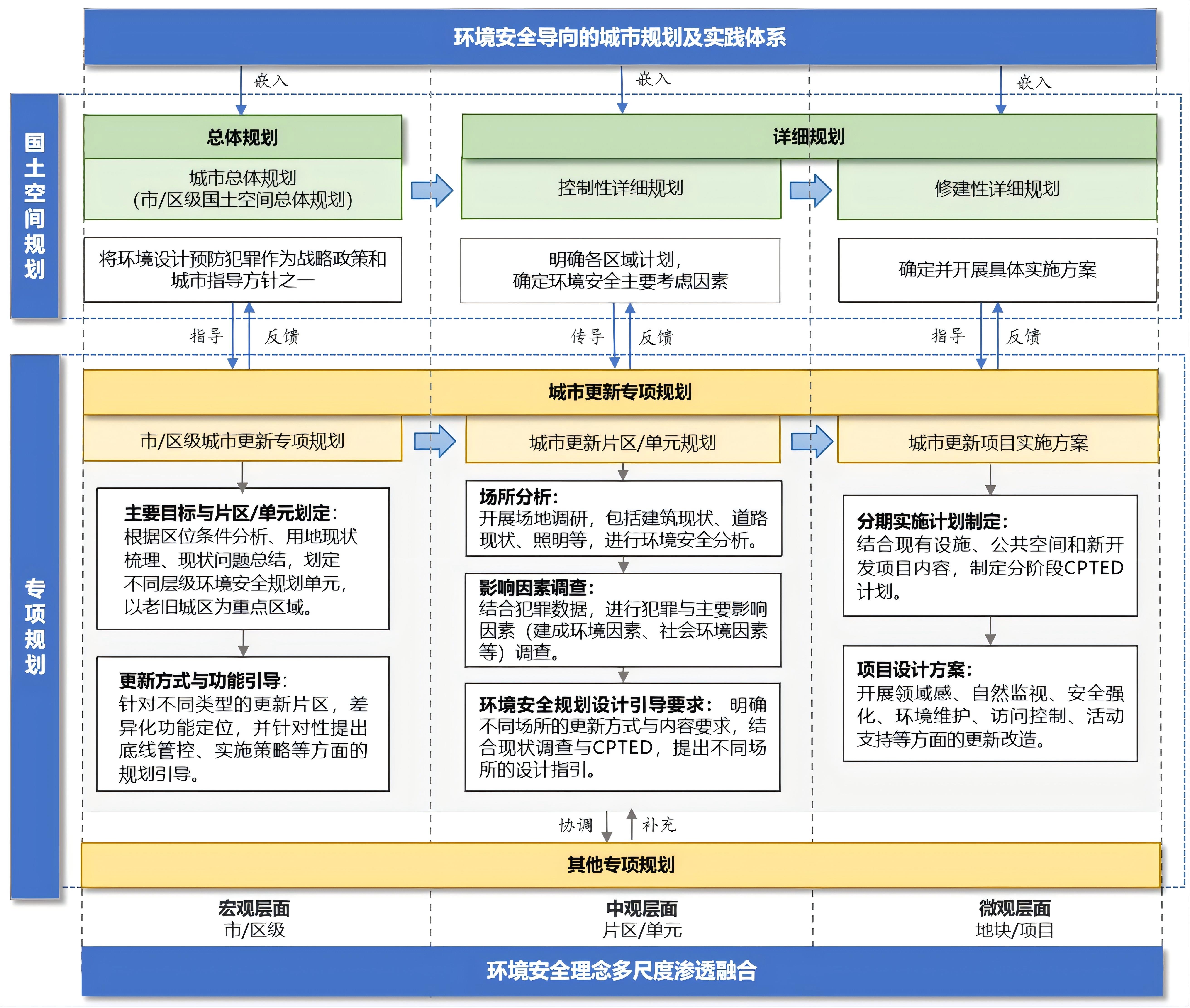
With rapid urbanization, urban safety has become a critical issue in city governance. Among the various approaches, Crime Prevention Through Environmental Design (CPTED) has gained increasing attention owing to its effectiveness in reducing crime risk through physical environment interventions. This study systematically reviewed the development trajectory of CPTED practices in South Korea over the past four decades, dividing them into three distinct stages: initial conceptual introduction and early experimentation, formulation of guidelines and pilot implementation, and legislative revision and full-scale institutionalization. Each stage was analyzed in detail in terms of policy background, implementation strategies, and governance arrangements. Based on this review, this study constructed a framework illustrating the operational mechanism of CPTED in South Korea, highlighting the collaboration among national agencies (particularly the National Police Agency), local governments, academic institutions, and communities. The model emphasizes the importance of a standardized design process and case-based feedback to form a dynamic and iterative practice system. To demonstrate the practical application of this framework, this paper presents a detailed case study of the Yeomni-dong neighborhood in Seoul, one of the earliest CPTED pilot projects in South Korea. Through onsite assessments, risk mapping, participatory planning, and post-implementation evaluations, the project significantly improved community safety, reduced specific types of crime (such as robbery), and enhanced residents' sense of belonging and security. This case underscores the adaptability and effectiveness of CPTED principles in densely built East Asian urban contexts.The study also provides a concise overview of how CPTED-related principles have been applied in China across different administrative sectors, including the Ministry of Public Security's "Skynet Project," the Ministry of Housing and Urban-Rural Development's "Complete Residential Community Guidelines," and grassroots governance initiatives such as Zhejiang's "Neighborhood Watch" and Beijing's "Fengqiao Experience." Despite these efforts, challenges remain in China's current CPTED practices, including the lack of a unified standard system, fragmented departmental responsibilities, and insufficient integration of digital and physical safety strategies.Drawing on South Korea's institutional and practical experience, this study proposes four strategies for constructing a localized CPTED framework in China: (1) improving the legal and regulatory system by incorporating CPTED principles into national and local standards; (2) fostering cross-sector collaboration among planning, security, and governance bodies; (3) embedding CPTED assessments into urban health-check mechanisms to identify spatial safety risks; and (4) integrating CPTED principles into the entire process of urban renewal projects to promote sustainable and resilient urban environments. This study aims to provide theoretical insights and practical guidance for improving urban crime prevention strategies in China, contributing to the development of a more integrated, adaptive, and locally tailored CPTED system. It also offers valuable lessons for the convergence of spatial planning and public safety governance in rapidly urbanizing contexts.
Key words: crime prevention; CPTED; urban planning; urban regeneration; environmental design; South Korea
Yuanyuan Mao , Rui Lin , Kaixuan Chen , Ziting Zhou , Can Wang . Enlightenment of Practice and Experience of Crime Prevention Through Environment Design (CPTED) in South Korea[J]. Tropical Geography, 2025 , 45(11) : 2068 -2082 . DOI: 10.13284/j.cnki.rddl.20240808
表1 韩国CPTED相关法律修订概览Table 1 South Korea amends CPTED-related laws |
| 部门 | 名称 | 修订时间 | 相关内容 |
|---|---|---|---|
| 国土交通部 | 可持续新城规划标准 | 2010年 | 第六章通过预防灾害和犯罪的规划标准,提出了预防犯罪环境设计的标准。 |
| 城市公园及绿地等实施规则法律 | 2012年 | 第十条中规定,为预防城市公园中的犯罪,公园管理厅要根据相关标准对城市公园进行规划、建设和管理。 | |
| 促进城市再开发特别法 | 2013年 | 第三十条规定,各地区有关部门再决定和公布在开发促进计划时,应通知管辖区的警察局局长,并要求其实施加强巡逻、设立巡逻所以及其他居民安全必要的事项,以确保再开发促进区居民的安全。 | |
| 建筑法 | 2014年 | 第五十三条第二款(建筑物的犯罪预防)中规定,国土交通部长为预防犯罪,创造安全的生活环境,应制定有关建筑物、建筑设备和土地的犯罪预防标准并公告,规定部分类型建筑物必须按照犯罪预防标准建造。 | |
| 教育部 | 中小学教育法 | 2012年 | 第三十条中规定,学校校长必须制定和实施保护学生安全对策,在具体实施事项中,提出关于安装校园监控的事项。 |
| 国家安全部 | 灾害和安全管理基本法 | 2017年 | 第三章安全管理计划第二十二条规定,国家安全管理及本计划应包括生活安全、交通安全、产业安全、设施安全、犯罪安全、饮食安全、弱势阶层安全以及其他以此为基础的安全管理对策。 |
|
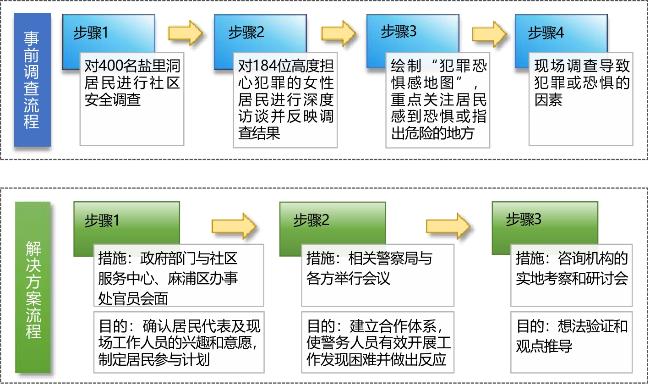
图6 麻浦区盐里洞事前调查和解决方案流程 Fig. 6 Flow chart of the Preliminary Survey and the solution process in Yeomni-dong, Mapo-gu |
1 https://cpted.or.kr/en/company/history.php
2 https://www.kicj.re.kr/crimestats/portal/main/indexEngPage.do
|
Arabi M, Naseri T S, and Jahdi R. 2020. Use All Generation of Crime Prevention through Environmental Design(CPTED) for Design urban Historical Fabric(Case Study: The Central Area of Tehran Metropolis, Eastern Oudlajan). Ain Shams Engineering Journal, 11: 519-533.
|
|
曹磊,朱丽衡,霍艳虹. 2020. 基于模糊综合评价法的城市公园环境安全评价——以唐山市南湖公园为例. 风景园林,27(3):80-85.
Cao Lei, Zhu Liheng, and Huo Yanhong. 2020. Environmental Safety Evaluation of Urban Parks Based on Fuzzy Comprehensive Evaluation Method—Taking Nanhu Park in Tangshan City as an Example. Landscape Architecture, 27(3): 80-85.
|
|
차윤미,정희선. 2015. 노후 주거지역의범죄에대한두려움과경관디자인——서울염리동의사례. 국토지리학회지,49(1):51-71. [Cha Yoonmi and Jeong Heesun. 2015. Fear of Crime and Landscape Design in Older Residential Areas—The Case of Yeomri-dong, Seoul. Journal of the Korean Geographical Society, 49(1): 51-71. ]
|
|
蔡长春,姜东良. 2017. “雪亮工程”照亮百姓平安路. (2017-09-21)[2025-02-28]. https://www.mps.gov.cn/n2255079/n5590589/n5747791/n5747803/c5784112/content.html.
Cai Changchun and Jiang Dongliang. 2017. "Bright Project" Lights up People's Ping'An Road. (2017-09-21) [2025-02-28]. https://www.mps.gov.cn/n2255079/n5590589/n5747791/n5747803/c5784112/content.html.
|
|
傅舒兰. 2020. 传统、路径与影响——日韩近代城市规划体系发展与形成的比较研究. 国际城市规划,35(4):36-43.
Fu Shulan. 2020. Study on the Development and Formation of the Modern Urban Planning System in Japan and Korea. Urban Planning International, 35(4): 36-43.
|
|
顾至欣,顾海玲. 2012. 犯罪预防性环境设计与居住区安全性的提升——以瑞典罗森歌德居住区改造项目为例. 城市问题,(1):35-39.
Gu Zhixin and Gu Hailing. 2012. Crime Prevention Environmental Design and the Enhancement of Safety in Residential Neighbourhoods—A Case Study of the Rosengold Residential Renovation Project in Sweden. Urban Issues, (1): 35-39.
|
|
韩国犯罪预防设计研究与信息中心. 2014. CPTED商业案例. (2015-05-27)[2023-12-13]. http://www.cpted.kr/?r=home&c=03/0301/030102.
Korea Crime Prevention Design Research and Information Centre. 2014. CPTED Business Case. (2015-05-27)[2023-12-13]. http://www.cpted.kr/?r=home&c=03/0301/030102.
|
|
韩国国家安全部. 2010. 灾害安全管理基本法. (2010-06-08)[2023-12-13]. http://www.yeslaw.com/lims/front/layout.html?pAct=template_contents_view&pLayout=view&pUrl=%2Flims%2Ffront%2Fpage%2Ffulltext.html%3FpAct%3Dview%26pPromulgationNo%3D209740%23.
Ministry of National Security of Korea. 2010. Basic Law on Disaster Safety Management. (2010-06-08) [2023-12-13]. http://www.yeslaw.com/lims/front/layout.html?pAct=template_contents_view&pLayout=view&pUrl=%2Flims%2Ffront%2Fpage%2Ffulltext.html% 3FpAct%3Dview%26pPromulgationNo%3D209740%23.
|
|
韩国国土交通部. 2013. 促进城市再开发特别法. (2013-07-16)[2023-12-13]. http://www.yeslaw.com/lims/front/page/fulltext.html?action=LAW&lawid=4040.
Ministry of Land, Infrastructure and Transport, Korea. 2013. Special Act on Promotion of Urban Redevelopment. (2013-07-16) [2023-12-13]. http://www.yeslaw.com/lims/front/page/fulltext.html?action=LAW&lawid=4040.
|
|
韩国国土交通部. 2020. 建筑法. (2020-04-07)[2023-12-13]. http://www.yeslaw.com/front/page/fulltext.html?pAct=viewPopLaw&pLawId=469.
Korea Ministry of Land, Infrastructure and Transport. 2020. Construction Law. (2020-04-07) [2023-12-13]. http://www.yeslaw.com/front/page/fulltext.html?pAct=viewPopLaw&pLawId=469.
|
|
韩国建筑与城市研究院. 2014. CPTED研究. (2014-09-03)[2023-12-13]. https://www.auri.re.kr/menu.es?mid=a20203030000.
Korea Institute of Architecture and Urbanism. 2014. CPTED Study.(2014-09-03)[2023-12-13]. https://www.auri.re.kr/menu.es?mid=a20203030000.
|
|
韩国教育部. 2021. 中小学教育法. (2021-08-13)[2023-12-13]. http://www.yeslaw.com/lims/front/page/fulltext.html?action=LAW&lawid=718.
Ministry of Education, Korea. 2021. Elementary and Secondary Education Act. (2021-08-13) [2023-12-13]. http://www.yeslaw.com/lims/front/page/fulltext.html?action=LAW&lawid=718.
|
|
韩国警察厅. 2007. 通过环境设计预防犯罪(CPTED)指南. (2007-08-13)[2023-12-13]. https://www.police.go.kr/user/bbs/BD_selectBbs.do?q_bbsCode=1025&q_bbscttSn=1B000013618665000.
Korea Police Agency. 2007. Crime Prevention Through Environmental Design(CPTED) Guidelines. (2007-08-13) [2023-12-13]. https://www.police.go.kr/user/bbs/BD_selectBbs.do?q_bbsCode=1025&q_bbscttSn=1B000013618665000.
|
|
韩国警察厅. 2009. 首尔新城CPTED设计指南. (2009-05-20)[2023-12-13]. https://www.police.go.kr/user/bbs/BD_selectBbs.do?q_bbsCode=1025&q_bbscttSn=1B000013618820000.
Korea Police Agency. 2009. Design Guidelines for CPTED in Seoul New Town. (2009-05-20) [2023-12-13]. https://www.police.go.kr/user/bbs/BD_selectBbs.do?q_bbsCode=1025&q_bbscttSn=1B000013618820000.
|
|
韩国警察厅. 2016. 警务政策评论. (2016-07-12)[2023-12-13]. https://www.police.go.kr/user/bbs/BD_selectBbs.do?q_bbsCode=1001&q_bbscttSn=1B000000218595000.
Korea Police Agency. 2016. Police Policy Review. (2016-07-12) [2023-12-13]. https://www.police.go.kr/user/bbs/BD_selectBbs.do?q_bbsCode=1001&q_bbscttSn=1B000000218595000.
|
|
韩国首尔政府. 2021. 解决首尔社会问题的项目白皮书. (2021-08-13)[2023-12-13]. https://news.seoul.go.kr/culture/files/2022/01/62a8225499b823.59437095.pdf.
Seoul Government, Korea. 2021. White Paper on Projects to Address Social Problems in Seoul. (2021-08-13) [2023-12-13]. https://news.seoul.go.kr/culture/files/2022/01/62a8225499b823.59437095.pdf.
|
|
Ha T, Oh G, and Park H. 2015. Comparative Analysis of Defensible Space in CPTED Housing and Non-CPTED Housing. International Journal of Law, Crime and Justice, 43(4): 496-511.
|
|
Hino K and Chronopoulos T. 2021. A Review of Crime Prevention Activities in a Japanese Local Government Area since 2008: Beautiful Windows Movement in Adachi Ward. Crime Prevention and Community Safety, 23(3): 341-357.
|
|
黄邓楷,赖文波,薛蕊. 2018. 基于CPTED理论的大学校园环境安全评价研究——以华南理工大学五山校区为例. 风景园林,25(7):36-41.
Huang Dengkai, Lai Wenbo, and Xue Rui. 2018. Research on Environmental Safety Evaluation of University Campuses Based on CPTED Theory—Taking Wushan Campus of South China University of Technology as an Example. Landscape Architecture, 25(7): 36-41.
|
|
黄邓楷,赖文波. 2023. 政府犯罪预防政策主导的社区环境安全规划设计经验及启示. 西部人居环境学刊,38(3):54-59.
Huang Dengkai and Lai Wenbo. 2023. Experiences and Implications of Community Environmental Safety Planning and Design Led by Government Crime Prevention Policies. Western Habitat Journal, 38(3): 54-59.
|
|
Jain A, Brown C T, and Sinclair J. 2020. Case Studies on Increasing Walking and Bicycling through Crime Prevention through Environmental Design(CPTED). New Brunswick: Edward J. Bloustein School of Planning and Public Policy. https://equitablecities.com/wp-content/uploads/2021/08/CPTED-Report_03.08.pdf?utm_source.
|
|
Jeong Y, Kang Y, and Lee M. 2017. Effectiveness of a Project Applying Crime Prevention through Environmental Design in an Urban Area in South Korea. Journal of Asian Architecture & Building Engineering, 16(3): 543-549.
|
|
靳高风,张雍锭,郭兆轩. 2023. 2022—2023年中国犯罪形势分析与预测. 中国人民公安大学学报(社会科学版),39(2):1-11.
Jin Gaofeng, Zhang Yongding, and Guo Zhaoxuan. 2023. Analysis and Forecast of Crime Situation in China from 2022 to 2023. Journal of the Chinese People's Public Security University (Social Science Edition), 39(2): 1-11.
|
|
Jongejan A and Woldendorp T. 2013. A Successful CPTED Approach: The Dutch 'Police Label Secure Housing'. Built Environment, 39: 31-48.
|
|
Jeffery C R. 1971. Crime Prevention through Environmental Design. Thousand Oaks: SAGE Publications Inc.
|
|
정지연,오지현,권예진외. 2023. 범죄예방진단팀(CPO)의CPTED전략과실태에대한인식연구——서울경찰청CPO를대상으로. 한국셉테드학회지,14(1):127-156. [Jung Jiyeon, Oh Jihyun, and Kwon Yejin. 2023. A Study on the Perceptions of CPTED Strategies and Practices of Crime Prevention Diagnosis Team(CPO)—Seoul Metropolitan Police Agency CPOs. Journal of the Korean Society of Cephalometrics, 14(1): 127-156. ]
|
|
Kang E, Park S, Kim S, Park G, Choi I, and Kang Y. 2013. Preliminary Analysis of Effectiveness of Seoul City CPTED Project. Seoul: Korean Institute of Criminology and Justice.
|
|
김다희,정용욱,이승희. 2018. 범죄발생위치데이터를활용한염리 CPTED요소의범죄예방효과분석——가로세그먼트분석단위를중심으로. 주거환경,16(4):13-27. [Kim Dahee, Jung Yongwook, and Lee Seunghee. 2018. Crime Prevention Effectiveness Analysis of Chlorine CPTED Elements Using Crime Occurrence Location Data—Centering on the Street Segmentation Analysis Unit. Residential, 16(4): 13-27. ]
|
|
Kim D, Hong S W, and Jeong Y. 2019. Crime Prevention Effect of the Second Generation Crime Prevention through Environmental Design Project in South Korea: An Analysis. Social Sciences, 8(6): 187.
|
|
Kim H and Seong E. 2022. Pattern and Explanation of Inter-City Crime Variation in South Korea. Sustainability, 14(22): 15458.
|
|
Kim J and Park Y. 2002. The CPTED Evaluation Model Using Space Syntax Theory. The CPTED Journal, 1(1): 35-45.
|
|
Kim J, Kang J, Kim S.-h, Kim C, Park W, Lee Y, Choi S, and Kim S. 2019. Korean General Social Survey 2003-2018. Seoul: Sungkyunkwan University Press.
|
|
孔翠芳,王大伟,张璇,闰浩楠. 2021. 代表性发达国家城镇化历程及启示. 宏观经济管理,(11):39-48.
Kong Cuifang, Wang Dawei, Zhang Xuan, and Run Haonan. 2021. The Urbanization History of Representative Developed Countries and Its Implications. Macroeconomic Management, (11): 39-48.
|
|
경찰청. 2023. 통계연보_HOME_정보공개_공공데이터_통계연보. (2024-08-31)[2025-03-01]. https://www.police.go.kr/user/bbs/BD_selectBbsList.do?q_bbsCode=1115&estnColumn2=%EB%85%84%EB%8F%84. [Korea National Police Agency. 2023. Statistical Yearbook_Home_Information Disclosure_Public Data_Statistical Yearbook. (2024-08-31) [2025-03-01]. https://www.police.go.kr/user/bbs/BD_selectBbsList.do?q_bbsCode=1115&estnColumn2=%EB%85%84%EB%8F%84.]
|
|
Lee S. 2006. Organized Crime in South Korea. Trends in Organized Crime, 9: 61-76.
|
|
毛媛媛,戴慎志,曾敏玲. 2012. 国外环境设计预防犯罪组织机构评析与借鉴. 国际城市规划,27(4):102-109.
Mao Yuanyuan, Dai Shenzhi, and Zeng Minling. 2012. Review and Reference of Foreign Environmental Design Crime Prevention Organizations. International Urban Planning, 27(4): 102-109.
|
|
毛媛媛,丁家骏. 2014. 居住区环境与犯罪行为关系研究——以上海市浦东新区居住区为例. 城市发展研究,21(4):78-85.
Mao Yuanyuan and Ding Jiajun. 2014. A Study on the Relationship between Residential Environment and Criminal Behavior—The Case of Residential Area in Pudong New Area, Shanghai. Urban Development Research, 21(4): 78-85.
|
|
毛媛媛,寇琴,孙庆颖,宋科,殷玲. 2022. 国外环境设计预防犯罪导则介述与借鉴. 上海城市规划,(2):148-154.
Mao Yuanyuan, Kou Qin, Sun Qingying, Song Ke, and Yin Ling. 2022. Guidelines for Crime Prevention in Environmental Design in Overseas Countries. Shanghai Urban Planning, (2): 148-154.
|
|
Mihinjac M and Saville G. 2019. Third-Generation Crime Prevention Through Environmental Design(CPTED). Social Sciences, 8(6): 182.
|
|
Park H. 2010. Designing out Crime in South Korea: Qualitative Analysis of Contemporary CPTED-Related Issues. Asia Pacific Journal of Police & Criminal Justice, 8(2): 21-48.
|
|
Peiser R and Chang A. 1998. Situational Crime Prevention in Cerritos and Paramount Industrial Parks. In: Felson M and Peiser R. Reducing Crime through Real Estate Development and Management. Washington D C: Urban Land Institute, 91-101.
|
|
Piroozfar P, Farr E R P, Aboagye-Nimo E, and Osei-Berchie J. 2019. Crime Prevention in Urban Spaces through Environmental Design: A Critical UK Perspective. Cities, 95: 102411.
|
|
Saville G and Cleveland G. 2008. Second Generation CPTED: An Antidote to the Social Y2K Virus of Urban Design. In: Atlas R I. 21st Century Security and CPTED. New York: Auerbach Publications.
|
|
서울특별시 균형발전본부 뉴타운사업2담당관. 2008. 서울시 재정비촉진지구내 환경설계를 통한 범죄예방(CPTED) 적용방안 연구. 서울특별시: 서울시 간행물.[Seoul Metropolitan Government, Balanced Development Headquarters, New Town Project Division 2 (Ed.). 2008. A Study on the Application Plan of Crime Prevention Through Environmental Design (CPTED) in Redevelopment Promotion Zones in Seoul. Seoul Metropolitan Government: Seoul City Publication.]
|
|
신재헌,김상운. 2017. 범죄예방진단팀(CPO)을 활용한지방자치단체CPTED전략개선방안. 한국경찰연구,16(3):179-200. [Shin Jaeheon and Kim Sangwoon. 2017. How to Improve CPTED Strategy of Local Governments Utilizing Crime Prevention Diagnosis Team(CPO). Korean Police Research, 16(3): 179-200. ]
|
|
首尔解决方案. 2015. 通过环境设计预防犯罪项目. (2015-01-23)[2023-12-13]. https://www.seoulsolution.kr/en/content/crime-prevention-through-environmental-design-project.
Seoul Solutions. 2015. Crime Prevention through Environmental Design Project. (2015-01-23)[2023-12-13]. https://www.seoulsolution.kr/en/content/crime-prevention-through-environmental-design-project.
|
|
首尔设计国际论坛. 2022. 犯罪率会因改变设计而下降吗? (2022-09-16)[2023-12-13].https://sdif.org/html/en/view.php?no=37.
Seoul Design International Forum. 2022. Will Crime Rates Fall as a Result of Design Changes?(2022-09-16) [2023-12-13].https://sdif.org/html/en/view.php?no=37.
|
|
宋科,毛媛媛,刘逸灵. 2023. 日本环境设计预防犯罪导则评析及其启示. 西部人居环境学刊,38(5):73-80.
Song Ke, Mao Yuanyuan, and Liu Yiling. 2023. A Review of Japanese Environmental Design Guidelines for Crime Prevention and Its Implications. Western Habitat Journal, 38(5): 73-80.
|
|
唐燕. 2022. 我国城市更新制度建设的关键维度与策略解析. 国际城市规划,37(1):1-8.
Tang Yan. 2022. Analysis of Key Dimensions and Strategies for the Construction of Urban Renewal System in China. International Urban Planning, 37(1): 1-8.
|
|
UNICRI and MIT Senseable City Lab. 2011. Improving Urban Security<br>through Environmental Design. (2011-04-01) [2023-12-24]. https://unicri.org/news/improving-urban-securitythrough-environ-mental-design.
|
|
王发曾. 1988. 国外城市犯罪的地理研究. 国外人文地理,(2):76-82.
Wang Fazeng. 1988. A Geographical Study of Urban Crime in Foreign Countries. Foreign Human Geography, (2): 76-82.
|
|
王梦瑶,张晨曦,杨芳绒,张艺鸽. 2022. 基于CiteSpace的国内环境设计预防犯罪研究可视化分析. 西南师范大学学报(自然科学版),47(1):112-119.
Wang Mengyao, Zhang Chenxi, Yang Fangrong, and Zhang Yige. 2022. Visualization Analysis of Domestic CPTED Research Based on CiteSpace. Journal of Southwest China Normal University(Natural Science Edition), 47(1): 112-119.
|
|
王青云,左健. 2020. 韩国快速城镇化时期城市住房问题及启示. 宏观经济研究,(6):159-167.
Wang Qingyun and Zuo Jian. 2020. Urban Housing Problems and Implications of Korea's Rapid Urbanisation. Macroeconomic Research, (6): 159-167.
|
|
翁里,潘建珍. 2003. 城市规划与防控犯罪之理论初探. 中国人民公安大学学报,(2):135-140.
Weng Li and Pan Jianzhen. 2003. A Preliminary Study on the Theory of Urban Planning and Crime Prevention and Control. Journal of the Chinese People's Public Security University, (2): 135-140.
|
|
徐磊青. 2003. 以环境设计防止犯罪研究与实践30年. 新建筑,(6):4-7.
Xu Leiqing. 2003. 30 Years of Research and Practice on Crime Prevention through Environmental Design. New Architecture, (6): 4-7.
|
|
新华社. 2021. 中华人民共和国国民经济和社会发展第十四个五年规划和2035年远景目标纲要. (2021-03-13)[2025-03-01]. https://www.gov.cn/xinwen/2021-03/13/content_5592681.htm.
Xinhua News Agency. 2021. The Fourteenth Five-Year Plan. (2021-03-13) [2025-03-01]. https://www.gov.cn/xinwen/2021-03/13/content_5592681.htm.
|
|
新华社. 2024. 中共中央关于进一步全面深化改革 推进中国式现代化的决定. (2024-07-21)[2025-03-01]. https://www.gov.cn/zhengce/2024-07/21/content_6948990.htm.
Xinhua News Agency. 2024. Decision of the CPC Central Committee on Further Deepening Reform and Advancing Chinese Modernization. (2024-07-21) [2024-07-21]. https://www.gov.cn/zhengce/2024-07/21/content_6948990.htm.
|
|
杨英姿. 2011. 国外城市社区空间环境与犯罪关系理论研究综述. 现代城市研究,26(2):78-85.
Yang Yingzi. 2011. A Review of Theoretical Studies on the Relationship between Spatial Environment and Crime in Overseas Urban Communities. Modern Urban Research, 26(2): 78-85.
|
|
余侃华,魏伟,杨俊涛,赵韦. 2023. 基于乡村振兴的人才机制反思与模式建构——以韩国“归农归村”计划为镜鉴. 国际城市规划,38(2):24-30.
Yu Kanhua, Wei Wei, Yang Juntao, and Zhao Wei. 2023. Reflection on and Model Construction of Talent Returning Cultivation Mechanism Based on Rural Revitalization: A Case Study of the"Return to Farming and Village" Program in the Republic of Korea. Urban Planning International, 38(2): 24-30.
|
|
张宇,华乃斯. 2020. 环境设计预防犯罪相关理论在日本的建筑设计发展实践. 建筑学报,(S1):134-140.
Zhang Yu and Hua Naisi. 2020. Environmental Design and Crime Prevention Related Theories in the Development of Architectural Practice in Japan. Journal of Architecture, (S1): 134-140.
|
|
赵秉志,金翼翔. 2012. CPTED理论的历史梳理及中外对比. 青少年犯罪问题,(3):34-41.
Zhao Bingzhi and Jin Yixiang. 2012. A Historical Overview of CPTED Theory and Comparison between China and the World. Juvenile Delinquency, (3): 34-41.
|
|
中华人民共和国住房和城乡建设部办公厅. 2021. 住房和城乡建设部办公厅关于印发完整居住社区建设指南的通知. (2021-12-17)[2025-02-28]. https://www.gov.cn/zhengce/zhengceku/2022-01/12/content_5667815.htm.
Ministry of Housing and Urban-Rural Development of the People's Republic of China. 2021. Notice of the General Office of the Ministry of Housing and Urban Rural Development on Printing and Distributing the Complete Guidelines for the Construction of Residential Communities. (2021-12-17) [2025-02-28]. https://www.gov.cn/zhengce/zhengceku/2022-01/12/content_5667815.htm.
|
|
中华人民共和国最高人民检察院. 2025. 刑事检察工作白皮书(2024). (2025-03-09)[2025-03-10]. https://www.spp.gov.cn/xwfbh/wsfbh/202503/t20250309_688590.shtml.
The Supreme People's Procuratorate of the People's Republic of China. 2025. White Paper on Criminal Prosecution. (2025-03-09) [2025-03-10]. https://www.spp.gov.cn/xwfbh/wsfbh/202503/t20250309_688590.shtml.
|
|
中华人民共和国中央人民政府. 2024. 住房和城乡建设部关于开展2022年城市体检工作的通知 建科〔2022〕54号. (2024-07-02)[2024-07-04]. https://www.gov.cn/zhengce/zhengceku/2022-07/09/content_5700178.htm.
Central People's Government of the People's Republic of China. 2024. Notice of the Ministry of Housing and Urban-Rural Development on Carrying Out the 2022 Urban Physical Examination Work Jianke [2022] No.54. (2024-07-02) [2024-07-04]. https://www.gov.cn/zhengce/zhengceku/2022-07/09/content_5700178.htm.
|
/
| 〈 |
|
〉 |