Cultural Capital Formation and Scale Transformation in the Context of Intangible Cultural Heritage Consumption: A Case of Chaoshan Yingge Dance
Received date: 2025-05-30
Revised date: 2025-07-20
Online published: 2025-12-02
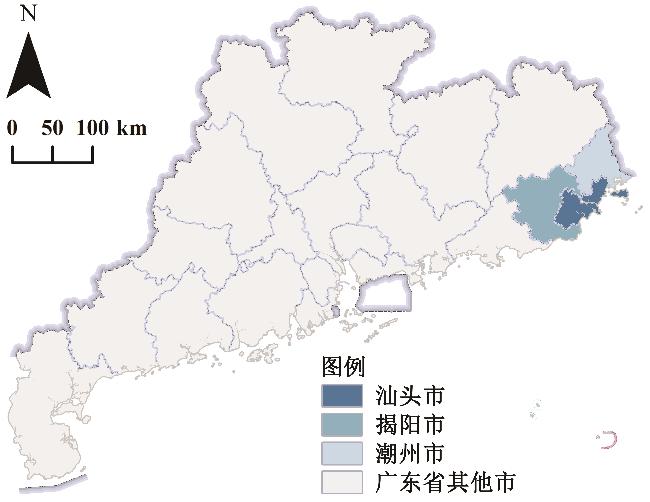
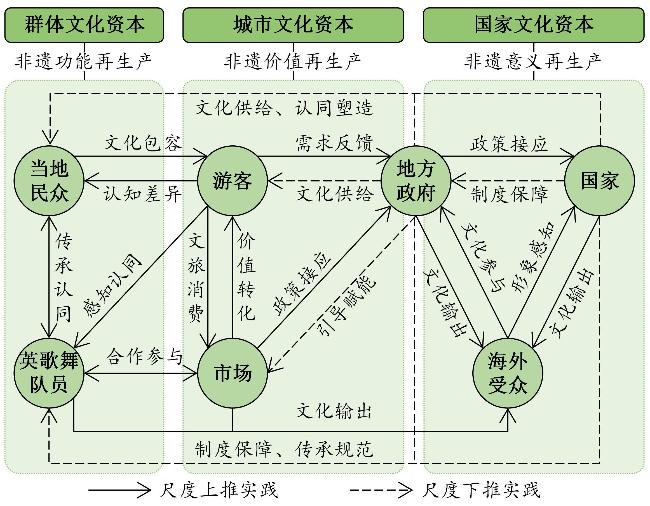
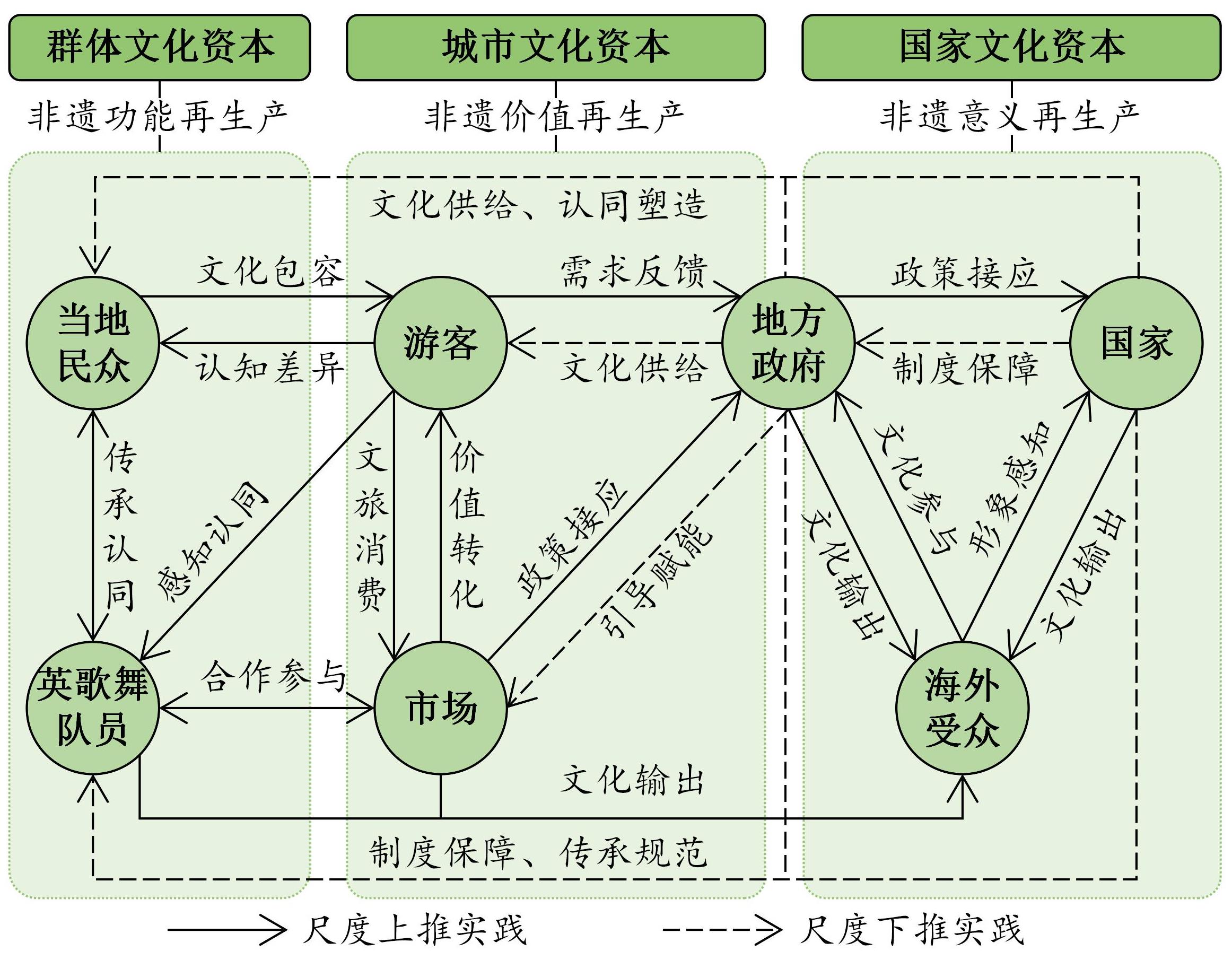
Recently, the integration of Intangible Cultural Heritage (ICH) and tourism has generated new consumption hotspots that facilitate the transformation of cultural resources into cultural capital, producing notable economic and social benefits. Drawing on critical heritage studies, this research applies cultural capital theory and scale theory to examine Yingge Dance, a national-level ICH item originating from Chaoshan region (comprising 3 prefecture-level cities: Shantou, Jieyang and Chaozhou), China. Using participant observation and in-depth interviews, we explored the multi-scalar formation and scale transformation of cultural capital related to Yingge Dance. This study yielded three main findings. First, Yingge Dance embodies both cultural publicity and capital productivity. Its preservation and transmission depend on embodied practice, objectified transformation, and institutionalized support, reflecting a fusion of tradition and modernity as well as a symbiotic relationship between economy and culture. Second, at the individual scale, performers continually refine their bodily knowledge and skills in intergenerational practices, extending training and performance into broader community contexts. This process transforms Yingge Dance into cultural capital that fosters group cohesion and enhances community governance. At the regional scale, cultural tourism consumption and market participation accelerate the production of objectified cultural capital. Supported by local government initiatives, Yingge Dance becomes a form of urban cultural capital that stimulates tourism consumption and contributes to urban branding. At the national scale, China incorporates Yingge Dance into narratives of physical, moral, and aesthetic education, embedding it within cultural governance frameworks through top-down policy empowerment. This elevates Yingge Dance to national cultural capital that reflects cultural diversity and strengthens international competitiveness. Third, Yingge Dance has achieved the reproduction of the functions, values, and meanings by scaling up from group-level cultural capital to urban cultural capital and subsequently to national cultural capital. However, challenges emerge during this scaling-up process, including cognitive conflicts among stakeholders, blurred genre boundaries, uneven development, and diminishing authenticity. To address these issues, China promotes a scaling-down approach through policies and discursive frameworks to maintain the vitality of ICH transmission. This scaling down is reflected in the stewardship and empowerment of ICH bearers, incorporation of national ICH strategies into urban development agendas, and strengthening of local governments' narrative and discursive power. This study offers a critical perspective on understanding the practices and interactions of multiple actors in ICH inheritance. It also provides practical recommendations for cultural tourism development and the extraction of ICH value through the lens of cultural capital and scale theories.
Dahao Guo , Geng Lin , Yichao Li . Cultural Capital Formation and Scale Transformation in the Context of Intangible Cultural Heritage Consumption: A Case of Chaoshan Yingge Dance[J]. Tropical Geography, 2025 , 45(11) : 1927 -1938 . DOI: 10.13284/j.cnki.rddl.20250359
表1 受访者信息Table 1 Information of Interviewees |
| 身份 | 编号 | 地区 |
|---|---|---|
| 当地居民 | R1~R16 | 广东汕头、潮州、揭阳 |
| 英歌舞队员 | P1~P3 | 广东广州(GCQN英歌队) |
| P4~P6 | 广东汕头(JZYC校园英歌队) | |
| P7~P9 | 广东汕头(FG英歌队) | |
| 游客 | T1~T3 | 广东汕头 |
| T4~T10 | T4-安徽安庆;T5-四川成都; T6-广东广州;T7-广东江门; T8-北京;T9-江苏苏州; T10-山西太原 |
|
Bourdieu P. 1989. The Forms of Capital. Transmission and Reproduction, 16(6): 241-258.
|
|
Bridge G. 2006. It's not Just a Question of Taste: Gentrification, the Neighbourhood, and Cultural Capital. Environment and Planning A-Economy and Space, 38(10): 1965-1978.
|
|
布迪厄 P. 1997. 文化资本与社会炼金术. 上海:上海人民出版社.
Bourdieu P. 1997. Cultural Capital and Social Alchemy. Shanghai: Shanghai People's Publishing House.
|
|
董宝玲,白凯,陈永红. 2022. 多元权力主体实践下民族村寨的旅游空间再生产——以贵州肇兴侗寨为例. 热带地理,42(1):87-99.
Dong Baoling, Bai Kai, and Chen Yonghong. 2022. Reproduction of Tourism Space in Ethnic Villages under the Practice of Multiple Power Subjects: A Case Study of Zhaoxing Dong Village in Guizhou Province. Tropical Geography, 42(1): 87-99.
|
|
Ferdinal F, Oktavianus O, Rizano G, and Sandika E. 2025. Exploring People’s Perceptions of Cultural Capital: A Case Study of Rumah Puisi Taufiq Ismail in West Sumatra. Cogent Social Sciences, 11(1): 2462448.
|
|
高佳一,韩晓莉. 2025. 新质生产力视域下非遗产业化发展的理论分析与实践路径. 经济问题,(5):113-120.
Gao Jiayi and Han Xiaoli. 2025. Theoretical Analysis and Practical Pathways for the Development of Intangible Cultural Heritage Industrialization from the Perspective of New Quality Productive Forces. On Economic Problems, (5): 113-120.
|
|
戈大专. 2023. 新时代中国乡村空间特征及其多尺度治理. 地理学报,78(8):1849-1868.
Ge Dazhuan. 2023. The Characteristics and Multi-Scale Governance of Rural Space in the New Era in China. Acta Geographica Sinica, 78(8): 1849-1868.
|
|
Gogishvili D and Müller M. 2025. Culture Goes East: Mapping the Shifting Geographies of Urban Cultural Capital through Major Cultural Buildings. Urban Studies, 62(7): 1417-1434.
|
|
龚浩群,姚畅. 2018. 迈向批判性遗产研究:非物质文化遗产保护中的知识困惑与范式转型. 文化遗产,(5):70-78. [Gong Haoqun and Yao Chang. 2018. On Critical Heritage Studies and the Transformation of Paradigm. Cultural Heritage, (5): 70-78. ]
|
|
郭建斌,张薇. 2017. “民族志”与“网络民族志”:变与不变. 南京社会科学,(5):95-102.
Guo Jianbin and Zhang Wei. 2017. "Ethnography" and "On-line Ethnography": The Changed and the Unchanged. Nanjing Journal of Social Sciences, (5): 95-102.
|
|
Harrison R. 2012. Heritage: Critical Approaches. London: Routledge.
|
|
胡郑丽. 2024. 跨文化阐释视角下中国非物质文化遗产保护话语体系的构建. 文化遗产,(6):31-37.
Hu Zhengli. 2024. Construction of Discourse System of Safeguarding China's Intangible Cultural Heritage from the Perspective of Cross-cultural Interpretation. Cultural Heritage, (6): 31-37.
|
|
黄孝东,张继焦. 2022. 铸牢中华民族共同体意识视角下非物质文化遗产区域性整体保护. 广西民族研究,(3):145-151.
Huang Xiaodong and Zhang Jijiao. 2022. The Regional and Overall Protection of Intangible Cultural Heritage from the Perspective of Forging a Sense of the Community of Chinese Nation. Guangxi Ethnic Studies, (3): 145-151.
|
|
黄怡,吴长福,谢振宇. 2015. 城市更新中地方文化资本的激活——以山东省滕州市接官巷历史街区更新改造规划为例. 城市规划学刊,(2):110-118.
Huang Yi, Wu Changfu, and Xie Zhenyu. 2015. The Activation of Local Cultural Capital in Urban Renewal: A Case Study of the Renovation and Transformation Planning of Jieguan Lane Historical Block in Tengzhou City, Shandong Province. Urban Planning Forum, (2): 110-118.
|
|
黄永林,李媛媛. 2023. 新世纪以来中国非遗保护政策发展逻辑及未来取向. 民俗研究,(1):5-17,156.
Huang Yonglin and Li Yuanyuan. 2023. The Development Logic and Future Orientation of China's ICH Protection Policy since the New Century. Folklore Studies, (1): 5-17, 156.
|
|
匡卉,郑欣. 2021. 乡村文化建设中的非遗战略及其传播现象. 中国农村观察,(1):40-50.
Kuang Hui and Zheng Xin. 2021. Intangible Cultural Heritage Strategy and Its Communication Phenomenon in Rural Cultural Construction. China Rural Survey, (1): 40-50.
|
|
Lak A, Gheitasi M, and Timothy D J. 2020. Urban Regeneration through Heritage Tourism: Cultural Policies and Strategic Management. Journal of Tourism and Cultural Change, 18(4): 386-403.
|
|
李和平,杨宁,张玛璐. 2016. 后消费时代城市文化资本空间生产状况解析. 人文地理,31(2):50-54.
Li Heping, Yang Ning, and Zhang Malu. 2016. Study on the Production of Space by Urban Cultural Capital in Post-Consumption. Human Geography, 31(2): 50-54.
|
|
联合国教科文组织. 2003. 公约与建议书. (2003-10-17)[2022-07-22]. https://ich.unesco.org/en/convention.
United Nations Educational, Scientific, and Cultural Organization. 2003. Conventions and Recommendations. (2003-10-17) [2025-05-01]. https://ich.unesco.org/en/convention.
|
|
Öberg C. 2025. Intangible Cultural Heritage on Export: How is Swedish Fika Portrayed in International Press? International Journal of Gastronomy and Food Science, 39: 101096.
|
|
邱德华,辛奕,郑皓. 2024. 基于文化资本评价的苏州市姑苏区旧城社区更新策略研究. 现代城市研究,(2):110-116,121.
Qiu Dehua, Xin Yi, and Zheng Hao. 2024. Research on the Renewal Strategy of the Old City Community in Suzhou Gusu District Based on the Evaluation of Cultural Capital. Modern Urban Research, (2): 110-116, 121.
|
|
Rossetti G and Quinn B. 2023. The Value of the Serious Leisure Perspective in Understanding Cultural Capital Embodiment in Festival Settings. The Sociological Review, 71(3): 526-543.
|
|
Savage M, Hanquinet L, Cunningham N, and Hjellbrekke J. 2018. Emerging Cultural Capital in the City: Profiling London and Brussels. International Journal of Urban and Regional Research, 42(1): 138-149.
|
|
汕头市市场监督管理局. 2025. 非物质文化遗产 潮阳英歌:DB4405/T 315-2025. 汕头:汕头市市场监督管理局.
Shantou Municipal Administration for Market Regulation. 2025. Intangible Cultural Heritage—Chaoyang Yingge Dance: DB4405/T 315-2025. Shantou: Shantou Municipal Administration for Market Regulation
|
|
孙九霞,许泳霞. 2018. 文化资本化视角下“非遗”的表述与重构——以丽江纳西刺绣为例. 思想战线,44(3):21-27.
Sun Jiuxia and Xu Yongxia. 2018. Interpretation and Reconstruction of Intangible Cultural Heritage from the Perspective of Culture Capitalization: A Case Study Based on Naxi Embroider. Thinking, 44(3): 21-27.
|
|
唐雪琼,徐海妙,尹铎. 2022. 尺度转换视角下易武斗茶会的构建与变迁. 地理科学,42(1):136-142.
Tang Xueqiong, Xu Haimiao, and Yin Duo. 2022. Development and Evolution of Yiwu Tea Competition Festival from the Perspective of Scale Transformation. Scientia Geographica Sinica, 42(1): 136-142.
|
|
Throsby D. 1999. Cultural Capital. Journal of cultural economics, 23: 3-12.
|
|
王超,陈芷怡. 2024. 文化何以兴村:在地文化赋能乡村振兴的实现逻辑. 中国农村观察,(3):18-38.
Wang Chao and Chen Zhiyi. 2024. How does Culture Prosper Villages? The Implementation Logic of Local Culture Empowering Rural Revitalization. China Rural Survey, (3): 18-38.
|
|
王丰龙,刘云刚. 2015. 尺度概念的演化与尺度的本质:基于二次抽象的尺度认识论. 人文地理,30(1):9-15. [Wang Fenglong and Liu Yungang. 2015. An Analytical Framework of Scale Based on Second Abstraction. Human Geography, 30(1): 9-15. ]
|
|
王丰龙,刘云刚. 2017. 尺度政治理论框架. 地理科学进展,36(12):1500-1509.
Wang Fenglong and Liu Yungang. 2017. Towards a Theoretical Framework of 'Politics of Scale'. Progress in Geography, 36(12): 1500-1509.
|
|
王敏,林钿,江荣灏,朱竑. 2017. 传统节庆、身体与展演空间——基于人文地理学视觉量化方法的研究. 地理学报,72(4):671-684.
Wang Min, Lin Tian, Jiang Ronghao, and Zhu Hong. 2017. Analysis of the Traditional Festival, Body and Performative Space: A Human Geographical Method from the Perspective of Visual Quantitative Research. Acta Geographica Sinica, 72(4): 671-684.
|
|
魏雷,刘晓平,朱竑,杨蓉. 2024. 跨地方视角下非物质文化遗产地方性的多尺度建构. 地理学报,79(4):1068-1084.
Wei Lei, Liu Xiaoping, Zhu Hong, and Yang Rong. 2024. Multiscale Constructions of Interconnections Between Place and Intangible Cultural Heritage from a Translocal Perspective. Acta Geographica Sinica, 79(4): 1068-1084.
|
|
文化和旅游部. 2023. 关于推动非物质文化遗产与旅游深度融合发展的通知. (2023-02-17)[2025-05-01]. https://www.gov.cn/zhengce/zhengceku/2023-02/22/content_5742727.htm.
Ministry of Culture and Tourism. 2023. Notice on Promoting the Deep Integration and Development of Intangible Cultural Heritage and Tourism. (2023-02-17) [2025-05-01]. https://www.gov.cn/zhengce/zhengceku/2023-02/22/content_5742727.htm.
|
|
新华社. 2024. 从执法检查报告看我国非物质文化遗产法实施成效. (2024-11-06)[2025-05-01]. https://www.news.cn/culture/20241106/d15454b09ba44ccc8c82be863cd439aa/c.html.
The Xinhua News Agency. 2024. Examining the Implementation Effectiveness of China's Intangible Cultural Heritage Law from Law Enforcement Inspection Reports. (2024-11-06) [2025-05-01]. https://www.news.cn/culture/20241106/d15454b09ba44ccc8c82be863cd439aa/c.html.
|
|
徐姗姗. 2024. 非遗“两创”与民族文化互嵌的“村BA”实践. 文化遗产,(5):9-15.
Xu Shanshan. 2024. "Liang Chuang" of Intangible Cultural Heritage and the Interembedded Ethnic Culture: An Analysis Based on "Village BA". Cultural Heritage, (5): 9-15.
|
|
杨迪,杨培峰,张秋仪. 2023. 从“文化资本”到“文化资本空间”再生产的评估与反思. 城市规划,47(10):54-61.
Yang Di, Yang Peifeng, and Zhang Qiuyi. 2023. Evaluation and Reflection on Reproduction from "Cultural Capital" to "Cultural Capital Space". City Planning Review, 47(10): 54-61.
|
|
张朝枝,杨继荣. 2022. 建构与协商:文化遗产与旅游的关系再认识. 旅游学刊,37(11):75-84.
Zhang Chaozhi and Yang Jirong. 2022. Construction and Negotiation: Reflections on Relationship between Cultural Heritage and Tourism. Tourism Tribune, 37(11): 75-84.
|
|
张鸿雁. 2002. 城市形象与“城市文化资本”论——从经营城市、行销城市到“城市文化资本”运作. 南京社会科学,(12):24-31.
Zhang Hongyan. 2002. The Theory of Urban Image and "Urban Cultural Capital": From Managing the City, Marketing the City to the Operation of "Urban Cultural Capital". Nanjing Journal of Social Sciences, (12): 24-31.
|
|
张鸿雁. 2010. 城市文化资本论. 南京:东南大学出版社.
Zhang Hongyan. 2010. The Capital of Urban Culture. Nanjing: Southeast University Press.
|
|
张天洁,程秉钤. 2021. 城市文化资本与地方重塑:新加坡公园建设与更新历程解析(1968—2020年). 风景园林,28(6):56-63.
Zhang Tianjie and Chen Bingqian. 2021. City Cultural Capital and Local Rebuilding: Analysis of Singapore Park Construction and Renewal Process(1968-2020). Landscape Architecture, 28(6): 56-63.
|
|
张子昂,保继刚,贾文通. 2023. 侨产资源对侨乡旅游地开发的尺度性影响过程与作用机制——以开平赤坎古镇为例. 自然资源学报,38(12):3058-3073.
Zhang Ziang, Bao Jigang, Jia Wentong. 2023. The Scality Impact and Mechanism of "Qiaochan" Resources on the Tourism Development of Overseas Chinese Hometown: a Case Study of Chikan, Kaiping. Journal of Natural Resources, 38(12): 3058-3073.
|
|
中共中央,国务院. 2021. 关于进一步加强非物质文化遗产保护工作的意见. (2021-08-12)[2025-05-01]. https://www.gov.cn/gongbao/content/2021/content_5633447.htm.
Central Committee of the Communist Party of China, State Council. 2021. Opinions on Further Strengthening the Protection of Intangible Cultural Heritage. (2021-08-12) [2025-05-01]. https://www.gov.cn/gongbao/content/2021/content_5633447.htm.
|
|
周茜茜,萧放. 2023. 遗产与资本:非物质文化遗产作为文化资本的当代实践. 文化遗产,(1):40-46.
Zhou Qianqian and Xiao Fang. 2023. Heritage and Capital: The Contemporary Practice of Intangible Cultural Heritage as Cultural Capital. Cultural Heritage, (1): 40-46.
|
|
朱竑. 2020. 中国旅游发展笔谈——旅游领域的认同研究. 旅游学刊,35(11):1.
Zhu Hong. 2020. Discussion Forum of China Tourism Development: Research on Identity in the Field of Tourism. Tourism Tribune, 35(11): 1.
|
|
Zhu Y. 2024. Putting the 'Critical' in Heritage Studies from Non-Anglophone Regions: China and Beyond. International Journal of Heritage Studies, 30(12): 1476-1486.
|
/
| 〈 |
|
〉 |