



Normalization of "Crap" in Everyday Spaces in the Spectacle 2.0 Society: A Mixed-Method Analysis of the "Exquisite Girl" Vlog Series
Received date: 2025-05-27
Revised date: 2025-08-18
Online published: 2025-12-02
In the current era of oversaturated consumer goods, "crappy" goods—defined as low-cost, shoddy commodities with inferior materials, limited practicality, and poor durability—have shaped an urban culture that fosters overconsumption and resource wastage. Fueled by the ascendancy of social media shopping in China, such goods have rapidly gained prevalence and evolved into a prominent cultural phenomenon. Against this backdrop, video logs (vlogs), which originally emerged on social media as a medium centered on documenting daily life, have gradually been transformed into marketing tools for Multi-Channel Network agencies. The "exquisite girl" vlog series serves as a typical example, generating significant controversy and attention in online spaces. From the perspective of Spectacle 2.0, this study employed a mixed-methods approach to social media content analysis, taking the "exquisite girl" vlog series as the research subject. Through cross-platform browsing analysis of the videos and visual and textual analysis of their content and descriptive texts, this study explored how such elaborately crafted social media advertisements promoted cheap products through performances in everyday spaces, and how the promotion of these cheap products, in turn, reconstructed the social and cultural meanings of everyday spaces. The main findings are as follows: On the one hand, everyday spaces constituted the core scenes of the "exquisite girl" vlog series, shaping Spectacle 2.0-style images that functioned as advertisements for "crappy" goods. These images consisted of three key elements: the video protagonists (young urban women with relatively high incomes, strong professional capabilities, and adept at managing households), the everyday spaces they inhabited, and the commodity-displaying activities taking place within these spaces. As these images were essentially social media-based advertisements, everyday spaces, the "exquisite girls," China's short video industry, digital platforms, and cheap products collectively constructed a materialized "pseudo-environment" that appealed to women's consumption capital. This environment was characterized by the commodification of daily life, in which even mundane spaces and routines were packaged to stimulate purchasing behavior, blurring the boundaries between authentic daily experiences and commercial promotion. On the other hand, the Spectacle 2.0 constructed through the visual and textual narratives of the "exquisite girl" vlog series endowed everyday spaces with new meanings. Originally serving functional purposes, such as residence, work, leisure, transportation, and retail, these everyday spaces had been redefined under the influence of social media-driven linguistic and visual aesthetics, which carried inherent contradictions. The result was a new type of space: a feminized, photogenic, and homogenized commodity space. This reconstruction of meaning in everyday spaces reinforced the stereotypical connection between women, domestic labor, and physical display. Women in these vlogs were often portrayed engaging in activities such as decorating living spaces with cheap products, demonstrating household chores, or showcasing their appearance—activities that perpetuated traditional gender roles and framed women's worth through their ability to create an "exquisite" and visually appealing lifestyle. This study makes a critical contribution to the existing research on the mutual construction of social media and urban aesthetics under Spectacle 2.0. By expanding the analysis from the perspective of gendered everyday spaces, this study clarifies the bidirectional interactive relationship between platform atmospheres and these spaces. Drawing evidence from the online marketing discourse surrounding "crappy" goods, this study reveals the core role of such discursive systems, thereby offering a new perspective for research on digital urban consumption geography. The findings suggest that future research should focus on bidirectional interactions between digital platforms and everyday consumption spaces rather than unidirectional influences. Additionally, this study calls for greater attention from the digital creative and cultural industries—as well as from relevant research and policy discussions—to the consumer society saturated with cheap products shaped by Spectacle 2.0. Overall, this study highlights the pressing issues arising from this phenomenon, including excessive resource consumption and lack of spiritual life—problems that require collective reflection and proactive solutions to promote more sustainable and equitable patterns of consumption in the digital age.
Key words: Spectacle 2.0; crap; vlog; social media advertising; everyday spaces; exquisite girl
Yu'ao LIU , Chen Liu . Normalization of "Crap" in Everyday Spaces in the Spectacle 2.0 Society: A Mixed-Method Analysis of the "Exquisite Girl" Vlog Series[J]. Tropical Geography, 2025 , 45(11) : 1950 -1961 . DOI: 10.13284/j.cnki.rddl.20250349
表1 选取的“精致女生”账号Table 1 The selected "exquisite girl" vloggers |
| 账号名 | 小红书粉丝数/万人 | 抖音粉丝数/万人 | 哔哩哔哩动画粉丝数/万人 | 快手粉丝数/万人 |
|---|---|---|---|---|
| 你心中的小可爱 | 292.6 | 769.0 | 70.9 | 226.5 |
| 奶茶还不困 | 111.6 | 224.4 | 7.4 | 60.1 |
| 安妮塔塔Anita | 103 | 210.7 | 3.2 | 36.4 |
| 小奶桔 | 81.9 | 530.0 | 2.2 | 7.3 |
| 麻花酱Boo | 76.1 | 3.6 | 0.06 | 未入驻 |
| 玛卡巴卡爆米花 | 63.5 | 131.9 | 1.4 | 124.9 |
| 小家璧玉 | 58.9 | 124.5 | 10 | 78.2 |
| 五花博士 | 38.6 | 14.2 | 未入驻 | 未入驻 |
| 独居的瑶瑶酱 | 17.9 | 1.6 | 0.01 | 未入驻 |
| 爱吃火锅的妮妮 | 16.1 | 1.5 | 未入驻 | 未入驻 |
| JulieZhu | 12.6 | 0.88 | 未入驻 | 未入驻 |
| 辛波小咔 | 15.2 | 56.3 | 未入驻 | 未入驻 |
| 野生菜 | 11.6 | 0.33 | 0.02 | 0.81 |
| Ruirui芮瑛 | 10.2 | 0.74 | 022 | 2.2 |
| 鸡蛋妹儿 | 7.9 | 0.84 | 0.0017 | 1.1 |
| 奶思大姐姐 | 6.6 | 0.03 | 未入驻 | 未入驻 |
| 一只买 | 5.9 | 99.5 | 未入驻 | 31.2 |
表2 视频场景分类Table 2 The scenarios shown by "exquisite girl" vlogs |
| 场景类别 | 具体场所 | 笔记数量/条* |
|---|---|---|
| 室内空间 | 家 | 1 948 |
| 宿舍 | 4 | |
| 酒店 | 51 | |
| 商业场所(餐饮空间、超市、洗浴中心、娱乐和运动场所) | 48 | |
| 办公空间(办公室和公共自习室) | 30 | |
| 户外空间 | 自然景观(主要为露营地) | 37 |
| 城市公共空间 | 9 | |
| 主题乐园 | 2 | |
| 流动空间 | 私人交通工具(豪华轿车、房车、新能源汽车和电瓶车) | 67 |
| 公共交通工具(公共汽车、地铁、出租车、飞机、火车、高铁和游轮) | 46 | |
| 交通站场(高速公路服务区、机场) | 4 |
|
表3 文本分析结果(前20高频词)Table 3 The result of quantitative textual analysis (top 20 words) |
| 高频词 | 词频/次 | 度中心性 | 中介中心性 | 高频词 | 词频/次 | 度中心性 | 中介中心性 |
|---|---|---|---|---|---|---|---|
| 沉浸式 | 3 542 | 0.686 7 | 0.632 3 | 月入 | 320 | 0.060 2 | 0.000 0 |
| 独居 | 1 695 | 0.361 4 | 0.244 5 | 打工人 | 302 | 0.072 3 | 0.002 4 |
| 好物 | 846 | 0.289 2 | 0.144 5 | 卧室 | 289 | 0.108 4 | 0.005 1 |
| 快乐 | 758 | 0.156 6 | 0.025 4 | 装修 | 281 | 0.072 3 | 0.026 7 |
| 护理 | 747 | 0.072 3 | 0.002 4 | 露营 | 241 | 0.084 3 | 0.073 8 |
| 家居 | 678 | 0.144 6 | 0.021 6 | 少女心 | 233 | 0.084 3 | 0.000 6 |
| 治愈 | 653 | 0.072 3 | 0.003 5 | 洗澡 | 228 | 0.024 1 | 0.000 0 |
| 收纳 | 508 | 0.156 6 | 0.082 7 | 冰箱 | 221 | 0.048 2 | 0.024 1 |
| 分享 | 449 | 0.096 4 | 0.025 0 | 解压 | 218 | 0.024 1 | 0.000 0 |
| 浪漫生活 | 439 | 0.084 3 | 0.025 8 | 有多爽 | 212 | 0.024 1 | 0.000 0 |
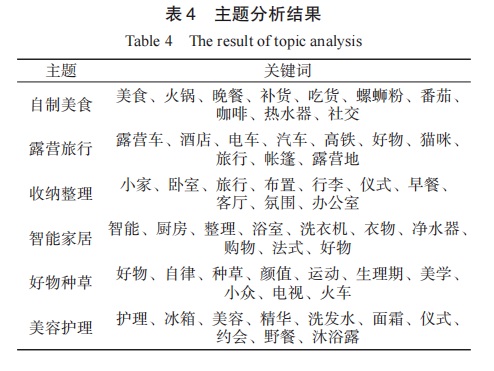
表4 主题分析结果Table 4 The result of topic analysis |
| 主题 | 关键词 |
|---|---|
| 自制美食 | 美食、火锅、晚餐、补货、吃货、螺蛳粉、番茄、咖啡、热水器、社交 |
| 露营旅行 | 露营车、酒店、电车、汽车、高铁、好物、猫咪、旅行、帐篷、露营地 |
| 收纳整理 | 小家、卧室、旅行、布置、行李、仪式、早餐、客厅、氛围、办公室 |
| 智能家居 | 智能、厨房、整理、浴室、洗衣机、衣物、净水器、购物、法式、好物 |
| 好物种草 | 好物、自律、种草、颜值、运动、生理期、美学、小众、电视、火车 |
| 美容护理 | 护理、冰箱、美容、精华、洗发水、面霜、仪式、约会、野餐、沐浴露 |
表5 各博主针对个人身份的叙述以及平台收益渠道情况Table 5 Vloggers'self-declared identities and cross-platform revenue channels |
| 账号 | 是否强调视频内容真实性、无推广、无团队等 | 身份叙述来源 | 签约MCN机构 | 签约官方直播平台 | 签约官方推广平台 | 开通商品橱窗的官方平台 |
|---|---|---|---|---|---|---|
| 你心中的小可爱 | 是 | 小红书评论区回复和笔记、各平台账号简介 | 暂无 | 暂无 | 抖音、快手 | 抖音 |
| 奶茶还不困 | 是 | 小红书评论区回复及笔记文案 | 少女派 | 暂无 | 快手 | 抖音 |
| 安妮塔塔Anita | 是 | 抖音评论区回复、各平台账号简介 | 少女派 | 暂无 | 快手 | 抖音 |
| 小奶桔 | 是 | 小红书评论区回复 | 暂无 | 抖音 | 抖音 | 抖音 |
| 麻花酱Boo | 是 | 小红书评论区回复、各平台账号简介 | 飞鱼 | 暂无 | 暂无 | 抖音 |
| 玛卡巴卡爆米花 | 是 | 小红书评论区置顶回复 | 暂无 | 暂无 | 抖音、快手 | 抖音 |
| 小家璧玉 | 是 | 小红书评论区回复、各平台账号简介 | 暂无 | 抖音 | 抖音、快手 | 抖音、快手 |
| 五花博士 | 是 | 小红书评论区回复 | 暂无 | 小红书 | 小红书 | 小红书 |
| 独居的瑶瑶酱 | 是 | 小红书评论区回复、各平台账号简介 | 告趣 | 暂无 | 暂无 | 抖音 |
| 爱吃火锅的妮妮 | 是 | 小红书评论区回复、各平台账号简介 | 暂无 | 暂无 | 暂无 | 小红书、抖音 |
| JulieZhu | 是 | 小红书评论区回复 | 暂无 | 小红书 | 暂无 | 小红书 |
| 辛波小咔 | 是 | 小红书评论区、抖音账号简介 | 飞博共创 | 暂无 | 抖音 | 小红书、抖音 |
| 野生菜 | 是 | 小红书账号简介 | 初闪文化 | 暂无 | 暂无 | 暂无 |
| Ruirui芮瑛 | 是 | 小红书评论区回复、各平台账号简介 | 侵尘文化 | 暂无 | 快手及其磁力万合 | 暂无 |
| 鸡蛋妹儿 | 是 | 小红书评论区回复、各平台账号简介 | 暂无 | 暂无 | 快手及其磁力万合 | 小红书、抖音、快手 |
| 奶思大姐姐 | 是 | 小红书评论区回复、各平台账号简介 | 初新文化 | 暂无 | 暂无 | 小红书 |
| 一只买 | 是 | 抖音评论区回复、各平台账号简介 | 创新娱乐 | 抖音 | 抖音、快手 | 小红书、抖音 |
精致女孩游泳到底要几步?一、消毒衣柜。先把柜子消消毒再放东西;二、组装拖鞋,换上自己带的拖鞋最放心;三、取下首饰。首饰取下来更安全;四、贴游泳无忧贴。女生必备的游泳池防水贴,懂的都懂;五、穿一次性内裤;六、换泳衣泳帽;七、给泳镜防雾。眼镜不雾下水才有安全感;八、冲个凉适应水温;九、洗脚;十、测水质;十一、擦防氯乳保护皮肤;十二、浅热个身;十三、戴上防水耳机。游泳也能听歌不再孤单;十四、戴上鼻夹;十五、给手机也穿个泳衣;十六、戴防溺水手环;十七、戴鸭掌;十八、沉浸式游泳。带你们感受下在水下听歌的感觉,仿佛一只自由的鱼儿哈哈哈;十九、测试救生手环;二十、用速干浴巾,很轻不会湿哒哒;二十一、用除氯洗发水;二十二、除氯沐浴露;二十三、一秒变毛巾;二十四、给眼睛洗个澡,好舒服一点都不刺激;二十五、洗面奶;二十六、记得要漱口水漱口哦;二十七、用[某品牌]精华;二十八、防晒;二十九、擦身体乳;三十、护发精油;三十一、吹头发;三十二、梳头。按摩头皮的一把好手;三十三、身体补水;三十四、身体排毒;三十五、东西归类;三十六、出游泳馆;三十七、开车回家。
床是有电动叫醒服务的,还可以床上瑜伽spa。睡醒也不用下床,早餐由机器狗直接送到嘴边。面膜也不用自己动手,我都给安排。喜欢唱歌,把KTV直接搬进山景浴室。路也不许她走,家里有专属坐骑接送,想去哪就去哪,没事就和她一起撸猫,沉浸式体验运动会,一起燃烧卡路里,走向我俩的终身事业。运动完了去厨房有我提前冻好的夏日冰棍,客厅一起懒瘫追剧不要太爽~闺蜜想出去露营又怕蚊子,我就立马在家支起帐篷布置成她喜欢的样子,当然少不了美味的食物。殊不知其实她总是陪我喜、看我闹、听我怒、扶我伤,特别鸣谢你,制造更快乐的我。她真又菜又爱看,我只能用魔法打败魔法了。
1 https://www.mckinsey.com.cn/wp-content/uploads/2022/12/20221208_China-consumer-report-CN.pdf
2 https://www.thepaper.cn/newsDetail_forward_28577879
3 coze平台(https://www.coze.cn/open/docs/guides)可快速搭建基于大模型的各类AI应用,并将AI应用发布到各平台、通讯软件,或者通过API或SDK调用AI应用至个人的业务系统。
4 https://www.stats.gov.cn/sj/zxfb/202501/t20250117_1958325.html
5 播放量查询时间均为2025-05-17。
6 https://www.stats.gov.cn/sj/zxfb/202501/t20250117_1958325.html
|
Bauman Z. 2013. Consuming life. Hoboken: John Wiley & Sons.
|
|
Bishop S. 2019. Managing Visibility on YouTube through Algorithmic Gossip. New Media & Society, 21(11-12): 2589-2606.
|
|
Bissell D. 2020. Affective Platform Urbanism: Changing Habits of Digital On-Demand Consumption. Geoforum, 115: 102-110.
|
|
Briziarelli M and Armano E. 2017. The Spectacle 2. 0: Reading Debord in the Context of Digital Capitalism. London: University of Westminster Press.
|
|
Burgess J and Bruns A. 2015. Easy Data, Hard Data: The Politics and Pragmatics of Twitter Research after the Computational Turn. In: Langlois G, Redden J, and Elmer G. Compromised Data: From Social Media to Big Data. London: Bloomsbury Publishing, 93-111.
|
|
Cao L. 2024. From Online to Onsite: Wanghong Economy as the New Engine Driving China's Urban Development. Environment and Planning A: Economy and Space, 56(4): 1061-1076.
|
|
Chen C P. 2016. Forming Digital Self and Parasocial Relationships on YouTube. Journal of Consumer Culture, 16(1): 232-254.
|
|
Chen J, Liu C, and Bian F. 2025. Imaginative Gender Roles of Care in the Smart Home: An Analysis of 'Carescapes' in Chinese Commercial Narratives. Gender, Place & Culture, 32(4): 495-519.
|
|
Craig D, Lin J, and Cunningham S. 2021. Wanghong as Social Media Entertainment in China. Cham: Springer International Publishing.
|
|
De Kloet J, Fai Chow Y, and Scheen L. 2019a. Boredom, Shanzhai, and Digitisation in the Time of Creative China. Amsterdam: Amsterdam University Press.
|
|
De Kloet J, Poell T, Guohua Z, and Yiu Fai C. 2019b. The Platformization of Chinese Society: Infrastructure, Governance, and Practice. Chinese Journal of Communication, 12(3): 249-256.
|
|
De Kloet J and Scheen L. 2013. Pudong: The Shanzhai Global City. European Journal of Cultural Studies, 16(6): 692-709.
|
|
Debord G. 1983. The Society of the Spectacle. Knabb K, Trans. Wellington: Rebel Press.
|
|
Degen M M and Rose G. 2022. The New Urban Aesthetic: Digital Experiences of Urban Change. London: Bloomsbury Publishing.
|
|
Degen M M and Rose G. 2024. Conceptualising Aesthetic Power in the Digitally-Mediated City. Urban Studies, 61(11): 2176-2192.
|
|
丁志伟,马芳芳,张改素. 2022. 基于抖音粉丝量的中国城市网络关注度空间差异及其影响因素. 地理研究,41(9):2548-2567.
Ding Zhiwei, Ma Fangfang, and Zhang Gaisu. 2022. Spatial Differences and Influencing Factors of Urban Network Attention by Douyin Fans in China. Geographical Research, 41(9): 2548-2568.
|
|
Gotham K F. 2005. Theorizing Urban Spectacles. City, 9(2): 225-246.
|
|
Hargittai E. 2020. Potential Biases in Big Data: Omitted Voices on Social Media. Social Science Computer Review, 38(1): 10-24.
|
|
江海燕,宋天昊,李世杰,邓智平. 2023. 数字化背景下城市虚实活力空间格局特征——以广州为例. 热带地理,43(4):695-706.
Jiang Haiyan, Song Tianhao, Li Shijie, and Deng Zhiping. 2023. Spatial Pattern Characteristics of Urban Virtual-Real Vitality in the Digitization Context: A Case Study of Guangzhou. Tropical Geography, 43(4): 695-706.
|
|
Leszczynski A. 2019. Platform Affects of Geolocation. Geoforum, 107: 207-215.
|
|
Liu C. 2021. Exploring Selfie Practices and Their Geographies in the Digital Society. The Geographical Journal, 187(3): 240-252.
|
|
Liu C. 2022. Imag (in) ing Place: Reframing Photography Practices and Affective Social Media Platforms. Geoforum, 129: 172-180.
|
|
Liu C. 2023. The Digitalisation of Consumption and Its Geographies. Geography Compass, 17(7):e12716.
|
|
梁璐,符鸿雁,李九全,李苞容. 2022. 网红城市网络关注度时空动态演变及影响因素研究——以西安市为例. 地理科学,42(9):1566-1576.
Liang Lu, Fu Hongyan, Li Jiuquan, and Li Baorong. 2022. Spatio-Temporal Dynamic Evolution and Influencing Factors of Net Celebrity City Network Attention: A Case of Xi'an. Geographical Science, 42(9): 1566-1576.
|
|
刘霄泉,莫燕,张纯,王莎莎. 2023. 抖音“新农人”主播空间格局及乡村文旅转化潜力研究——基于蝉妈妈网站数据. 地理科学进展,42(8):1636-1650.
Liu Xiaoquan, Mo Yan, Zhang Chun, and Wang Shasha. 2023. Spatial Pattern of Tiktok "New Farmer" Anchors and the Transformation Potential of Rural Culture Tourism: Based on the Data of the Chanmama Website. Progress in Geography, 42(8): 1636-1650.
|
|
罗婉琳,卞荷雨,王洁,杨振凯,王世鹏,丁志伟. 2024. 短视频视域下中国红色景区关注水平的空间差异及提升路径研究. 地理研究,43(12):3327-3349.
Luo Wanlin, Bian Heyu, Wang Jie, Yang Zhenkai, Wang Shipeng, and Ding Zhiwei. 2024. Spatial Difference and Influencing Factors of Network Attention of Red Scenic Spots in China from the Perspective of Short Videos. Geographical Research, 43(12): 3327-3349.
|
|
罗婉琳,王芳,丁志伟. 2023. 中国红色景区抖音网络关注度的空间差异及其影响因素. 经济地理,43(3):198-210.
Luo Wanlin, Wang Fang, and Ding Zhiwei. 2023. Spatial Difference and Influencing Factors of Douyin's Network Attention of Red Scenic Spots in China. Economic Geography, 43(3): 198-210.
|
|
Lupton D. 2016. The Guantified Self. Hoboken: John Wiley & Sons.
|
|
Maalsen S. 2024. Digital Geographies 1: Reality Bytes. Progress in Human Geography, 48(6): 912-921.
|
|
Marres N. 2017. Digital sociology: The Reinvention of Social Research. Cambridge: Polity.
|
|
Özkula S, Omena J J, and Radhika G. 2024. Researching Visual Protest and Politics with "Extra-Hard" Data. Journal of Digital Social Research, 6(2): 46-65.
|
|
Peng Y. 2019. Sharing Food Photographs On Social Media: Performative Xiaozi Lifestyle in Young, Middle-Class Chinese Urbanites' WeChat 'Moments'. Social Identities, 25(2): 269-287.
|
|
Peng Y. 2020. A Feminist Reading of China's Digital Public Sphere. London: Palgrave Macmillan.
|
|
Proctor D. 2022. The #Tradwife Persona and the Rise of Radicalized White Domesticity. Persona Studies, 8(2): 7-26.
|
|
Shove E. 2003. Comfort, Cleanliness and Convenience: The Social Organization of Normality. Oxford: Berg.
|
|
Tebaldi C. 2023. Tradwives and Truth Warriors. Gender and Language, 17(1): 14-38.
|
|
Tromble R. 2021. Where Have All the Data Gone? A Critical Reflection on Academic Digital Research in the Post-API Age. Social Media + Society, 7(1): 2056305121988929.
|
|
Van Den Bossche A, Brankovic J, and Hansen M. 2025. 'Rankings Are All Bullsh*t Anyway, Why Not Do My Own?': Vloggers and Genre Remediation. New Media & Society. (2025-02-19) [2025-05-21]. https://doi.org/10.1177/14614448251316795.
|
|
Wang X. 2016. Social Media in Industrial China. London: UCL press.
|
|
Woloson W A. 2020. Crap: A History of Cheap Stuff in America. Chicago: University of Chicago Press.
|
|
解佳. 2022. 表征、关系、资本——媒介地理学视角下乡村网红民宿的生成逻辑. 旅游学刊,37(10):50-64.
Xie Jia. 2022. Representation, Relation, Capital: The Logic of Making of Internet-Famous Rural Homestay from the Perspective of Geographies of Media and Communication. Tourism Tribune, 37(10): 50-64.
|
|
谢晓茹,朱竑,胡蕊纯,陈晓亮. 2025. 旅游新质生产力及其对地方的作用机制——基于视频化社交媒体场域的案例研究. 地理科学,45(1):92-105.
Xie Xiaoru, Zhu Hong, Hu Ruichun, and Chen Xiaoliang. 2025. New Quality Productive Force of Tourism and Its Mechanism on Place: A Case Study of the Field of Video-Based Social Media. Geographical Science, 45(1): 92-105.
|
|
谢亚文,李晓青,周楷淳,谢炳庚. 2023. 城市旅游抖音关注度空间分布及影响因素——以长江中游城市群为例. 经济地理,43(2):220-228.
Xie Yawen, Li Xiaoqing, Zhou Kaichun, and Xie Binggeng. 2023. Spatial Pattern and Influencing Factors of Urban Tourism Douyin Attention: A Case Study of the Urban Agglomeration in the Middle Reaches of the Yangtze River. Economic Geography, 43(2): 220-228.
|
|
杨位擎,罗秋菊. 2024. 自媒体语境下海外受众对中国的地理想象建构——以YouTube李子柒短视频受众为例. 人文地理,39(1):8-16.
Yang Weiqing and Luo Qiuju. 2024. Reseach on Geographical Imagination of China in the Context of We Media: Taking the Overseas Audiences of Li Ziqi's Short Video on Youtube as an Example. Human Geography, 39(1): 8-16.
|
|
Zhang A Y, Roast A, and Morris C. 2022. Wanghong Urbanism: Towards a New Urban-Digital Spectacle. Mediapolis: A Journal of Cities and Culture, 7(4). https://www.mediapolisjournal.com/2022/11/wanghong-urbanism/.
|
|
Zhang P, Hasan N, Chiong R, and Chao C W. 2024. A Systematic Literature Review on Vlog Marketing: Thematic Analysis and Future Research Directions. Asia Pacific Journal of Marketing and Logistics, 36(6): 1538-1555.
|
|
周佼,林耿. 2021. 网络对实体店发展的影响——以广州市“网红咖啡店”为例. 现代城市研究,2:114-120.
Zhou Jiao and Ling Geng. 2021. The Impact of the Internet on Physical Stores: A Case Study of Sensation Cafes in Guangzhou. Modern Urban Research, 2: 114-120.
|
|
周恺,张海涛,夏依宁,刘冲. 2021. 社交媒体影响下的城市消费空间新特征:以小红书长沙“网红打卡地”为例. 现代城市研究,9:20-27.
Zhou Kai, Zhang Haitao, Xia Yining, and Liu Chong. 2021. New Urban Consumption Space Shaped by Social Media: A Case Study of the Geo-Tagging Places of Changsha on Xiaohongshu. Modern Urban Research, 9: 20-27.
|
|
周雯婷,丁哲璇,刘凌云,林陈蕙璇. 2022. 新媒体影响下仿制景观的兴起及其形象塑造:以佛山日本街为例. 世界地理研究,31(6):1155-1166.
Zhou Wenting, Ding Zhexuan, Liu Lingyun, and Lin Chenhuixuan. 2022. The Emergence and Image Building of Simulacrascape Influenced by New Media: The Case of Foshan Japan Street. World Regional Studies, 31(6): 1155-1166.
|
|
Zou S. 2025. Transcoding a Wanghong City: Mediatized Culturalization of Urban Places in China. Media, Culture & Society, 47(1): 22-40.
|
/
| 〈 |
|
〉 |