Exploring the Timescape of Urban Camping Activities: A Case Study of Guangzhou
Received date: 2025-06-06
Revised date: 2025-09-05
Online published: 2025-12-25
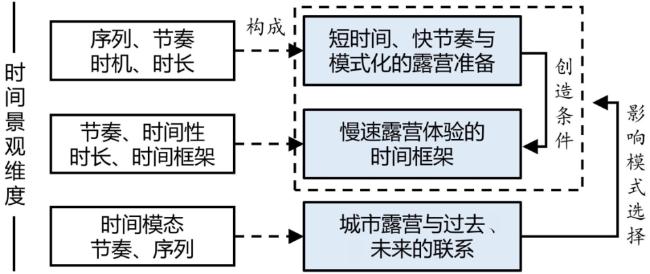
In the post-pandemic period, urban camping has become a popular form of leisure in China. Such urban camping activities, which were originally "anti-everydayness", have infiltrated urban living spaces, forming an urban leisure landscape that differs from traditional camping. In this context, this study focused on camping practices in proximate urban spaces. The leisure activity in Guangzhou was investigated using data collected through field observations and interviews. Using the conceptual framework of Timescape, this study has elucidated the everyday aspects of camping and major factors that influence them, and their connection with the mundane leisure time and spaces of urban residents. The results revealed: (1) The everyday nature of camping is mainly shaped by social media and urban park management. Presently, camping functions as a leisure activity conducted within specific spatio-temporal contexts (primarily on nonworking days and in proximity to urban parks) and social patterns (primarily with family and friends). The shift towards open-access management of parks and green spaces, together with media content, produces a culture and mechanism for proximity leisure time and space, thereby transforming the spatio-temporal characteristics of urban residents' leisure activities in urban areas. (2) Timescape shaped by urban camping activities comprises various temporal elements and mainly forms three inter-related dimensions: (a) short, fast-paced, and patterned camping preparation embedded in the everyday rhythm of urban life; (b) a timeframe for the slow camping experience comprising contact with urban nature, social interaction, and non-efficiency-oriented behaviors; and (c) connections between camping activities and both past and future. Structured by this framework, short, fast-paced, and patterned camping preparation creates temporal conditions for the slow camping experience. Furthermore, the participants' past experiences and future plans shape their attitudes toward consuming proximate parks and influence their leisure-pattern decisions. By applying the concept of Timescape to urban leisure, the multiplicity and sociality of time and its relationship with individual leisure practices have been examined in this study. Empirical findings revealed spatio-temporal interactions underlying the shifts in urban residents' leisure modalities in the post-pandemic context, indicating that everyday leisure is not only spatially proximate but also embedded in residents' everyday lives and rhythms. This study extends the understanding of urban camping activities in non-Western contexts and provides insights into the formation mechanisms of everyday urban leisure practices, thereby offering a reference for the planning and management of leisure in urban green spaces.

Key words: urban camping; urban leisure; temporality; spatiality; Timescape; Guangzhou
Yuhang Huang , Chen Liu . Exploring the Timescape of Urban Camping Activities: A Case Study of Guangzhou[J]. Tropical Geography, 2025 , 45(12) : 2156 -2168 . DOI: 10.13284/j.cnki.rddl.20250378
表1 露营休闲受访者基本信息Table 1 Basic information of urban camping activity respondents |
| 受访者编号 | 访谈类型 | 访谈地点 | 群组关系(人数/人) | 职业 | 年龄(主受访者)/岁 |
|---|---|---|---|---|---|
| A-01 | 群组访谈 | 咖啡厅(线下访谈) | 情侣(2) | 企业员工、教师 | 28 |
| A-02 | 单独访谈 | 咖啡厅(线下访谈) | 无(1) | 大学生 | 23 |
| ES-01 | 群组访谈 | 二沙岛艺术公园 | 朋友(2) | 大学生 | 21 |
| ES-02 | 群组访谈 | 二沙岛艺术公园 | 朋友(3) | 企业员工 | 26 |
| ES-03 | 群组访谈 | 二沙岛艺术公园 | 朋友、社团(10) | 大学生、老师 | 24 |
| ES-04 | 群组访谈 | 二沙岛艺术公园 | 朋友(3) | 风景园林从业者 | 25 |
| ES-05 | 群组访谈 | 二沙岛艺术公园 | 朋友(3) | 编辑、企业员工 | 30 |
| ES-06 | 群组访谈 | 二沙岛艺术公园 | 多家庭组合(8) | 不详 | 34 |
| ES-07 | 群组访谈 | 二沙岛艺术公园 | 朋友(3) | 医护从业者 | 26 |
| ES-08 | 群组访谈 | 二沙岛艺术公园 | 朋友(5) | 待业 | 26 |
| FZ-01 | 群组访谈 | 发展公园 | 朋友(3) | 不详 | 30 |
| HC-01 | 群组访谈 | 宏城公园 | 多核心家庭组合(7) | 不详 | 30 |
| HZ-01 | 群组访谈 | 会展公园 | 情侣(2) | 企业员工 | 29 |
| LJ-01 | 群组访谈 | 临江带状公园 | 朋友(3) | 大学生 | 20 |
| LJ-02 | 单独访谈 | 临江带状公园 | 同事(12) | 企业员工 | 30 |
| LJ-03 | 群组访谈 | 临江带状公园 | 朋友(3) | 不详 | 28 |
| ZJ-01 | 单独访谈 | 珠江公园 | 多代际家庭组合(8) | 规划从业者 | 39 |
| ZJ-02 | 群组访谈 | 珠江公园 | 同学、朋友(2) | 不详 | 23 |
| ZJ-03 | 群组访谈 | 珠江公园 | 夫妻、朋友(3) | 退休 | 55 |
| ZJ-04 | 群组访谈 | 珠江公园 | 朋友(2) | 大学生 | 23 |
| ZX-01 | 群组访谈 | 中心湖公园 | 核心家庭(4) | 教师、企业员工 | 35 |
| ZX-02 | 群组访谈 | 中心湖公园 | 家庭、同事(5) | 企业员工 | 38 |
表2 露营场所相关负责人受访基本信息Table 2 Basic information of interviewed persons in charge of camping sites |
| 受访者编号 | 访谈类型 | 访谈地点 | 职业事务 | 年龄/岁 |
|---|---|---|---|---|
| P-01 | 单独访谈 | 二沙岛艺术公园 | 活动志愿者 | 20 |
| P-02 | 单独访谈 | 珠江公园 | 公园管理人员 | 30 |
| P-03 | 单独访谈 | 麓湖公园 | 公园管理人员 | 35 |
| P-04 | 单独访谈 | 会展公园 | 公园管理人员 | 42 |
表3 主题分析框架及各子主题的部分示例Table 3 Framework of thematic analysis and examples of sub-themes |
| 主题 | 子主题 | 示例 |
|---|---|---|
| 基本 特征 | 空间特征 | 家就离公园10分钟左右的距离远……因为附近只有这个地方有,就没得选,而且也离得比较近(HZ-01) |
| 时间特征 | “同样迷上了这个'家门口的生态福利'的市民还有很多……每到周末,就会有很多市民带着帐篷、餐垫和桌椅,来到大草坪指定的区域……”(标题:广州这24个公园绿地开放搭帐篷区域_来源:广州日报) | |
| 群体特征 | 该公园中露营休闲群体共有10组,其中5组是由青年群体组成(2组为情侣,3组为朋友结伴),其余5组分别是由核心家庭和代际家庭构成,分别有老人和小孩出现该群体中。各组人数均在2~6人(观察笔记:20240629_会展公园) | |
| 活动特征 | 公园内的露营休闲者在准备好露营器具后可见的活动有:使用碳炉烧烤(后续该组被管理人员制止用火)、放风筝、小孩结伴玩耍、使用茶具泡茶、野餐、看书、躺着睡觉等(观察笔记:20240714_二沙岛艺术公园) | |
| 影响 因素 | (社交)媒体 的塑造 | 一家子像户外这种,就小朋友又可以玩耍,父母又可以呼吸到新鲜空气,然后大家其乐融融地能在一起做一些事,年轻人他可能更多的是一种跟风体验(A-01) “来公园搭设帐篷,交通便利,同时环境优美,更重要的是安全,小朋友自由自在地在大草坪上奔跑,不用担心会有车流或者其他危险”(标题:广州这24个公园绿地开放搭帐篷区域_来源:广州日报) |
| 公园、绿地 开放转变 | “分区域分功能设置草坪活动主题,精心策划草地音乐会、潮玩集市、花艺展、科普展、灯光秀、休闲游等,开展形式多样的文化科普和休闲活动”(标题:广州推动公园绿地开放共享造福群众、来源:广州日报) 这里是护绿驿站……就是可以借物资,我们这里你看到的物资基本上都可以借,后面有游戏可以给小朋友们玩…(志愿活动的目的)资源共享,帮助别人…劝导不要乱丢垃圾、垃圾分类宣传(P-01) | |
| 时间 景观 | 时间框架 | 大家其实也没有那么多时间、那么长的时间出去远的地方玩,你说周末的话,如果不请年假也就两天时间,这也去不了很远的地方(ES-02) |
| 时间性 | 当你坐在这里看着这里的蓝天白云的时候,就会觉得好像工作的压力,还有一些生活上的琐事,一些烦恼,好像就会好很多,心情也会变得开阔一点(HC-01) | |
| 节奏 | 因为这个就是经常一个周末的选项,然后今天只是正好这里有活动,就算没有活动我们可能也会来,所以也没有说特别的期待和提前准备(ZJ-01) 搭这个天幕的话,第一次不是很熟练,花了20多分钟……如果之后再搭的话就弄起来就差不多10分钟就好了,像这些凳子之类的都是那种折叠的,放下来就可以用了(HZ-01) | |
| 时长 | 一般(露营)到太阳下山吧,那这样算下来,大概就是三四个小时吧(ZJ-01) | |
| 时机 | 比如今天我想出来,就会群里面问一下……愿意出来的,大家就约好时间在哪个位置(HC-01)/(像这样出来)一般就星期天嘛,刚好大家都有空(ES-05) | |
| 序列 | 我们特意把培训都调到了周内,就是周末是空出来的。嗯,然后基本上每个周末只要天气允许我们都会出来。(ZX-01) | |
| 时间模态 | 可能还是这种户外和亲近自然的这种互动都和以前有所不同,疫情这几年之后,这种户外的环境可能更适合一家老小(ZJ-01) |
1 广州市公园绿地开放共享区域名单:https://lyylj.gz.gov.cn/gkmlpt/content/9/9008/post_9008009.html#1023
2 关于发布广州市公园名录(截至2020年底)的通知: https://lyylj.gz.gov.cn/gkmlpt/content/7/7295/post_7295517.html#1023
3 广州市人民政府网. 广州这24个公园绿地开放搭帐篷区域. https://www.gz.gov.cn/zlgz/wlzx/content/mpost_8017905.html
4 中国经济网. 小红书发布五一数据,露营热度连续三年大涨. http://www.ce.cn/xwzx/gnsz/gdxw/202205/05/t20220505_37553360.shtml
5 广州市人民政府网. 广州市人民政府办公厅关于印发广州市绿地系统规划(2021—2035)的通知. https://www.gz.gov.cn/zwgk/fggw/sfbgtwj/content/post_9224696.html
6 广州市人民政府网. 广州推动公园绿地开放共享造福群众. https://www.gz.gov.cn/zwfw/zxfw/ggfw/content/post_9191807.html
黄宇杭:研究数据搜集,论文撰写与修改;
刘 晨:提供研究理论和方法指导,论文内容提升。
|
Adam B. 1998. Timescapes of Modernity: The Environment and Invisible Hazards. London: Routledge.
|
|
Axelsson L, Malmberg B, and Zhang Q. 2017. On Waiting, Work-Time and Imagined Futures: Theorising Temporal Precariousness among Chinese Chefs in Sweden's Restaurant Industry. Geoforum, 78: 169-178.
|
|
Ayazlar R A and Ayazlar G. 2023. Camping: A Liminal Space as a Gateway to Eudaimonic Happiness. World Leisure Journal, 66(2): 1-18.
|
|
Brochado A and Pereira C. 2017. Comfortable Experiences in Nature Accommodation: Perceived Service Quality in Glamping. Journal of Outdoor Recreation and Tourism, 17: 77-83.
|
|
Brooker E and Joppe M. 2013. Trends in Camping and Outdoor Hospitality—An International Review. Journal of Outdoor Recreation and Tourism, 3-4: 1-6.
|
|
Brooker E and Joppe M. 2014. A Critical Review of Camping Research and Direction for Future Studies. Journal of Vacation Marketing, 20(4): 335-351.
|
|
Burch W R. 1965. The Play World of Camping: Research into the Social Meaning of Outdoor Recreation. American Journal of Sociology, 70(5): 604-612.
|
|
程德兴,罗飞宁. 2023. 精致露营现象的社会学分析. 中国青年社会科学,42(1):82-90.
Cheng Dexing and Luo Feiling. 2023. A Sociological Analysis of the Phenomenon of Glamping. Journal of Chinese Youth Social Science, 42(1): 82-90.
|
|
Clark R N, Hendee J C, and Campbell F L. 2009. Values, Behavior, and Conflict in Modern Camping Culture. Journal of Leisure Research, 41(3): 377-393.
|
|
Crouch D. 2000. Places Around Us: Embodied Lay Geographies in Leisure and Tourism. Leisure Studies, 19(2): 63-76.
|
|
Degen M. 2018. Timescapes of Urban Change: The Temporalities of Regenerated Streets. The Sociological Review, 66(5), 1074-1092.
|
|
Edensor T and Holloway J. 2008. Rhythmanalysing the Coach Tour: The Ring of Kerry, Ireland. Transactions of the Institute of British Geographers, 33(4): 483-501.
|
|
Edensor T. 2010. Walking in Rhythms: Place, Regulation, Style and the Flow of Experience. Visual Studies, 25(1), 69-79.
|
|
Edensor T. 2012. The Rhythms of Tourism. In: Minca c and Oakes T. Real Tourism: Practice, Care, and Politics in Contemporary Travel Culture. London: Routledge.
|
|
方芳. 2022. 从反日常到日常:当代旅游实践的还原和再认识. 旅游学刊,37(1):44-55.
Fang Fang. 2022. From Counter-Everyday Life to Daily Life: The Reduction and Re-Conceptualization of Contemporary Tourism Practices. Tourism Tribune, 37(1): 44-55.
|
|
Felski R. 2000. The Invention of Everyday Life. Doing Time: Feminist Theory and Postmodern Culture. New York: New York University Press, 77-98.
|
|
高林安,李蓓,刘继生,梅林. 2011. 欧美国家露营旅游发展及其对中国的启示. 人文地理,26(5):24-28.
Gao Linan, Li Bei, Liu Jisheng, and Mei Lin. 2011. The Development of Camping Tourism in European and American Countries and its Inspiration to China. Human Geography, 26(5): 24-28.
|
|
高子茵,管婧婧. 2025. 游不离家?非惯常环境理论下的邻近游探析. 旅游学刊,40(1):30-44.
Gao Ziyin and Guan Jingjing. 2025. The Sense of Away from Home in Residence: An Analysis of Proximity Tourism Based on the Theory of Unusual Environments. Tourism Tribune, 40(1): 30-44.
|
|
Garst B A, Williams D R, and Roggenbuck J W. 2009. Exploring Early Twenty-First Century Developed Forest Camping Experiences and Meanings. Leisure Sciences, 32(1): 90-107.
|
|
韩光明,黄安民. 2013. 地方理论在城市休闲中的应用. 人文地理,28(2): 125-130.
Han Guangming and Huang Anmin. 2013. Exploration of Applying Place Theory to Urban-Based Leisure Study. Human Geography, 28(2): 125-130.
|
|
Higgins-Desbiolles F and Bigby B C. 2022. A Local Turn in Tourism Studies. Annals of Tourism Research, 92: 103291.
|
|
Ho E L E. 2021. Social Geography I: Time and Temporality. Progress in Human Geography, 45(6): 1668-1677.
|
|
Holdsworth C. 2022. The Paradoxical Habits of Busyness and the Complexity of Intimate Time-Space. Social & Cultural Geography, 23(4): 485-501.
|
|
Huang L L, Liu C, and Hung K. 2025. Understanding Camping Tourism Experiences Through Thematic Analysis: An Embodiment Perspective. Journal of Leisure Research, 56(4): 660-683.
|
|
Kearns R, Collins D and Bates L. 2017. "It's Freedom!": Examining the Motivations and Experiences of Coastal Freedom Campers in New Zealand. Leisure Studies, 36(3): 395-408.
|
|
Kim H H, Park I, and Bae J S. 2019. Happy Campers? The Relationships between Leisure Functioning, Serious Leisure, and Happiness. Social Behavior and Personality: an international journal, 47(11): 1-9.
|
|
Kitchin R. 2019. The Timescape of Smart Cities. Annals of the American Association of Geographers, 109(3): 775-790.
|
|
Kou I E, Wu J R, Lin Z W(CJ), and Gong T E. 2024. Staycation: A Review of Definitions, Trends, and Intersections. Tourism and Hospitality Research, 25(4): 568-579.
|
|
兰凯伦. 2023. “诗与远方”:都市青年的露营实践与浪漫主义异托邦的生产——基于2022年西安市的田野调查. 中国青年研究,(10):30-36,54.
Lan Lunkai. 2023. "Poetry and Faraway Places": Urban Youth's Camping Practices and the Production of Romantic Heterotopias—A Field Study Based on the City of Xi'an in 2022. China Youth Study, (10): 30-36, 54.
|
|
Larsen J. 2008. De‐Exoticizing Tourist Travel: Everyday Life and Sociality on the Move. Leisure Studies, 27(1): 21-34.
|
|
李琳, 唐亚男, 李春晓, 谢双玉. 2022. 非惯常环境及行为:基于旅游情境的再思考. 旅游学刊,37(11): 40-51.
Li Lin, Tang Yanan, Li Chunxiao and Xie Shuangyu. 2022. Unusual Environments and Unusual Behaviors: A Rethinking in the Context of Tourism. Tourism Tribune, 37(11): 40-51.
|
|
李世杰,曾晓悦,樊德良,刑亚龙,蒋海燕. 2024. 开放共享背景下城市公园绿地露营满意度评价——以广州为例. 中国园林,40(1):72-78.
Li Shijie, Zeng Xiaoyue, Fan Deliang, Xing Yalong, and Jiang Haiyan. 2024. Satisfaction Evaluation of Camping in Urban Parks in the Context of Open and Sharing: A Case Study of Guangzhou. Chinese Landscape Architecture, 40(1): 72-78.
|
|
Liu C. 2021. Rethinking the Timescape of Home: Domestic Practices in Time and Space. Progress in Human Geography, 45(2): 343-361.
|
|
Liu F Y, Zhao Y, and Mao Z D. 2023. Staycation Or Holiday? Exploring Camping's Contribution to Subjective Well-Being During COVID-19. Asia Pacific Journal of Tourism Research, 28(7): 701-712.
|
|
Liu F Y, Zhao Y, and Mao Z D. 2024. Rediscover Nearby Nature: Exploring the Well-Being Effect and Influence Factors of Camping at Different Stages of COVID-19. Journal of Outdoor Recreation and Tourism, 48: 100819.
|
|
刘志林,柴彦威. 2001. 深圳市民周末休闲活动的空间结构. 经济地理,21(4):504-508.
Liu Zhilin and Chai Yanwei. 2001. The Leisure Spatial Structure of Shenzhen Citizens on Weekends. Economic Geography, 21(4): 504-508.
|
|
罗伟杰,陶伟,蔡浩辉. 2024. 西方人文地理学的“时间性”研究进展. 世界地理研究,34(8):41-55.
Luo Weijie, Tao Wei, and Cai Haohui. 2024. Progress in Temporality Studies in Western Human Geography. World Regional Studies, 34(8): 41-55.
|
|
Milohnić I, Cvelić Bonifačić J, and Licul I. 2019. Transformation of Camping into Glamping—Trends and Perspectives. In: Zadel Z and Jurdana D S. ToSEE—Tourism in Southern and Eastern Europe 2019—Creating Innovative Tourism Experiences: The Way to Extend the Tourist Season. Opatija: University of Rijeka, 457-473.
|
|
Mommaas H and van der Poel H. 1987. New Perspectives on Theorizing Leisure. Loisir et Société / Society and Leisure, 10(2): 161-176.
|
|
Morris N J and Orton-Johnson K. 2024. Camping At Home: Escapism, Self-Care, and Social Bonding During the COVID-19 Pandemic. Annals of Leisure Research, 27(1): 14-35.
|
|
潘海颖. 2015. 休闲与日常生活的反正——列斐伏尔日常生活批判的独特维度. 旅游学刊,30(6):119-126.
Pan Haiying. 2015. Leisure and Everyday Life: The Special Dimensionality of Lefebvre's Critique of Everyday Life. Tourism Tribune, 30(6): 119-126.
|
|
Parry D C and Johnson C W. 2007. Contextualizing Leisure Research to Encompass Complexity in Lived Leisure Experience: The Need for Creative Analytic Practice. Leisure Sciences, 29(2): 119-130.
|
|
齐兰兰,周素红. 2018. 邻里建成环境对居民外出型休闲活动时空差异的影响——以广州市为例. 地理科学,38(1):31-40.
Qi Lanlan and Zhou Suhong. 2018. The Influence of Neighborhood Built Environments on the Spatial-Temporal Characteristics of Residents' Daily Leisure Activities: A Case Study of Guangzhou. Scientia Geographica Sinica, 38(1): 31-40.
|
|
Roberts K. 2006. Leisure in Contemporary Society. Wallingford: CABI.
|
|
Roberts K. 2011. Leisure: The Importance of Being Inconsequential. Leisure Studies, 30(1): 5-20.
|
|
Rogerson C and Rogerson J. 2020. Camping Tourism: A Review of Recent International Scholarship. GeoJournal of Tourism and Geosites, 28(1): 349-359.
|
|
Rojek C. 2005. An Outline of the Action Approach to Leisure Studies. Leisure Studies, 24(1): 13-25.
|
|
Small J. 2016. The Experience of Time in Long-Term Travel. Tourism Geographies, 18(4): 341-358.
|
|
Southerton D. 2013. Habits, Routines and Temporalities of Consumption: From Individual Behaviours to the Reproduction of Everyday Practices. Time & Society, 22(3): 335-355.
|
|
Stebbins R A. 2017. Leisure Activities in Context: A Micro-Macro/Agency-Structure Interpretation of Leisure. New York: Routledge.
|
|
Stebbins R A. 2018. The Sociology of Leisure: An Estranged Child of Mainstream Sociology. International Journal of the Sociology of Leisure, 1(1): 43-53.
|
|
孙志鹏. 2023. 青年“精致露营”现象的流行表征、时代成因与多维功能. 思想理论教育,(9):102-106.
Sun Zhipeng. 2023. The Popular Characterization, Causes and Multidimensional Functions of Youth "Glamping" Phenomenon. Ideological & Theoretical Education, (9): 102-106.
|
|
Veal A J. 2023. Everyday Life and Everyday Leisure. International Journal of the Sociology of Leisure, 6(2): 225-248.
|
|
王四海,郭方斌,Russ A,程希平,吴超. 2016. 美国露营活动流行原因分析及对我国的启示. 世界地理研究,25(1):115-124.
Wang Sihai, Guo Fangbin, Russ A, Cheng Xiping, and Wu Chao. 2016. Camping in the U. S. : Inspiration for China. World Regional Studies, 25(1): 115-124.
|
|
Xia M. 2025. Aesthetic Camping—Urban Lifestyles in China. Continuum, 39(4): 583-602.
|
|
Xiang K H, Cao Y, Qiao G H, and Zhang H Z. 2023. Mechanisms of Communitas Experience Generation in Glampers: An Interactive Ritual Perspective. Journal of Hospitality and Tourism Management, 55: 355-367.
|
|
薛岚,张静儒,韩佳妍. 2023. 重新发现附近:惯常环境下的城市微旅行体验研究. 旅游学刊,38(5):127-136.
Xue Lan, Zhang Jingru, and Han Jiayan. 2023. Rediscovering the neighbourhood: A study of City Walk Experience in the Usual Environment. Tourism Tribune, 38(5): 127-136.
|
|
徐雨晨,张海洲,陆林. 2019. 国际休闲研究综述——基于Journal of Leisure Research、Leisure Sciences、Leisure Studies的统计分析. 旅游学刊,34(3):134-148.
Xu Yuchen, Zhang Haizhou, and Lu Lin. A Review of International Leisure Research: Statistical Analysis Based on Journal of Leisure Research, Leisure Sciences and Leisure Studies. Tourism Tribune, 34(3): 134-148.
|
|
尹罡,甄峰,席广亮. 2014. 信息技术影响下城市休闲空间生产机理及特征演变研究. 地理与地理信息科学,30(6):121-124.
Yin Gang, Zhen Feng, and Xi Guangliang. 2014. A Study on Production Mechanism and Evolution Characteristics of Urban Leisure Space Affected by Information and Communication Technologies. Geography and Geo-Information Science, 30(6): 121-124.
|
|
于光远. 2002. 论普遍有闲的社会. 自然辩证法研究,18(1):41-43,48.
Yu Guangyuan. 2002. For a Society Where Leisure is Enjoyed by All. Studies in Dialectics of Nature, 18(1): 41-43, 48.
|
|
余玲,刘家明,李涛,朱鹤. 2018. 中国城市公共游憩空间研究进展. 地理学报,73(10):1923-1941.
Yu Ling, Liu Jiaming, Li Tao, and Zhu He. 2018. Research Progress of Urban Public Recreational Space in China. Acta Geographica Sinica, 73(10): 1923-1941.
|
|
张凌云. 2019. 旅游:非惯常环境下的特殊体验. 旅游学刊,34(9):3-5.
Zhang Lingyun. 2019. Tourism: A Special Experience in an Unusual Environments. Tourism Tribune, 34(9): 3-5.
|
|
赵莹,柴彦威,桂晶晶. 2016. 中国城市休闲时空行为研究前沿. 旅游学刊,31(9):30-40.
Zhao Ying, Cai Yanwei, and Gui Jingjing. 2016. Prospects for Urban Leisure Studies in China: A Perspective of Space-Time Behavior. Tourism Tribune, 31(9): 30-40.
|
|
中国旅游研究院. 2023. 中国休闲发展年度报告:卷 2023. 北京:旅游教育出版社. [China Tourism Academy. 2023. Annual Report of China Leisure Development 2023. Beijing: Tourism Education Press. ]
|
|
周婷婷,陈芷祺,李丽. 2023. 基于大数据分析的城市露营行为特征和绿地需求研究. 广东园林,45(6):60-65.
Zhou Tingting, Chen Zhiqi, and Li Li. 2023. Urban Camping Behavior Characteristics and Green Space Demand Based on Big Data Analysis. Landscape Architecture Research, 45(6): 60-65.
|
|
周贤雅,张骁鸣. 2025. 通过龙舟“变革”日常——对节庆活动的一种日常生活批判解释. 旅游学刊,40(2):30-43.
Zhou Xianya and Zhang Xiaoming. 2025. The "Revolution" of Everyday Life through the Dragon Boat Festival: An Interpretation of Festivals from the Critique of Everyday Life. Tourism Tribune, 40(2): 30-43.
|
|
朱新秤. 2022. 露营时尚:社会心理分析与思考. 人民论坛,(22):94-97. [Zhu XinCheng. 2022. Camping Fashion: Psychosocial Analysis and Reflections. People's Tribune, 22: 94-97. ]
|
/
| 〈 |
|
〉 |