Measurement and Spatiotemporal Evolution Characteristics of Artificial Intelligence Invention Patents in Guangdong Based on the BERT Large Language Model
Received date: 2025-06-04
Revised date: 2025-09-07
Online published: 2025-12-28
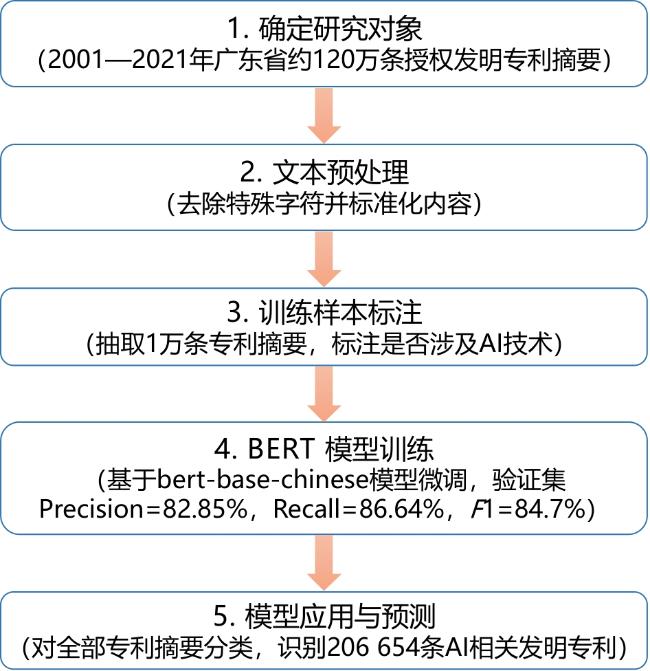
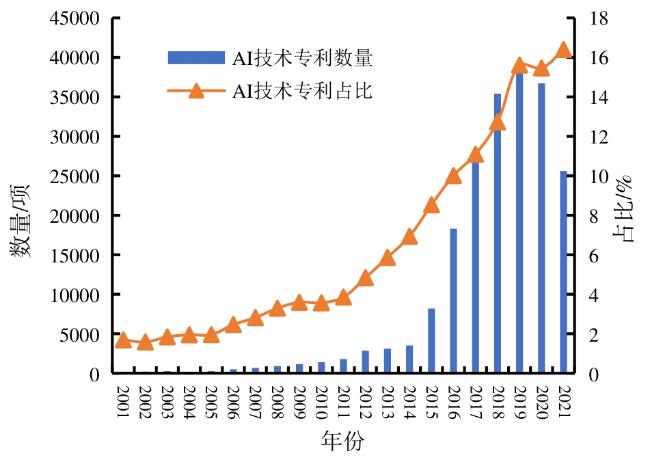
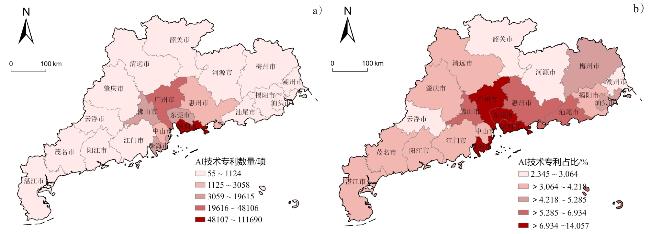
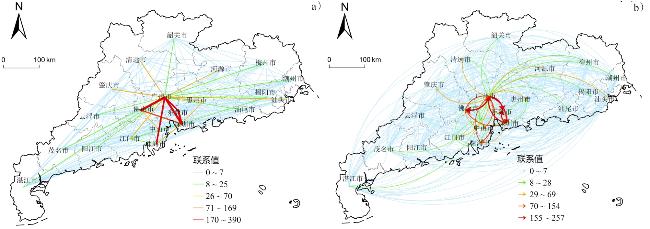
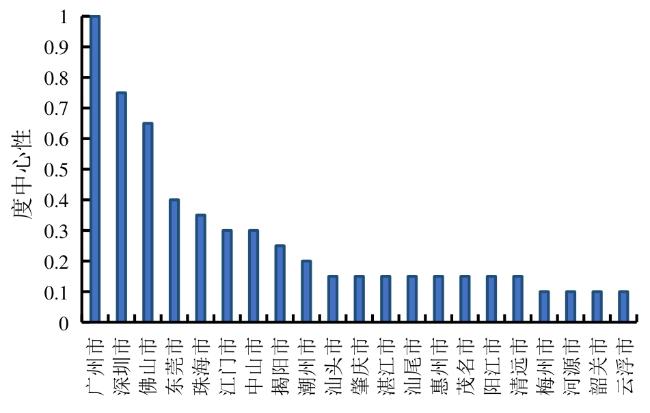
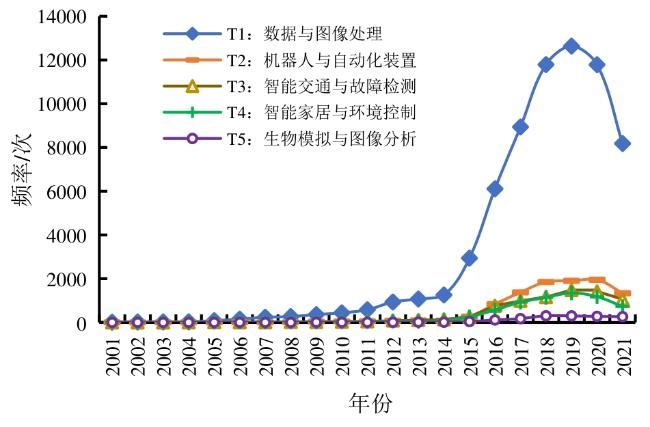
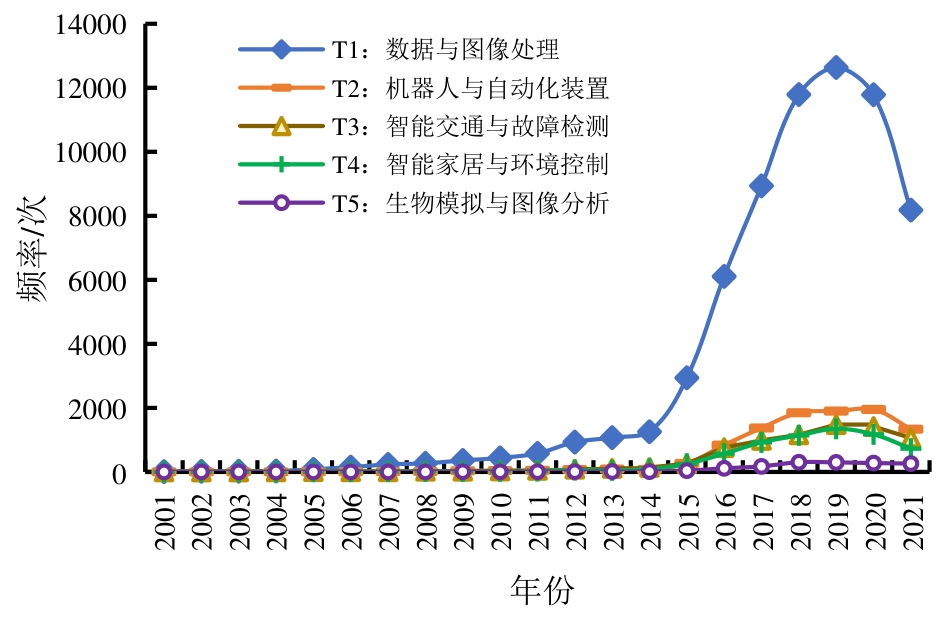
Artificial intelligence (AI) has emerged as a key driver of high-quality regional development by reshaping innovation systems, industrial structures, and spatial economic dynamics. Consequently, the scientific measurement of the spatial distribution and evolutionary trajectories of AI technologies has become a critical issue in economic geography. Existing empirical studies typically measure AI activity using enterprise registration data or granted invention patents based on proxy variables, keyword searches, or the International Patent Classification system. However, these methods often suffer from limited semantic accuracy and incomplete coverage, making it difficult to fully capture the rapidly evolving and context-dependent nature of AI technologies. To address these limitations, this study developed a semantic-based identification framework based on large language models. Drawing on approximately 1.2 million granted invention patent abstracts from Guangdong Province between 2001 and 2021, we employed Bidirectional Encoder Representations from Transformers (BERT) large language model to identify AI-related technologies based on deep semantic understanding. This approach yielded a dataset of approximately 200,000 AI-related patents and provided a more comprehensive and accurate representation of regional AI innovation activities. Building on this dataset, we applied BERTopic for topic modeling to identify major technological themes and trace their temporal evolution. The empirical results reveal several key findings. (1) From a temporal perspective, the evolution of AI technologies in Guangdong Province followed a clear two-stage trajectory. During the initial stage from 2001 to 2014, AI patenting activities remained at a relatively low level, gradually increasing from 37 patents in 2001 to 3,514 in 2014. By contrast, the period from 2015 to 2021 represents a phase of rapid expansion, characterized by a sharp increase in AI patenting activities and a substantial acceleration in innovation intensity. This shift indicates the growing strategic importance of AI in regional innovation systems. (2) From a spatial perspective, AI technologies are highly unevenly distributed across Guangdong Province, exhibiting strong agglomeration in the Guangdong-Hong Kong-Macao Greater Bay Area. Shenzhen and Guangzhou together account for 75.1% of all AI patents in the province, forming a pronounced core region of AI innovation. Shenzhen contributed to more than half of the provinces' AI patents, demonstrating a strong primacy position. Beyond these two leading cities, Dongguan, Zhuhai, and Foshan constituted the secondary tier in terms of patent volume. Further analysis of co-invention patents revealed the network characteristics of AI technological collaboration. Within Guangdong Province, inter-city cooperation exhibited a clear dual-core structure centered on Guangzhou and Shenzhen, with dense collaborative linkages concentrated in the Greater Bay Area. While Shenzhen dominates AI patent production, Guangzhou demonstrates the highest level of intraprovincial collaboration, indicating a stronger coordinating and connective role within regional innovation networks. (3) In terms of technological content, topic modeling identified five major AI technology themes: data and image processing, robotics and automation devices, intelligent transportation and fault detection, smart homes and environmental control, and bio-simulation and image analysis. Among these themes, data and image processing constituted the most active and foundational domains throughout the study period, entering a phase of rapid growth around 2013 and peaking in 2019. Robotics, intelligent transportation, and smart home technologies have expanded markedly after 2015, reflecting the increasing diversification and application-oriented nature of AI innovation. By contrast, biosimulation and image analysis exhibited modest growth, suggesting a narrower range of applications. Moreover, cities within Guangdong displayed differentiated thematic advantages, reflecting the distinct trajectories of regional AI specialization. Shenzhen has maintained a leading position in image and data processing, as well as robotics; Guangzhou has developed distinctive strengths in intelligent transportation and urban service applications; Zhuhai integrated AI into its home appliance manufacturing base and marine technologies; Dongguan focused on AI applications in intelligent manufacturing and environmental governance; and Foshan emphasized the integration of smart home technologies with industrial automation.
Yijia Chen , Juntao Tan , Ruilin Yang . Measurement and Spatiotemporal Evolution Characteristics of Artificial Intelligence Invention Patents in Guangdong Based on the BERT Large Language Model[J]. Tropical Geography, 2026 , 46(1) : 154 -166 . DOI: 10.13284/j.cnki.rddl.20250373
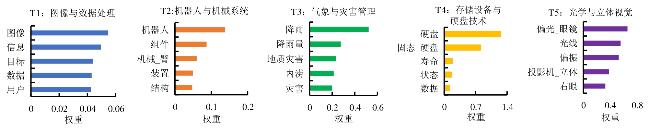
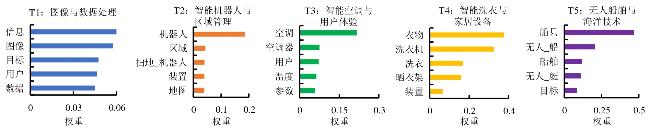
图8 深圳市AI发明专利BERTopic主题词汇权重Fig.8 Weights of BERTopic-derived key topics of AI invention patents in Shenzhen |
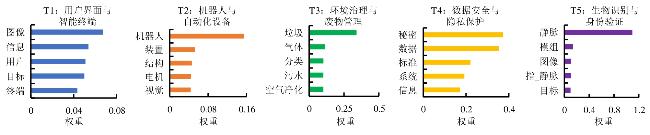
图9 广州市AI发明专利BERTopic主题词汇权重Fig.9 Weights of BERTopic-derived key topics of AI invention patents in Guangzhou |
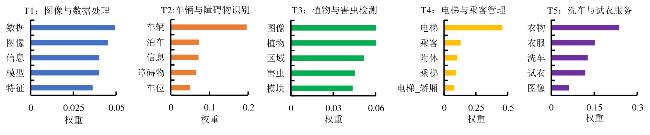
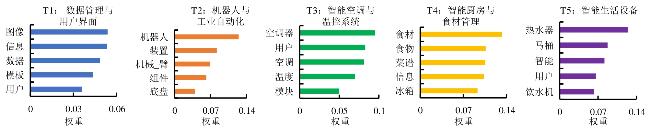
图10 珠海市AI发明专利BERTopic主题词汇权重Fig.10 Weights of BERTopic-derived key topics of AI invention patents in Zhuhai |
图11 东莞市AI发明专利BERTopic主题词汇权重Fig.11 Weights of BERTopic-derived key topics of AI invention patents in Dongguan |
陈奕嘉:负责选题确定、研究框架设计、数据处理与论文撰写与修改;
谭俊涛:负责数据分析与论文撰写与修改;
杨瑞霖:负责论文修改与润色。
|
Broekel T. 2025. Feeling the Heartbeat of Regions: Local News and Economic Sentiments. Journal of Economic Geography, 25(6): 937-976.
|
|
Buarque B S, Davies R B, Hynes R M, and Kogler D F. 2020. OK Computer: The Creation and Integration of AI in Europe. Cambridge Journal of Regions, Economy and Society, 13(1): 175-192.
|
|
陈鹏鑫,何金廖,曾刚,李炜,杨阳. 2023. 全球城市顶尖人才流动网络的空间格局与结构特征——基于AI顶尖人才成长流动轨迹数据. 地理科学,43(12):2069-2079.
Chen Pengxin, He Jinliao, Zeng Gang, Li Wei, and Yang Yang. 2023. Spatial Patterns and Structural Characteristics of the Global Intercity Elite Mobility Network: Based on the Data of AI Elite Growth Mobility Trajectories. Scientia Geographica Sinica, 43(12): 2069-2079.
|
|
Chen Y and Wu K. 2025. Integrating Artificial Intelligence into Regional Technological Domains: The Role of Intra-and Extra-Regional AI Relatedness. Cambridge Journal of Regions, Economy and Society, 18(1): 111-130.
|
|
Cicerone G, Faggian A, Montresor S, and Rentocchini F. 2023. Regional Artificial Intelligence and the Geography of Environmental Technologies: Does Local AI Knowledge Help Regional Green-Tech Specialization? Regional Studies, 57(2): 330-343.
|
|
Devlin J, Chang M W, Lee K, and Toutanova K. 2019. BERT: Pre-Training of Deep Bidirectional Transformers for Language Understanding. Proceedings of NAACL-HLT, 1: 4171-4186.
|
|
Doloreux D and Turkina E. 2021. New Path Creation in the Artificial Intelligence Industry: Regional Preconditions, New Actors and Their Collective Actions, and Policies. Regional Studies, 55(10/11): 1751-1763.
|
|
冯瑜满,马丽,金凤君. 2025. 中国人工智能创新合作网络的时空格局及其影响因素分析. 地理科学,45(1):130-140.
Feng Yuman, Ma Li, and Jin Fengjun. 2025. Spatial-Temporal Evolution and Influencing Factors of Artificial Intelligence Innovation Collaboration Network in China. Geographical Science, 45(1): 130-140.
|
|
国务院. 2025. 国务院关于深入实施“人工智能+”行动的意见(国发〔2025〕11号). (2025-08-21)[2025-08-25]. https://www.gov.cn/zhengce/zhengceku/202508/content_7037862.htm.
The State Council. 2025. Opinions of the State Council on Deepening the Implementation of the “Artificial Intelligence Plus” Initiative (Guo Fa [2025] No.11). (2025-08-21) [2025-08-25] https://www.gov.cn/zhengce/zhengceku/202508/content_7037862.htm.
|
|
Grootendorst M. 2022. BERTopic: Neural Topic Modeling with a Class-Based TF-IDF Procedure. (2022-03-11) [2025-08-25]. https://arxiv.org/abs/2203.05794.
|
|
Kriesch L and Losacker S. 2024. A Global Patent Dataset of Bioeconomy-Related Inventions. Scientific Data, 11(1): 1308.
|
|
邝劲松,杨坤宇,石校菲,姚一凡. 2024. 省域人工智能发展对绿色全要素生产率的空间效应. 经济地理,44(7):144-154.
Kuang Jinsong, Yang Kunyu, Shi Xiaofei, and Yao Yifan. 2024 Spatial Effect of Provincial Artificial Intelligence Development on Green Total Factor Productivity. Economic Geography, 44(7): 144-154.
|
|
李宇航,徐志伟,刘燕华,张玉虎,孙福宝. 2024. 人工智能时代的地理科学前沿问题探析. 地理学报,79(10):2409-2424.
Li Yuhang, Xu Zhiwei, Liu Yanhua, Zhang Yuhu, and Sun Fubao. 2024. AI for Geographical Sciences: The Frontiers. Acta Geographica Sinica, 79(10): 2409-2424.
|
|
刘亮,阮俊杰,庄海涛. 2024. 数智化赋能长三角城市群绿色发展的效应研究. 经济地理,44(9):123-132.
Liu Liang, Ruan Junjie, and Zhuang Haitao. 2024. Impact of Digital Intelligence on Green Development in the Yangtze River Delta Urban Agglomeration. Economic Geography, 44(9): 123-132.
|
|
刘青,肖柏高. 2023. 劳动力成本与劳动节约型技术创新——来自AI语言模型和专利文本的证据. 经济研究,58(2):74-90.
Liu Qing and Xiao Baigao. 2023. Labor Costs and Labor-Saving Innovation: Evidence from AI Language Model and Patent Texts. Economic Research Journal, 58(2): 74-90.
|
|
Rogers A, Kovaleva O, and Rumshisky A. 2020. A Primer in BERTology: What We Know about how BERT Works. Transactions of the Association for Computational Linguistics (TACL), 8: 842-866.
|
|
Vaswani A, Shazeer N, Parmar N, Uszkoreit J, Jones L, Gomez A, and Polosukhin I. 2017. Attention is All You Need. In: Lawrence N and Garnett R. 31st Conference on Neural Information Processing Systems(NIPS 2017). Long Beach: NIPS.
|
|
Xiao J and Boschma R. 2023. The Emergence of Artificial Intelligence in European Regions: The Role of a Local Ict Base. The Annals of Regional Science, 71(3): 747-773.
|
|
杨永春,菅煜婷. 2024. 人工智能时代城市地理学发展的变革与挑战. 地理学报,79(10):2425-2441.
Yang Yongchun and Jian Yuting. 2024. The Transformation and Challenges of Urban Geography Development in the Era of Artificial Intelligence. Acta Geographica Sinica, 79(10): 2425-2441.
|
|
张平,范文慧,贾婧,刘义. 2024. 基于改进 DBSCAN 空间聚类算法的北京市人工智能产业集聚格局研究. 地理科学,44(2):238-247.
Zhang Ping, Fan Wenhui, Jia Jing, and Liu Yi. 2024. Artificial Intelligence Industrial Agglomerations in Beijing: An Spatial Pattern Study Based on Improved Dbscan Algorithm. Scientia Geographica Sinica, 44(2): 238-247.
|
|
邹伟勇,熊云军. 2022. 中国城市人工智能发展的时空演化特征及其影响因素. 地理科学,42(7):1207-1217.
Zou Weiyong and Xiong Yunjun. 2022. Spatio-Temproral Evolution Characteristics of AI Development in Chinese Cities and Its Influencing Factors. Scientia Geographica Sinica, 42(7): 1207-1217.
|
/
| 〈 |
|
〉 |