Strategic Coupling and Investment Resilience of Taiwan-Funded Manufacturing in Chinese Mainland under External Shocks: A Comparative Study of Xiamen and Quanzhou
Received date: 2024-11-01
Revised date: 2025-01-12
Online published: 2026-01-23
Copyright
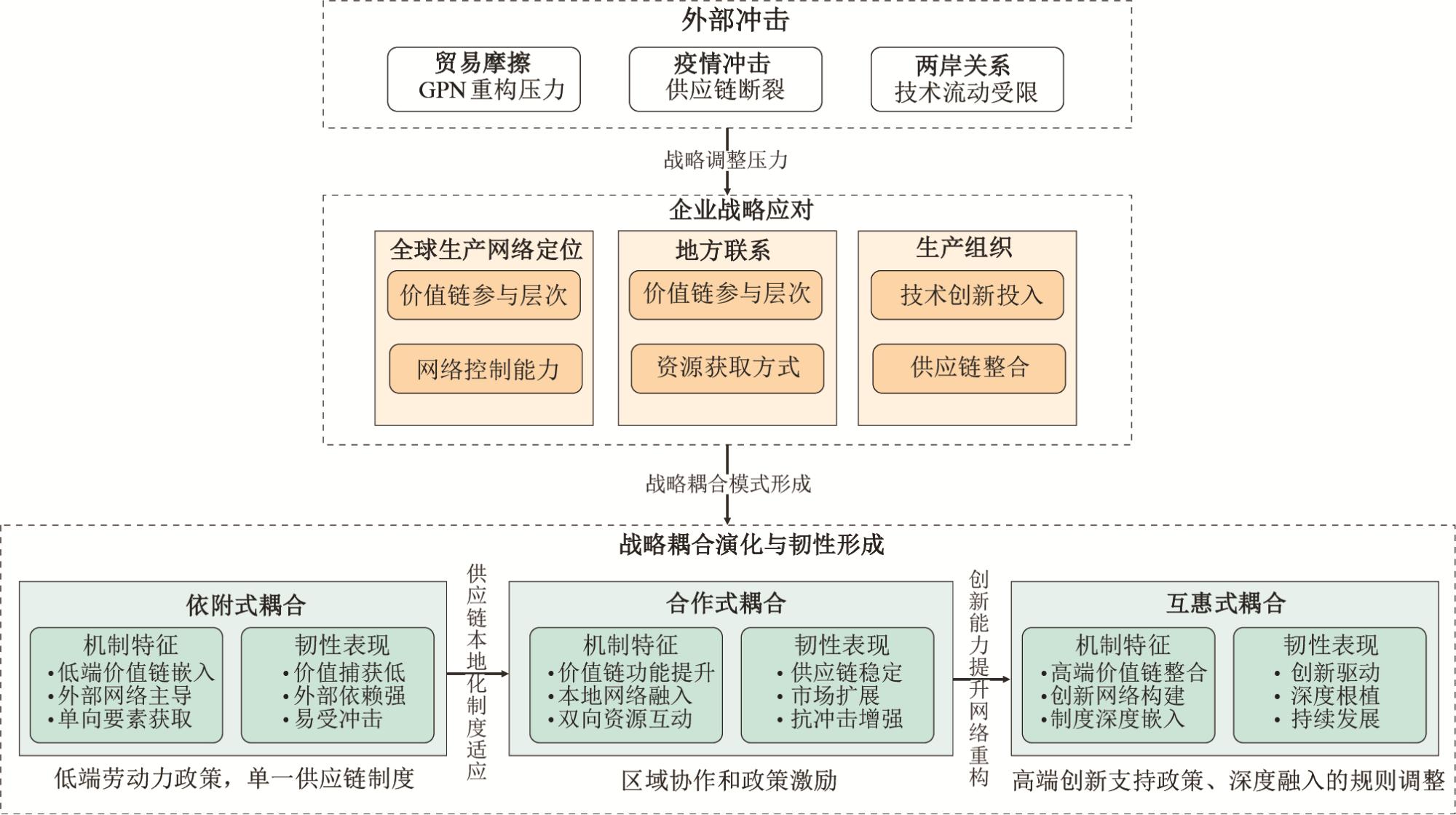
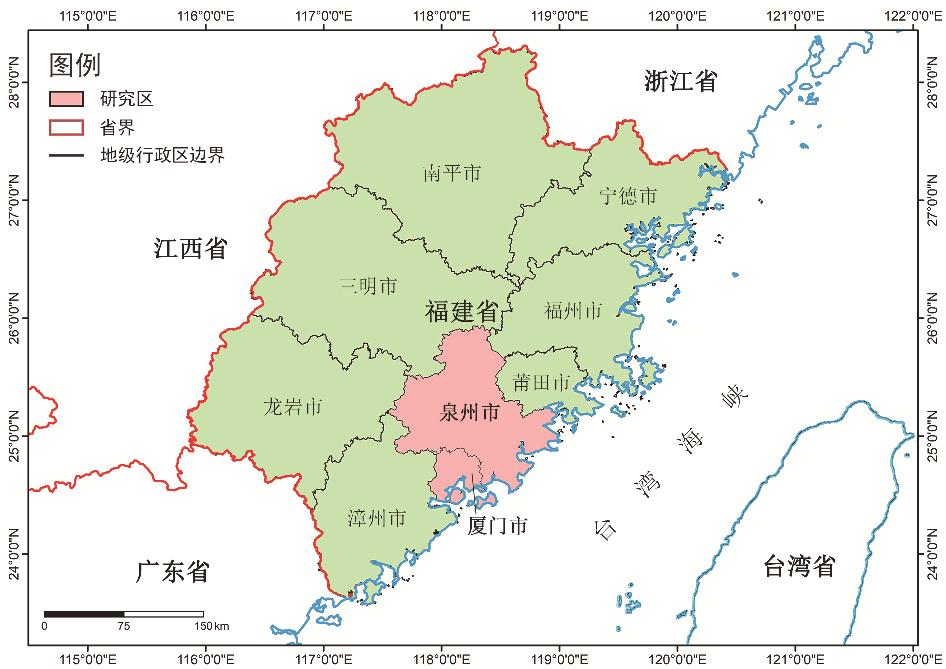
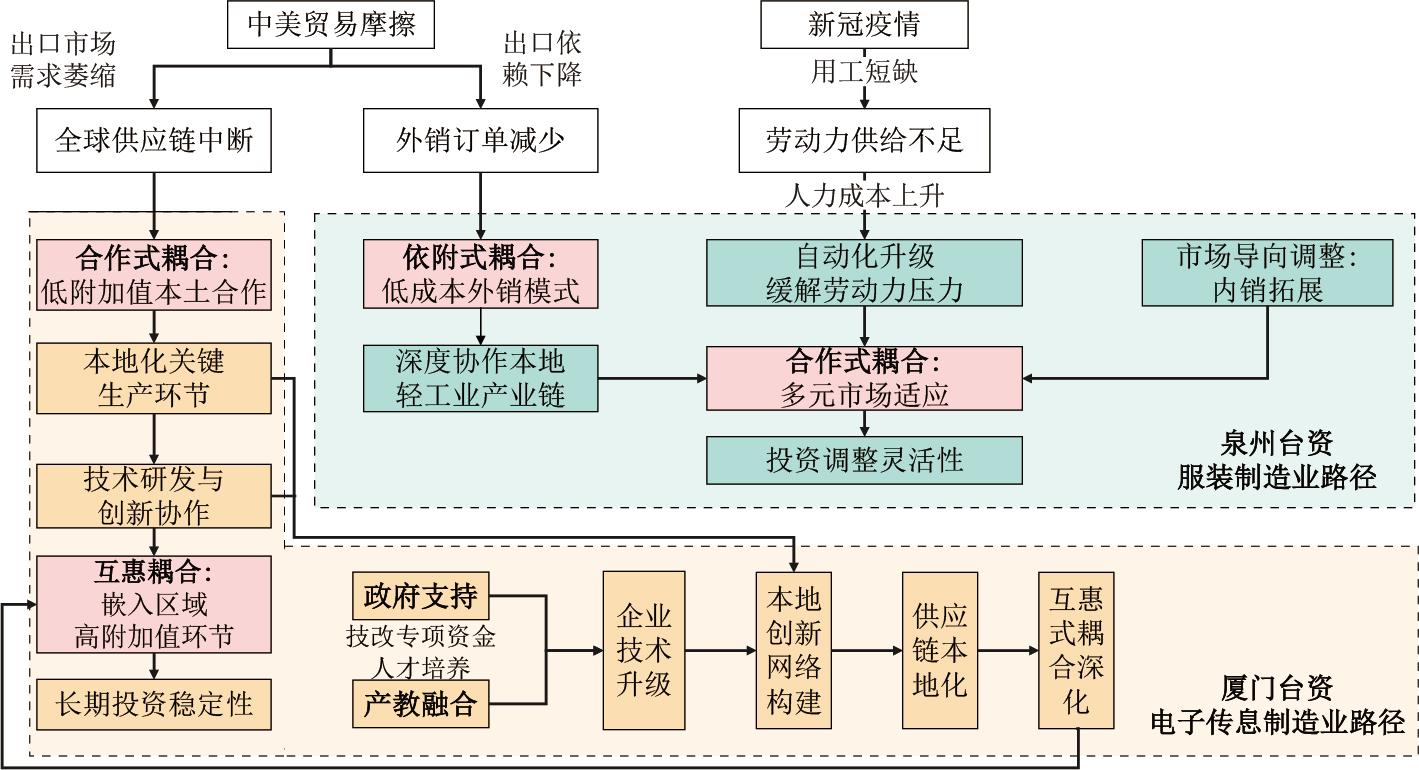
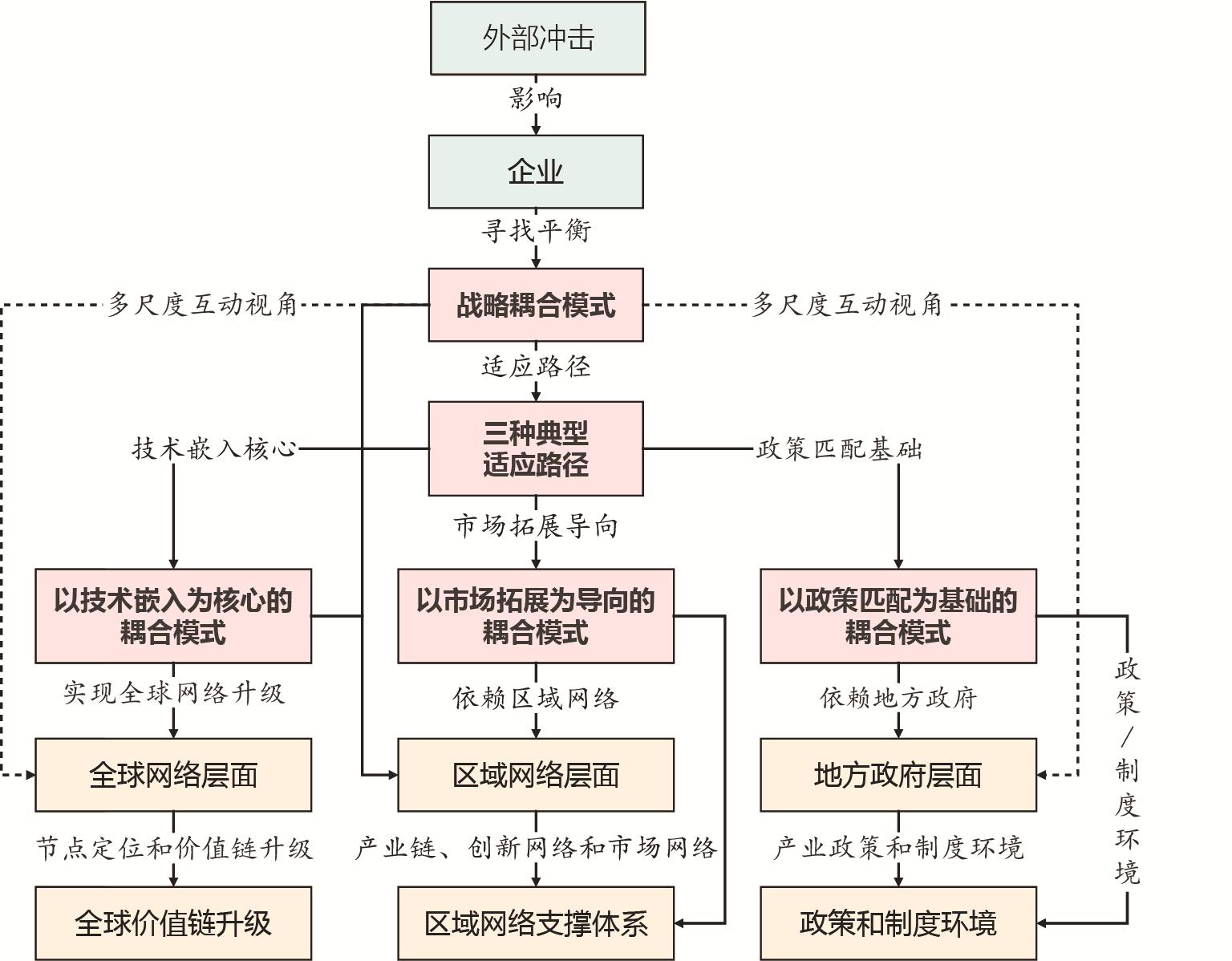
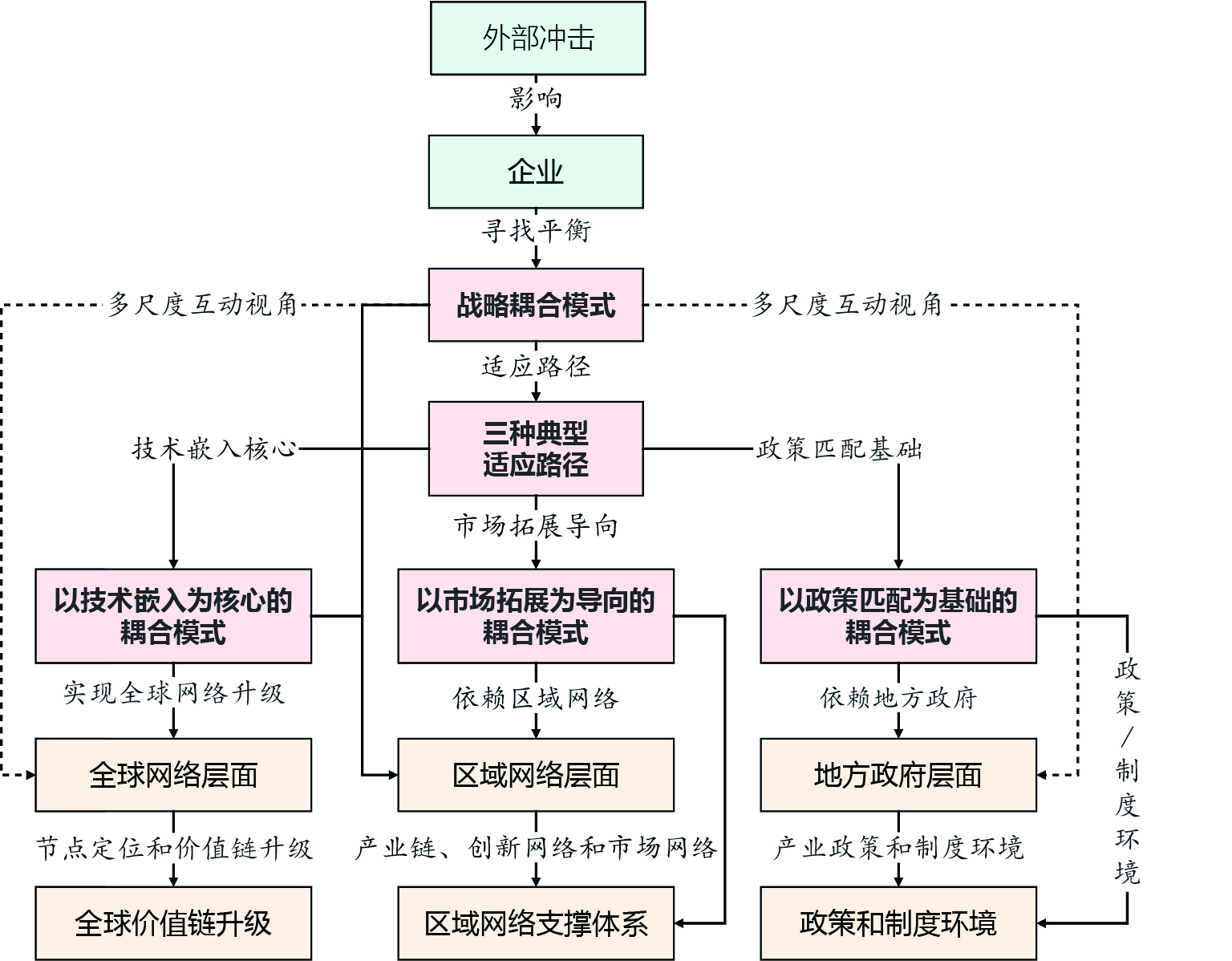
Taiwan’s direct investment has long been a major contributor to regional economic development in Chinese mainland and an important source of cross-border capital. However, recent geopolitical and economic disruptions, including shifts in China–U.S. relations, the COVID-19 pandemic, and persistent cross-strait tensions, have accelerated the relocation of Taiwanese-funded enterprises, posing challenges to regional economic stability. Therefore, understanding how Taiwanese manufacturing firms strategically respond to external shocks is essential for advancing theoretical discussions and informing policy formulation. Guided by Global Production Network theory, particularly the concept of strategic coupling, this study examined how Taiwanese manufacturing enterprises interacted with regional institutional environments and how such interactions influenced their investment resilience. Employing a comparative case-study approach, we investigated the electronics and information manufacturing industry in Xiamen and the garment and accessories sector in Quanzhou. Data were obtained through questionnaires, in-depth interviews with 16 enterprises across multiple production-chain segments, and fieldwork with local industrial associations and government agencies. The findings yielded two major insights. First, investment resilience under external shocks is strongly shaped by the strategic coupling between firms and regional institutional settings. In Xiamen, electronics and information firms, characterized by high fixed-asset investment and technological intensity, displayed high spatial stickiness. Their deep integration with local institutions facilitated a transition from dependent to reciprocal coupling, supported by the localization of key production stages, technological upgrading, equipment modernization, and strengthened collaborations with universities and research institutes. In contrast, Quanzhou's garment and accessories manufacturers, operating with lighter assets, transitioned from dependent to cooperative coupling by leveraging the mature industrial ecosystem and strong market foundations of the region. These firms diversified beyond export-oriented models toward a balanced domestic–international market orientation, driven by the growth of e-commerce, live-streaming sales, and increased automation. Second, the degree of alignment between firm attributes and regional conditions plays a crucial role in shaping investment resilience and serves as a buffer against external disruptions. In Xiamen, compatibility with high-tech resources, university–industry linkages, and technology-oriented policy support enhanced regional embeddedness and spatial stickiness. In Quanzhou, alignment with extensive light-industry supply chains, abundant labor, and rapidly developing e-commerce platforms fostered greater flexibility and market responsiveness. These relational assets, developed through strategic coupling, reinforced both operational and strategic adaptability. Moreover, the investment resilience of Taiwanese enterprises exhibited multi-scalar characteristics: globally, firms reconfigured supply chains in response to U.S.–China trade tensions; regionally, cross-strait relations influenced technology transfer and talent flows; locally, deep embedding in innovation systems and institutional frameworks strengthened long-term rootedness. Theoretically, this study constructs an analytical framework that links micro-level firm strategies with macro-level investment resilience through the lens of strategic coupling. It elucidates how coupling evolves under external shocks and reveals the heterogeneous pathways through which industrial characteristics, regional resources, and institutional environments jointly shape resilience outcomes. These insights provide valuable implications for understanding cross-border investment dynamics in developing economies and guiding regional policy-making.
Jiping Sun , Suqiong Wei , Yizhi Xia , Chengye Zhou , Yunlong Wang . Strategic Coupling and Investment Resilience of Taiwan-Funded Manufacturing in Chinese Mainland under External Shocks: A Comparative Study of Xiamen and Quanzhou[J]. Tropical Geography, 2026 , 46(4) : 680 -692 . DOI: 10.13284/j.cnki.rddl.20240703
表1 受访企业相关信息Table 1 Information of surveyed enterprises |
| 企业序号 | 所属行业 | 经营范围 | 企业规模 | 产业链位置 | 企业所在地 |
| 1 | 计算机、通信和其他电子设备制造业 | 各类LCD平板显示屏材料(膜片、板材等)及相关材料 | 大型 | 上游 | 厦门 |
| 2 | 计算机、通信和其他电子设备制造业 | 电子用玻璃管、陶瓷管及熔丝类零组件生产加工 | 中小型 | 上游 | 厦门 |
| 3 | 仪器仪表制造业 | 工业自动控制系统装置制造 | 大型 | 上游 | 厦门 |
| 4 | 计算机、通信和其他电子设备制造业 | 光电子器件及其他电子器件制造 | 大型 | 中游 | 厦门 |
| 5 | 计算机、通信和其他电子设备制造业 | 液晶显示器、液晶电视、AIO一体机的研发 | 大型 | 中游 | 厦门 |
| 6 | 计算机、通信和其他电子设备制造业 | 电子元件及组件制造 | 中小型 | 中游 | 厦门 |
| 7 | 计算机、通信和其他电子设备制造业 | 加工、生产各种型号充电器、测试器 | 中小型 | 中游 | 厦门 |
| 8 | 计算机、通信和其他电子设备制造业 | 网络计算机、嵌入式计算机、便携式计算机 | 大型 | 下游 | 厦门 |
| 9 | 专用设备制造业 | 缝制机械制造 | 中小型 | 中游 | 泉州 |
| 10 | 专用设备制造业 | 生产制鞋机械及从事制鞋机械及配件的批发 | 中小型 | 中游 | 泉州 |
| 11 | 金属制品业 | 生产服饰五金制品、塑料制品及工艺品 | 中小型 | 下游 | 泉州 |
| 12 | 纺织服装、服饰业 | 运动机织服装制造 | 大型 | 下游 | 泉州 |
| 13 | 纺织服装、服饰业 | 生产服装、服饰品、箱包 | 中小型 | 下游 | 泉州 |
| 14 | 纺织服装、服饰业 | 生产童装、童鞋、包袋 | 中小型 | 下游 | 泉州 |
| 15 | 皮革、毛皮、羽毛及其制品和制鞋业 | 运动鞋制造 | 中小型 | 下游 | 泉州 |
| 16 | 皮革、毛皮、羽毛及其制品和制鞋业 | 鞋制造;服装制造 | 中小型 | 下游 | 泉州 |
注:本文访谈的所有企业均采用匿名化,故在此不展示企业名称等详细信息。 |
表2 厦门与泉州台资主导制造业投资韧性对比Table 2 Comparison of resilience in Taiwan-invested leading manufacturing industries in Xiamen and Quanzhou |
| 要素 | 厦门台资电子信息制造业 | 泉州台资服装制造业 |
| 耦合模式 | 高附加值互惠耦合 | 从依附耦合到合作耦合的转型 |
| 外部冲击适应能力 | 强,通过技术创新和内销市场拓展实现风险分散 | 中等,依赖本地产业链的缓冲作用,逐步向内销转型 |
| 技术驱动力 | 高,依赖地方高校和政策支持,推动设备和生产模式升级 | 较低,以自动化升级为主,技术创新能力有限 |
| 市场依赖结构 | 内外销平衡,逐步提高内销市场占比 | 出口依赖较高,但内销比重在快速上升 |
| 产业链韧性 | 强,依托电子信息制造高附加值环节,实现产业链优化 | 中等,依赖本地轻工产业链,附加值相对较低 |
| 空间粘性 | 高,通过区域网络协作实现嵌入,投资根植性强 | 中等,逐步从外部依赖向区域协作模式转型 |
① 为了保护和鼓励台湾同胞投资,促进海峡两岸的经济发展,中国全国人民代表大会常务委员会颁布了《中华人民共和国台湾同胞投资保护法》,台湾同胞适用于该法,该法未规定的,中国其他有关法律、行政法规对台湾同胞投资有规定的,依照该规定执行。
|
Backer K D, Menon C, Desnoyersjames I, and Moussiegt L. 2016. Reshoring: Myth or Reality? In: OECD. OECD Science Technology & Industry Policy Papers. Paris: OECD Publishing.
|
|
Boschma R. Towards an Evolutionary Perspective on Regional Resilience. Regional Studies, 2015, 49 (5): 733- 751.
|
|
Bryson J R and Vanchan V. COVID-19 and Alternative: Conceptualisations of Value and Risk in GPN Research. Tijdschrift Voor Economische En Sociale Geografie, 2020, 111 (3): 530- 542.
|
|
陈蕊, 刘逸. 全球生产网络(GPN)的理论问题和中国实践启示. 地理研究, 2021, 40 (12): 3259- 3271.
Chen Rui and Liu Yi. Theoretical Problems of Global Production Network Research and the Implications to China. Geographical Research, 2021, 40 (12): 3259- 3271.
|
|
Coe N M, Hess M, Yeung H W C, Dicken P, and Henderson J. 'Globalizing' Regional Development: a Global Production Networks Perspective. Transactions of the Institute of British Geographers, 2004, 29 (4): 468- 484.
|
|
Fuller C. Brexit, the Mediation Strategies of Foreign Corporate Subsidiaries and Regional Resilience. Regional Studies, 2022, 56 (11): 1961- 1975.
|
|
Gereffi G, Lim H C, and Lee J. Trade Policies, Firm Strategies, and Adaptive Reconfigurations of Global Value Chains. Journal of International Business Policy, 2021, 4 (4): 506- 522.
|
|
Gray J V, Skowronski K, Esenduran G, and Rungtusanatham M J. The Reshoring Phenomenon: What Supply Chain Academics ought to Know and should Do. Journal of Supply Chain Management, 2013, 49, 27- 33.
|
|
海鹏, 房帅, 王文姝. 上游垄断与外资企业供应链本地化——来自中国制造业的证据. 经济与管理研究, 2023, 44 (2): 75- 93.
Hai Peng, Fang Shuai, and Wang Wenshu. Upstream Monopoly and Supply Chain Localization of Foreign Enterprises—Evidence from Chinese Manufacturing Industry. Research on Economic and Management, 2023, 44 (2): 75- 93.
|
|
何周倩, 梁育填, 周克杨. 行业异质性与空间黏性: 企业迁移成效的差异及其解释——以英德市产业转移园为例. 人文地理, 2022, 37 (1): 109- 115.
He Zhouqian, Liang Yutian, and Zhou Keyang. Industry Heterogeneity and Spatial Stickiness: Differences in the Effectiveness of Enterprise Migration and Its Explanation—Taking Yingde Industrial Transfer Park as an Example. Human Geography, 2022, 37 (1): 109- 115.
|
|
Henderson J, Dicken P, Hess M, Coe N, and Yeung H W C. Global Production Networks and the Analysis of Economic Development. Review of International Political Economy, 2002, 9 (3): 436- 464.
|
|
Hsu J Y. The Dynamic Firm—Territory Nexus of Taiwanese Informatics Industry Investments in China. Growth and Change, 2006, 37 (2): 230- 254.
|
|
胡晓辉, 董柯, 杨宇. 战略耦合演化视角下的区域经济韧性分析框架. 地理研究, 2021, 40 (12): 3272- 3286.
Hu Xiaohui, Dong Ke, and Yang Yu. Analysis Framework of Regional Economic Resilience from the Perspective of Strategic Coupling Evolution. Geographical Research, 2021, 40 (12): 3272- 3286.
|
|
Hu X H and Yang C. Institutional Change and Divergent Economic Resilience: Path Development of Two Resource-Depleted Cities in China. Urban Studies, 2019, 56 (16): 3466- 3485.
|
|
Kammoun S and Ben Romdhane Y. Impact of Government Responses to COVID-19 on the Resilience of FDI Attractiveness Factors in the Asian Region. Journal of Economic and Administrative Sciences, 2022, 40 (1): 37- 56.
|
|
刘逸. 战略耦合的研究脉络与问题. 地理研究, 2018, 37 (7): 1421- 1434.
Liu Yi. Theoretical Thread and Problems of Strategic Coupling. Geographical Research, 2018, 37 (7): 1421- 1434.
|
|
刘逸, 张一帆, 黄凯旋, 陈蕊. 战略耦合影响下珠三角产业升级模式及测度. 地理研究, 2022, 41 (4): 1107- 1121.
Liu Yi, Zhang Yifan, Huang Kaixuan, and Chen Rui. Measuring Impact of Strategic Coupling towards the Patterns of Industrial Upgrading in the Pearl River Delta. Geographical Research, 2022, 41 (4): 1107- 1121.
|
|
Liu Y, Liang Y, Ma S, and Wang K. 2017. Divergent Developmental Trajectories and Strategic Coupling in the Pearl River Delta: Where is a Sustainable Way of Regional Economic Growth? Sustainability, 9(10): 1782.
|
|
Lund H B and Steen M. Make at Home or Abroad? Manufacturing Reshoring through a GPN Lens: A Norwegian Case Study. Geoforum, 2020, 113, 154- 164.
|
|
MacKinnon D. Beyond Strategic Coupling: Reassessing the Firm-Region Nexus in Global Production Networks. Journal of Economic Geography, 2012, 12 (1): 227- 245.
|
|
Martin R and Sunley P. On the Notion of Regional Economic Resilience: Conceptualization and Explanation. Journal of Economic Geography, 2015, 15 (1): 1- 42.
|
|
Refslund B. Global Production Networks: Theorizing Economic Development in an Interconnected World. European Planning Studies, 2015, 23 (12): 2621- 2624.
|
|
Saxenian A. 1996. Regional Advantage: Culture and Competition in Silicon Valley and Route 128. Cambridge: Harvard University Press.
|
|
Simmie J and Martin R. 2010. The Economic Resilience of Regions: Towards an Evolutionary Approach. Cambridge Journal of Regions, Economy and Society, 3(1): 27-43.
|
|
孙继平, 韦素琼, 游小珺. 外部冲击下台资产业的战略耦合与本地发展韧性——来自永福高山茶产业的实证. 地理研究, 2023, 42 (5): 1200- 1214.
Sun Jiping, Wei Suqiong, and You Xiaojun. Strategic Coupling and Resilience of Investment from Taiwan under External Shocks: A Case Study of Yongfu Gaoshan Tea Industry. Geographical Research, 2023, 42 (5): 1200- 1214.
|
|
Tate W L, Ellram L M, Schoenherr T, and Petersen K J. Global Competitive Conditions Driving the Manufacturing Location Decision. Business Horizons, 2014, 57 (3): 381- 390.
|
|
Uminski S and Borowicz A. Will Multinational Enterprises Contribute to Poland's Economic Resilience and Recovery During and Post COVID-19 Pandemic. Transnational Corporations Review, 2021, 13 (1): 74- 87.
|
|
Van Grunsven L and Hutchinson F E. The Evolution of the Electronics Industry in Johor(Malaysia): Strategic Coupling, Adaptiveness, Adaptation, and the Role of Agency. Geoforum, 2016, 74, 74- 87.
|
|
王子旗. 全球供应链重组下台商投资布局动向及趋势研究. 台湾研究, 2022 (3): 41- 54.
Wang Ziqi. Research on the Trend of Taiwanese Investment Layout under the Global Supply Chain Restructuring. Taiwan Research, 2022 (3): 41- 54.
|
|
Yeung H W C. 2002. Towards a Relational Economic Geography: Old Wine in New Bottles. In: Association of American Geographers. 98th Annual Meeting of the Association of American Geographers. New York: Taylor & Francis.
|
|
Yeung H W C. Regional Development in the Global Economy: A Dynamic Perspective of Strategic Coupling in Global Production Networks. Regional Science Policy & Practice, 2015, 7 (1): 1- 23.
|
|
赵建吉, 王艳华, 苗长虹. 战略耦合及区位机会窗口与GPNs领先企业策略合作伙伴的区位重构——以富士康为例. 地理学报, 2023, 78 (4): 877- 893.
Zhao Jianji, Wang Yanhua, and Miao Changhong. Strategic Coupling, Windows of Locational Opportunity and Relocation of Strategic Partners of a Leading Firm in GPNs: A Case Study of Foxconn. Acta Geographica Sinica, 2023, 78 (4): 877- 893.
|
/
| 〈 |
|
〉 |