Improving the Simulation of Vegetation Canopy Interception in the Community Land Model by Incorporating Rainfall Coverage
Received date: 2025-09-04
Revised date: 2025-11-15
Online published: 2026-03-17
Copyright
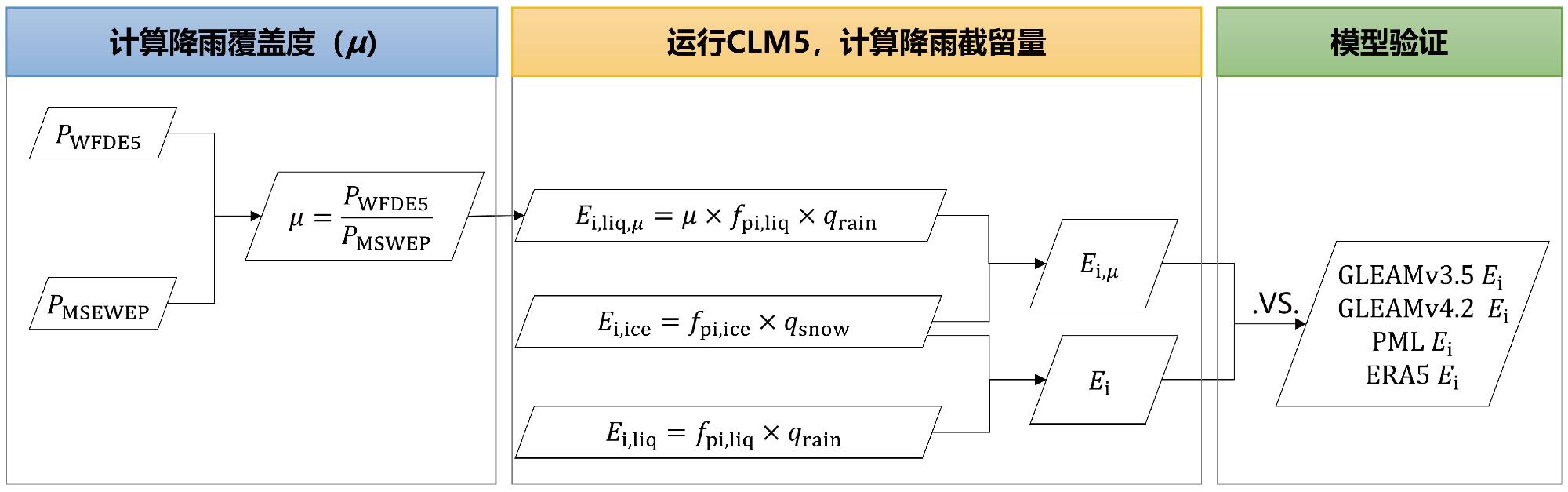
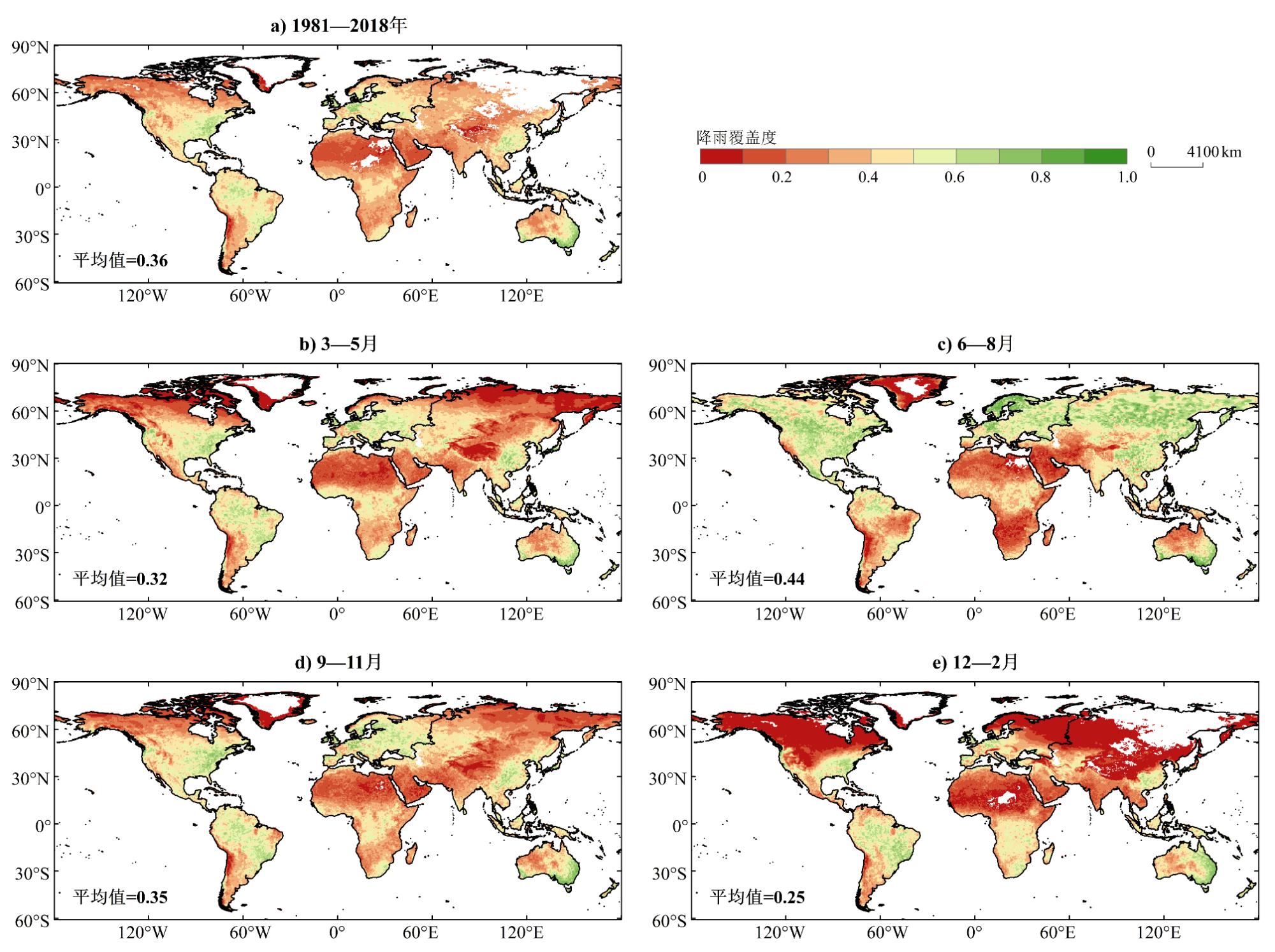
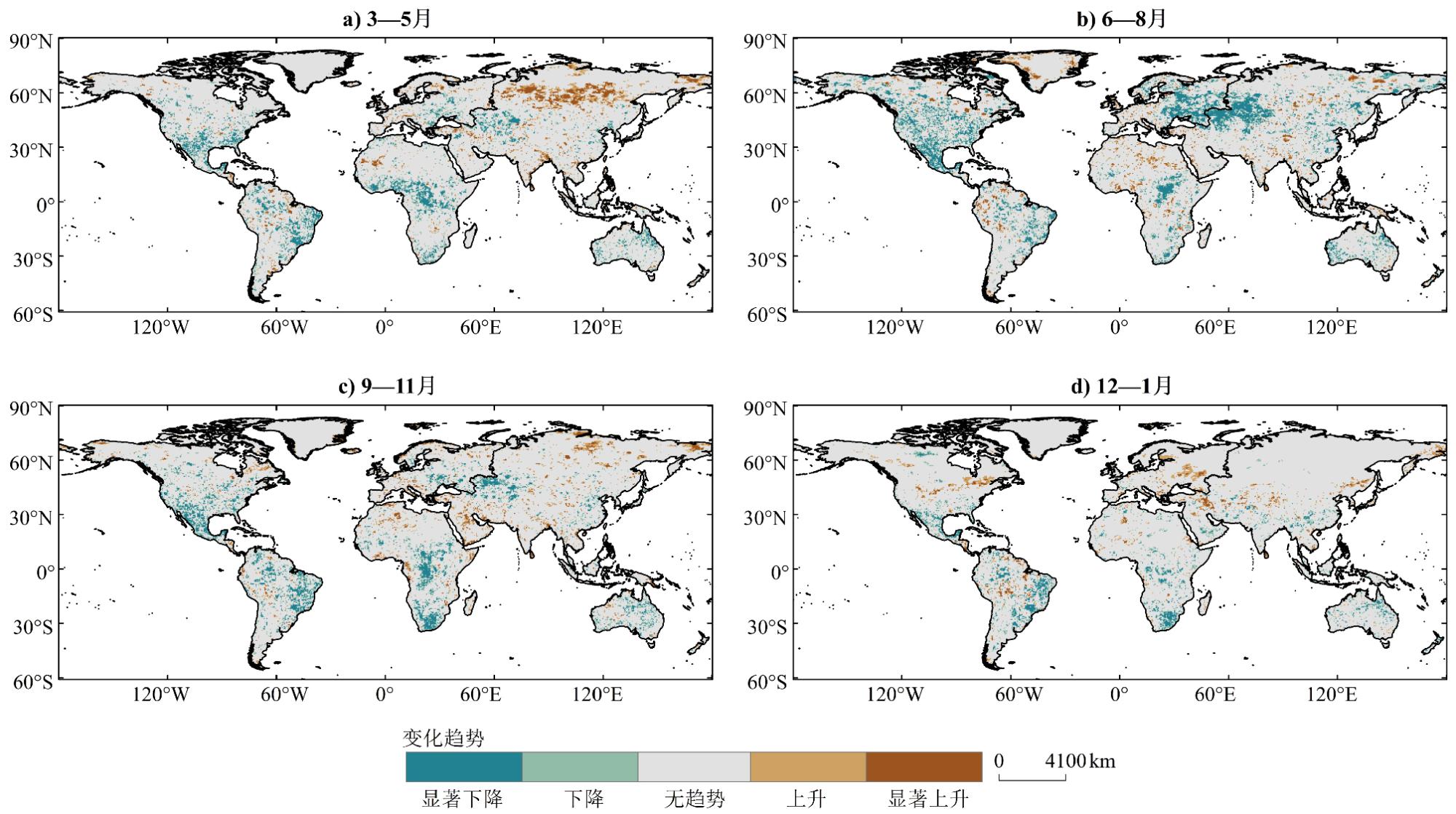
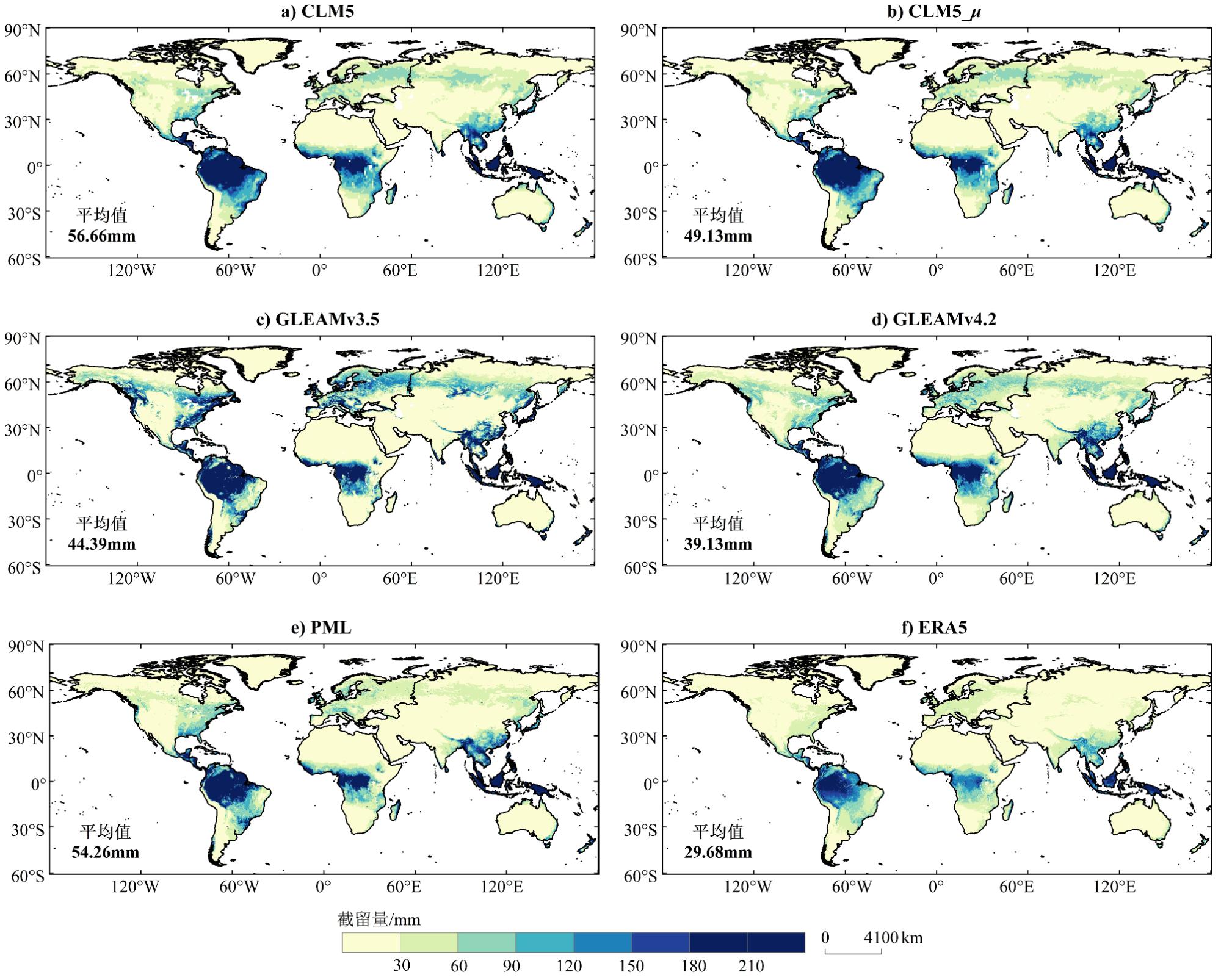
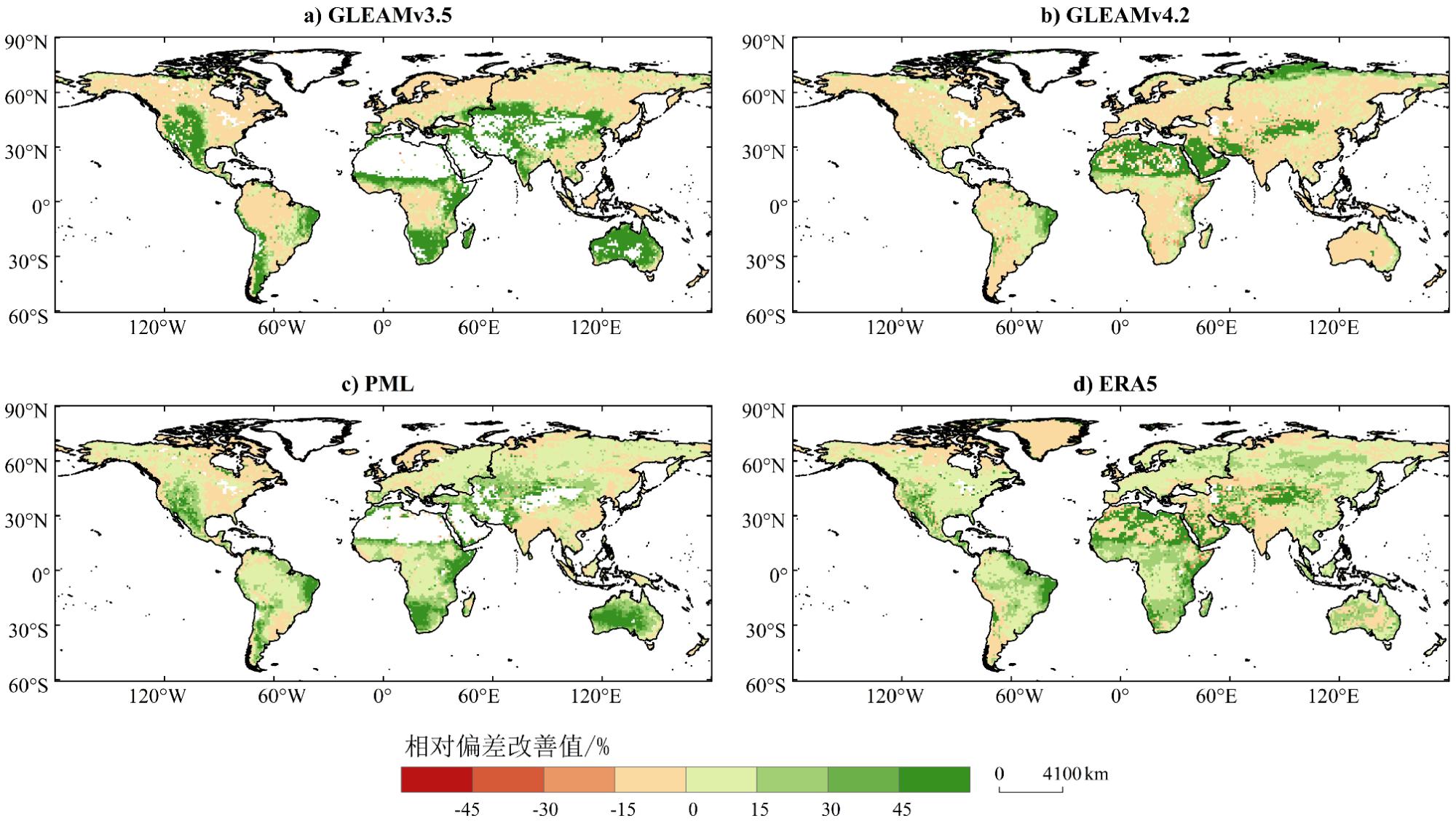
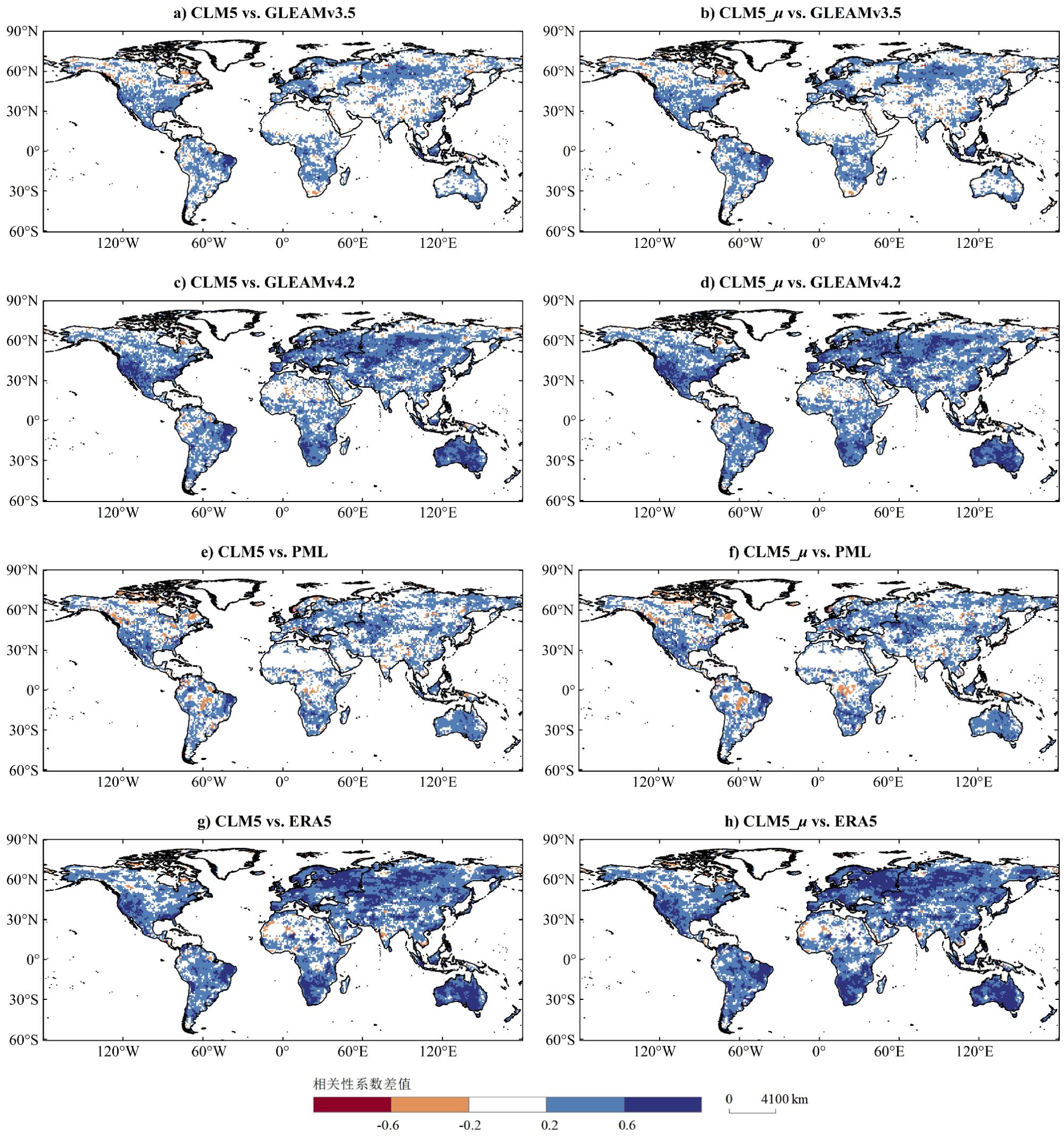
Global warming has intensified the spatiotemporal heterogeneity of precipitation, but the typical grid spacing of land-atmosphere coupling models remains much larger than the spatial scale of real precipitation events. This scale mismatch forces models to distribute rainfall uniformly within a grid cell, which can distort rain-rate estimation and subsequently introduce systematic biases into land-surface hydrological simulations. Vegetation canopy interception is particularly sensitive because it is the evapotranspiration component that responds most rapidly to rainfall and directly controls the partitioning of precipitation into interception, evaporation, throughfall, and stemflow, thereby influencing surface energy and water fluxes. In this study, we quantify the global spatiotemporal patterns of rainfall coverage (μ), defined as the fractional area within a model grid cell where rainfall actually occurs. Using bias-adjusted WFDE5 precipitation as the model forcing field and MSWEP V2.8 as the benchmark “actual” precipitation, we derive a global μ dataset at 0.5° spatial resolution and 3-hourly temporal resolution for 1980-2018 and then aggregate it to monthly means for model application. The climatological mean μ over 1981-2018 is 0.36, exhibiting strong spatial contrasts: high values occur in equatorial and tropical rainforest regions, whereas low values dominate subtropical arid and desert zones. Seasonally, μ follows the order June-August > December-February > March-May > September-November, with the largest seasonal amplitude in mid- to high-latitude regions of the Northern Hemisphere. We incorporate the monthly varying μ into the rainfall interception parameterization of Community Land Model version 5 (CLM5), thereby representing subgrid precipitation heterogeneity in canopy interception calculations. Offline global simulations were conducted at a 1° resolution for 1980-2018 using the CLM5 Satellite Phenology configuration. The performance of the modified model (CLM5_μ) is systematically evaluated against four widely used global evapotranspiration products that provide canopy interception estimates, including GLEAMv3.5, GLEAMv4.2, PML, and ERA5. The results demonstrate that introducing rainfall coverage substantially improves the realism of the simulated global canopy interception. The multi-year mean interception decreases from 56.66 mm in the baseline CLM5 to 49.13 mm in CLM5_μ, bringing simulations closer to the range of benchmark products. Spatially, the most pronounced improvements occurred in mid- to low-latitude humid and semi-humid regions (e.g., parts of North America and northern Eurasia) and in arid-to-semiarid transition zones (e.g., the Sahel and Central Asian grasslands), where the baseline model tended to overestimate interception under the uniform rainfall assumption. Temporally, CLM5_μ shows a higher proportion of grid cells with statistically significant correlations to benchmark products and enhanced spatial continuity of correlated areas, especially during summer months in mid- to low latitudes and during non-growing seasons in high-latitudes. Improvements are relatively limited in primary tropical rainforests, high-latitude cold regions (e.g., Siberia and northern Canada), and extremely arid areas. Overall, this study provides a practical and physically interpretable pathway for incorporating spatial heterogeneity of precipitation into canopy interception parameterization. By accounting for rainfall coverage dynamics, the proposed scheme reduces interception biases induced by scale mismatches and strengthens the capability of land-surface models to represent water and heat flux partitioning on a global scale.
Wei He , Dagang Wang . Improving the Simulation of Vegetation Canopy Interception in the Community Land Model by Incorporating Rainfall Coverage[J]. Tropical Geography, 0 , 46(3) : 548 -561 . DOI: 10.13284/j.cnki.rddl.20250593
表1 CLM5模型大气驱动与地表数据Table 1 Atmospheric forcing data and land surface data in the CLM5 Model |
| 数据类别 | 数据名称 | 空间分辨率 | 时间分辨率 | 关键变量 | 数据来源 |
| 大气驱动 数据 | WFDE5数据集 (WATCH Forcing Data applied to ERA5) | 0.5° | 逐小时 (1980—2018年) | 降水、气温、气压、 比湿、辐射、风速 | Cucchi等(2020) |
| 地表 输入 数据 | MODIS卫星数据 (Moderate Resolution Imaging Spectroradiometer) | 1 km | 静态 | 植物功能型 | Lawrence等(2011) |
| 1 km | 月气候态 | 叶面积指数 | Lawrence等(2011) | ||
| — | 0.5° | 静态 | 冠层顶部高度、 冠层基底高度 | Bonan等(2002) | |
| IGBP全球土壤数据集(International Geosphere-Biosphere Programme) | 0.5° | 静态 | 土壤质地 | Global Soil Data Task Group(2000) | |
| — | 0.5° | 静态 | 土壤颜色 | Lawrence & Chase(2007) | |
| USGS HYDRO1K数据集 | 1 km | 静态 | 坡度、高程、 最大饱和分数 | Verdin & Jenson(1996) |
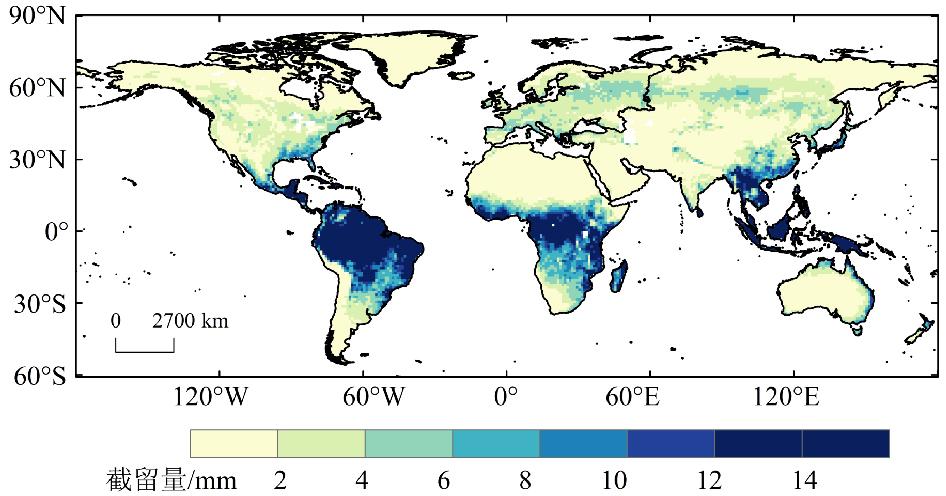
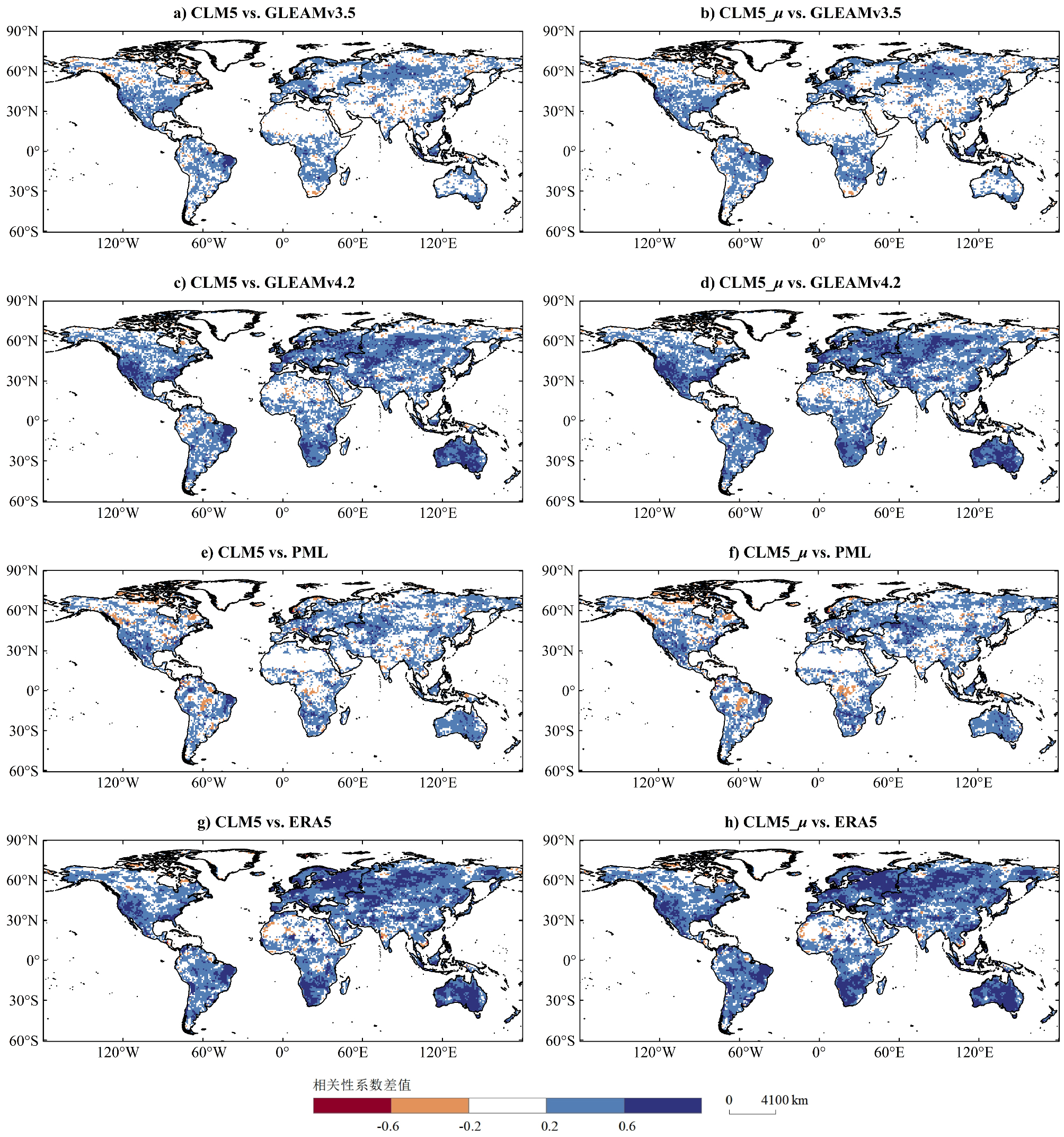
图4 各模型多年平均降雨截留量空间分布模拟结果(1981—2018年)Fig.4 Spatial distribution simulation results of the multi-year mean rainfall interception for each model(1981–2018) |
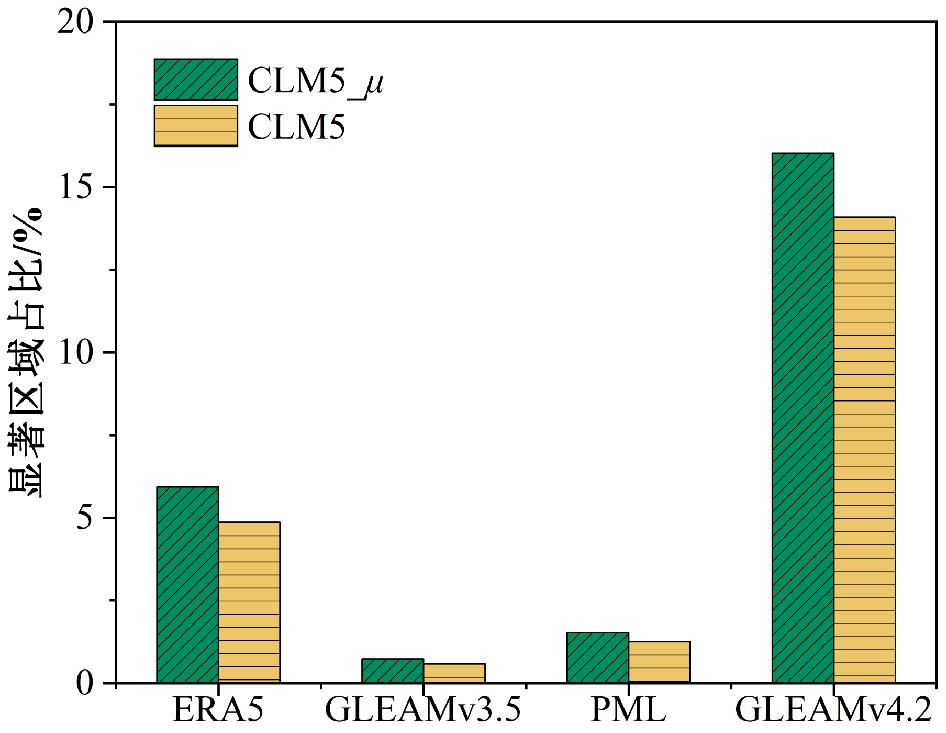
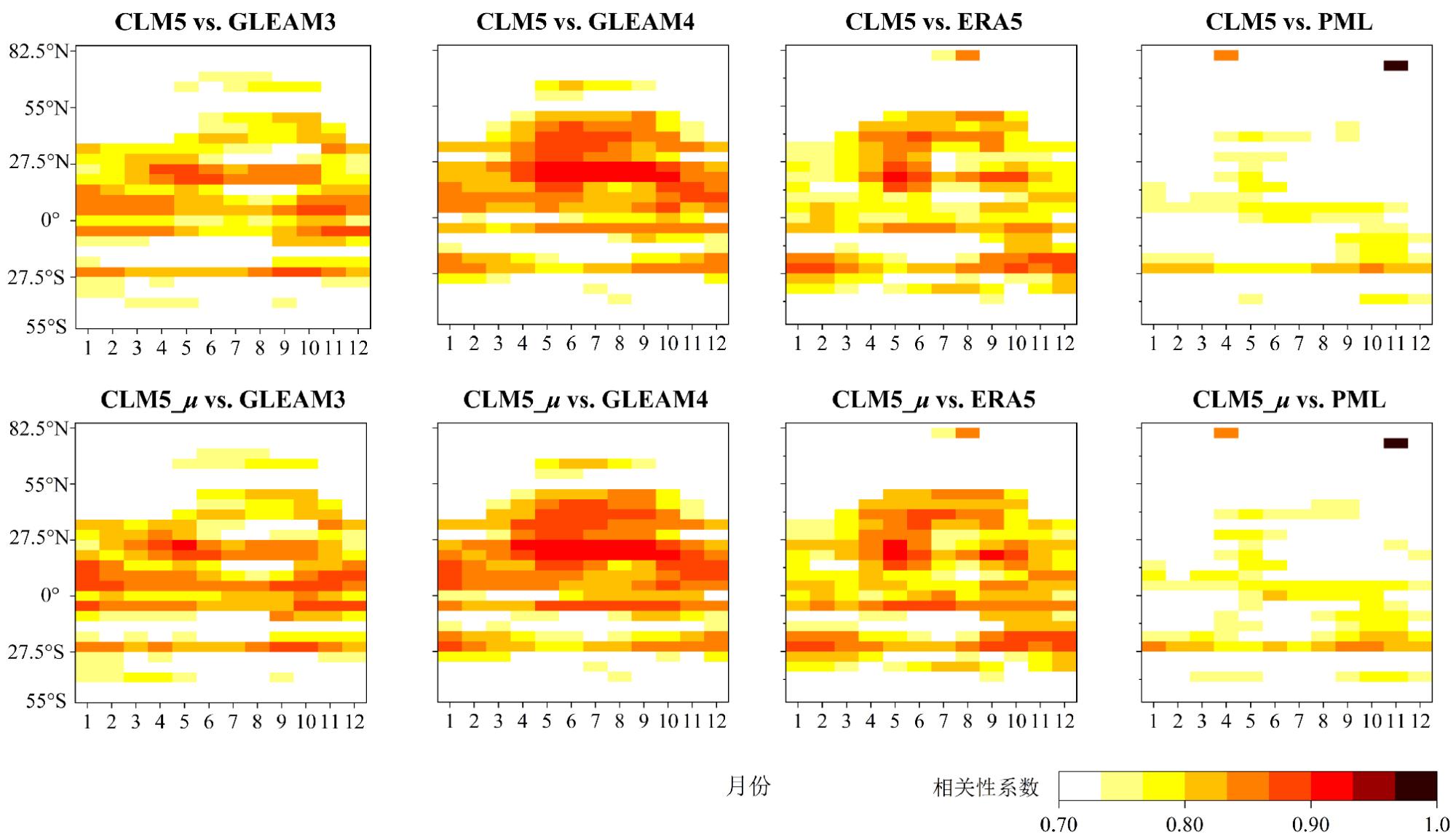
图7 CLM5与CLM5_μ与基准产品的显著区域占比Fig.7 Proportion of Significant Regions for CLM5 and CLM5_μ Models Compared with Benchmark Models |
① https://doi.org/10.24381/cds.20d54e34
② https://www.gloh2o.org/
③ https://www.gleam.eu/#downloads
④ https://www.tpdc.ac.cn/zh-hans/data/48c16a8d-d307-
⑤ https://data.csiro.au/collection/csiro:
⑥ https://cds.climate.copernicus.eu/datasets/reanalysis-era5-single-levels?tab=overview
|
Adler R F, Gu G, and Huffman G J. Estimating Climatological Bias Errors for the Global Precipitation Climatology Project (GPCP). Journal of Applied Meteorology and Climatology, 2012, 51 (1): 84- 99.
|
|
Andreasen M, Christiansen J R, Sonnenborg T O, Stisen S, and Looms M C. Seasonal Dynamics of Canopy Interception Loss within a Deciduous and a Coniferous Forest. Hydrological Processes, 2023, 37 (4): e14828.
|
|
Bonan G B. Land-Atmosphere Interactions for Climate System Models: Coupling Biophysical, Biogeochemical, and Ecosystem Dynamical Processes. Remote Sensing of Environment, 1995, 51 (1): 57- 73.
|
|
Bonan G B, Oleson K W, Vertenstein M, Levis S, Zeng X, Dai Y, Dickinson R E, and Yang Z L. The Land Surface Climatology of the Community Land Model Coupled to the NCAR Community Climate Model. Journal of Climate, 2002, 15, 3123- 3149.
|
|
Cheng Y, Huang M, Chen M, Guan K, Bernacchi C, Peng B, and Tan Z. Parameterizing Perennial Bioenergy Crops in Version 5 of the Community Land Model Based on Site-Level Observations in the Central Midwestern United States. Journal of Advances in Modeling Earth Systems, 2020, 12 (1): e2019MS001719.
|
|
Clark P, Roberts N, Lean H, Ballard S P, and Charlton-Perez C. Convection-Permitting Models: A Step-Change in Rainfall Forecasting. Meteorological Applications, 2016, 23 (2): 165- 181.
|
|
Cucchi M, Weedon G P, Amici A, Bellouin N, Lange S, Schmied H M, Hersbach H, and Buontempo C. WFDE5: Bias-Adjusted ERA5 Reanalysis Data for Impact Studies. Earth System Science Data, 2020, 12 (3): 2097- 2120.
|
|
邓雅丽, 赵新宇, 崔自杰, 冯英杰, 张卫强, 刘效东. 中国森林生态系统林冠层降雨截留特征. 生态学报, 2024, 44 (7): 2981- 2992.
Deng Yali, Zhao Xinyu, Cui Zijie, Feng Yingjie, Zhang Weiqiang, and Liu Xiaodong. Canopy Rainfall Interception Characteristics of Forest Ecosystems in China. Acta Ecologica Sinica, 2024, 44 (7): 2981- 2992.
|
|
Eltahir E A B and Bras R L. Estimation of the Fractional Coverage of Rainfall in Climate Models. Journal of Climate, 1993, 6 (4): 639- 644.
|
|
Famiglietti J S and Wood E F. Effects of Spatial Variability and Scale on Areally Averaged Evapotranspiration. Water Resources Research, 1995, 31 (3): 699- 712.
|
|
Fan Y, Meijide A, Lawrence D M, Roupsard O, Carlson K M, Chen H Y, Röll A, Niu F, and Knol A. Reconciling Canopy Interception Parameterization and Rainfall Forcing Frequency in the Community Land Model for Simulating Evapotranspiration of Rainforests and Oil Palm Plantations in Indonesia. Journal of Advances in Modeling Earth Systems, 2019, 11 (3): 732- 751.
|
|
Fosser G, Khodayar S, and Berg P. Benefit of Convection Permitting Climate Model Simulations in the Representation of Convective Precipitation. Climate Dynamics, 2015, 44 (1): 45- 60.
|
|
Gianotti R L and Eltahir E A B. Regional Climate Modeling over the Maritime Continent. Part II: New Parameterization for Autoconversion of Convective Rainfall. Journal of Climate, 2014, 27 (4): 1504- 1523.
|
|
Giles D, Briant J, Morcrette C J, and Guillas S. Embedding Machine-Learnt Sub-Grid Variability Improves Climate Model Precipitation Patterns. Communications Earth & Environment, 2024, 5, 712.
|
|
Global Soil Data Task Group. 2000. Global Gridded Surfaces of Selected Soil Characteristics (IGBP-DIS). Oak Ridge: ORNL Distributed Active Archive Center.
|
|
Hersbach H, Bell B, Berrisford P, Hirahara S, Horányi A, Muñoz-Sabater J, Nicolas J, Peubey C, Radu R, Schepers D, Simmons A, Soci C, Abdalla S, Abellan X, Balsamo G, Bechtold P, Biavati G, Bidlot J, Bonavita M, Chiara G, Dahlgren P, Dee D, Diamantakis M, Dragani R, Flemming J, Forbes R, Fuentes M, Geer A, Haimberger L, Healy S, Hogan R J, Hólm E, Janisková M, Keeley S, Laloyaux P, Lopez P, Lupu C, Radnoti G, Rosnay P, Rozum I, Vamborg F, Villaume S, and Thépaut J. The ERA5 Global Reanalysis. Quarterly Journal of the Royal Meteorological Society, 2020, 146, 1999- 2049.
|
|
候沂辰, 王卫光, 刘国帅. 基于陆面模式的中国陆地蒸散发模拟及变化分析. 生态学报, 2025, 45 (12): 5926- 5940.
Hou Yichen, Wang Weiguang, and Liu Guoshuai. Simulation and Variation Analysis of Terrestrial Evapotranspiration in China Based on the Land Surface Model CLM5. Acta Ecologica Sinica, 2025, 45 (12): 5926- 5940.
|
|
Houze Jr R A, Rasmussen K L, Zuluaga M D, and Brodzik S R. The Variable Nature of Convection in the Tropics and Subtropics: A Legacy of 16 Years of the Tropical Rainfall Measuring Mission Satellite. Reviews of Geophysics, 2015, 53 (3): 994- 1021.
|
|
Junqueira Junior J A, Mello C R D, Mello J M D, Scolforo H F, Beskow S, and McCarter J. Rainfall Partitioning Measurement and Rainfall Interception Modelling in a Tropical Semi-Deciduous Atlantic Forest Remnant. Agricultural and Forest Meteorology, 2019, 275, 170- 183.
|
|
Koren V I, Finnerty B D, Schaake J C, Smith M B, Seo D-J, and Dua Q Y. Scale Dependencies of Hydrologic Models to Spatial Variability of Precipitation. Journal of Hydrology, 1999, 217 (3): 285- 302.
|
|
Lawrence D M, Fisher R A, Koven C D, Oleson K W, Swenson S C, Gordon Bonan G, Collier N, Ghimire B, Kampenhout L, Kennedy D, Kluzek E, Lawrence P J, Li F, Li H, Lombardozzi D, Riley W J, Sacks W J, Shi M, Vertenstein M, Wieder W R, Xu C, Ali A A, Badger A M, Bisht G, Broeke M, Brunke M A, Burns S P, Buzan J, Clark M, Craig A, Dahlin K, Drewniak B, Fisher J B, Flanner M, Fox A M, Gentine P, Hoffman F, Keppel-Aleks G, Knox R, Kumar S, Lenaerts J, Leung L R, Lipscomb W H, Lu Y, Pandey A, Pelletier J D, Perket J, Randerson J T, Ricciuto D M, Sanderson B M, Slater A, Subin Z M, Tang J, Thomas R Q, Martin M V, and Zeng X. The Community Land Model Version 5: Description of New Features, Benchmarking, and Impact of Forcing Uncertainty. Journal of Advances in Modeling Earth Systems, 2019, 11 (12): 4245- 4287.
|
|
Lawrence D M, Oleson K W, Flanner M G, Thornton P E, Swenson S C, Lawrence P J, Zeng X B, Yang Z L, Levis S, Sakaguchi K, Bonan B, and Slater A G. Parameterization Improvements and Functional and Structural Advances in Version 4 of the Community Land Model. Journal of Advances in Modeling Earth Systems, 2011, 3 (2): M03001.
|
|
Lawrence P J and Chase T N. Representing a New MODIS Consistent Land Surface in the Community Land Model (CLM 3.0). Journal of Geophysical Research: Biogeosciences, 2007, 112, G01023.
|
|
Lian X, Zhao W, and Gentine P. Recent Global Decline in Rainfall Interception Loss Due to Altered Rainfall Regimes. Nature Communications, 2022, 13 (1): 7642.
|
|
Miralles D G, Bonte O, Koppa A, Baez-Villanueva O M, Tronquo E, Zhong F, Beck H E, Hulsman P, Dorigo W, Verhoest N E V, and Haghdoost S. GLEAM4: Global Land Evaporation and Soil Moisture Dataset at 0.1° Resolution from 1980 to Near Present. Scientific Data, 2025, 12 (1): 416.
|
|
Miralles D G, Holmes T R H, De Jeu R A M, Gash J H, Meesters A G C A, and Dolman A J. Global Land-Surface Evaporation Estimated from Satellite-Based Observations. Hydrology and Earth System Sciences, 2011, 15 (2): 453- 469.
|
|
Qiu L, Wu Y, Shi Z, Chen Y, and Zhao F. Quantifying the Responses of Evapotranspiration and Its Components to Vegetation Restoration and Climate Change on the Loess Plateau of China. Remote Sensing, 2021, 13 (12): 2358.
|
|
Oki T and Kanae S. Global Hydrological Cycles and World Water Resources. Science, 2006, 313 (5790): 1068- 1072.
|
|
Seth A, Giorgi F, and Dickinson R E. Simulating Fluxes from Heterogeneous Land Surfaces: Explicit Subgrid Method Employing the Biosphere-Atmosphere Transfer Scheme (BATS). Journal of Geophysical Research: Atmospheres, 1994, 99 (D9): 18651- 18667.
|
|
舒章康, 李文鑫, 张建云, 金君良, 薛晴, 王银堂, 王国庆. 中国极端降水和高温历史变化及未来趋势. 中国工程科学, 2022, 24 (5): 116- 125.
Shu Zhangkang, Li Wenxin, Zhang Jianyun, Jin Junliang, Xue Qing, Wang Yintang, and Wang Guoqing. Historical Changes and Future Trends of Extreme Precipitation and High Temperature in China. Strategic Study of CAE, 2022, 24 (5): 116- 125.
|
|
Sun J, Yu X, Wang H, Jia G, Zhao Y, Tu Z, Deng W, Jia J, and Chen J. Effects of Forest Structure on Hydrological Processes in China. Journal of Hydrology, 2018, 561, 187- 199.
|
|
Tuinenburg O A, Theeuwen J J E, and Staal A. High-Resolution Global Atmospheric Moisture Connections from Evaporation to Precipitation. Earth System Science Data, 2020, 12 (4): 3177- 3188.
|
|
Verdin K L and Jenson S K. 1996. Development of Continental Scale Digital Elevation Models and Extraction of Hydrographic Features. In Proceedings of the Third International Conference/Workshop on Integrating GIS and Environmental Modeling. Santa Fe: National Center for Geographic Information and Analysis.
|
|
Wang D, Wang G, and Anagnostou E N. Use of Satellite-Based Precipitation Observation in Improving the Parameterization of Canopy Hydrological Processes in Land Surface Models. Journal of Hydrometeorology, 2005, 6 (5): 745- 763.
|
|
Wang D, Anagnostou E N, and Wang G. The Effect of Sub-Grid rainfall Variability on the Water Balance and Flux Exchange Processes Resolved at Climate Scale. Advances in Geosciences, 2006, 7, 269- 274.
|
|
Wang R, Li L, Gentine P, Zhang Y, Chen J, Chen X, Chen L, Ning L, Yuan L, and Lü G. Recent Increase in the Observation-Derived Land Evapotranspiration Due to Global Warming. Environmental Research Letters, 2022, 17 (2): 024020.
|
|
王淑春, 程然然, 杜盛. 黄土丘陵区2种典型林分降雨分配特征及其主要影响因素. 水土保持学报, 2022, 36 (3): 173- 180.
Wang Shuchun, Cheng Ranran, and Du Sheng. Characteristics and Main Influencing Factors of Rainfall Partitioning in Two Typical Forests in the Loess Hilly Region. Journal of Soil and Water Conservation, 2022, 36 (3): 173- 180.
|
|
Wang Y Q, Xiong Y J, Qiu G Y, and Zhang Q T. 2016. Is Scale Really a Challenge in Evapotranspiration Estimation? A Multi-Scale Study in the Heihe Oasis Using Thermal Remote Sensing and the Three-Temperature Model. Agricultural and Forest Meteorology, 230/231: 128-141.
|
|
Yan H, Sun N, Eldardiry H, Thurber T B, Reed P M, Malek K, Gupta R, Kennedy D, Swenson S C, Hou Z, Cheng Y, and Rice J S. Large Ensemble Diagnostic Evaluation of Hydrologic Parameter Uncertainty in the Community Land Model Version 5 (CLM5). Journal of Advances in Modeling Earth Systems, 2023, 15 (5): e2022MS003312.
|
|
Zhang C, Wang D, Wang G, Yang W, and Liu X. Regional Differences in Hydrological Response to Canopy Interception Schemes in a Land Surface Model. Hydrological Processes, 2014, 28, 2499- 2508.
|
|
Zhang Y, Peña-Arancibia J L, McVicar T R, Chiew F H S, Vaze J, Liu C, Lu X, Zheng H, Wang Y, Liu Y Y, Miralles D G, and Pan M. Multi-Decadal Trends in Global Terrestrial Evapotranspiration and Its Components. Scientific Reports, 2016, 6 (1): 19124.
|
|
Zhang Y, Kong D, Gan R, Chiew F H S, McVicar T R, Zhang Q, and Yang Y. Coupled Estimation of 500 m and 8-Day Resolution Global Evapotranspiration and Gross Primary Production in 2002-2017. Remote Sensing of Environment, 2019, 222, 165- 182.
|
|
Zipser E J and Liu C. Extreme Convection vs. Extreme Rainfall: A Global View. Current Climate Change Reports, 2021, 7 (4): 121- 130.
|
/
| 〈 |
|
〉 |