Social Relationship Networks: An Innovative Asset for High-Quality Social Development
Received date: 2025-10-27
Revised date: 2026-01-15
Online published: 2026-04-02
Copyright
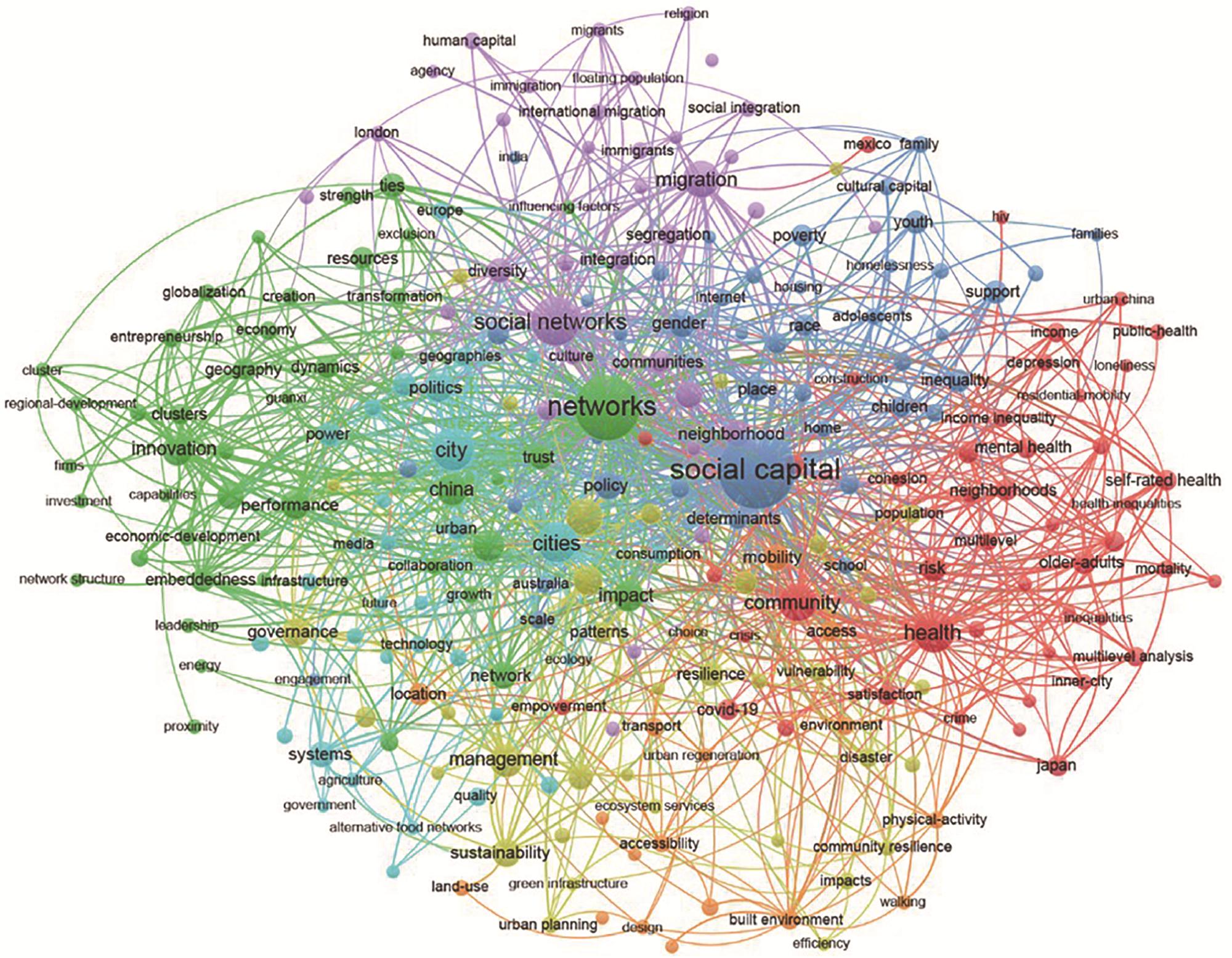
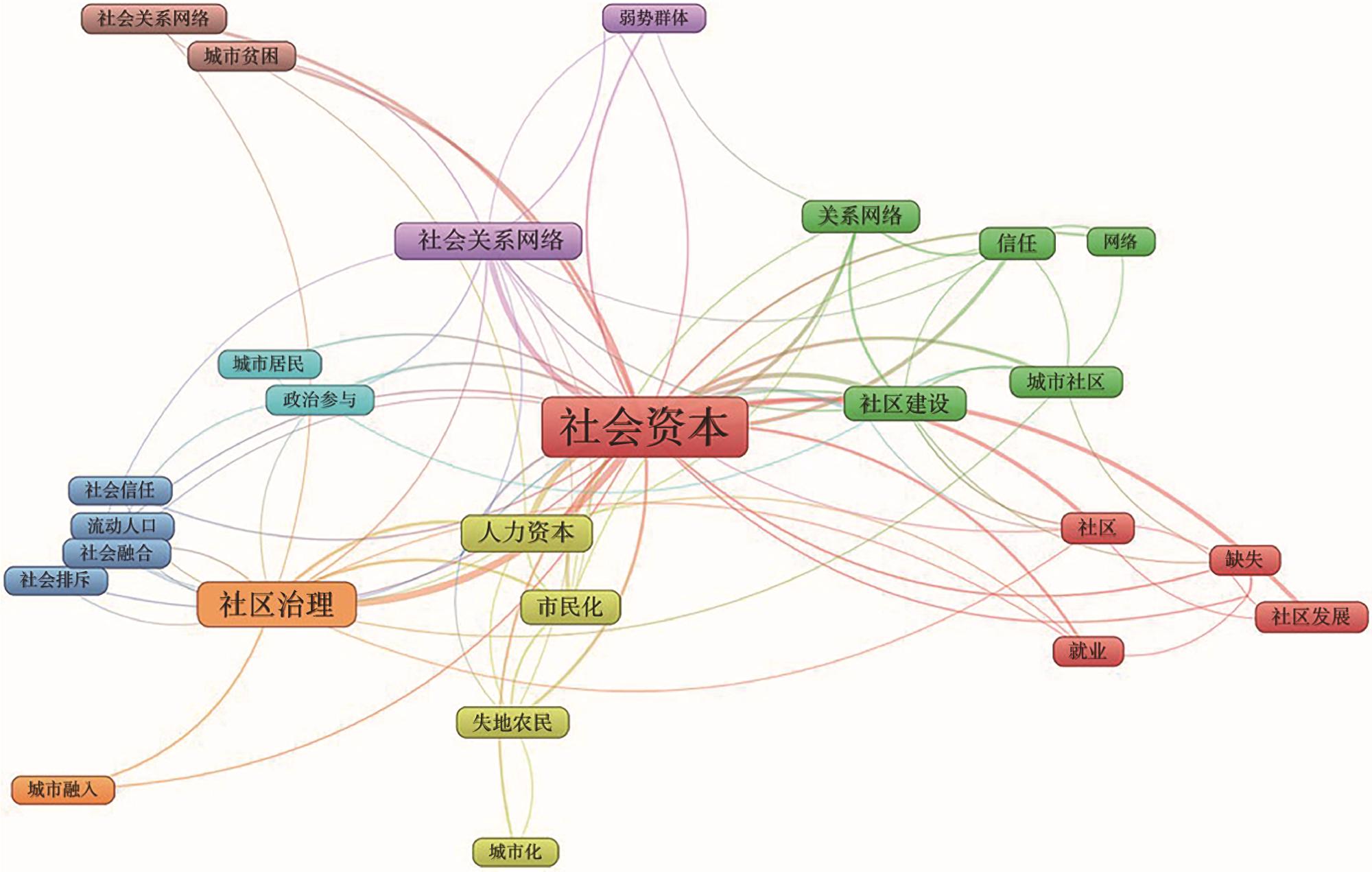
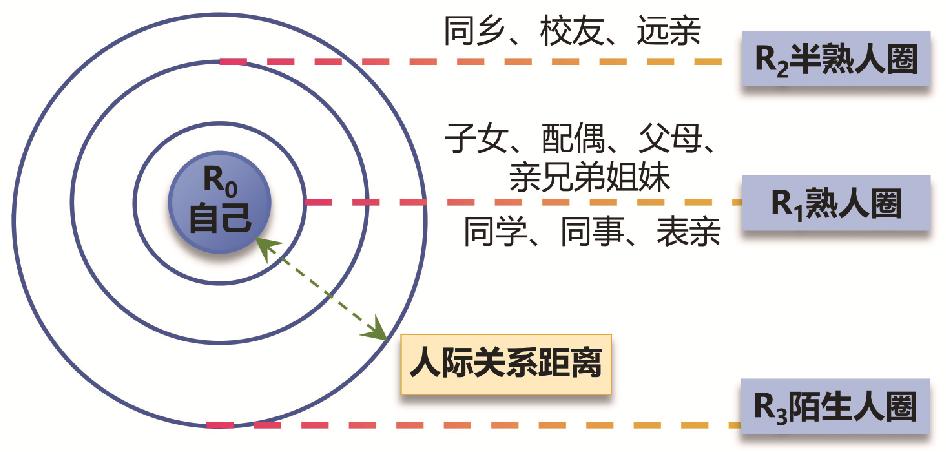
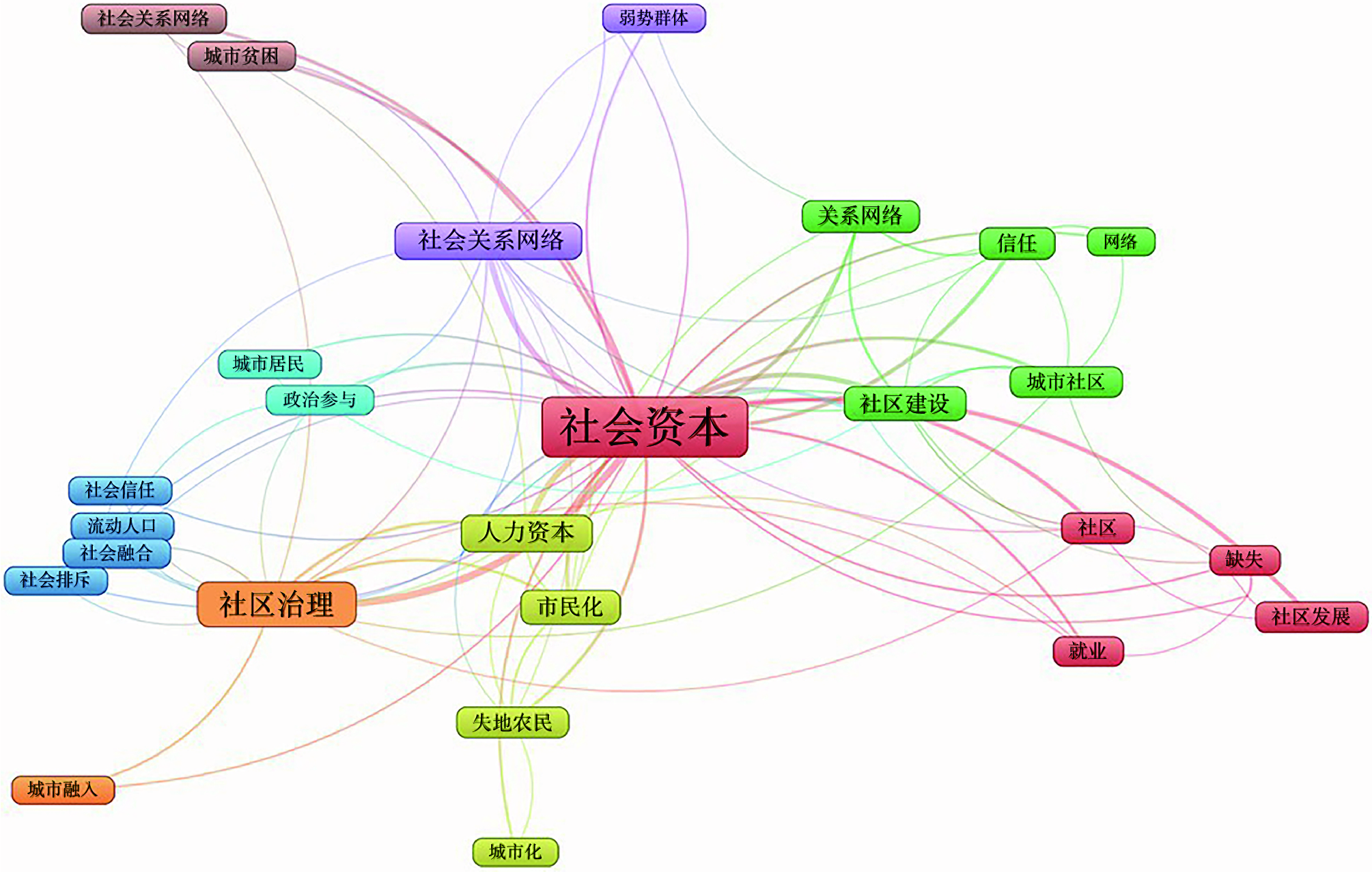
The emergence of the information society has made two major limitations of traditional socio-economic increasingly evident: its emphasis on temporal and spatial dimensions while neglecting social relationships, and its focus on natural and economic capital while overlooking social capital. Using literature analysis and empirical evidence, this study examines the evolution of research from social capital theory to the practice of community construction and from social relationship network theory to the development living-circle planning. The results indicate the following: (1) The emergence of social capital theory reflects a renewed recognition of the importance of social communities. Trust mechanisms, participatory networks, and norms of reciprocity inherent in social capital contribute significantly to community construction and governance. Social relationship network theory focuses on connections and interactions among individuals and highlights the influence of network structure on individual behavior and decision making. Both social capital and social relationship networks operate at three levels: micro, meso, and macro. The interaction between these two dimensions continuously reshapes the social relationship system and constitutes an important form of “soft power” in the development of a high-quality society. (2) As innovative assets, social relationship networks derive their value from their capacity to transform social capital into innovation capital and to address uncertainties in innovation processes that formal markets or bureaucratic systems often struggle to manage, primarily through informal governance mechanisms. Innovation is therefore not merely a technical challenge but also a dynamic process involving the formation and evolution of social relationship networks. (3) The scarcity of social capital and the weakening of interpersonal relationships have resulted in significant social deficits and growing inequality. Strengthening interpersonal relationship networks, fostering supportive neighborhood mutual-assistance systems, cultivating a cohesive collective ethos, maintaining stable family lifestyles, and preserving a balanced relationship between market and family values are critical issues that must be addressed in the pursuit of high-quality social development in the new era of socialism with Chinese characteristics. Based on these findings, this study proposes several key pathways for reconstructing robust social relationship networks, including innovating institutional frameworks for network development, deepening the construction of resilient community commonwealths, optimizing the planning and design of urban social spaces, and strengthening social relationship networks through digital intelligence technologies. Finally, potential directions for future research in this field are outlined. Overall, this study proposes strategic goals, key tasks, and implementation pathways for reconstructing robust social relationship networks, offering both theoretical insights and practical guidance for high-quality social development.
Yishao Shi . Social Relationship Networks: An Innovative Asset for High-Quality Social Development[J]. Tropical Geography, 2026 , 46(4) : 573 -585 . DOI: 10.13284/j.cnki.rddl.20250741
|
Borgatti S P and Halgin D S. On Network Theory. Organization Science, 2011, 22 (5): 1168- 1181.
|
|
Bourdieu P. 1983. The Forms of Capital. In: Richardson J C. Handbook of Theory and Research for the Sociology of Education. Westport: Greenwood Press.
|
|
Burke J. 1995. Connections. London: Simon & Schuster Inc.
|
|
Burt R S. 1992. Structural Holes: The Social Structure of Competition. Cambridge: Harvard University Press.
|
|
柴彦威, 张雪, 孙道胜. 基于时空间行为的城市生活圈规划研究——以北京市为例. 城市规划学刊, 2015 (3): 61- 69.
Chai Yanwei, Zhang Xue, and Sun Daosheng. Research on Urban Living Circle Planning Based on Spatial-Temporal Behaviors: A Case Study of Beijing. Urban Planning Forum, 2015 (3): 61- 69.
|
|
Chang Q, Chan C H, and Yip P S. A Meta-Analytic Review on Social Relationships and Suicidal Ideation among Older Adults. Social Science & Medicine, 2017, 191, 65- 76.
|
|
Coleman J S. Social Capital in the Creation of Human Capital. American Journal of Sociology, 1988, 94, 95- 121.
|
|
D'Angelo J and Van der Heide B. The Formation of Physician Impressions in Online Communities: Negativity, Positivity, and Nonnormativity Effects. Communication Research, 2016, 43 (1): 49- 72.
|
|
Ewing R and Hamidi S. Compactness Versus Sprawl: A Review of Recent Evidence from the United States. Journal of Planning Literature, 2015, 30 (4): 413- 432.
|
|
Farber S and Li X. Urban Sprawl and Social Interaction Potential: An Empirical Analysis of Large Metropolitan Regions in the United State. Journal of Transport Geography, 2013, 31, 267- 277.
|
|
Gehl J. 2006. Life between Buildings. Skive: Danish Architectural Press.
|
|
Göpel M. 2020. Unsere Welt Neu Denken. Berlin: Uiistein Verlag.
|
|
顾秋实, 叶浩彬, Vu Huy Quan, 黄松山, 宋海岩, 龚丽丹, 张雷. 新兴葡萄酒旅游目的地空间网络结构及其影响因素—基于社会网络分析方法(QAP). 地理科学, 2022, 42 (9): 1619- 1626.
Gu Qiushi, Ye Haobing, Vu Huy Quan, Huang Songshan, Song Haiyan, Gong Lidan, and Zhang Lei. Spatial Network Structure and Influencing Factors on Emerging Wine Tourism Destinations: A Network Analysis Based on Quadratic Assignment Procedure (QAP). Scientia Geographica Sinica, 2022, 42 (9): 1619- 1626.
|
|
Hardin G. 1993. Living within Limits: Ecology, Economics and Population Taboos. New York: Oxford University Press.
|
|
H-UTokyo Lab. 2020. Society 5.0 A People-Centric Super-Smart Society. Singapore: Springer Singapore.
|
|
Holt-lunstad J, Smith T B, and Layton J B. Social Relationships and Mortality Risk: A Meta-Analytic Review. PLoS Medicine, 2010, 7 (7): e1000316.
|
|
Hu H Y and Su C. Modeling of Network Communication Instability Based on K-Means Algorithm. Journal of Intelligent & Fuzzy Systems, 2020, 39 (2): 1649- 1658.
|
|
Igarashi T, Takai J, and Yoshida T. Gender Differences in Social Network Development via Mobile Phone Text Messages: A Longitudinal Study. Journal of Social and Personal Relationships, 2005, 22 (5): 691- 713.
|
|
Johnston J, Cairns K, and Baumann S. 2017. Introducing Sociology Using the Stuff of Everyday Life. Abingdon: Routledge.
|
|
Knox P and Pinch S. 2000. Urban Social Geography: An Introduction. 4th Edition. London: Pearson Education Limited.
|
|
Kozlenkova I V, Palmatier R W, Fang E, Xiao B M, and Huang M X. Online Relationship Formation. Journal of Marketing, 2017, 81 (3): 21- 40.
|
|
Lane R E. 2000. The Loss of Happiness in Market Democracies. New Haven: Yale University Press.
|
|
连至炜, 李晋磊, 金平阅, 王紫娟, 朱之恺, 刘远立. 社交网络与城市老年人心血管疾病患病的关联. 中国慢性病预防与控制, 2020, 28 (8): 563- 566.
Lian Zhiwei, Li Jinlei, Jin Pingyue, Wang Zijuan, Zhu Zhikai, and Liu Yuanli. The Association of Social Network with Cardiovascular Diseases among the Urban Elderly in China. Chinese Journal of Prevention and Control of Chronic Diseases, 2020, 28 (8): 563- 566.
|
|
李二玲, 李小建. 基于社会网络分析方法的产业集群研究——以河南省虞城县南庄村钢卷尺产业集群为例. 人文地理, 2007, 22 (6): 10- 15.
Li Erling and Li Xiaojian. Social Network Analysis Method in the Industrial Clusters Studies—The Case Study of Steel Measuring Tape Cluster in Nanzhuang Village, Yuxian County, Henan Province. Human Geography, 2007, 22 (6): 10- 15.
|
|
Lin N. 2001. Social Capital: A Theory of Social Structure and Action. Cambridge: Cambridge University Press.
|
|
柳建文. 城市基层治理中的社区韧性营造. 国家治理, 2021 (1): 20- 23.
Liu Jianwen. Building Community Resilience in Urban Grassroots Governance. Governance, 2021 (1): 20- 23.
|
|
李小建, 李国平, 曾刚, 覃成林, 张文忠. 1999. 经济地理学 北京: 高等教育出版社.
Li Xiaojian, Li Guoping, Zeng Gang, Qin Chengwen, and Zhang Wenzhong. 1999. Economic Geography. Beijing: Higher Education Press.
|
|
Lyu S, Kang S, and Koo J H. Social Capital Inequality According to Hukou in Inequal Economic Environments in China. Sustainability, 2022, 14 (21): 13748.
|
|
马静, 刘冠秋, 饶婧雯. 地理环境与时空行为对主观幸福感的影响研究进展. 地理科学进展, 2022, 41 (4): 718- 730.
Ma Jing, Liu Guanqiu, and Rao Jingwen. Progress of Research on the Impact of Geographical Context and Spatiotemporal Behavior on Subjective Well-Being. Progress in Geography, 2022, 41 (4): 718- 730.
|
|
Martin S and Marks J. 2019. Messengers: Who We Listen To, Who We Don’t, and Why. London: Penguin Random House.
|
|
Montgomery C. 2013. Happy City Transforming Our Lives through Urban Design. London: Penguin Books Ltd.
|
|
Ogle V. 2015. The Global Transformation of Time: 1870-1950. Cambridge: Harvard University Press.
|
|
潘文翔. 社区共同体: 新时代社会治理的新追求. 江南论坛, 2022, 30 (6): 18- 21.
Pan Wenxiang. Community Coalitions: A New Pursuit of Social Governance in the New Era. Jiangnan Forum, 2022, 30 (6): 18- 21.
|
|
Putnam R D. The Prosperous Community: Social Capital and Public Life. The American Prospect, 1993, 13, 35- 42.
|
|
上海市规划和国土资源管理局. 2016. 上海15分钟社区生活圈规划导则. (2016-08-05)[2025-06-16]. https://hd.ghzyj.sh.gov.cn/zcfg/ghss/201609/P020160902620858362165.pdf.
Shanghai Municipal Bureau of Planning and Land Resources. 2016. Shanghai 15-Minute Community Living Circle Planning Guidelines. (2016-08-05) [2025-05-16]. https://hd.ghzyj.sh.gov.cn/zcfg/ghss/201609/P020160902620858362165.pdf.
|
|
Silver D A and Clark T N. 2016. Scenescapes: How Qualities of Place Shape Social Life. Chicago: The University of Chicago Press.
|
|
Storper M, Kemeny T, Makarem N, and Osman T. 2015. The Rise and Fall of Urban Economies: Lessons from San Francisco and Los Angeles. San Francisco: Stanford University Press.
|
|
孙道胜, 柴彦威. 日本的生活圈研究回顾与启示. 城市建筑, 2018 (12): 13- 16.
Sun Daosheng and Chai Yanwei. A Review and Implications of Life Circle Studies in Japan. Urban Architecture, 2018 (12): 13- 16.
|
|
Tao T H, Shi Y S, Yang Q Q, Li S Z, Guo X T, and Pei X W. Characteristics of Hospitalized Patients with Depression and Their Relationship with the Surrounding Environment: A Study in a Class 3A Hospital in Shanghai. Current Psychology, 2023, 42 (7): 5910- 5921.
|
|
Valtorta N K, Kanaan M, Gilbody S, Ronzi S, and Hanratty B. Loneliness and Social Isolation as Risk Factors for Coronary Heart Disease and Stroke: Systematic Review and Meta-Analysis of Longitudinal Observational Studies. Heart, 2016, 102 (13): 1009- 1016.
|
|
汪若菡, 李国卿. 2024. 唤醒空间生产力. 杭州: 浙江教育出版社.
Wang Ruohan and Li Guoqing. 2024. Awakening Spatial Productivity. Hangzhou: Zhejiang Education Press.
|
|
Wang S B, Zhao J L, and Yu J N. Seed selection for Technology Innovation Diffusion in Complex Networks. International Journal of Modern Physics C, 2019, 30 (1): 1950012.
|
|
Wasserman S and Faust K. 1994. Social Network Analysis: Methods and Applications. New York: Cambridge University Press.
|
|
吴晓波. 2020. 这个国家的新中产: 新中产画像与未来商业白皮书. 北京: 中国友谊出版公司.
Wu Xiaobo. 2020. The New Middle Class in This Country: A Portrait of the New Middle Class and A White Paper on Future Business. Beijing: China Friendship Publishing House.
|
|
Xie X M, Wu Y H, and Ma G X. Driving Forces of Industrial Clusters Towards Innovative Clusters: Accelerating the Innovation Process. Asian Journal of Technology Innovation, 2016, 24 (2): 161- 178.
|
|
张浩然. 城市规模与主观幸福感——基于认知主体异质性的视角. 社会科学战线, 2022, 45 (5): 83- 91.
Zhang Haoran. Urban Size and Subjective Well-Being: From the Perspective of Cognitive Subjective Heterogeneity. Social Science Front, 2022, 45 (5): 83- 91.
|
|
张文忠. 2000. 居住区位论. 北京: 科学出版社.
Zhang Wenzhong. 2000. The Theory of Residential Location. Beijing: Science Press.
|
|
占晓松. 2025. 以社交样板区为引擎, 推动片区渐进式生长. (2025-06-24)[2025-08-12]. https://mp. weixin. qq. com/s/Nm6vC6NsrEOeJs2N9xJihg. [Zhan Xiaosong. 2025. Take the Social Model Area as the Engine to Drive the Progressive Growth of the District. (2025-06-24) [2025-08-12]. https://mp.weixin.qq.com/s/Nm6vC6NsrEOeJs2N9xJihg.
|
|
赵宝静, 奚文沁, 吴秋晴, 王睿. 塑造韧性社区共同体: 生活圈的规划思考与策略. 上海城市规划, 2020 (2): 14- 19.
Zhao Baojing, Xi Wenqin, Wu Qiucing, and Wang Rui. Building Resilient Community Coalitions: Planning Considerations and Strategies for Neighborhood Circles. Shanghai City Planning Review, 2020 (2): 14- 19.
|
|
赵浩华, 于钦明. 2023. 社会资本赋能社区治理共同体构建. (2023-10-18)[2025-12-25]. https://www.cssn.cn/skgz/bwyc/202310/t20231018_5691013.shtml.
Zhao Haohua and Yu Qinming. 2023. Empowering the Construction of Community Governance Community through Social Capital. (2023-10-18) [2025-12-25]. https://www.cssn.cn/skgz/bwyc/202310/t20231018_5691013.shtml.
|
|
Zhu L. 2017. "Healing Alone?": Social Capital, Racial Diversity and Health Care Inequality in the American States. American Politics Research, 45(6): 1059-1087.
|
|
朱天义. 社会资本: 理论边界、局限及适用性. 青海社会科学, 2015 (3): 63- 70,96.
Zhu Tianyi. Social Capital: Theoretical Boundaries, Limitations and Applicability. Qinghai Social Sciences, 2015 (3): 63- 70,96.
|
|
自然资源部. 2022. 上海市长宁区新华路街道规划案例. (2022-02-18)[2025-10-15]. https://www.toutiao.com/article/7066074740204503560/?wid=1764731278502.
Ministry of Natural Resources. 2022. Planning Case of Xinhua Road Sub-District, Changning District, Shanghai. (2022-02-18) [2025-10-15]. https://www.toutiao.com/article/7066074740204503560/?wid=1764731278502.
|
/
| 〈 |
|
〉 |