Behavior Characteristics of Food Shopping of Guangzhou Residents in the Age of Online Shopping
Received date: 2019-07-08
Request revised date: 2019-08-27
Online published: 2019-11-08
Copyright
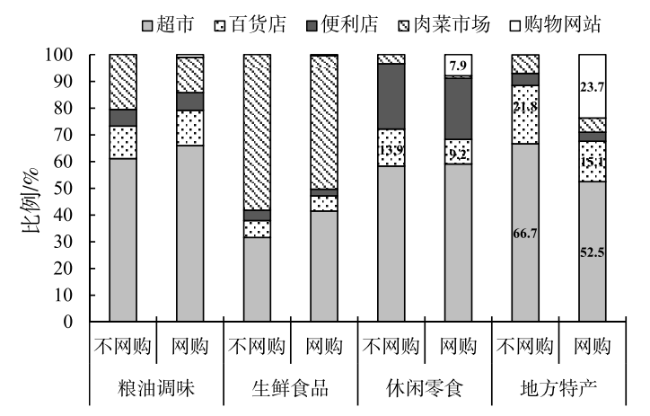
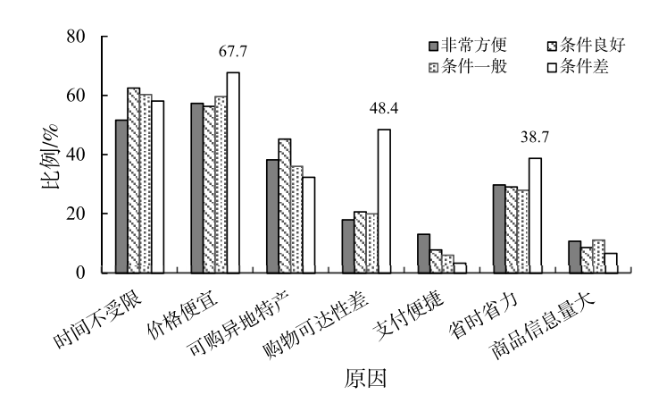
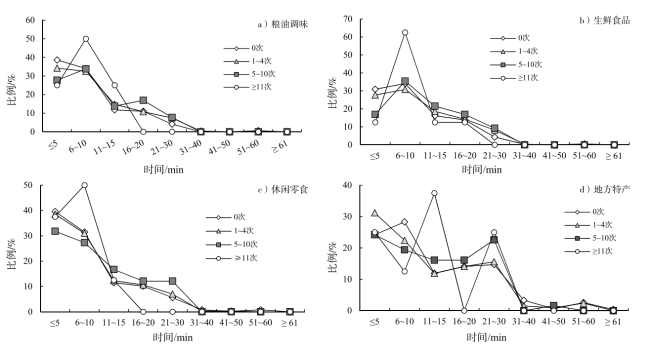
Information and communication technology reshapes resident behavior and urban spaces. Emerging online shopping has changed residents’ shopping preferences and processes, which inevitably affects the physical business space. However, there are some differences in shopping behaviors of different types of goods. Current research focuses on online shopping behavior for books, clothes, and other commodities, but seldom explores online food shopping behavior from the spatial perspective. Based on 1406 questionnaires on the food shopping behavior of residents in Guangzhou, we compared the behaviors of food purchasers whether to buy online, who buy food online in different locations and with different frequencies. General and spatial characteristics of food shopping behaviors of Guangzhou residents under the influence of online shopping were investigated in this study using cross frequency, chi-square test, and corresponding analyses. Spatial characteristics included shopping locations, retail formats, residence locations, and shopping travel time. The results of this study are as follows: 1) Acceptance of online shopping food is generally low, and the traditional shopping model still dominates; however, online food shopping has a certain substitution effect on traditional food purchases based on purchase frequency and single cost. This is consistent with
Qinghua Deng , Desheng Xue , Jianzhou Gong . Behavior Characteristics of Food Shopping of Guangzhou Residents in the Age of Online Shopping[J]. Tropical Geography, 2019 , 39(5) : 780 -789 . DOI: 10.13284/j.cnki.rddl.003171

表1 调查样本基本情况统计Tab.1 The basic statistics of surveyed samples |
| 样本属性 | 网购食品者 | 不网购食品者 | 合计 | ||||
|---|---|---|---|---|---|---|---|
| 样本数/个 | 比例/% | 样本数/个 | 比例/% | 样本数/个 | 比例*/% | ||
| 性别 | 男 | 313 | 45.3 | 378 | 54.7 | 691 | 49.1 |
| 女 | 384 | 53.7 | 331 | 46.3 | 715 | 50.9 | |
| 年龄/岁 | 15~24 | 290 | 60.4 | 190 | 39.6 | 480 | 34.1 |
| 25~34 | 244 | 66.8 | 121 | 33.2 | 365 | 26.0 | |
| 35~44 | 114 | 46.9 | 129 | 53.1 | 243 | 17.3 | |
| 45~59 | 45 | 20.1 | 179 | 79.9 | 224 | 15.9 | |
| ≥60 | 4 | 4.3 | 90 | 95.7 | 94 | 6.7 | |
| 学历 | 初中及以下 | 25 | 12.3 | 179 | 87.7 | 204 | 14.5 |
| 高中或高职 | 129 | 41.2 | 184 | 58.8 | 313 | 22.3 | |
| 大专或本科 | 511 | 61.1 | 326 | 38.9 | 837 | 59.5 | |
| 研究生 | 32 | 61.5 | 20 | 38.5 | 52 | 3.7 | |
| 月收入 /万元 | <0.3 | 319 | 53.3 | 279 | 46.7 | 598 | 42.5 |
| 0.3~0.6 | 180 | 46.9 | 204 | 53.1 | 384 | 27.3 | |
| 0.6~1 | 139 | 51.5 | 131 | 48.5 | 270 | 19.2 | |
| 1~1.5 | 49 | 46.7 | 56 | 53.3 | 105 | 7.5 | |
| >1.5 | 10 | 20.4 | 39 | 79.6 | 49 | 3.5 | |
| 职业 | 机关/事业单位人员 | 58 | 45.0 | 71 | 55.0 | 129 | 9.2 |
| 企业员工 | 194 | 56.4 | 150 | 43.6 | 344 | 24.5 | |
| 私营业者 | 73 | 40.3 | 108 | 59.7 | 181 | 12.9 | |
| 在校学生 | 281 | 61.4 | 177 | 38.6 | 458 | 32.5 | |
| 自由职业者 | 50 | 47.6 | 55 | 52.4 | 105 | 7.5 | |
| 农民 | 3 | 9.7 | 28 | 90.3 | 31 | 2.2 | |
| 退休人员 | 7 | 8.9 | 72 | 91.1 | 79 | 5.6 | |
| 其他 | 31 | 39.2 | 48 | 60.8 | 79 | 5.6 | |
| 居住 区位 | 中心区 | 241 | 48.7 | 254 | 51.3 | 495 | 35.2 |
| 近郊区 | 257 | 49.4 | 263 | 50.6 | 520 | 37.0 | |
| 远郊区 | 199 | 50.8 | 192 | 49.2 | 391 | 27.8 | |
| 合计 | 697 | 49.6 | 709 | 50.4 | 1 406 | 100 | |
注:*以样本总量1 406个为基数。 |
表2 居民实体店和网络购买食品的频率、单次花费、时间比例Tab. 2 Percentage of frequency, one-time cost and time for shopping food in physical stores and online |
| 居民及购物渠道 | 月均购物频率/次 | 单次花费/元 | 时间 | ||||||||||||
|---|---|---|---|---|---|---|---|---|---|---|---|---|---|---|---|
| 0 | 1~4 | 5~10 | ≥11 | 合计 | <20 | 20~50 | 50~100 | >100 | 合计 | 工作日 | 周末 | 两者差不多 | 合计 | ||
| 不网购食品者 | 实体占比/% | 2.6 | 47.8 | 29.4 | 20.2 | 100 | 15.5 | 38.1 | 32 | 14.4 | 100 | 6.2 | 32 | 61.8 | 100 |
| 网购食品者 | 实体占比/% | 1 | 58.6 | 23.5 | 16.9 | 100 | 15.4 | 39.5 | 32 | 13.1 | 100 | 4.5 | 43.5 | 52 | 100 |
| 网络占比/% | 0 | 89.1 | 9.8 | 1.1 | 100 | 13 | 40 | 35.4 | 11.6 | 100 | 5.2 | 21.9 | 72.9 | 100 | |
表3 居民经常网络购买不同类型食品的比例Tab.3 Percentage of different foods of residents shopping online |
| 常网购食品类型 | 频数/次 | 比例*/% |
|---|---|---|
| 休闲零食 | 577 | 83.6 |
| 生鲜食品 | 44 | 6.4 |
| 粮油调味 | 53 | 7.7 |
| 饮料冲饮 | 217 | 31.4 |
| 保健品类 | 66 | 9.6 |
| 烟酒 | 21 | 3 |
| 地方特产 | 115 | 16.7 |
| 进口食品 | 279 | 40.4 |
| 其他 | 2 | 0.3 |
注:*以690个网购食品者样本为基数,另7个网购食品者样本缺失此数据。 |
表4 居民最主要购买食品地点的比例Tab.4 Percentage of the major shopping sites for food % |
| 购买地点 | 不网购食品者 | 网购食品者 | 合计 |
|---|---|---|---|
| 购物网站 | 0 | 25.2 | 13.8 |
| 居住地周边商店 | 96.7 | 70.5 | 82.4 |
| 商业区 | 3.3 | 4.3 | 3.8 |
表5 不同区位居民网购食品的频率、单次花费和时间比例Tab.5 Percentage of frequency, time and one-time cost for shopping food online in different locations % |
| 区域类型 | 月均网购频率/次 | 单次花费/元 | 时间 | ||||||||||
|---|---|---|---|---|---|---|---|---|---|---|---|---|---|
| 1~4 | 5~10 | ≥11 | 合计 | <20 | 20~50 | 50~100 | >100 | 合计 | 工作日 | 周末 | 两者差不多 | 合计 | |
| 中心区 | 88.0 | 11.2 | 0.8 | 100 | 11.0 | 33.7 | 40.1 | 15.2 | 100 | 5.5 | 19.9 | 74.6 | 100 |
| 近郊区 | 89.1 | 10.1 | 0.8 | 100 | 10.5 | 49.3 | 32.4 | 7.8 | 100 | 6.3 | 17.7 | 76.0 | 100 |
| 远郊区 | 90.5 | 7.5 | 2.0 | 100 | 18.8 | 35.5 | 33.5 | 12.2 | 100 | 3.6 | 29.6 | 66.8 | 100 |
| 1 |
|
| 2 |
|
| 3 |
|
| 4 |
|
| 5 |
|
| 6 |
|
| 7 |
杜晓娟, 甄峰 ,
[
|
| 8 |
|
| 9 |
|
| 10 |
傅辰昊, 周素红, 闫小培, 柳林 . 2018. 广州市零售商业中心消费活动时变模式及其影响因素. 地理科学, 38(1):20-30.
[
|
| 11 |
|
| 12 |
|
| 13 |
国家统计局广州调查队城镇住户处. 2018. 网购消费需求与供给应对分析.(2018-08-28)[2018-12-05].
[ Urban Households’ Office of Guangzhou Survey Team, National Bureau of Statistics. 2018. Analysis on the Demand and Supply of Online Purchase.(2018-08-28)[2018-12-05].
|
| 14 |
|
| 15 |
|
| 16 |
冯其予 . 2019. 去年全国网上零售额超九万亿元农村电商迅猛发展.(2019-02-22)[2019-03-20]. 经济日报,
[
|
| 17 |
|
| 18 |
|
| 19 |
|
| 20 |
|
| 21 |
|
| 22 |
|
| 23 |
|
| 24 |
|
| 25 |
|
| 26 |
欧玫姗 . 2009. 澎湖地区居民之生活型态与网络购物行为研究. 澎湖:国立澎湖科技大学.
[
|
| 27 |
|
| 28 |
|
| 29 |
|
| 30 |
|
| 31 |
|
| 32 |
孙智群, 柴彦威, 王冬根 . 2009. 深圳市民网上购物行为的空间特征. 城市发展研究, 16(6):106-112.
[
|
| 33 |
|
| 34 |
汪明峰, 卢姗, 邱娟 . 2010. 网上购物对城市零售业空间的影响:以书店为例. 经济地理, 30(11):1835-1840.
[
|
| 35 |
汪明峰, 卢姗 . 2012. 替代抑或补充:网上购物与传统购物出行的关系研究. 人文地理, 27(3):44-49.
[
|
| 36 |
汪明峰, 卢姗, 袁贺 . 2013. 网上购物对不同区位消费者行为的影响——市区和郊区的比较. 城市规划, 37(11):84-88,95.
[
|
| 37 |
翁艺丹, 千庆兰, 陈颖彪, 韩富状 . 2015. 广州人口空间均衡特征与经济关联研究初探. 广州大学学报(自然科学版), 14(6):84-91.
[
|
| 38 |
|
| 39 |
|
| 40 |
席广亮, 甄峰, 汪侠, 秦萧 . 2014. 南京市居民网络消费的影响因素及空间特征. 地理研究, 33(2):284-295.
[
|
| 41 |
杨浩雄, 王浩 . 2018. 生鲜食品网络购买决策的关键因素研究. 管理现代化, 38(4):64-66.
[
|
| 42 |
杨进广 . 2013. 网上购物感知风险研究——以网购食品为例. 成都:西南交通大学.
[
|
| 43 |
易智康 . 2015. B2C电子商务对广州天河IT商业空间的影响研究. 广州:华南理工大学.
[
|
| 44 |
余安琦, 刘杨晨, 缪琪琪 . 2018. 基于描述性统计分析的网络食品购买行为与风险感知. 中国商论,( 22):60-62.
[
|
| 45 |
张小英, 巫细波 . 2016. 广州购物中心时空演变及对城市商业空间结构的影响研究. 地理科学, 36(2):231-238.
[
|
| 46 |
张永明, 甄峰 . 2017 a.城市居民网络与实体购物互动模式及空间分异——以南京为例. 经济地理, 37(1):15-22.
[
|
| 47 |
张永明, 甄峰, 曹新宇, 翟青, 章雨晴 . 2017b. 基于区位和商品类型的居民购物过程分解比较——以南京为例. 人文地理, 32(1):109-115.
[
|
| 48 |
张红霞, 杨渊 . 2017. 消费者网购食品安全信心及其影响因素分析. 调研世界,( 10):17-22.
[
|
| 49 |
章雨晴, 甄峰, 张永明 . 2016. 南京市居民网络购物行为特征——以书籍和衣服为例. 地理科学进展, 35(4):476-486.
[
|
| 50 |
中国互联网络信息中心. 2019. 第43次《中国互联网络发展状况统计报告》.(2019-02-28)[2019-04-06].http://www.cnnic.net.cn/hlwfzyj/hlwxzbg/hlwtjbg/201902/t20190228_70645.htm
[ China Internet Network Information Center. 2019. The 43rd Statistical Report on the Development of Internet in China (2019-02-28)[ 2019-04-06]. http://www.cnnic.net.cn/hlwfzyj/hlwxzbg/hlwtjbg/201902/t20190228_70645.htm.
|
| 51 |
中国商务部电子商务和信息化司. 2017. 中国电子商务报告(2016).(2017-06-14)[2019-02-15].http://dzsws.mofcom.gov.cn/article/dzsw/tjjc/201706/20170602591881.shtml
[ Department of Electronic Commerce and Informatization, Ministry of Commerce of the People’s Republic of China. 2017. China E-commerce Report(2016). (2017-06-14)[2019-02-15]. http://dzsws.mofcom.gov.cn/article/dzsw/tjjc/201706/20170602591881.shtml
|
/
| 〈 |
|
〉 |