AI-Generated Content (AIGC) and Metaverse-Empowered Geography Education: Practical Exploration of an Immersive Scenario and Intelligent Tutoring Collaborative Teaching Model
Received date: 2025-07-22
Revised date: 2025-11-04
Online published: 2025-12-28
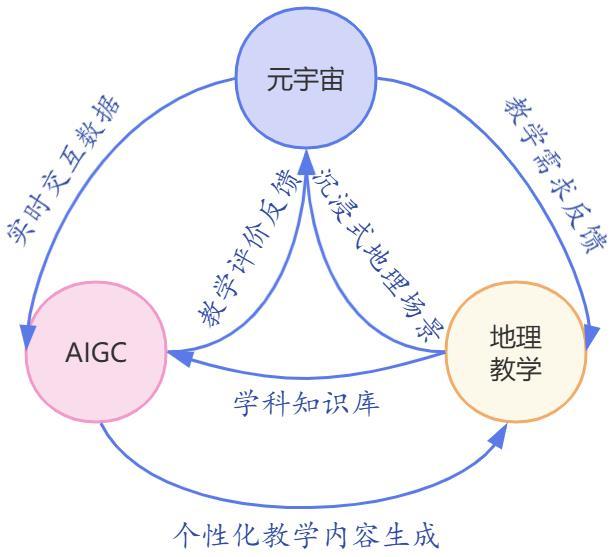
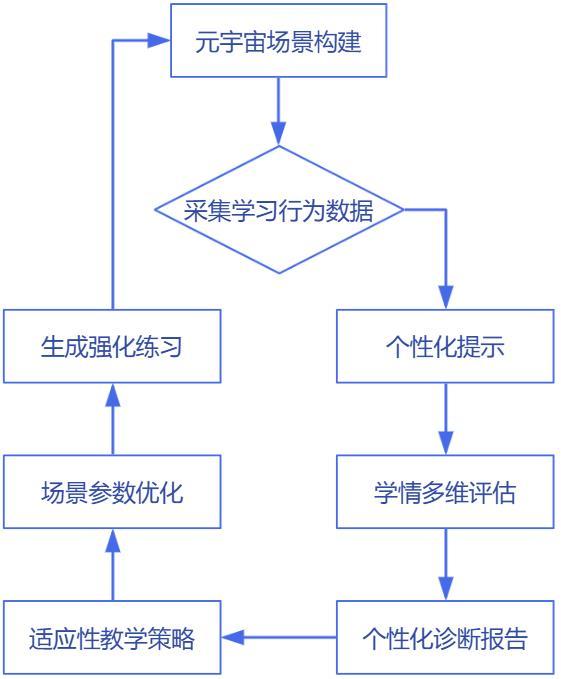
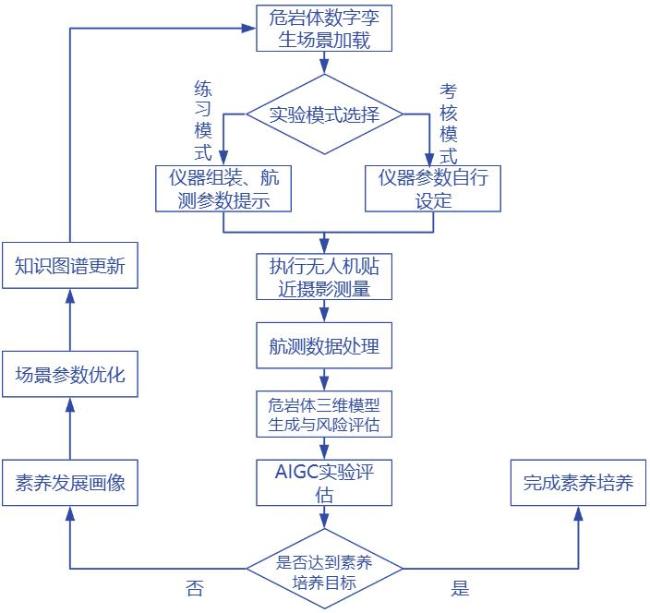
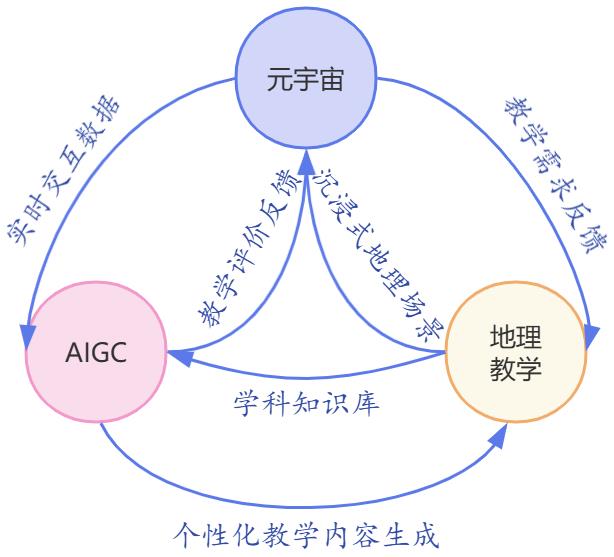
Traditional geography teaching has long faced core challenges, such as difficulties in visualizing abstract concepts and the limitations of high-risk or high-cost practical activities. Although AI-generated content (AIGC) and metaverse technologies have individually shown educational potential, existing research is largely confined to single-technology applications. There is a lack of a cross-technology synergistic framework tailored to the three-dimensional attributes of geography ("spatial-temporal-process"), resulting in insufficient adaptation between technology and pedagogical needs. To address this gap, this study aimed to construct a novel geography teaching model synergistically empowered by "AIGC + Metaverse". Through empirical research, it sought to validate the effectiveness of the proposed model in enhancing students' core competencies, thereby providing a verified and systematic solution to overcome traditional teaching dilemmas an."d promote the intelligent transformation of geography education. This study developed a closed-loop teaching model consisting of "Scenario Immersion—Intelligent Guidance—Assessment Optimization". The model employed metaverse technology to create high-fidelity immersive geography scenarios (e.g., a digital twin environment of a dangerous rock mass), while leveraging AIGC to build an intelligent tutoring system that supported personalized guidance, intelligent Q&A, and formative assessment. Deep integration was achieved through data and pedagogical process synergy mechanisms. To validate the model's effectiveness, a quasi-experimental study was conducted over two academic years using the "Spatial Information Collection and Risk Assessment of Dangerous Rock Mass" experiment as a case study. A multidimensional dataset, including experimental scores, learning behavior data, and system logs, was collected to comprehensively compare outcomes between a traditional teaching group and an "AIGC + Metaverse" synergistic group. The empirical results demonstrated that the "AIGC + Metaverse" synergistic teaching model achieved significant improvements over the traditional model. In terms of practical operation ability, students' average scores in operational standardization and data completeness both increased by 12.5%. Improvements in spatial analysis ability were particularly prominent, with the average score for measurement accuracy increasing by 28.57% and the average score for analytical logic by 14.29%. Regarding innovative application ability, the average score for the quality of risk assessment reports rose by 28.57%, and the average score for thinking questions by 14.29%. Ultimately, the average score for comprehensive task ability improved by 11.25%. The study concluded that this synergistic model, by combining immersive metaverse scenarios with the intelligent AIGC feedback, effectively resolved the core contradictions of traditional geography teaching. It facilitated a shift in students' roles from passive recipients of knowledge to active explorers of capability, thereby achieving a fundamental paradigm shift from "knowledge transmission" to "capability empowerment." The contributions of this study are threefold. First, it offers theoretical innovation by constructing and validating a synergistic teaching framework integrating AIGC-generated content, metaverse-hosted scenarios, and real-time AI tutor interaction, thus filling the gap in existing research on cross-technology synergy and discipline-specific adaptation. Second, it provides a practical paradigm by delivering a replicable, scalable, and systematic teaching solution, serving as a concrete example for geography education reform. Third, it contributes to domain expansion by exploring a viable path for the deep integration of advanced intelligent technologies with subject teaching in the context of educational digitalization, offering theoretical references and practical insights for innovative teaching in related disciplines.
Key words: geography teaching; AI-generated content; Metaverse; collaboration; teaching mode
Zhaoxiong Liang , Hongyi Zhou , Xizhi Wang , Dan Xu . AI-Generated Content (AIGC) and Metaverse-Empowered Geography Education: Practical Exploration of an Immersive Scenario and Intelligent Tutoring Collaborative Teaching Model[J]. Tropical Geography, 2026 , 46(1) : 190 -199 . DOI: 10.13284/j.cnki.rddl.20250493
表1 地理学教学元宇宙+AI应用案例集Table 1 Application case collection of Metaverse and AI in geography teaching |
| | | | | |
|---|---|---|---|---|
| | | | | |
| | | | | |
| | | | | |
| | | | | |
| | | | | |
表2 新旧教学模式实验流程对比Table 2 Comparison of experimental processes between new and old teaching models |
| 教学环节 | 传统教学模式 | “AIGC+元宇宙”协同模式 |
|---|---|---|
| 知识输入 | 教师课堂讲授危岩体成因、监测技术规范,展示2D遥感影像和地质剖面图。 | 学生虚拟场景中沉浸式漫游危岩体数字孪生场景,AIGC助教实时讲解地质构造与风险点。 |
| 技能训练 | 根据实验指导书,分析教师给定的现成点云数据,撰写分析报告。整个过程不涉及数据采集环节,学生无法体验数据 获取的全流程。 | 学生在虚拟环境中模拟无人机操控,自主规划航线。AIGC 助教实时推荐最优参数(航高100 m±5%,重叠率70%),并 即时纠正操作偏差。 |
| 数据分析 | 学生使用模拟数据操作,重点在于软件操作流程。教学为 一对多模式,学生遇到问题无法得到及时反馈。 | 学生采集的虚拟数据可导出,并可通过软件构建三维模型。AIGC助教精准识别误差来源(如“航线偏差导致点云密度 降低15%”),并生成个性化改进方案。 |
| 成果评估 | 提交书面报告,教师依据报告逻辑性和结论准确性评分。 反馈周期长,批改效率低,且难以针对每位学生的具体问题提供个性化辅导。 | 提交含三维模型、动态模拟与分析图表的综合报告,系统从 “数据完整性、测量精度、风险评估逻辑”三维度自动生成初步评价,教师复核。 |
表3 新旧教学模式下学生实验成绩与能力表现对比Table 3 Comparison of students' experiment scores and ability performance between traditional and new teaching modes |
| | | | | |
|---|---|---|---|---|
| | | | | 12.50 |
| | | | 12.50 | |
| | | | | 28.57 |
| | | | 14.29 | |
| | | | | 28.57 |
| | | | 14.29 | |
| | | | | 11.25 |
梁钊雄:负责选题设计、文献资料的搜集与分析、论文初稿的撰写、数据处理及图表绘制;
周红艺:负责论文关键科学问题的指导、退修阶段核心数据的复核与深度分析、指导论文讨论部分的重构与优化;
王兮之:负责部分实地调研工作、基础数据的收集与整理、实验/计算过程的辅助操作;
徐 丹:参与文献调研、论文格式的规范化校对、部分图表的初步处理。
|
陈永伟. 2023. 超越ChatGPT:生成式AI的机遇、风险与挑战. 山东大学学报(哲学社会科学版),(3):127-143.
Chen Yongwei. 2023. Beyond ChatGPT: Opportunities, Risks, and Challenges from Generative AI. Journal of Shandong University(Philosophy and Social Sciences), (3): 127-143.
|
|
邓敏,刘启亮. 2023. “大知识”时代地理信息科学专业本科人才培养探索与实践. 测绘通报,(8):178-181.
Deng Min and Liu Qiliang. 2023. Exploration and Practice on the Cultivation of Undergraduate Talents in Geographic Information Science in the Era of "Big Knowledge". Bulletin of Surveying and Mapping, (8): 178-181.
|
|
郭江浩,许晏萌,薛昭铭,高升. 2025. 面向教育数字化:元宇宙体育教学的功能场景与发展路向. 体育与科学,46(1):62-71.
Guo Jianghao, Xu Yanmeng, Xue Zhaoming, and Gao Sheng. 2025. Toward Education Digitization: Metaverse Physical Teaching's Functional Scenarios and Development Direction. Sports & Science, 46(1): 62-71.
|
|
李白杨,白云,詹希旎,李纲. 2023. 人工智能生成内容(AIGC)的技术特征与形态演进. 图书情报知识,40(1):66-74.
Li Baiyang, Bai Yun, Zhan Xini, and Li Gang. 2023. The Technical Features and Aromorphosis of Artificial Intelligence Generated Content(AIGC). Documentation, Information & Knowledge, 40(1): 66-74.
|
|
刘革平,高楠,胡翰林,秦渝超. 2022. 教育元宇宙:特征、机理及应用场景. 开放教育研究,28(1):24-33.
Liu Geping, Gao Nan, Hu Hanlin, and Qin Yuchao. 2022. Edu-Metaverse: Characteristic Mechanism and Application Scenarios. Open Education Research, 28(1): 24-33.
|
|
刘革平,王星,高楠,胡翰林. 2021. 从虚拟现实到元宇宙:在线教育的新方向. 现代远程教育研究,33(6):12-22.
Liu Geping, Wang Xing, Gao Nan, and Hu Hanlin. 2021. From Virtual Reality to Metaverse: A New Direction of Online Education. Open Education Research, 33(6): 12-22.
|
|
华子荀,黄慕雄. 2021. 教育元宇宙的教学场域架构、关键技术与实验研究. 现代远程教育研究,33(6):23-31.
Hua Zixun and Huang Muxiong. 2021. The Teaching Field Structure, Key Technologies and Experimental Study of Edu-Metaverse. Modern Distance Education Research, 33(6): 23-31.
|
|
教育部,中央网信办,国家发展改革委,工业和信息化部,财政部,中国人民银行. 2021. 关于推进教育新型基础设施建设构建高质量教育支撑体系的指导意见. (2021-07-08)[2025-07-15]. http://www.moe.gov.cn/srcsite/A16/s3342/202107/t2021 0720_545783.html.
Ministry of Education of the People's Republic of China, Office of the Central Cyberspace Affairs Commission, National Development and Reform Commission, Ministry of Industry and Information Technology, Ministry of Finance, and People's Bank of China. 2021. Guiding Opinions on Promoting the New Infrastructure Construction of Education and Building a High-Quality Education Support System. (2021-07-08) [2025-07-15]. http://www.moe.gov.cn/srcsite/A16/s3342/202107/t20210 720_545783.html.
|
|
凌杰,张丽丽,陈鸿光,金彪,林铭炜. 2025. 生成式人工智能在计算机实验教学中的应用. 计算机教育,(5):28-32.
Ling Jie, Zhang Lili, Chen Hongguang, JinBiao, and Lin Mingwei. 2025. The Application of Generative Artificial Intelligence in Computer Experiment Teaching. Computer Education, (5): 28-32.
|
|
罗敏,黄佳芳,许章华,王琳,仝川. 2022. 碳中和背景下基于滨海湿地控制实验系统的地理学实践教学改革. 实验室研究与探索,41(10):173-178.
Luo Min, Huang Jiafang, Xu Zhanghua, Wang Lin, and Tong Chuan. 2022. Geography Practice Teaching Reform Based on Coastal Wetland Control Experimental System under the Strategy of Carbon Neutralization. Research and Exploration in Laboratory, 41(10): 173-178.
|
|
潘崇佩,廖康启,孔勇发. 2024. 生成式人工智能背景下的近代物理实验教学改革. 实验室研究与探索,43(12):117-122.
Pan Chongpei, Liao Kangqi, and Kong Yongfa. 2024. Research on the Reform of Modern Physics Experiments Teaching under the Background of Generative Artificial Intelligence. Research and Exploration in Laboratory, 43(12): 117-122.
|
|
邵延秀,李云帅,丁虎,高满,李晓东,姚文倩. 2025. 地理科学专业野外实践课程思政教学与探索. 高教学刊,11(18):185-188.
Shao Yanxiu, Li Yunshuai, Ding Hu, Gao Man, Li Xiaodong, and Yao Wenqian. 2025. Ideological and Political Education in Field Practice Courses for Geography Science Majors: Teaching and Exploration. Journal of Higher Education, 11(18): 185-188.
|
|
施贵刚,郑润强,疏臻. 2024. 测绘地理信息类专业产教融合实践教学研究. 测绘通报,(11):167-171.
Shi Guigang, Zheng Runqiang, and Shu Zhen. 2024. Research on Practical Teaching and Learning for Industry-Education Integration of Surveying and Mapping Geographic Information Specialties. Bulletin of Surveying and Mapping, (11): 167-171.
|
|
佘砚,庄启昕,张浩然,左沛元,顾金楼,滕鑫. 2025. 数智化时代生成式AI助力材料专业实验课程探索研究. 高分子通报,38(6):958-966.
She Yan, Zhuang Qixin, Zhang Haoran, Zuo Peiyuan, Gu Jinlou, and Teng Xin. 2025. Exploration and Research on the Application of Generative AI in Supporting Materials Science Experimental Courses in the Era of Digital Intelligence. Polymer Bulletin, 38(6): 958-966.
|
|
石岩,邓敏,刘宝举,陈炳蓉. 2024. 大数据时代地理信息科学专业创新教育改革探索与实践. 测绘通报,(4):179-182.
Shi Yan, Deng Min, Liu Baoju, and Chen Bingrong. 2024. Exploration and Practice of Reforming Innovation Education for Geographic Information Science Specialty in the Big Data Era. Bulletin of Surveying and Mapping, (4): 179-182.
|
|
王梅梅,刘兴德,蒋子臻,董蕴萱,张子龙. 2025. 兰州大学融入人文素养的地理野外综合实习课程建设与实践. 地理教学,(8):59-64.
Wang Meimei, Liu Xingde, Jiang Zizhen, Dong Yunxuan, and Zhang Zilong. 2025. The Construction and Practice of Comprehensive Field Geography Internship Courses Incorporating Humanistic Literacy at Lanzhou University. Geography Teaching, (8): 59-64.
|
|
杨宗凯,王俊,吴砥,陈旭. 2023. ChatGPT/生成式人工智能对教育的影响探析及应对策略. 华东师范大学学报(教育科学版),41(7):26-35.
Yang Zongkai, Wang Jun, Wu Di, and Chen Xu. 2023. Exploring the Impact of ChatGPT/AIGC on Education and Strategies for Response. Journal of East China Normal University(Educational Sciences), 41(7): 26-35.
|
|
余越凡,周晓云. 2024. 基于元宇宙的职业教育虚拟仿真实训系统设计——以“计算机组装与维护”课程为例. 实验室研究与探索,43(7):176-182.
Yu Yuefan and Zhou Xiaoyun. 2024. Design of Virtual Simulation Training System for Vocational Education Based on Metaverse: Taking the Course of "Computer Assembly and Maintenance" as an Example. Research and Exploration in Laboratory, 43(7): 176-182.
|
|
张策,初佃辉,张侨,刘鹏,魏萌,刘晓颖. 2024. 元宇宙教学:高等教育数字化教学转型的高阶形态. 计算机科学,51(10):1-9.
Zhang Ce, Chu Dianhui, Zhang Qiao, Liu Peng, Wei Meng, and Liu Xiaoying. 2024. Metaverse Teaching: A Higher Form of Digital Teaching Transformation in Higher Education. Computer Science, 51(10): 1-9.
|
|
翟雪松,楚肖燕,王敏娟,张紫徽,董艳. 2022. 教育元宇宙:新一代互联网教育形态的创新与挑战. 开放教育研究,28(1):34-42.
Zhai Xuesong, Chu Xiaoyan, Wang Minjuan, Zhang Zihui, and Dong Yan. 2022. Education Metaverse: The Shape, Challenges and Reflections of the New Generation of Internet Education. Open Education Research, 28(1): 34-42.
|
|
中共中央 国务院.2019. 中国教育现代化2035. (2019-02-23)[2025-07-15]. http://www.moe.gov.cn/jyb_xwfb/s6052/moe_838/201902/t20190223_370857.html.
The Central Committee of the Communist Party of China and the State Council of the People's Republic of China. 2019. China's Education Modernization 2035.(2019-02-23) [2025-07-15]. http://www.moe.gov.cn/jyb_xwfb/s6052/moe_838/201902/t20190223_370857.html.
|
/
| 〈 |
|
〉 |